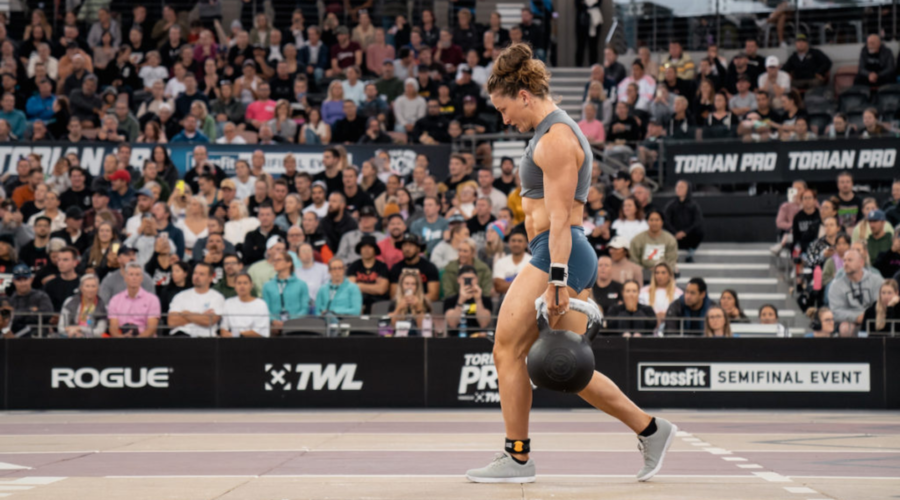


Carrying your bodyweight for 30 seconds sounds simple until you try it. Hold half your bodyweight in each hand, stand tall, and walk without dropping the weights, leaning sideways, or losing your grip. It is a demanding test of strength, grip, trunk stability, posture, and mental focus.
For a 180 pound person, carrying bodyweight means holding a total of 180 pounds. That could mean two 90 pound kettlebells, two 90 pound dumbbells, or loaded farmer carry handles. The weight is split between both hands, but the task is still substantial because your hands, shoulders, upper back, trunk, hips, and legs must all work together.


This is not a universal fitness standard. Body size, training history, hand size, equipment, walking surface, and injury history all affect performance. A smaller person may carry less absolute load but still be carrying a very demanding percentage of bodyweight. A larger person may have more absolute strength but also more load to manage.
Still, carrying your bodyweight for 30 seconds is a useful challenge for experienced lifters. It is not only about being strong enough to pick up the load. It is about maintaining that strength while walking with controlled posture and a secure grip.
Why Loaded Carries Matter
Loaded carries are movements where you hold a weight and walk. The farmer carry uses a load in both hands. The suitcase carry uses one load on one side. The front rack carry holds weights near the shoulders, while the overhead carry places weights above the head.
The farmer carry is the most direct choice for a bodyweight carry challenge because it distributes the load evenly between both hands. This reduces the sideways bending demand of a single sided carry, but it increases the total weight you can potentially handle.
Carrying a heavy load requires the hands to grip the handles, the forearms to resist fatigue, the upper back to keep the shoulders organized, and the trunk to maintain posture. The hips and legs must also control each step while the added load changes the demands on balance and walking.
Research on grip strength shows that it is associated with physical function and important health outcomes. Grip strength is not the sole cause of better health, but it is a useful marker of overall muscular strength and functional capacity. Loaded carries provide a practical way to train grip in the context of whole body movement.
Carrying also reflects something that happens outside the gym. People carry bags, boxes, tools, luggage, children, and groceries. Training carries does not make every real world lifting task risk free, but it can improve your ability to handle loads with better strength and control.
Is Carrying Your Bodyweight for 30 Seconds a Good Goal?
For a healthy, experienced strength trainee, carrying total bodyweight for 30 seconds can be a challenging and worthwhile benchmark. It requires substantial grip endurance and full body strength. It is not an appropriate starting target for beginners, people returning after injury, or anyone who has not yet learned basic loaded carry technique.
There is no scientific consensus stating that every adult should be able to carry bodyweight for 30 seconds. It is better viewed as a training challenge than a diagnostic test. Failing to achieve it does not mean you are unfit, and achieving it does not guarantee that you are healthy or resistant to injury.

The challenge can still provide useful information. If your grip fails immediately, grip strength may be the limiting factor. If you can hold the weights but your shoulders rise toward your ears, upper back endurance and load selection may need attention. If you lean, stumble, or feel unstable, trunk control or leg strength may be the issue.
The key is to treat the carry as feedback, not as a judgment.
Research supports progressive resistance training as a way to improve muscular strength and physical function. A bodyweight carry is simply one advanced expression of those qualities. You can build toward it through steady progression rather than attempting it before you are ready.
How to Perform the Farmer Carry
Place the weights on the floor beside your feet. Stand between them with your feet about hip width apart. Push your hips backward, bend your knees naturally, and grip the handles firmly.
Before standing, gently tighten your trunk and upper back. Press your feet into the floor and stand tall. Your arms should stay long at your sides, your shoulders should remain away from your ears, and your ribs should stay stacked over your pelvis.
Walk with short, controlled steps. Keep your gaze forward and avoid rushing. The weights should stay close to your sides without swinging into your legs. Maintain steady breathing throughout the carry.
When you finish, lower the weights by pushing your hips back and bending your knees. Do not drop them unless the equipment and gym environment are specifically designed for it.
The goal is not to look tense from head to toe. You want enough tension to maintain posture, but your neck, jaw, and hands should not be clenched harder than necessary.
What Counts as a Good 30 Second Carry
A quality bodyweight carry is not simply surviving the time limit. You should be able to walk with an upright torso, level shoulders, a stable head position, and controlled steps. You should not need to shuffle, lean backward, or drag the weights.
The distance you cover depends on your walking speed and available space. For this challenge, time is more useful than distance because it standardizes the effort. A measured thirty second carry allows you to focus on posture instead of trying to reach a specific number of steps.
If you need to set the weights down before 30 seconds, that is useful information. Rest, reduce the load, and build capacity through training. Do not force the challenge by using poor technique.
The Muscles That Make the Carry Possible
Your hands and forearms are the first point of contact with the load. Grip endurance is often the limiting factor during heavy carries because the fingers and forearm muscles must maintain force continuously.
The upper back helps hold the shoulders in a stable position. The trapezius, rhomboids, lats, and shoulder stabilizers work to prevent the load from pulling the shoulders forward or downward excessively.
The trunk muscles provide stiffness and control. Your abdominal muscles, obliques, spinal erectors, and deeper stabilizing muscles work together to keep your torso organized while your legs move. The trunk does not need to remain perfectly rigid, but it should resist large unwanted movement.
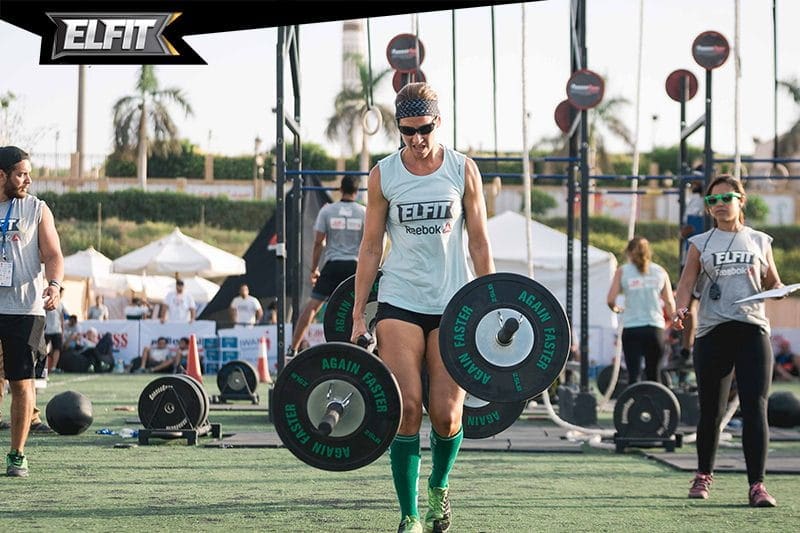
Your glutes, quadriceps, hamstrings, calves, and feet control each step. Walking with a heavy load changes the forces traveling through the lower body, which is why the carry becomes much more demanding as the weight increases.
Research on loaded kettlebell carries has shown meaningful activation of the trunk and hip muscles. However, direct research comparing different farmer carry loading programs is limited. The strongest evidence supports the broader principle that progressive resistance training improves strength, while carry specific training should be treated as one practical method for applying that principle.
How to Build Toward a Bodyweight Carry
Start with a load you can carry for twenty to thirty seconds while keeping excellent posture. For many beginners, that may be far below bodyweight. The starting load is not important. The quality of the carry is what matters.
Train farmer carries once or twice per week after your main strength work. Begin with two or three carries of twenty to thirty seconds. Rest for one to two minutes between carries so that your grip and posture can recover.
Increase the load gradually. A small increase in weight can make a large difference because the hands and upper back must support the added load during every step. You can also build capacity by extending the carry from twenty seconds to thirty seconds before increasing the weight.
For example, if you begin with two weights that total half your bodyweight, perform several weeks of controlled carries. Once you can complete every set for 30 seconds without major grip fatigue or posture loss, add a small amount of weight and repeat the process.
A Practical Progression
You might begin by carrying half your bodyweight for 20 seconds. Build toward 30 seconds over several sessions. Then increase the total load to around 60 percent of bodyweight and return to 20 seconds.
Continue this process until you can carry your bodyweight for 30 seconds with consistent form. The timeline will differ greatly between individuals. Some experienced lifters may reach the target quickly, while others may need months of focused work.
Do not increase load and duration at the same time. Change one variable, then give your body time to adapt. This approach is consistent with established principles of progressive resistance training.
Common Mistakes During Heavy Carries
The most common mistake is choosing a load that is too heavy. If your shoulders rise sharply, your torso leans, or your steps become unsteady, reduce the weight. Heavy carries are valuable only when you can maintain control.
Another mistake is holding your breath for the entire carry. You should brace your trunk, but you should also breathe. Use small controlled breaths while maintaining an upright posture.
Some people walk too fast. Fast walking can turn the carry into a balance challenge and cause the weights to swing. Use a deliberate pace, especially when the load is heavy.
Finally, do not ignore hand pain, numbness, tingling, or sharp discomfort in the shoulders, back, hips, knees, or feet. Muscular fatigue is expected during a demanding carry. Pain that changes your movement or persists after training deserves attention.
Who Should Avoid the Full Challenge?
The full bodyweight carry challenge is not necessary for everyone. If you are new to strength training, begin with lighter carries and focus on technique. If you have a recent injury, significant pain, balance problems, uncontrolled blood pressure, or a condition that affects grip, speak with a qualified health professional before attempting very heavy carries.
How to Build Strength Without Heavy Weights (Is It Possible?)
People with a history of back pain may still benefit from carefully progressed carrying, but bodyweight loading should not be the starting point. A lighter farmer carry or suitcase carry can offer a more appropriate challenge.
The best carry weight is the one that challenges you while allowing you to walk with control. A smaller load performed well is more useful than a larger load performed with compromised technique.
Final Thoughts
Carrying your bodyweight for 30 seconds is a demanding strength challenge, not a universal standard of health or fitness. It requires grip endurance, upper back strength, trunk control, leg strength, and confident walking under load.
If you can do it with level shoulders, controlled steps, and a stable torso, you have developed impressive full body carrying capacity. If you cannot do it yet, use the target as a long term training goal rather than a reason to rush.
Build gradually, prioritize good form, and let the carry become a regular part of your strength training.
Key Takeaways
| Topic | Main point | Practical application |
|---|---|---|
| Challenge definition | A bodyweight farmer carry uses a total load equal to your bodyweight | Split the load evenly between both hands |
| Benchmark value | It is an advanced training target, not a health test | Use it as feedback rather than a pass or fail standard |
| Starting point | Beginners should begin well below bodyweight | Choose a load you can carry for twenty to thirty seconds with control |
| Progression | Build time before adding more weight | Increase one variable at a time |
| Quality standard | Posture and walking control matter as much as duration | Keep your shoulders level, breathe steadily, and avoid leaning |
References
- American College of Sports Medicine (2009) ‘American College of Sports Medicine position stand: Progression models in resistance training for healthy adults’, Medicine and Science in Sports and Exercise, 41(3), pp. 687 to 708.
- Leong, D.P., Teo, K.K., Rangarajan, S., Lopez Jaramillo, P., Avezum, A., Orlandini, A., Seron, P., Ahmed, S.H., Rosengren, A., Kelishadi, R. and others (2015) ‘Prognostic value of grip strength: Findings from the Prospective Urban Rural Epidemiology study’, The Lancet, 386(9990), pp. 266 to 273.
- McGill, S.M. and Marshall, L.W. (2012) ‘Kettlebell swing, snatch, and bottoms up carry: Back and hip muscle activation, motion, and low back loads’, Journal of Strength and Conditioning Research, 26(1), pp. 16 to 27.
- Schoenfeld, B.J., Grgic, J., Ogborn, D. and Krieger, J.W. (2017) ‘Strength and hypertrophy adaptations between low versus high load resistance training: A systematic review and meta analysis’, Journal of Strength and Conditioning Research, 31(12), pp. 3508 to 3523.
- Westcott, W.L. (2012) ‘Resistance training is medicine: Effects of strength training on health’, Current Sports Medicine Reports, 11(4), pp. 209 to 216.