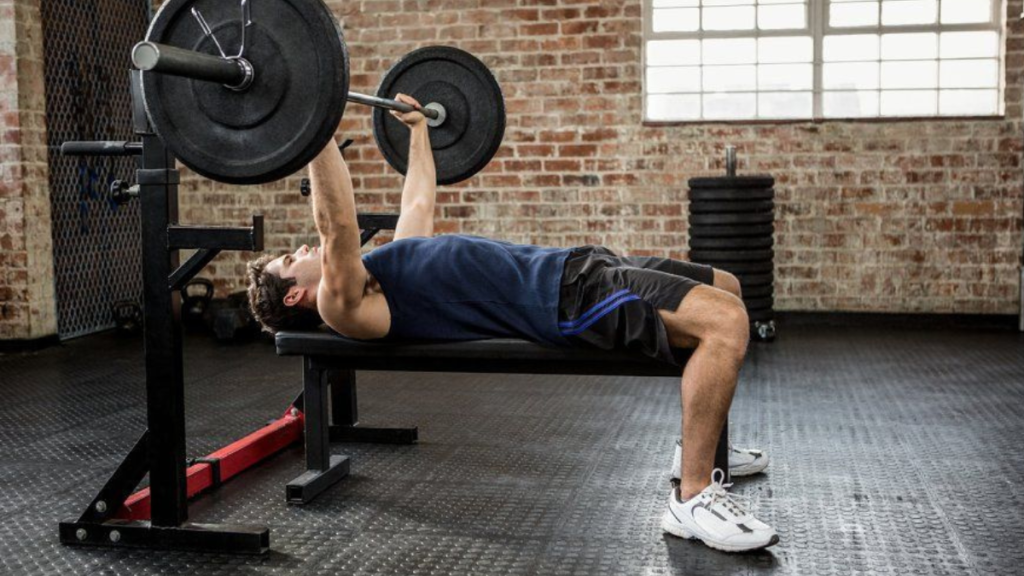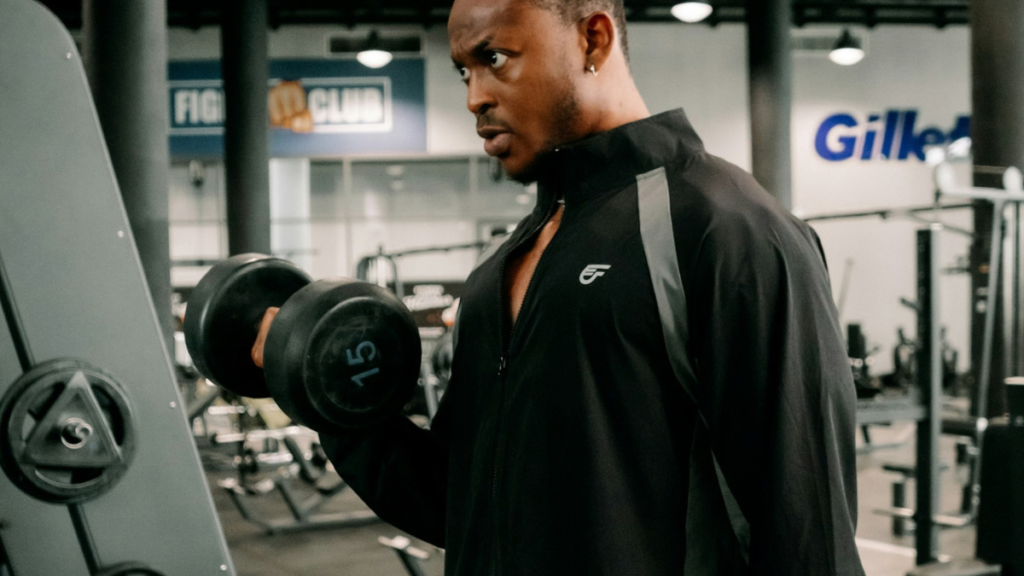


Building a more muscular lower chest does not require a complicated training plan. It requires sensible exercise selection, challenging sets, and enough time for the chest muscles to adapt. The lower portion of the pectoralis major works during many pressing and fly movements, so beginners can make excellent progress with a small number of movements performed consistently.
The lower chest is commonly used to describe the sternocostal fibers of the pectoralis major. These fibers originate from the sternum and ribs before attaching to the upper arm. They work with the rest of the chest, front shoulders, and triceps when you press an object away from your torso or bring your arms across the body.


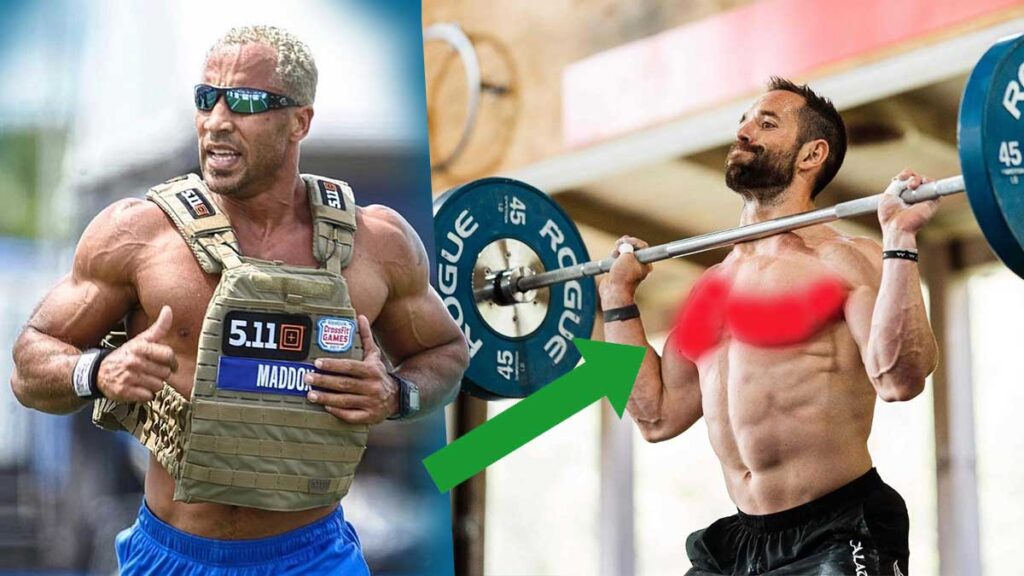
No exercise can completely isolate the lower chest. The chest functions as one large muscle, and the shoulders and triceps will always help during pressing. Different angles can change the relative contribution of chest regions, but they do not allow you to switch one region on while switching all others off.
For beginners, the goal is to build the entire chest while using a few movements that may place useful emphasis on the lower fibers. The decline dumbbell press, high to low cable fly, and assisted chest dip are three excellent options. They provide a main strength movement, a controlled chest focused accessory exercise, and a bodyweight pressing pattern that can be scaled gradually.
What Creates a More Defined Lower Chest
The shape of your lower chest depends on two main factors: the size of the pectoralis major and the amount of body fat covering it. Resistance training can increase the size and strength of the chest. Nutrition, physical activity, and overall energy balance influence whether the chest becomes more visibly defined.
You cannot remove fat specifically from the lower chest by performing more lower chest exercises. Research on localized exercise does not support spot reduction. Direct chest training can build the underlying muscle, but fat loss happens across the body rather than precisely where you train.
3 Best Beginner Exercises for Wider and More Attractive Shoulders
That is good news because it keeps the plan simple. Train your chest effectively, train the rest of your body, and use nutrition habits that support your goal. Over time, a stronger chest and improved body composition can create a more defined appearance.
Research on resistance training shows that muscle growth is supported by progressive overload, sufficient effort, and enough weekly training volume. The exercises below are useful because they can be loaded, repeated, and progressed without requiring advanced skill.
1. Decline Dumbbell Press
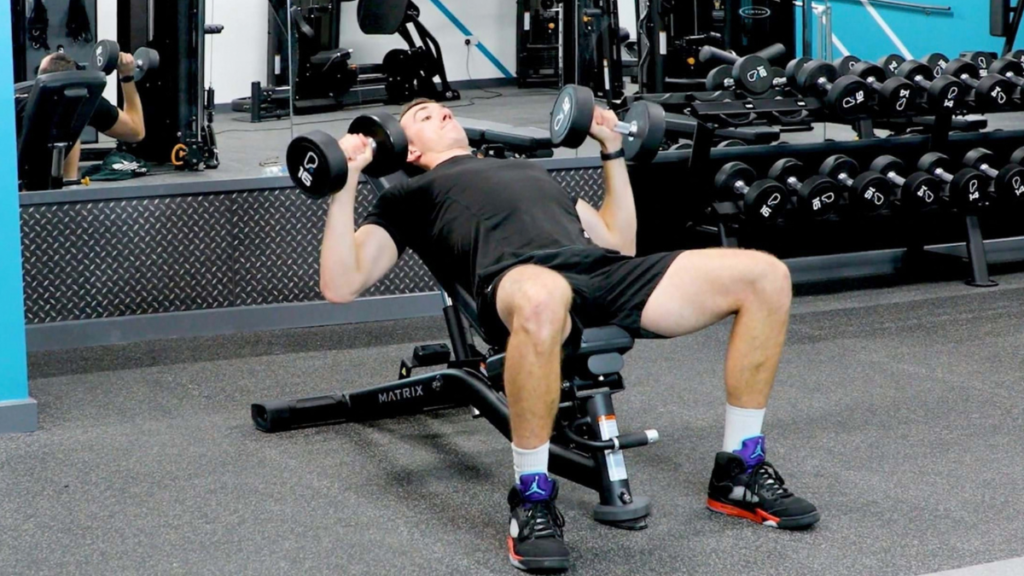
The decline dumbbell press is an effective primary chest exercise for beginners who want to place more emphasis on the lower chest. A slight decline changes the pressing angle and may increase activation of the sternocostal region of the pectoralis major compared with some incline angles.
Set an adjustable bench to a gentle decline. You do not need a steep angle. Sit down with a dumbbell in each hand resting on your thighs, then lie back and guide the weights into position above your lower chest. Keep your feet secure and your shoulder blades gently pulled back against the bench.
Lower the dumbbells slowly toward the outside of your lower chest. Keep your wrists stacked over your elbows and allow your elbows to travel at a comfortable angle from the torso. Press the dumbbells upward until your elbows are straight, then repeat with the same controlled path.
Studies using muscle activity measurements suggest that bench angle can alter the relative activation of the upper and lower regions of the pectoralis major. These short term measurements do not guarantee greater muscle growth from one angle alone. They do provide a reasonable basis for including a slight decline press when lower chest development is a priority.
Dumbbells are helpful for beginners because each arm works independently and the pressing path can feel more natural than a fixed barbell. Start light enough that you can lower the dumbbells and return them to the start position safely.
How to Progress the Decline Dumbbell Press
Begin with two or three sets of six to twelve repetitions. Use a weight that makes the last few repetitions challenging but still allows you to keep the dumbbells stable.
Once you can complete all sets at the top of your repetition range with good form, increase the load slightly. If heavier dumbbells are not available, add repetitions, slow the lowering phase, or add one extra set.
Rest for one to two minutes between sets. This allows the chest, triceps, and shoulders to recover enough to produce high quality work in the next set.
Common Decline Dumbbell Press Errors
The most common mistake is using a decline that feels uncomfortable or unstable. A small decline is enough. If the setup causes dizziness, shoulder discomfort, or difficulty getting into position, use flat dumbbell pressing instead.
Another error is letting the elbows flare straight out to the sides. Keep them slightly angled toward your torso and use a smooth pressing path. This usually creates a more controlled and comfortable repetition.
2. High to Low Cable Fly
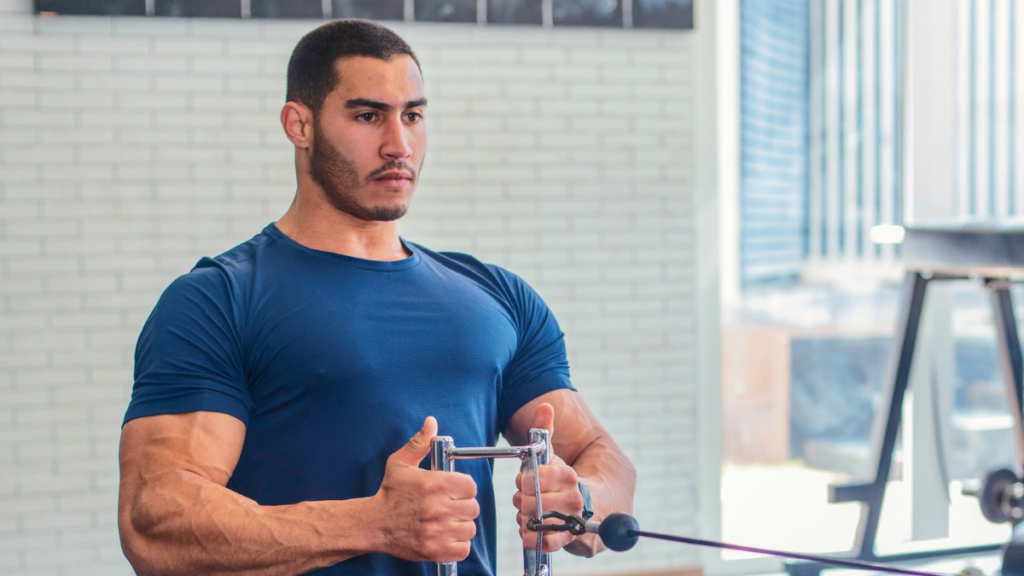
The high to low cable fly is a useful accessory exercise because it trains the chest through controlled arm movement without relying on the triceps as heavily as a press. The cable angle provides resistance as you bring your hands down and inward across the body.
Set the cable handles above shoulder height. Stand in the middle of the machine and take a stable split stance. Begin with your arms open, elbows softly bent, and hands slightly above shoulder level. Keep your chest lifted without leaning backward.
Bring your hands down and inward until they meet in front of your lower chest or upper abdomen. Pause briefly, then return slowly to the starting position. Keep the elbow bend gentle and consistent throughout the repetition.
The high to low path follows the direction of the sternocostal chest fibers more closely than a low to high cable fly. Direct long term research comparing cable fly paths for regional chest hypertrophy is limited, so the movement should not be treated as a perfect lower chest isolator. It is a practical way to add chest focused volume after your main press.
Research supports using different exercises for a muscle group when those exercises provide challenging resistance and can be progressed. The cable fly is valuable because it lets you train the chest with a light to moderate load and close attention to control.
How to Progress the High to Low Cable Fly
Start with two or three sets of ten to fifteen repetitions. Choose a load that lets you control both the inward movement and the return. The final repetitions should be difficult, but you should not need to lean, twist, or use momentum.
Once you can perform fifteen repetitions with the same controlled technique, add a small amount of resistance. You can also use a one second pause when your hands meet to make a lighter load more challenging.
Common High to Low Cable Fly Errors
The most common mistake is bending and straightening the elbows like a press. Keep the elbows softly bent but mostly fixed. The arms should travel in an arc around the shoulder joint.
Another mistake is allowing the shoulders to rise toward the ears. Keep your neck relaxed and your shoulders controlled as you bring the handles down and inward.
3. Assisted Chest Dip
The chest dip is a demanding bodyweight pressing exercise that can train the chest, triceps, and front shoulders. A slight forward body position can increase the contribution of the chest compared with a more upright dip. For beginners, an assisted dip machine or resistance band is usually the smartest starting point.
Grip the dip handles and support your body with your arms straight. Begin with a modest forward lean, keeping your chest open and your shoulders controlled. Bend your elbows to lower your body only as far as you can do so comfortably. Press through the handles to return to the starting position.
The chest dip can provide a strong training stimulus because it requires you to move a large percentage of your bodyweight. It is also easy to make too difficult too soon. Assisted versions reduce the amount of bodyweight you lift and allow you to learn the movement without turning every repetition into a struggle.
Research comparing pushup and pressing variations shows that bodyweight pressing can build strength when the relative loading is appropriate. The dip is a more advanced pattern than the incline pushup, so beginners should earn the right to use it through controlled assistance and gradual progression.
The range of motion should feel comfortable. You do not need to descend as deeply as possible to make the exercise effective. A controlled range that keeps the shoulders comfortable is a better choice than chasing depth at the expense of position.
How to Progress the Assisted Chest Dip
Begin with two or three sets of five to ten repetitions using enough assistance to keep every repetition controlled. If you use an assisted dip machine, reduce the assistance only after you can perform the top number of repetitions with good form.
If you use a resistance band, begin with a thicker band and gradually move to a thinner one. Once you can perform controlled bodyweight dips, add repetitions before considering external load.
Common Assisted Chest Dip Errors
The most common error is sinking too far into the bottom position. Lower only as far as your shoulders tolerate comfortably. If you feel sharp pain, a pinching sensation, or instability, stop and choose a more suitable pressing exercise.
Another error is allowing the shoulders to roll forward aggressively. Keep the chest open and control the shoulder blades throughout the repetition. Reducing assistance too quickly can make this mistake more likely.
How to Program These Exercises for Lower Chest Growth
Train your chest two or three times each week. Start with the decline dumbbell press while you are fresh because it is the most demanding movement. Follow with high to low cable flies, then use assisted dips if your shoulders feel good and you can maintain controlled form.
A simple beginner session can include three sets of decline dumbbell presses, two sets of high to low cable flies, and two sets of assisted dips. This provides a useful amount of direct chest work without creating excessive fatigue.
Research suggests that weekly resistance training volume is an important contributor to hypertrophy. Beginners usually do not need a large amount of work at the start. Add volume only when you are recovering well, maintaining good technique, and making gradual strength progress.

Keep most sets one to three good repetitions away from failure. This means you end a set knowing you could probably complete a small number of additional repetitions with clean form. Training close to fatigue can support muscle growth, but beginners benefit from leaving enough reserve to keep learning the movements well.
Train your upper back at least as consistently as your chest. Rows, pullups, pulldowns, and rear shoulder exercises support a balanced upper body program and help build the strength needed to control the shoulder blades during pressing.
Safety and Realistic Expectations
No chest exercise should cause sharp pain, numbness, tingling, or a feeling of instability. If a movement causes these symptoms, stop and use a more comfortable variation. People with recent shoulder injuries, surgery, or ongoing pain should seek individual advice from a qualified health professional.
Muscle growth takes time. You may notice better control and improved pressing strength before you see a major visual change. Track your repetitions and loads so that you can measure progress objectively instead of changing exercises too quickly.
The lower chest will not become visibly defined through chest training alone. Build the muscle with progressive resistance training, then support your physique goals with sustainable nutrition and regular physical activity.
Final Thoughts
The decline dumbbell press, high to low cable fly, and assisted chest dip are three effective beginner exercises for building a stronger and more muscular lower chest. The decline press gives you a progressive strength movement. The cable fly adds controlled chest focused volume. The assisted dip develops bodyweight pressing strength when you are ready for it.
Use comfortable ranges of motion, build the load slowly, and train consistently. That is how beginners develop a lower chest that looks more muscular because the entire chest has become stronger.
Key Takeaways
| Exercise | Main role | Starting recommendation | Main technique priority |
|---|---|---|---|
| Decline dumbbell press | Primary lower chest focused press | Two or three sets of six to twelve repetitions | Use a gentle decline and control the descent |
| High to low cable fly | Chest focused accessory work | Two or three sets of ten to fifteen repetitions | Bring the hands down and inward without leaning |
| Assisted chest dip | Scalable bodyweight pressing | Two or three sets of five to ten repetitions | Use enough assistance to keep the shoulders controlled |
| Weekly structure | Chest muscle development | Train chest two or three times weekly | Add load, repetitions, or volume gradually |
References
- American College of Sports Medicine (2009) ‘American College of Sports Medicine position stand: Progression models in resistance training for healthy adults’, Medicine and Science in Sports and Exercise, 41(3), pp. 687 to 708.
- Calatayud, J., Borreani, S., Colado, J.C., Martin, F., Flandez, J., Page, P. and Andersen, L.L. (2015) ‘Bench press and pushup at comparable levels of muscle activity results in similar strength gains’, Journal of Strength and Conditioning Research, 29(1), pp. 246 to 253.
- Lauver, J.D., Cayot, T.E. and Rothe, M.R. (2015) ‘Influence of bench angle on upper extremity muscular activation during bench press exercise’, European Journal of Sport Science, 16(3), pp. 309 to 316.
- Rodriguez Ridao, D., Antequera Soler, E., Martin Fuentes, I. and Muyor, J.M. (2020) ‘Effect of different bench angles on the muscle activation of upper and lower pectoralis major’, International Journal of Environmental Research and Public Health, 17(9), 3088.
- Schoenfeld, B.J., Grgic, J., Ogborn, D. and Krieger, J.W. (2017) ‘Strength and hypertrophy adaptations between low versus high load resistance training: A systematic review and meta analysis’, Journal of Strength and Conditioning Research, 31(12), pp. 3508 to 3523.
- Schoenfeld, B.J., Ogborn, D. and Krieger, J.W. (2017) ‘Dose response relationship between weekly resistance training volume and increases in muscle mass: A systematic review and meta analysis’, Journal of Sports Sciences, 35(11), pp. 1073 to 1082.
- Vispute, S.S., Smith, J.D., LeCheminant, J.D. and Hurley, K.S. (2011) ‘The effect of abdominal exercise on abdominal fat’, Journal of Strength and Conditioning Research, 25(9), pp. 2559 to 2564.