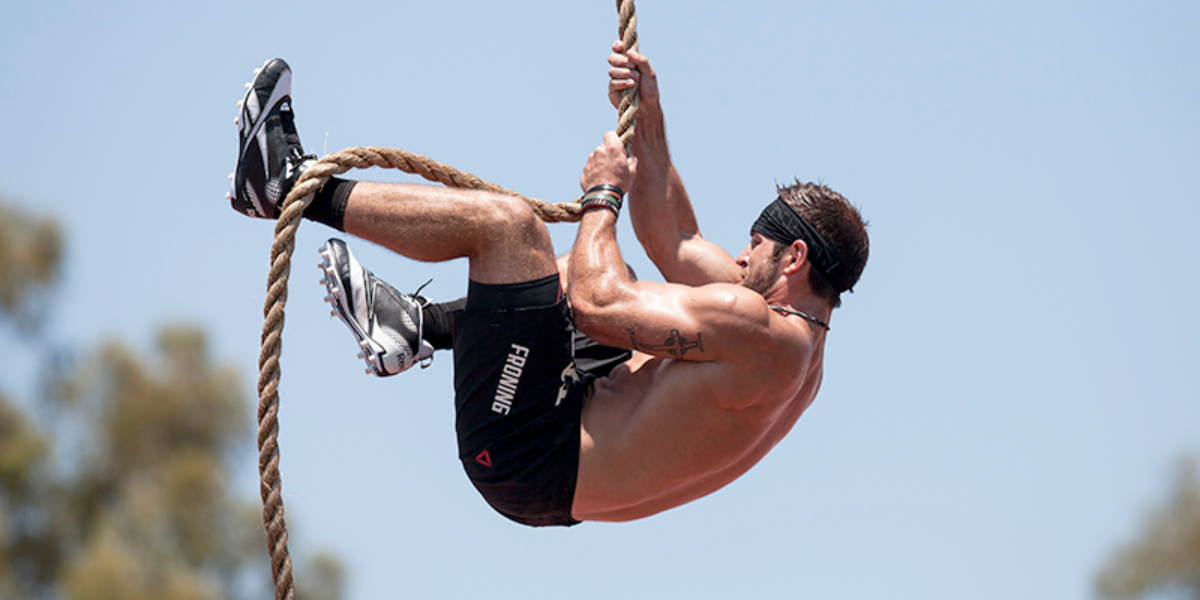


If your goal is bigger biceps, both curls and chin ups deserve a place in the conversation. A curl is an isolation exercise that makes elbow flexion the main job. A chin up is a compound pulling exercise that challenges the biceps while also training the lats, upper back, forearms, and trunk.
The short answer is that curls are usually the better choice for maximizing direct biceps growth, while chin ups are an excellent way to build biceps alongside substantial upper body pulling strength and back muscle. The most productive answer for most lifters is not choosing one forever. It is using chin ups as a major pulling movement and curls as dedicated biceps work.


That conclusion is not based on gym folklore. It comes from what research shows about muscle activation, training volume, exercise specificity, effort, and the way muscles grow in response to resistance training.
What the Biceps Actually Do
The biceps brachii crosses both the shoulder and elbow. Its most visible role is bending the elbow, but it also helps rotate the forearm into a palm up position. This second action matters when comparing curls and chin ups.
A standard supinated chin up uses an underhand grip. Your palms face you, which places the forearm in a position where the biceps can contribute strongly to elbow flexion. During a curl, the same basic elbow flexion function is even more central because there is no major back movement competing for the work.
The biceps are not the only elbow flexors. The brachialis and brachioradialis also contribute. However, the biceps have a particularly important role when the forearm is supinated. This is one reason that underhand chin ups tend to involve more biceps activity than overhand pull ups.
What Chin Up Research Tells Us
Electromyography research has found high biceps brachii activity during chin ups. In a comparison of pull ups, chin ups, and a rotating pull up variation, the chin up produced substantial biceps activation. This makes practical sense because the lifter must flex the elbow while pulling their body toward the bar with an underhand grip.
That said, muscle activation is not the same thing as muscle growth. Electromyography measures electrical activity at the muscle surface during a movement. It can help explain which muscles contribute to an exercise, but it cannot by itself prove that one exercise will produce more hypertrophy than another over months of training.
Chin ups also spread the training demand across several large muscles. The lats, teres major, middle and lower trapezius, posterior deltoids, forearms, and biceps all contribute. This is exactly why chin ups are so effective as a total upper body pulling movement. It is also why they are not as targeted as curls.
When a chin up gets difficult, your ability to continue may be limited by grip, back strength, body control, or simply how much of your bodyweight you can pull. Your biceps may still have productive reps left, but the set can end because another part of the movement is the weak link.
Why Curls Have an Advantage for Direct Biceps Size
A curl is easier to load specifically for the biceps. You can choose a weight that makes the biceps work hard through a controlled range of motion without asking your back, grip, or trunk to be the limiting factor.
How to Build Strength Without Heavy Weights (Is It Possible?)
This matters because hypertrophy is strongly related to accumulating enough challenging training volume. Research consistently shows a dose response relationship between resistance training volume and increases in muscle mass. More hard sets generally produce greater hypertrophy up to the point where recovery becomes inadequate.
Curls make it practical to add biceps specific sets after your main pulling work. You can use dumbbells, a barbell, cables, or a machine and make small load adjustments as strength improves. That degree of control is useful because progression can continue even when bodyweight chin ups become awkward to load or too demanding systemically.
Curls also let you train the biceps close to failure with less technical breakdown. A hard chin up set can turn into swinging, shortened range of motion, or compensatory shoulder movement. A hard curl can also become sloppy, but the movement is easier to stabilize and regulate when performed with sensible load selection.
Research comparing low load and high load resistance training indicates that both can build muscle when sets are performed with sufficiently high effort. This gives curls a practical advantage. You can use moderate loads for controlled repetitions, heavier loads when appropriate, or lighter cable and dumbbell work when joints need a break.
Does a Chin Up Replace a Curl?
A chin up can absolutely contribute to biceps hypertrophy, especially for beginners and intermediate trainees who are progressively adding repetitions or external load. If chin ups are hard and you perform them through a full range of motion, the biceps receive meaningful resistance.
However, a chin up does not always replace a curl when maximum arm size is the goal. Compound pulling work trains the biceps, but it does not guarantee enough direct volume for the biceps to reach their full potential. Studies examining multijoint and single joint resistance training suggest that compound movements can produce meaningful arm development, yet adding direct work can be valuable when a specific muscle is a priority.

The key distinction is training priority. If you want stronger and more muscular upper body pulling performance, chin ups should be a centerpiece. If you want the largest biceps you can build, curls give you an efficient way to increase biceps specific volume without having to add excessive back training.
There is also no strong basis for claiming that one exercise is universally superior for every lifter. A person who cannot yet perform a controlled chin up may progress faster with assisted chin ups, pulldowns, and curls. A strong lifter who can add weight to chin ups may build impressive biceps from those alone for a period. Individual anatomy, elbow comfort, shoulder tolerance, and training history all affect the best choice.
The Best Way to Use Both Exercises
Start with chin ups when you want to improve them. They require coordination, strength, and freshness. Use a controlled full range of motion, beginning from a stable hang that your shoulders tolerate and finishing with your chest rising toward the bar. Avoid using momentum to turn the movement into a partial repetition.
Perform curls after chin ups or on a separate upper body session. Choose a variation that feels comfortable at the wrist, elbow, and shoulder. A supinated dumbbell curl, cable curl, preacher curl, or machine curl can all work well. The best exercise is one you can train hard, progress over time, and perform consistently without pain.
Do not become obsessed with whether the barbell, dumbbell, cable, or machine is scientifically perfect. The important variables are sufficient effort, a controlled range of motion, progressive overload, and enough weekly hard sets. Resistance training research suggests that training close to failure can be useful for hypertrophy, particularly when lighter loads are used. You do not need to reach absolute failure on every set, but the final repetitions should require concentration and strong effort.
For most lifters, a practical starting point is to count chin up sets as some biceps work and add a moderate amount of curl volume. If you perform several challenging chin up sets twice weekly, adding a few hard curl sets each session may be plenty. If your back training is low or your arms are a major weakness, more direct curl work may be needed.
Common Mistakes That Limit Biceps Growth
The first mistake is treating chin ups as a back exercise only. The biceps are heavily involved, particularly with an underhand grip, so chin ups should be counted as part of your overall elbow flexor workload.
The second mistake is treating curls as meaningless because they are an isolation exercise. Isolation work is not inferior when the goal is to grow one specific muscle. It is simply more focused. A curl is not a replacement for rows and chin ups, but rows and chin ups are not always a replacement for curls.
The third mistake is adding more exercises without adding productive work. Ten variations performed casually are less useful than a small number of movements trained with consistent technique, adequate effort, and measurable progression.
The final mistake is ignoring recovery. Muscle growth requires repeated training exposure, but the ability to add load or repetitions depends on adequate sleep, nutrition, and sensible weekly volume. If elbow pain rises or performance falls for several weeks, reduce volume, adjust exercise selection, or improve technique before forcing more work.
The Verdict
Curls win if the question is strictly which exercise is better for directly maximizing biceps size. They allow more precise loading, more biceps specific volume, and fewer limitations from the back, grip, and whole body fatigue.
Chin ups win if you want a highly effective compound movement that develops the biceps while also building the lats and upper back. They are far more than a back exercise, particularly when performed with a supinated grip and progressive loading.
For the biggest biceps, use both. Build strength with chin ups, then add curls to provide the direct biceps volume that compound pulling alone may not deliver.
Key Takeaways
Table: Curls and Chin Ups for Biceps Growth
| Question | Best Answer |
|---|---|
| Which exercise targets the biceps more directly? | Curls, because elbow flexion is the primary task and other muscles are less likely to limit the set. |
| Do chin ups build the biceps? | Yes. Underhand chin ups place substantial demand on the biceps while also training the back and forearms. |
| Which is better for total upper body pulling strength? | Chin ups, because they train several upper body muscles in one movement. |
| Which is easier to progress specifically for arm size? | Curls, because load and effort can be adjusted precisely for the biceps. |
| What is the best strategy for most lifters? | Use chin ups for compound pulling strength and curls for additional direct biceps volume. |
References
- Gentil, P., Soares, S. and Bottaro, M. (2015) ‘Single versus multi joint resistance exercises: Effects on muscle strength and hypertrophy’, Asian Journal of Sports Medicine, 6(2), e24057.
- Grgic, J., Schoenfeld, B.J., Orazem, J. and Sabol, F. (2022) ‘Effects of resistance training performed to repetition failure or nonfailure on muscular strength and hypertrophy: A systematic review and meta analysis’, Journal of Sport and Health Science, 11(2), pp. 202 to 211.
- Schoenfeld, B.J., Ogborn, D. and Krieger, J.W. (2017) ‘Dose response relationship between weekly resistance training volume and increases in muscle mass: A systematic review and meta analysis’, Journal of Sports Sciences, 35(11), pp. 1073 to 1082.
- Schoenfeld, B.J., Grgic, J., Ogborn, D. and Krieger, J.W. (2017) ‘Strength and hypertrophy adaptations between low versus high load resistance training: A systematic review and meta analysis’, Journal of Strength and Conditioning Research, 31(12), pp. 3508 to 3523.
- Youdas, J.W., Amundson, C.L., Helmus, T.J., Rozeboom, J.D. and Hollman, J.H. (2010) ‘Surface electromyographic activation patterns and elbow joint motion during a pull up, chin up, or perfect pullup rotational exercise’, Journal of Strength and Conditioning Research, 24(12), pp. 3404 to 3414.