

The squat is one of the most productive lower body exercises you can use for strength, muscle, athleticism, and long term function. It trains the hips, knees, ankles, trunk, and upper back to work together under load. Yet there is no single squat variation that is best for every lifter, every body type, and every training goal.
The back squat is normally the strongest overall option for developing maximum lower body strength because it allows most people to use the greatest load. The front squat is an excellent choice for building leg strength with a more upright torso and less loading potential. The safety bar squat can be a powerful alternative for lifters who need a more comfortable shoulder position or who want a more quad focused squat pattern. Single leg squat variations can build impressive strength, stability, and muscle with lighter external loads.


The best squat for your lower body strength gains is therefore the one you can perform through a consistent, pain free range of motion, progressively overload over time, and recover from well enough to train regularly. Your anatomy, injury history, sport, experience, and equipment all influence the answer.
Why Squats Build Lower Body Strength
A squat is not simply a knee exercise or a glute exercise. It is a coordinated movement that requires force production from the quadriceps, glutes, adductors, calves, spinal erectors, and trunk musculature. As you descend, the hips and knees flex while the major lower body muscles control the movement. As you stand, those muscles produce the force needed to extend the knees and hips.
Strength adaptations are highly specific to the movements and ranges of motion that you train. This means a lifter who becomes much stronger in a deep front squat will improve general lower body strength, but will not necessarily develop the same ability to handle a maximal low bar back squat. The body becomes better at producing force in response to the exercise, load, technique, and range of motion repeatedly used in training.
Jeremy Ethier Tests a “World’s Most Filling Diet” for 30 Days and the Results Are Surprising
Squatting with a full range of motion is particularly valuable. Research comparing deeper and shallower squatting patterns suggests that greater squat depth can improve strength and muscle development, especially when the movement is controlled and appropriate for the lifter’s mobility and technique. A deeper squat also places the lower body through a longer working range, requiring the hips and knees to produce force from more demanding positions.
That does not mean every repetition must be as deep as possible. Depth should be determined by control, comfort, goals, and the ability to maintain a stable spine and balanced foot pressure. A squat that is slightly above parallel but loaded progressively can still build significant strength. However, consistently cutting every repetition short may limit the strength and muscle benefits available from the movement.
The Back Squat: Best for Maximum Overall Strength
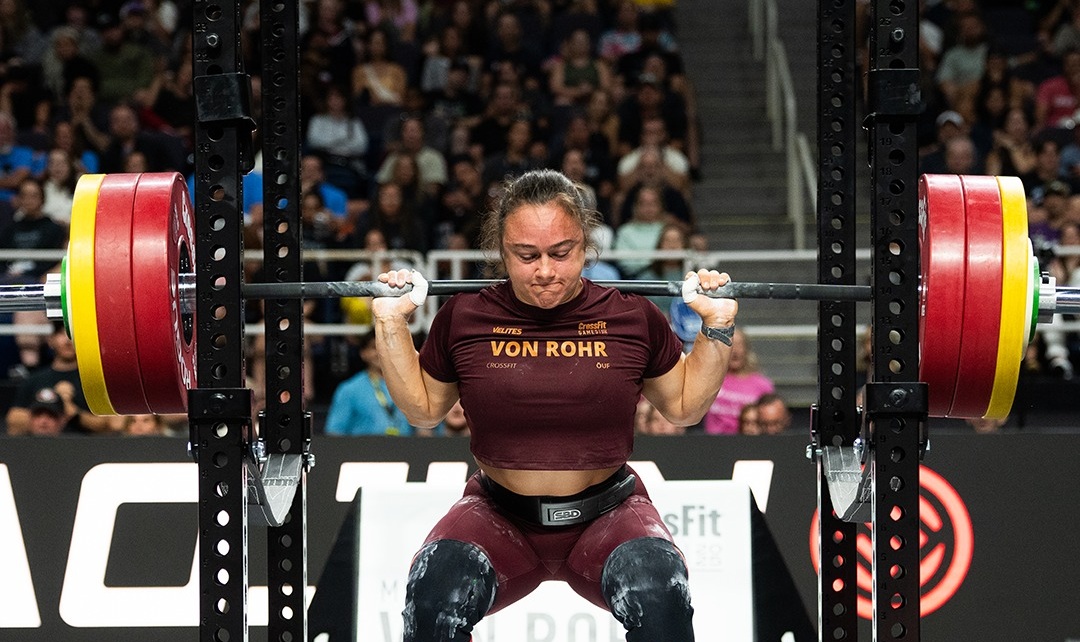
For most healthy lifters, the back squat is the best primary squat variation for building maximal lower body strength. The bar rests across the upper back, creating a stable position that allows substantial loading. Because the bar is supported by the torso rather than held in front of the body, most lifters can use heavier weights than they can in a front squat.
The ability to use more load matters because mechanical tension is a major driver of strength and muscle adaptation. When trained with good technique and an appropriate progression, the back squat develops the quadriceps, glutes, adductors, and trunk while improving whole body force production.
Back squats come in two main styles. A high bar back squat places the bar higher on the upper traps and usually encourages a more upright torso. This often leads to greater knee flexion and makes the movement feel more quad focused. A low bar back squat places the bar lower across the rear shoulder area. This usually creates more forward torso lean and more hip involvement, allowing many lifters to lift more weight.
Neither bar position is universally superior. High bar squats may feel more natural for athletes, Olympic weightlifters, and lifters who prefer a more upright position. Low bar squats may suit powerlifters and those seeking to maximize the load they can lift in the back squat. Both can be effective for developing lower body strength.
The main limitation of the back squat is that it demands sufficient shoulder mobility and tolerance to hold the bar securely. Some lifters also find that heavy back squats create more fatigue in the lower back and hips than other variations. These are not reasons to avoid the exercise automatically, but they are useful reasons to consider alternatives.
Who Should Prioritize the Back Squat?
The back squat is an excellent first choice for lifters whose main goal is broad lower body strength, powerlifting performance, or building the ability to handle heavy loads. It is especially useful when you can squat with a stable foot position, controlled depth, and no meaningful pain.
A simple approach is to make the back squat your primary strength lift once or twice per week, then use other squat patterns as assistance work. Moderate repetition sets can help build muscle and technical skill, while lower repetition work can develop strength with heavier loads.
The Front Squat: Best for Upright Strength and Quad Development
The front squat places the bar across the front of the shoulders. This shifts the load forward relative to the body and requires a more upright torso to keep the bar balanced over the midfoot. Research comparing front and back squat mechanics has shown that both exercises can produce similar overall muscle activation patterns, while the front squat generally uses lower loads and may reduce compressive forces at the knee.
Because the torso remains more upright, many lifters feel the front squat more strongly in the quadriceps. The front squat also demands upper back strength, trunk stiffness, and good positional control. It is a highly useful exercise for Olympic weightlifters, CrossFit athletes, and anyone who wants to improve their ability to stay upright under load.
The front squat is not an inferior back squat. It is a different tool. Since you can normally use less weight, it may be less effective for testing absolute squat strength. However, it can be extremely effective for increasing lower body strength, particularly when the goal is to strengthen the quads and improve the ability to hold a strong upright position.
Some lifters struggle with the front rack because of wrist, shoulder, or elbow mobility restrictions. Crossed arm grips or lifting straps can make the exercise more accessible, although a secure front rack remains useful if it is comfortable.
Who Should Prioritize the Front Squat?
Front squats are ideal for lifters who want stronger quads, a more upright squat pattern, and better positional strength. They are also valuable if back squatting aggravates the shoulders or if you need a squat that places less external load on the spine while still challenging the legs intensely.
For strength gains, front squats work well in sets of three to eight repetitions. Higher repetition sets can be demanding because the upper back and trunk must work hard to maintain position as fatigue accumulates.
The Safety Bar Squat: Best for Comfort and Strong Quads
The safety bar squat uses a specialized bar with padded shoulder supports and forward handles. The bar sits securely on the upper back and usually allows a more comfortable shoulder position than a straight bar. Its design also shifts the resistance slightly forward, which encourages a more upright torso and often creates a strong quad challenge.
This variation can be particularly helpful for lifters with limited shoulder mobility, elbow discomfort, or an irritated shoulder that makes a standard back squat difficult. It also removes some of the strain involved in gripping and stabilizing a straight bar behind the body.
The safety bar squat often feels like a blend between a front squat and high bar back squat. You can generally load it more heavily than a front squat, while the more upright position may make it less hip dominant than a low bar back squat. Individual technique and the design of the bar will influence exactly how it feels.
Research on squat variations shows that changes in bar placement alter joint angles, torso position, and loading demands. This makes the safety bar squat a valuable choice rather than merely a substitute. If it allows you to train hard, consistently, and without compromising your shoulders, it can be a superb main lower body lift.
Who Should Prioritize the Safety Bar Squat?
The safety bar squat is particularly useful for lifters who want to build serious leg strength but cannot comfortably hold a straight bar. It is also a strong option during phases when you want to reduce upper body stress while continuing to load the legs heavily.
The Bulgarian Split Squat: Best for Single Leg Strength
The Bulgarian split squat is a unilateral exercise in which the rear foot is elevated while the front leg does most of the work. It can produce substantial loading through the quadriceps and glutes without requiring the same total external load as a barbell squat.
Single leg training is valuable because it challenges each leg independently. It may help expose meaningful side to side differences in strength, control, or balance. It also requires the hip and trunk muscles to stabilize the pelvis and torso, which can be useful for running, jumping, field sports, and functional fitness.
A Bulgarian split squat should not automatically replace a bilateral squat for someone whose main goal is maximum barbell strength. Heavy bilateral squatting is more specific to developing and testing bilateral force production. However, Bulgarian split squats are one of the best assistance exercises for building lower body muscle and strength, particularly when equipment, discomfort, or training time limits the use of heavy barbell work.
The exercise can be loaded with dumbbells, kettlebells, a barbell, or a weighted vest. A longer stance usually increases hip involvement, while a shorter stance can allow more knee travel and a stronger quadriceps emphasis. Both styles can work well when performed with control.
How to Choose Your Best Squat Variation
Your squat choice should start with your goal. If you want the greatest possible increase in conventional lower body strength, begin with the back squat. If you want strong quads and a more upright torso, use the front squat. If shoulder comfort is a major issue, the safety bar squat may be the best solution. If you need single leg strength, stability, and a highly effective lower body accessory exercise, use the Bulgarian split squat.
Your body structure matters as well. Lifters with longer femurs may naturally lean forward more in a squat, while lifters with shorter femurs may find a more upright position easier. Neither pattern is wrong. Your goal is to find a stance, bar position, and depth that lets you stay balanced over the midfoot and maintain control.
Pain should also guide your decision. General muscular effort and temporary training fatigue are normal. Sharp pain, worsening joint pain, numbness, or symptoms that change how you move deserve attention from a qualified health professional. Do not force yourself into a squat style simply because another lifter uses it successfully.
Progressive overload remains more important than finding a mythical perfect variation. Add small amounts of weight, complete more quality repetitions, improve your technique, or gradually increase your range of motion. These small improvements, repeated over months, create meaningful strength gains.
The Best Squat Training Plan for Strength
Most lifters benefit from using more than one squat pattern across a training week. One movement can be the primary strength exercise, while another supports muscle development, weak point improvement, or movement quality.
For example, you might use a back squat for heavier sets early in the week and front squats later in the week for moderate repetition sets. Another lifter might use safety bar squats as their main lift and Bulgarian split squats as a unilateral accessory movement.
The strongest plan is the one you can recover from. Heavy squat training creates fatigue, and more is not always better. Research on resistance training indicates that strength improves with regular exposure to sufficiently challenging training, while volume, load, and frequency should be managed to match the lifter’s training age and recovery capacity.
Start with a manageable amount of work. Two to five challenging sets of a primary squat exercise, performed once or twice weekly, is enough for many recreational lifters to make excellent progress. Add assistance work only when it supports your goal and does not interfere with recovery.
The Verdict
The back squat is the best overall squat for maximum lower body strength gains because it allows most lifters to use the heaviest loads and train the legs, hips, and trunk together. It is the most useful all round choice when your body tolerates it well and your technique is sound.
The front squat is the best option for upright strength and quad emphasis. The safety bar squat is often the best choice for lifters who need greater shoulder comfort without giving up heavy lower body training. The Bulgarian split squat is one of the best exercises for single leg strength, stability, and lower body muscle development.
Use the squat variation that matches your goal, fits your body, and lets you train consistently. Then focus on controlled technique, progressive overload, sufficient recovery, and patience. Those factors will matter far more than choosing a variation based on what looks most impressive in the gym.
Key Takeaways
| Squat variation | Best use | Main strength benefit |
|---|---|---|
| Back squat | Maximum overall lower body strength | Allows the greatest loading for most lifters |
| High bar back squat | Upright bilateral strength | Strong quadriceps stimulus with a more upright torso |
| Low bar back squat | Powerlifting and maximal loading | Often permits the heaviest loads through greater hip involvement |
| Front squat | Quad strength and upright posture | Challenges the legs, trunk, and upper back with lower external loads |
| Safety bar squat | Shoulder comfort and leg strength | Supports heavy training with a comfortable bar position |
| Bulgarian split squat | Single leg strength and muscle growth | Trains each leg independently with lower total loading |
References
- Bloomquist, K., Langberg, H., Karlsen, S., Madsgaard, S., Boesen, M. and Raastad, T. (2013) ‘Effect of range of motion in heavy load squatting on muscle and tendon adaptations’, European Journal of Applied Physiology, 113(8), pp. 2133–2142.
- Gullett, J.C., Tillman, M.D., Gutierrez, G.M. and Chow, J.W. (2009) ‘A biomechanical comparison of back and front squats in healthy trained individuals’, Journal of Strength and Conditioning Research, 23(1), pp. 284–292.
- Hartmann, H., Wirth, K. and Klusemann, M. (2013) ‘Analysis of the load on the knee joint and vertebral column with changes in squatting depth and weight load’, Sports Medicine, 43(10), pp. 993–1008.
- Kubo, K., Ikebukuro, T., Yata, H. and Tsunoda, N. (2019) ‘Effects of squat training with different depths on lower limb muscle volumes’, European Journal of Applied Physiology, 119(9), pp. 1933–1942.
- Moran, J., Sandercock, G.R.H., Ramirez Campillo, R., Clark, C.C.T., Fernandes, J.F.T. and Drury, B. (2017) ‘A meta analysis of maturation related variation in adolescent boys’ resistance training response’, Journal of Sports Sciences, 35(18), pp. 1799–1807.
- Schoenfeld, B.J., Grgic, J., Ogborn, D. and Krieger, J.W. (2017) ‘Strength and hypertrophy adaptations between low versus high load resistance training: A systematic review and meta analysis’, Journal of Strength and Conditioning Research, 31(12), pp. 3508–3523.
- Schoenfeld, B.J., Grgic, J., Van Every, D.W. and Plotkin, D.L. (2021) ‘Loading recommendations for muscle strength, hypertrophy, and local endurance: A re examination of the repetition continuum’, Sports, 9(2), 32.