Doing pull ups every day for 30 days can improve your upper body strength, your skill at the movement, your grip endurance, and your confidence under the bar. It can also expose a weak link quickly. For some people, daily practice produces a noticeable increase in repetitions. For others, especially those who start each session close to failure, it can lead to elbow pain, shoulder irritation, or a stalled performance.
The result depends less on whether you train every day and more on how much work you do, how hard each set is, how well you recover, and whether your current strength matches the plan. Pull ups are an excellent exercise, but they are still a demanding resistance training movement. They load the muscles of the upper back, arms, forearms, shoulders, and trunk while asking you to control your full body weight.


A smart 30 day pull up challenge can be a highly effective way to build momentum. A reckless one can turn a useful exercise into a painful problem.
What Pull Ups Train
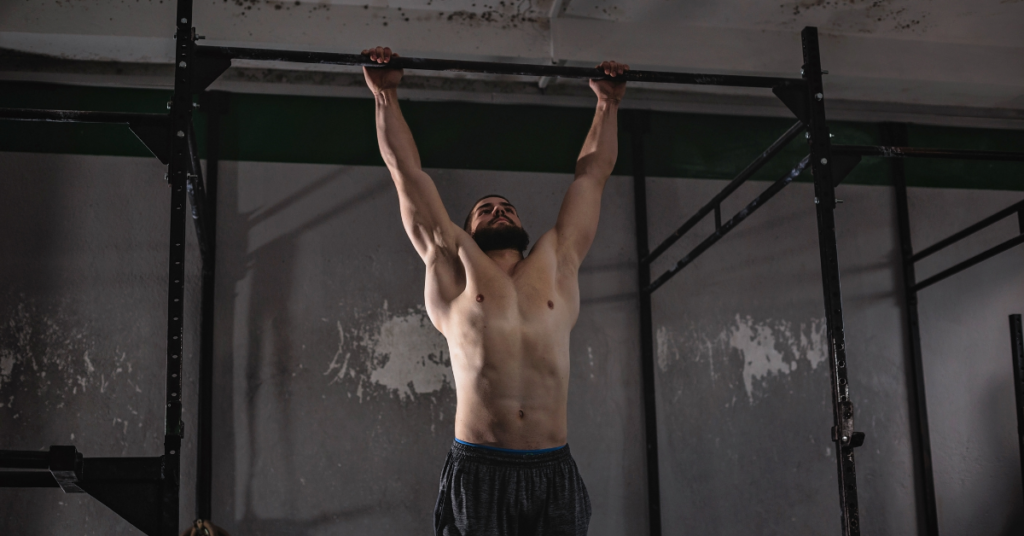
A strict pull up begins from a controlled hang with the elbows extended, then requires you to pull your chest upward until your chin clears the bar. The movement mainly trains the latissimus dorsi, the large muscles of the upper back that help pull the upper arm down and back. Your biceps, brachialis, forearms, middle back, rear shoulders, and trunk also contribute.
Research comparing pull up variations shows that the traditional pull up produces substantial activity in the latissimus dorsi, biceps brachii, and other pulling muscles. This makes it an efficient bodyweight movement for building pulling strength, particularly when you use a full range of motion and avoid excessive swinging.
Your core is involved too. It does not move the torso like a sit up, but it helps prevent your lower body from swinging. This means each repetition asks you to coordinate the upper body while maintaining a stable position through the ribs, pelvis, and hips.
Because you lift your own body weight, pull ups become harder as body mass increases. That does not make them a bad exercise for bigger athletes. It simply means progression may need to begin with assisted pull ups, eccentric repetitions, rows, or pulldowns before full repetitions become realistic.
Your First Week May Feel Harder Than Expected
Muscle Soreness Is Common
If you have not done pull ups regularly, the first several sessions may create muscle soreness in your lats, biceps, forearms, and upper back. This is especially likely if you include slow lowering phases, because eccentric muscle actions can produce more initial muscle damage and soreness than work you are used to.
Soreness does not automatically mean you had a productive workout, and the absence of soreness does not mean the session failed. It is simply one response to unfamiliar exercise. In most cases, repeated exposure reduces the soreness that follows the same movement. This is often called the repeated bout effect.
You should distinguish normal muscular soreness from sharp pain in a joint or tendon. Soreness usually feels broad, dull, and related to the muscle tissue. A painful point on the inside or outside of the elbow, deep pain at the front of the shoulder, or discomfort that worsens on every session deserves attention.
Your Technique May Improve Before Your Muscles Grow
The first improvement you notice may be technical rather than visual. You may learn to begin each repetition by setting your shoulders, pulling your upper arms down, keeping your ribs controlled, and avoiding wasted movement. This matters because strength is partly a skill.
Resistance training improves the nervous system’s ability to activate and coordinate the muscles involved in a task. Early strength changes are often strongly influenced by these neural adaptations. In practical terms, your body becomes better at recruiting the right muscles at the right time.
That is why an athlete who begins the challenge able to perform three messy repetitions may reach five or six cleaner repetitions within a few weeks, even before major muscle size changes are visible.
What May Change by Day 30

You May Be Able to Do More Repetitions
If you practice at an appropriate level, your maximum pull up count may increase over 30 days. This is most likely in beginners and people returning after time away from training. The movement becomes more familiar, the pulling muscles become better conditioned, and your grip may be less limiting.
The biggest mistake is assuming that every daily session must be an all out test. Constantly trying to beat your maximum creates fatigue that can reduce the quality of later sessions. It is usually more productive to complete several easy, crisp sets than to grind through poor repetitions.
For example, someone whose maximum is five pull ups could complete several sets of two or three repetitions throughout the day or in one session. This keeps the movement technically strong while accumulating useful practice. Someone who can do one pull up may use single repetitions, assisted repetitions, or slow controlled descents.
Your Grip Endurance Can Improve
Holding your body weight from a bar challenges the muscles of the hands and forearms. Repeated exposure can improve your ability to keep a secure grip, especially if it has previously been the reason you stop a set.
Grip strength is associated with wider measures of physical function and health, but the goal of daily pull ups should remain specific. Better grip can support your pull up performance and may transfer to other training such as deadlifts, rows, carries, and climbing. It does not replace dedicated grip training if that is a major priority.
Want a More Attractive Upper Body? Do These 3 Dumbbell Exercises
Use a grip that feels secure and comfortable. A pronated grip, with palms facing away, is the traditional pull up grip. A neutral grip, with palms facing each other, may feel friendlier on the elbows and shoulders for some people. A supinated grip, with palms facing toward you, usually involves the biceps more strongly and is often called a chin up.
Your Upper Back and Arms May Begin to Look More Muscular
Thirty days is enough time to create useful training adaptations, but it is not a magical transformation window. Visible muscle growth depends on your training history, protein intake, total calorie intake, sleep, genetics, and the amount of challenging work you perform.
Pull ups can contribute to hypertrophy because they provide mechanical tension through the lats, biceps, and upper back. However, muscle growth is usually better supported by sufficient weekly training volume, a progressive increase in difficulty over time, and sets performed with a challenging effort.
If your daily pull up plan becomes easy, your body has little reason to continue adapting. You may need more repetitions, more sets, slower eccentrics, a pause at the top, added load, or a harder variation. If every session is brutally difficult, recovery can become the limiting factor instead.
The Problem With Going to Failure Every Day
Training close to failure can be useful, particularly when loads are light or bodyweight exercise is your main option. However, failure is a tool, not a requirement. Reaching the point where you cannot complete another clean repetition creates more fatigue than stopping with one or two good repetitions in reserve.

Daily failure training may make it harder to maintain form. Your shoulders can rise toward your ears, your legs may kick, and the lowering phase may become uncontrolled. That changes the quality of the movement and can increase stress on structures that are already working hard.
Research on resistance training frequency suggests that training a muscle more often does not automatically produce more muscle growth when total weekly volume is the same. Frequency can be useful because it spreads work across the week, helps practice a movement, and makes individual sessions more manageable. It is not a reason to pile maximum effort onto the same muscles every day.
A better goal is to finish most sessions feeling as though you could have done a little more. This approach lets you train consistently while preserving the quality of each repetition.
Why Elbows and Shoulders Can Become Painful
Pull ups place repeated demands on the elbow flexors, forearm muscles, shoulder stabilizers, and tendons. Tendons adapt to loading, but they do not always tolerate a sudden increase in training volume. Going from no pull ups to many difficult repetitions every day is a sharp change in demand.
Pain around the inside or outside of the elbow can occur when the muscles and tendons that control the wrist and grip are overloaded. Shoulder discomfort can appear when people lack control at the bottom of the hang, use an excessively wide grip, force range of motion they do not own, or continue training through pain.
You do not need to avoid a dead hang forever. For many people, controlled hanging is useful. The important point is that your shoulders should feel stable and comfortable. Begin with a range of motion you can control, then build gradually.
If you develop persistent pain, reduce the volume, remove the most aggravating variation, and consider replacing some pull ups with chest supported rows, cable pulldowns, assisted pull ups, or easier ring rows. Continuing to force painful repetitions is rarely a sensible way to build long term strength.
How to Structure a Smarter 30 Day Challenge
If You Can Already Do Several Pull Ups
Start by identifying your current maximum number of strict repetitions. Do not repeat this test every day. Instead, spend most sessions well below your maximum.
If your maximum is eight pull ups, you might perform four sets of four repetitions on a training day. You could use easier days where you complete only a few sets of two or three repetitions, concentrating on smooth movement and a controlled lower.
This approach gives you enough practice to improve without treating every day as a competition.
If You Cannot Yet Do a Full Pull Up
You can still complete the challenge by scaling the movement. Use a resistance band, an assisted pull up machine, low bar rows, or controlled eccentric repetitions. For eccentrics, step to the top position and lower yourself as slowly as you can control.
Assisted training is not a lesser version of the exercise. It is the appropriate progression when full bodyweight repetitions exceed your current capacity. The goal is to gradually reduce assistance while keeping technique consistent.
A simple approach is to train three to five days each week with harder assisted work, then use the remaining days for easier rows, hangs, shoulder control drills, or rest. Thirty consecutive days does not require thirty maximal pull up workouts.
Support the Challenge With Recovery
Muscle protein intake supports resistance training adaptations, particularly when it helps you meet your daily protein needs. A broad body of research suggests that active people aiming to gain or preserve muscle benefit from a higher protein intake than sedentary adults, although the right amount depends on body size, total energy intake, and training goals.
Sleep matters as well. Poor sleep can negatively affect recovery, perceived effort, and training performance. You do not need a perfect routine, but a month of consistent pull up training will work better when supported by adequate food, hydration, and sleep.
The Best Result Is a Sustainable Habit
Doing pull ups every day for 30 days can make you stronger, more technically efficient, and more comfortable hanging from a bar. It may improve your maximum repetition count and help develop the upper back, arms, and grip. These benefits are most likely when you build volume gradually and keep most repetitions clean.
The challenge should not be judged only by the number on day 30. A better outcome is reaching the end of the month with improved form, healthy elbows and shoulders, and a clear plan for what comes next. From there, you can continue progressing with weighted pull ups, greater weekly volume, more difficult variations, or a balanced upper body program that also includes pressing and horizontal pulling.
Key Takeaways
| Focus | What to expect after 30 days | Best approach |
|---|---|---|
| Strength | More efficient pulling and potentially more strict repetitions | Practice frequently without testing your maximum every day |
| Muscle | Some early development in the upper back and arms is possible | Use enough challenging weekly work and support it with nutrition |
| Grip | Better endurance while hanging from the bar | Use controlled sets and avoid allowing grip fatigue to ruin form |
| Recovery | Daily maximal effort can cause fatigue and performance plateaus | Keep most sets one or two repetitions away from failure |
| Joint health | Sudden volume increases can irritate elbows or shoulders | Progress gradually and reduce volume if pain persists |
| Beginners | Assisted work can build toward the first full repetition | Use bands, machines, rows, and controlled eccentrics |
References
- Del Vecchio, A., Enoka, R.M. and Farina, D. (2024) ‘Specificity of early motor unit adaptations with resistive exercise training’, The Journal of Physiology, 602(12), pp. 2679 to 2688.
- Dickie, J.A., Cavanaugh, J.T., McLeod, T.C.V., White, T. and Seitz, A.L. (2017) ‘Electromyographical comparison of a traditional, suspension device, and towel pull up’, Journal of Strength and Conditioning Research, 31(10), pp. 2782 to 2788.
- Grgic, J., Schoenfeld, B.J., Davies, T.B., Lazinica, B., Krieger, J.W. and Pedisic, Z. (2018) ‘Effect of resistance training frequency on gains in muscular strength: A systematic review and meta analysis’, Sports Medicine, 48(5), pp. 1207 to 1220.
- Morton, R.W., Murphy, K.T., McKellar, S.R., Schoenfeld, B.J., Henselmans, M., Helms, E., Aragon, A.A., Devries, M.C., Banfield, L., Krieger, J.W. and Phillips, S.M. (2018) ‘A systematic review, meta analysis and meta regression of the effect of protein supplementation on resistance training induced gains in muscle mass and strength in healthy adults’, British Journal of Sports Medicine, 52(6), pp. 376 to 384.
- Schoenfeld, B.J., Ogborn, D. and Krieger, J.W. (2016) ‘Effects of resistance training frequency on measures of muscle hypertrophy: A systematic review and meta analysis’, Sports Medicine, 46(11), pp. 1689 to 1697.
- Schoenfeld, B.J., Ogborn, D. and Krieger, J.W. (2019) ‘Effects of resistance training frequency on measures of muscle hypertrophy: A systematic review and meta analysis’, Sports Medicine, 49(6), pp. 863 to 874.
- Siddique, U., Rahman, S., Frazer, A.K., Pearce, A.J., Howatson, G. and Kidgell, D.J. (2020) ‘Determining the sites of neural adaptations to resistance training: A systematic review and meta analysis’, Sports Medicine, 50(6), pp. 1107 to 1128.
- Visnes, H. and Bahr, R. (2013) ‘The evolution of eccentric training as treatment for patellar tendinopathy: A critical review of exercise programmes’, British Journal of Sports Medicine, 47(15), pp. 957 to 962.