

A bigger, stronger back does more than improve how you look in a T shirt. It helps you produce force in sport, control your shoulders during pressing, maintain better posture under load, and build the strength needed for everything from deadlifts to climbing.
Pull ups and rows are two of the most useful back exercises, but they are not interchangeable. Pull ups use a vertical pulling pattern, where your arms move down toward your sides. Rows use a horizontal pulling pattern, where your upper arms move behind your torso. Both train the latissimus dorsi, upper back, biceps, forearms, and muscles around the shoulder blades, but they challenge those areas in different ways.


So, which one builds a better back? For most people, the best answer is both. However, if you have to prioritize one exercise, the right choice depends on your current strength, goal, equipment, and ability to train with good technique.
What Makes a Back Exercise Effective?
Muscle growth comes from repeated, sufficiently challenging resistance training over time. The most important factors are training hard enough, using enough high quality sets across the week, gradually increasing the training demand, and performing exercises through a useful range of motion.
No single exercise is mandatory for back development. A movement only works if you can perform it consistently, control the target muscles, and progress it over time. This is why the best exercise on paper is not always the best exercise for an individual lifter.
Pull ups and rows both offer large ranges of motion and can be progressively loaded. Pull ups become harder by adding weight or increasing repetitions. Rows can be loaded with a barbell, dumbbells, cables, machines, resistance bands, or bodyweight. Each can therefore support long term strength and muscle gain.
The key difference is the direction of pull. Vertical pulling tends to place greater emphasis on the lats through shoulder adduction and extension. Horizontal pulling more directly trains the muscles that retract the shoulder blades, including the middle trapezius and rhomboids. A well developed back needs both functions.
The Case for Pull Ups
Pull Ups Train the Lats Hard
The pull up is one of the best bodyweight exercises for training the lats. During each repetition, the lats help pull the upper arm down and back while the biceps and forearms assist with elbow flexion and grip.
The lats are the largest muscles in the upper body. They create much of the visual width associated with a V shaped torso, particularly when developed alongside the rear deltoids and upper back. Pull ups also require the trunk to stay controlled while the body moves through space, which makes the exercise demanding beyond the target muscles alone.
Studies measuring muscle activity during common pulling exercises show that pull ups can create high lat activation. This does not mean they are automatically superior for hypertrophy, since muscle activity measurements cannot predict long term growth by themselves. However, the findings support what lifters experience in practice: a well performed pull up is a challenging lat focused movement.
Pull Ups Build Relative Strength
A pull up requires you to move your own bodyweight. This makes it an excellent test of relative upper body strength, which is strength in relation to body mass. Improving your pull up capacity can be especially useful for climbing, obstacle races, gymnastics based training, and athletes who need to control their bodies efficiently.
A full range pull up begins from a controlled hang and finishes when the chest moves toward the bar and the elbows travel down. This demands coordination between the lats, biceps, lower trapezius, forearms, and muscles that stabilize the shoulder joint.
For many people, gaining their first strict pull up is a major achievement. It can improve confidence, give training a clear target, and encourage the consistent practice needed to develop the upper body.
Pull Ups Are Time Efficient
Pull ups train several major muscle groups at once. A few hard sets can challenge the lats, biceps, forearms, upper back, and trunk without requiring much equipment beyond a stable bar.
They are also easy to make more difficult once bodyweight repetitions become manageable. Adding a small amount of external load, slowing the lowering phase, pausing near the top, or increasing the repetition target can all provide a new training stimulus.
This makes pull ups highly efficient, but efficiency is only useful if the exercise suits your current ability. A person who cannot yet complete a controlled repetition will often get more productive training from assisted pull ups, cable pulldowns, or rows.
The Limits of Pull Ups
They Are Difficult to Scale for Beginners
Pull ups are demanding because the resistance is fixed by bodyweight. If you are not yet strong enough to control your full bodyweight, the movement can become frustrating and technique can quickly break down.
Kipping, swinging, shortening the range of motion, and reaching with the chin may help someone complete a repetition, but they reduce the quality of the strength stimulus when the goal is building muscle and strict pulling strength.
Assisted pull up machines, resistance bands, and eccentric repetitions can bridge the gap. Lat pulldowns are also a practical substitute because they follow a similar vertical pulling pattern while allowing precise load adjustments. As strength improves, assisted variations can gradually become less supported.
Pull Ups Can Be Limited by Grip and Elbows
Grip strength can become the limiting factor before the lats are fully challenged, especially during high repetition sets. This is not necessarily a problem, because grip strength is useful, but it can make it harder to give the back enough direct work.
Some lifters also experience elbow or shoulder irritation when they perform too much pulling volume, use a grip width that does not suit them, or repeatedly force their way through painful ranges. A neutral grip often feels more comfortable for many people because it places the hands in a more natural position.
A pain free range of motion and controlled tempo matter more than using a specific grip. Training should challenge the muscles, not create persistent joint discomfort.
The Case for Rows
Rows Build Back Thickness
Rows are outstanding for developing the muscles between and around the shoulder blades. During a good row, you pull the upper arm back while controlling shoulder blade movement. This trains the lats, rhomboids, middle trapezius, rear deltoids, and parts of the lower trapezius.
If pull ups contribute strongly to back width, rows are often more useful for building the dense, thick appearance of the upper and middle back. This is especially noticeable from the side and rear, where the upper back needs more than lat size alone.
Rows also allow you to train shoulder extension with the upper arm moving behind the torso. This can be valuable for the lats, provided you do not turn each repetition into a lower back swing.
Rows Are Easy to Progress
Rows offer more loading options than pull ups. A beginner can start with a light cable row or chest supported dumbbell row. An experienced lifter can use heavy barbell rows, machine rows, one arm dumbbell rows, or weighted inverted rows.
This flexibility makes it easier to find a resistance that matches your strength. You can adjust the weight in small increments, change the handle, use a chest support, or alter your body position without changing the fundamental movement pattern.
Chest supported rows are particularly useful when the lower back is already fatigued from squats, deadlifts, or manual work. They allow you to direct more effort toward the upper back without needing to brace a bent over position for every set.
Rows Can Improve Shoulder Control
The shoulder blades need to move and stabilize well during upper body training. Rowing movements challenge scapular retraction and, depending on the variation, depression and controlled upward rotation.
This does not mean rows are a cure for shoulder pain or poor posture. Persistent pain needs an individual assessment. However, including rows alongside pressing exercises is a sensible way to train the muscles that support strong, controlled shoulder movement.
Cable and machine rows can be especially useful here because they provide consistent resistance and make it easier to focus on a smooth, repeatable path. A pause at the contracted position can help you avoid rushing through the strongest part of the repetition.
The Limits of Rows
Poor Technique Can Shift Work Away From the Back
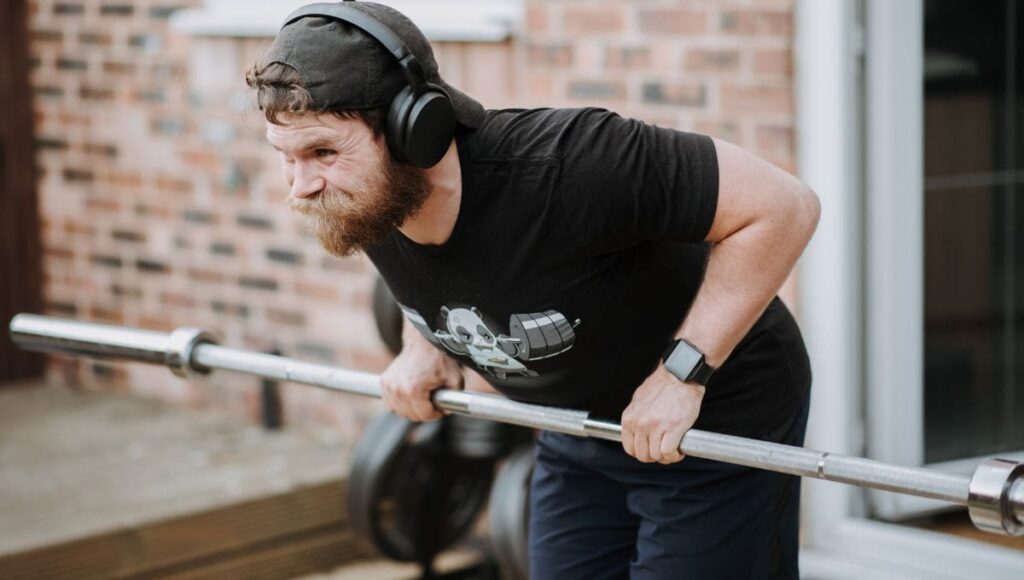
Rows are easy to load heavily, but more load is not always better. Many lifters turn a barbell row into a hip driven movement, using momentum and spinal extension to move the weight. This may allow bigger numbers, but it can reduce the quality of tension placed on the upper back.
A strong row should still involve a stable torso, controlled shoulder movement, and an elbow path that matches the intended target. Rows with the elbows closer to the body generally involve more lat contribution. Rows with the elbows moving farther out tend to place greater emphasis on the upper back and rear deltoids.
Neither style is wrong. The right choice depends on what your program needs.
Heavy Bent Over Rows Fatigue the Lower Back
Barbell rows require the spinal erectors and hips to hold a hinged position. This makes them a useful whole body exercise, but it can also limit performance if your lower back is tired or if you already perform heavy deadlifts and squats.

If lower back fatigue prevents you from training the upper back hard, switch to a chest supported row, seated cable row, or machine row. The exercise should fit your wider program rather than compete with your most important lifts.
Which Exercise Is Better for Muscle Growth?
For lat development and vertical pulling strength, pull ups have a slight advantage. They are demanding, involve a large range of motion, and can be progressed for years. They are particularly valuable if your goal is to build a wider back and improve bodyweight strength.
For upper back thickness, shoulder blade control, and easy load progression, rows have the advantage. They are more accessible to beginners and offer enough variation to suit almost any gym setup, training goal, or injury history.
Want a More Attractive Upper Body? Do These 3 Dumbbell Exercises
Neither exercise fully replaces the other. A program made only of pull ups may leave the middle back undertrained. A program made only of rows may miss the specific benefits of strong vertical pulling. Combining the two gives you a more complete stimulus with less need to find a single perfect movement.
Research on resistance training supports using enough weekly volume and progressively challenging the muscles over time. It also suggests that full or longer ranges of motion are generally useful for muscle growth, although the ideal range depends on the exercise and the person performing it.
How to Use Pull Ups and Rows Together
For Beginners
Start with two back sessions per week. Use an assisted pull up or pulldown for vertical pulling and a cable or chest supported row for horizontal pulling. Choose loads that allow controlled sets of approximately eight to fifteen repetitions, ending each set with only a small number of repetitions left in reserve.
The goal is not to destroy yourself. The goal is to practice clean repetitions, build strength steadily, and add small amounts of load or repetitions over time.
For Muscle Gain
Train both patterns across the week. You might perform pull ups or pulldowns early in one session, then use a row later in the workout. In another session, begin with a row and follow it with a different vertical pull.
Use a mix of moderate repetition work and heavier sets if your joints tolerate it. Most importantly, keep the repetitions controlled, use a challenging load, and add training volume gradually rather than making dramatic jumps.
For Strength and Athletic Performance
Prioritize strict pull ups if relative strength matters for your sport or goal. Add rows to build the upper back strength that helps maintain shoulder position, improve pulling capacity, and balance pressing volume.
Weighted pull ups can be trained like a strength exercise with lower repetition sets. Rows can then provide additional volume with a slightly lighter load and more deliberate control.
The Verdict
Pull ups are better for building vertical pulling strength and are one of the most effective exercises for challenging the lats with bodyweight. Rows are better for targeting the upper and middle back, allowing precise load progression, and building the muscular thickness that makes a back look complete.
If you can only choose one, pick pull ups when your priority is lat width, bodyweight strength, and athletic pulling ability. Pick rows when you need a more scalable exercise, want more upper back thickness, or need to reduce the demand on your grip and shoulders.
For the best overall back, use both. Train a vertical pull, train a horizontal pull, progress them patiently, and make every repetition controlled enough that your back muscles do the work.
Key Takeaways
| Focus | Best Choice | Why It Matters |
|---|---|---|
| Lat width and vertical pulling strength | Pull ups | They strongly challenge the lats while requiring you to control your bodyweight. |
| Upper back thickness | Rows | They directly train the rhomboids, middle trapezius, rear deltoids, and lats. |
| Beginner friendliness | Rows | Cables, machines, and dumbbells make resistance easy to adjust. |
| Relative strength | Pull ups | You must move your own bodyweight through a demanding range of motion. |
| Lower back comfort | Chest supported rows | They reduce the need to hold a bent over position while training the upper back. |
| Best long term plan | Both exercises | Vertical and horizontal pulling train complementary functions for more complete back development. |
References
- Baz-Valle, E., Fontes-Villalba, M., Santos-Concejero, J. and Balsalobre-Fernández, C. (2022) ‘Total number of sets as a training volume quantification method for muscle hypertrophy: A systematic review’, Journal of Strength and Conditioning Research, 36(6), pp. 1747–1754.
- Grgic, J., Schoenfeld, B.J., Skrepnik, M. and Davies, T.B. (2022) ‘Effects of range of motion on muscle development during resistance training interventions: A systematic review’, Sports Medicine, 52(7), pp. 1491–1505.
- Lasevicius, T., Ugrinowitsch, C., Schoenfeld, B.J., Roschel, H., Tavares, L.D., De Souza, E.O., Tricoli, V. and Teixeira, E.L. (2019) ‘Effects of different intensities of resistance training with equated volume load on muscle strength and hypertrophy’, European Journal of Sport Science, 19(6), pp. 772–780.
- Schoenfeld, B.J., Ogborn, D. and Krieger, J.W. (2016) ‘Dose response relationship between weekly resistance training volume and increases in muscle mass: A systematic review and meta analysis’, Journal of Sports Sciences, 35(11), pp. 1073–1082.
- Schoenfeld, B.J., Grgic, J., Ogborn, D. and Krieger, J.W. (2017) ‘Strength and hypertrophy adaptations between low versus high load resistance training: A systematic review and meta analysis’, Journal of Strength and Conditioning Research, 31(12), pp. 3508–3523.
- Sakamoto, A. and Sinclair, P.J. (2012) ‘Effect of movement velocity on the relationship between training load and the number of repetitions of bench press’, Journal of Strength and Conditioning Research, 26(8), pp. 2187–2195.
- Vigotsky, A.D., Halperin, I., Lehman, G.J., Trajano, G.S. and Vieira, T.M. (2018) ‘Interpreting signal amplitudes in surface electromyography studies in sport and rehabilitation sciences’, Frontiers in Physiology, 8, 985.
- Vieira, A.F., Umpierre, D., Teodoro, J.L., Lisboa, S.C., Baroni, B.M., Izquierdo, M. and Cadore, E.L. (2021) ‘Effects of resistance training performed to failure or not to failure on muscle strength, hypertrophy, and power output: A systematic review with meta analysis’, Journal of Strength and Conditioning Research, 35(4), pp. 1165–1175.