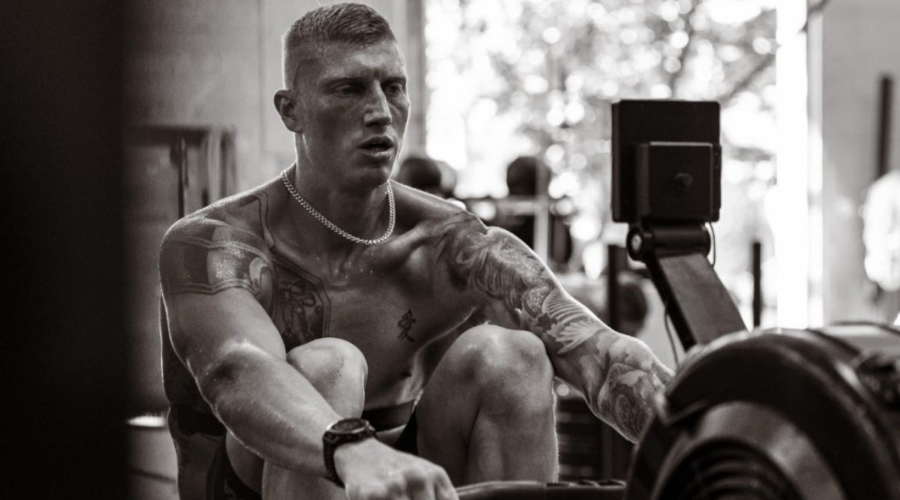


A 1 km row is a demanding test of fitness. It is long enough to place a serious demand on your aerobic system, but short enough that power, pacing, and the ability to tolerate discomfort all matter. That makes it a useful benchmark for gym goers, CrossFit athletes, HYROX competitors, and anyone who wants a simple way to measure progress.
Your age matters, but it is only one part of the picture. Sex, body size, rowing technique, training history, and the machine settings can all make a major difference to your result. A tall, experienced rower who has trained the movement for years will normally produce a much faster time than a smaller person who is equally fit but new to the ergometer.


The targets below are practical benchmarks for healthy recreationally trained adults using a Concept2 style rowing machine. They are not medical standards, and they are not intended to compare a novice with a competitive rower. Use them to set a realistic goal, then focus on improving your own time over several months.
What Is a Good 1 km Row Time?
For a recreationally trained man in his twenties or thirties, a 1 km time under 4 minutes is a strong result. For a recreationally trained woman in the same age group, completing the distance in under 4 minutes and 40 seconds is a strong result. These targets require more than general fitness. They demand good technique, a solid aerobic base, and the ability to generate force through the legs and hips.
A faster result does not automatically mean that one person is fitter than another. Rowing rewards body mass and long limbs because larger athletes can often generate greater force per stroke. That is one reason why competitive heavyweight rowers usually record much faster ergometer times than lightweight rowers, even when both groups are highly trained.
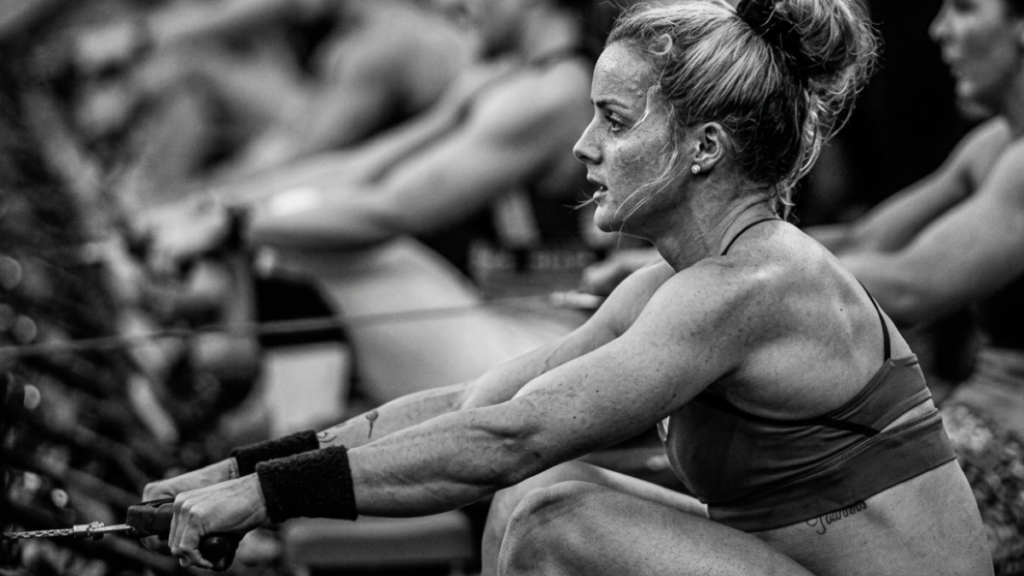
Age affects performance because maximal aerobic capacity, muscular power, and the ability to recover from intense exercise tend to decline across adulthood. Regular endurance and resistance training can substantially slow that decline, however. A well trained athlete in their fifties may comfortably outperform an inactive person half their age.
The most useful question is not whether your time beats every person in your age group. It is whether your result reflects your training status and whether it is improving in a sustainable way.
1 km Row Targets by Age
The following times assume a full 1 km effort on a rowing ergometer after an appropriate warm up. They are intended for healthy adults with some training experience rather than complete beginners or competitive rowers.
Men
1 km rowing benchmarks for men
| Age | Developing fitness | Good recreational fitness | Strong result |
|---|---|---|---|
| 18 to 29 | 4:30 to 4:10 | 4:09 to 3:50 | Under 3:50 |
| 30 to 39 | 4:35 to 4:15 | 4:14 to 3:55 | Under 3:55 |
| 40 to 49 | 4:45 to 4:25 | 4:24 to 4:05 | Under 4:05 |
| 50 to 59 | 5:00 to 4:40 | 4:39 to 4:20 | Under 4:20 |
| 60 to 69 | 5:20 to 4:55 | 4:54 to 4:35 | Under 4:35 |
| 70 and over | 5:50 to 5:20 | 5:19 to 4:55 | Under 4:55 |
Women
1 km rowing benchmarks for women
| Age | Developing fitness | Good recreational fitness | Strong result |
|---|---|---|---|
| 18 to 29 | 5:20 to 4:55 | 4:54 to 4:35 | Under 4:35 |
| 30 to 39 | 5:30 to 5:05 | 5:04 to 4:45 | Under 4:45 |
| 40 to 49 | 5:45 to 5:20 | 5:19 to 5:00 | Under 5:00 |
| 50 to 59 | 6:05 to 5:40 | 5:39 to 5:20 | Under 5:20 |
| 60 to 69 | 6:30 to 6:00 | 5:59 to 5:40 | Under 5:40 |
| 70 and over | 7:00 to 6:30 | 6:29 to 6:00 | Under 6:00 |
These ranges should guide training rather than define your potential. Someone who has never rowed may initially be outside them, even if they are strong or capable in running, cycling, and lifting. In contrast, an experienced rower may be far faster than the strong category because their movement efficiency is highly developed.
Why 1 km Rowing Performance Changes With Age
Rowing over 1 km requires a combination of aerobic energy production and high intensity power. The aerobic system supplies much of the energy needed to sustain the effort, while anaerobic energy production supports the hard start, surges in pace, and final sprint. The legs, glutes, back, and trunk all contribute, so the test measures more than cardiovascular fitness alone.
Maximal oxygen uptake generally declines with age, particularly from middle adulthood onward. This matters because oxygen uptake is strongly connected to endurance performance. The decline is not fixed at one rate for every person. Training status, body composition, health, and continued exposure to demanding exercise all influence the outcome.
Muscle mass and rapid force production can also decrease with age. A 1 km row requires the athlete to drive hard with the legs, transfer force through the trunk, and pull efficiently with the upper body. Maintaining lower body strength and power through resistance training can help preserve the qualities that make each stroke effective.
Technique is another major factor. Poor technique can turn rowing into an inefficient arm dominant movement that feels exhausting long before the cardiovascular system reaches its potential. A smooth stroke allows the stronger leg and hip muscles to do most of the work, while the arms and back finish the movement.
How to Test Your 1 km Row Properly
Consistency matters if you want your result to mean something. Test under similar conditions each time, ideally on the same rowing machine and at a similar time of day. A change in drag setting, fatigue level, or pacing approach can create a meaningful difference in the final time.
Start with at least 10 minutes of easy movement. Row gently, then include a few short intervals where you gradually increase your pace. The goal is to raise your body temperature, prepare the hips and shoulders, and practice the movement without tiring yourself out before the test.

Set the monitor to 1,000 meters and use a damper setting that feels controllable. The damper lever does not directly represent difficulty, and a higher setting does not automatically lead to a better score. It changes how the flywheel feels. Many recreational athletes perform well at a moderate setting, but the best choice depends on the machine and the athlete.
Use a powerful leg drive first, then lean back slightly, and finally finish with the arms. On the return, straighten the arms, move the torso forward, and bend the knees last. This sequence creates a strong rhythm and helps prevent the knees from rising before the handle has cleared them.
How Should You Pace a 1 km Row?
The most common mistake is starting far too fast. It is easy to chase an aggressive split during the opening 100 meters, then lose speed dramatically once fatigue builds. A better approach is to start hard but controlled, settle into a pace you can sustain, and save enough energy to increase your output in the final 200 meters.
Your monitor will show pace per 500 meters. If your goal is a 4 minute 1 km, you need to average 2 minutes per 500 meters. If your goal is 5 minutes, you need to average 2 minutes and 30 seconds per 500 meters. Learning to hold a target split is one of the most effective ways to improve your result.
A stroke rate of roughly 26 to 32 strokes per minute works well for many recreational athletes during a 1 km effort. The right rate is the one that allows you to apply force without rushing through short, weak strokes. A lower rate with a hard leg drive can be more effective than a frantic rhythm that causes your technique to break down.
The final 200 meters should feel uncomfortable. That is normal in a maximal test. If you can sprint strongly at the end, you probably paced the first half well. If you slow down dramatically before 700 meters, begin the next attempt at a slightly more controlled pace.
How to Improve Your 1 km Time
The most effective plan combines rowing practice with strength work. You do not need to row hard every day. Two focused rowing sessions per week, alongside regular strength training and easier aerobic work, can produce meaningful improvement.
One session can focus on short intervals. Try six rounds of 250 meters at a fast but repeatable pace, resting for 90 seconds to two minutes between efforts. This develops power and helps you get used to rowing quickly without losing technique.
A second session can focus on sustained efforts. Four rounds of 500 meters at your target 1 km pace, with two to three minutes of recovery, teaches you how to control your split while managing fatigue. As you improve, reduce the rest period slightly or make the pace a little faster.

Easy rowing is also valuable. Twenty to 30 minutes at a conversational effort can improve aerobic fitness while allowing you to practice efficient technique. It should feel controlled enough that you can maintain clean strokes from start to finish.
Strength training supports the leg drive that makes rowing effective. Squats, deadlifts, split squats, hip hinges, rows, and trunk exercises can all improve the strength qualities involved in the stroke. The goal is not to turn every lift into a maximal effort. Consistent training with good form is more useful than occasional hard sessions that disrupt recovery.
When You Should Be Careful
A 1 km time trial is intense. If you are new to exercise, returning after a long break, or managing a heart, joint, or back condition, build up gradually rather than immediately testing yourself at maximum effort. Start with short easy rows and learn the movement before introducing hard intervals.
Jeremy Ethier Tests a “World’s Most Filling Diet” for 30 Days and the Results Are Surprising
Back discomfort is often linked to poor sequencing or excessive rounding through the lower back. Focus on driving through the legs, maintaining a braced trunk, and avoiding the urge to pull early with the arms. If pain is sharp, persistent, or worsening, stop the session and seek advice from an appropriately qualified health professional.
Your best 1 km time should be one measure of fitness, not the only one. It becomes far more useful when combined with strength, mobility, aerobic capacity, recovery, and how well you feel during everyday training.
The Bottom Line
A good 1 km row time depends on age, sex, size, experience, and technique. For many recreationally trained adults, breaking 4 minutes for men or 4 minutes and 40 seconds for women is a strong goal in early adulthood. The target should gradually become more flexible with age, but regular rowing, strength training, and aerobic work can preserve impressive performance for decades.
Treat the benchmark tables as a starting point. Test yourself under consistent conditions, learn to pace intelligently, and aim to improve your own result over time. A faster 1 km row is not only a useful number on the monitor. It is evidence that your power, fitness, and ability to work hard are moving in the right direction.
Key Takeaways
| Topic | Key takeaway |
|---|---|
| A strong early adult target | Under 4 minutes for men and under 4 minutes and 40 seconds for women are strong recreational targets. |
| Age and performance | Aerobic capacity and power usually decline with age, but continued training can substantially slow the loss. |
| Technique | Strong leg drive, controlled trunk movement, and a relaxed recovery make each stroke more effective. |
| Pacing | Start hard but controlled, hold a sustainable split, and increase output over the final 200 meters. |
| Best training approach | Combine intervals, sustained pacing work, easy rowing, and regular strength training. |
| Using benchmarks | Compare your performance with your own previous results as well as broad age based ranges. |
References
- Buckeridge, E., Bull, A.M.J. and McGregor, A.H. (2015) ‘Biomechanical determinants of elite rowing technique and performance’, Scandinavian Journal of Medicine and Science in Sports, 25(2), pp. 183–192.
- Grammenou, M., Cardwell, K. and Kendall, K.L. (2020) ‘Physiological characteristics of competitive masters level rowers: A comparison amongst varying age groups’, Journal of Strength and Conditioning Research, 34(8), pp. 2230–2237.
- Mikulic, P. (2009) ‘Anthropometric and metabolic determinants of 6,000 m rowing ergometer performance in internationally competitive rowers’, Journal of Strength and Conditioning Research, 23(6), pp. 1851–1857.
- Pimentel, A.E., Gentile, C.L., Tanaka, H., Seals, D.R. and Gates, P.E. (2003) ‘Greater rate of decline in maximal aerobic capacity with age in endurance trained than in sedentary men’, Journal of Applied Physiology, 94(6), pp. 2406–2413.
- Secher, N.H. (1993) ‘Physiological and biomechanical aspects of rowing: Implications for training’, Sports Medicine, 15(1), pp. 24–42.
- Shephard, R.J. (1998) ‘Science and medicine of rowing: A review’, Journal of Sports Sciences, 16(7), pp. 603–620.
- Tanaka, H. and Seals, D.R. (2008) ‘Endurance exercise performance in masters athletes: Age associated changes and underlying physiological mechanisms’, The Journal of Physiology, 586(1), pp. 55–63.
- World Rowing (2026) ‘World Rowing introduces Masters Handicap Calculator’, World Rowing.