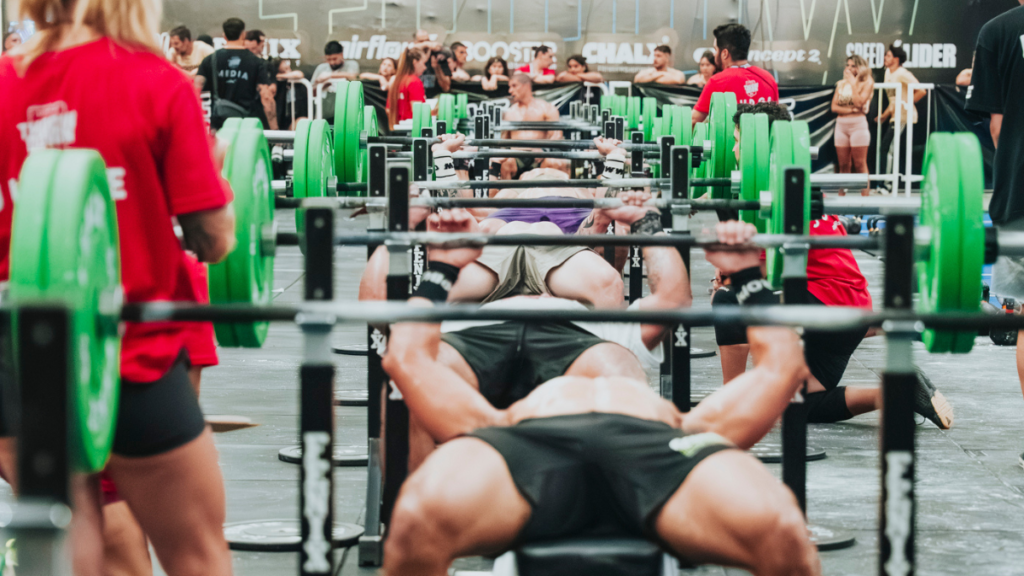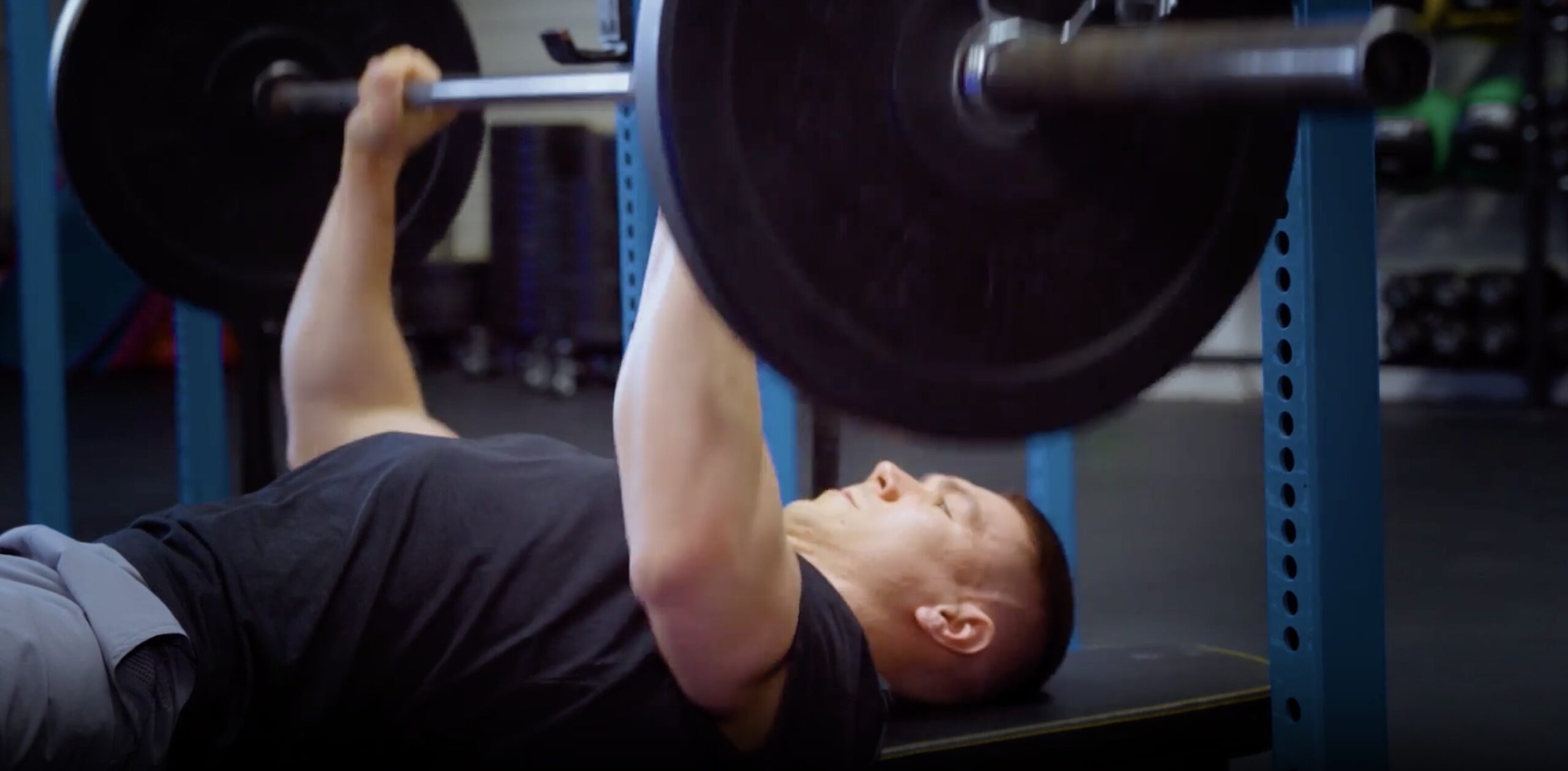


Benching your bodyweight is a memorable milestone because it is simple to understand, easy to compare, and demanding enough to require real training. If you weigh 180 pounds and press 180 pounds for one controlled repetition, you have developed meaningful upper body strength. Still, the lift does not provide a complete answer to how strong you are.
Strength is specific to the task being tested. A bodyweight bench press tells you something useful about your ability to produce force in a horizontal pressing pattern, but it says far less about your lower body strength, pulling strength, power, endurance, mobility, or overall athletic ability. It is a valuable data point, not a full physical report card.


What a Bodyweight Bench Press Actually Measures
A one repetition maximum bench press measures the greatest external load you can press once with a defined technique. In practical terms, it reflects how well your chest, triceps, shoulders, and supporting muscles can coordinate to move a barbell through that specific range of motion. It also reflects skill. Efficient bar path, stable shoulder positioning, leg drive, and confidence under a heavy bar can materially affect the result.
Research consistently treats maximal strength as an important physical quality because it supports force production, athletic performance, and many activities of daily living. However, the transfer from one strength test to another is not perfect. A strong bench press does not automatically mean a strong squat, a powerful jump, or an elite pull up. The body adapts specifically to the movements, ranges of motion, speeds, and muscles it practices.
That is why the most honest answer is that a bodyweight bench press makes you strong at the bench press. For a recreational lifter, that is a legitimate achievement. For an athlete or a person trying to assess complete physical capability, it is only one part of the picture.
Relative Strength Matters, but It Has Limits
Relative strength compares the load lifted with body mass. A 150 pound lifter who benches 150 pounds has a bodyweight ratio of 1.0. A 220 pound lifter who benches 220 pounds has the same ratio. This comparison is useful because it prevents larger people from being judged only by absolute load.
Body mass matters in strength performance, but it does not matter in a perfectly linear way. Larger people usually have more total muscle mass and can often lift more weight in absolute terms. Yet body mass also includes fat mass, bone mass, organs, and other tissue that does not contribute directly to pressing the bar. Two people at the same bodyweight can therefore have very different bench press potential.
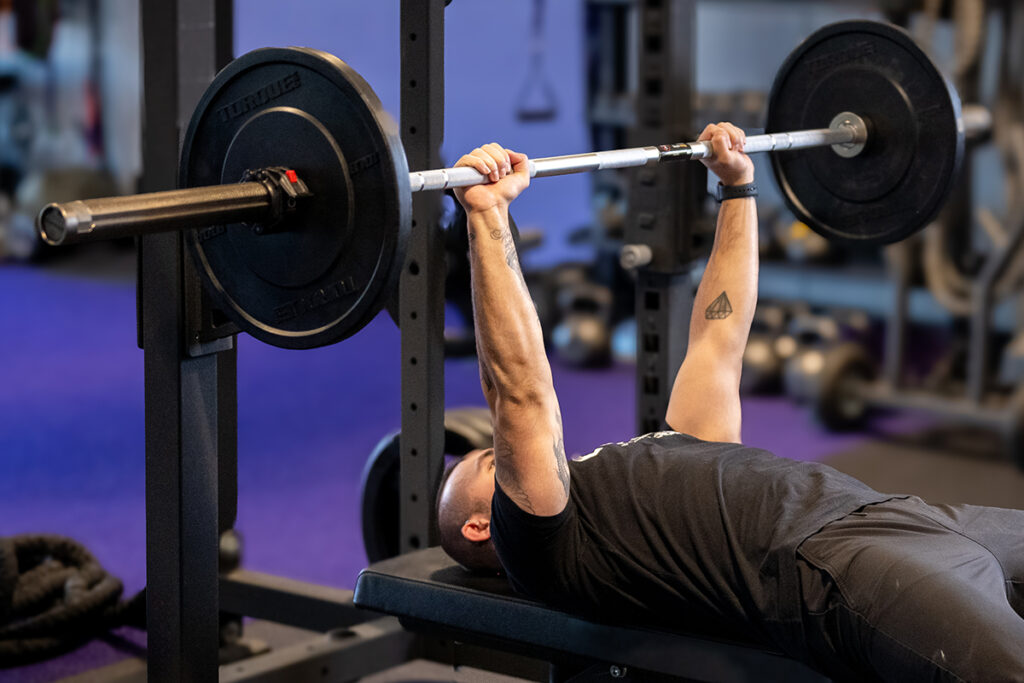
A bodyweight bench press is also easier or harder depending on body dimensions. Arm length, chest depth, shoulder structure, and the distance the bar must travel all influence the mechanical demands of the movement. Someone with long arms generally presses through a longer range of motion than someone with shorter arms. That does not make either performance illegitimate, but it does mean that the same bodyweight ratio is not an identical task for every lifter.
For this reason, bodyweight ratios are best used as a personal benchmark and a rough comparison tool, rather than a universal ranking system. They are especially helpful for tracking your own progress over time, provided your bodyweight, technique, and testing conditions are reasonably consistent.
How Impressive Is It for the Average Gym Goer?
For an adult who trains recreationally, a clean bodyweight bench press usually represents solid progress beyond the beginner stage. It generally requires regular practice, progressive loading, and enough muscle mass and coordination to handle a demanding load. The milestone is particularly meaningful if the repetition is performed with a controlled descent, a brief pause or consistent touch point on the chest, full elbow extension, and no assistance from a spotter.
The standard changes when the comparison group changes. Among people who do not resistance train, a bodyweight bench press is uncommon. Among dedicated strength athletes, powerlifters, and experienced physique competitors, it is often a baseline rather than a standout result. Competitive powerlifting data show that trained lifters can achieve bench presses far above bodyweight, although those results come from a highly selected population with years of focused practice.
Sex also matters when interpreting the number. On average, men have greater upper body lean mass and higher absolute upper body strength than women, which changes typical bench press performance. A woman who benches her bodyweight has usually reached a notably advanced level of upper body pressing strength relative to the general population. That conclusion should never be used to lower expectations for women. It simply recognizes that meaningful comparison requires an appropriate reference group.
Age, training history, nutrition, sleep, injury history, and access to coaching also shape what the milestone means. A person who began strength training at age 45 and reaches a bodyweight bench press may have made an exceptional personal transformation, even if a younger competitive lifter can press more.
Technique Determines Whether the Comparison Is Fair
A bench press number only means something when the lift is defined. Touching the bar high on the chest, stopping several inches above the chest, bouncing the bar, shortening the range of motion, or having a spotter assist can make a large difference. None of these choices automatically make training useless, but they make comparisons less reliable.
For a meaningful test, use a repeatable setup. Lower the bar under control to the chest, maintain contact with the bench, keep the feet planted, press to clear elbow extension, and use the same equipment from test to test. If you use a powerlifting style arch, that is still a bench press, but it should be part of your normal technique rather than a special setup used only to claim a bigger number.
The one repetition maximum test itself can be reliable when lifters are familiar with the exercise and testing procedure. Research has found high test and retest reliability for bench press maximums, although small changes can still reflect normal day to day variation rather than a meaningful increase in strength. That is why a single lift should not be treated as a permanent label.
Why One Lift Cannot Define Total Strength
The bench press primarily challenges horizontal pressing strength. It does not directly measure the ability to hinge, squat, carry, pull, sprint, jump, or control the body through space. A lifter can have a bodyweight bench press and still need substantial work on their legs, back, trunk control, or conditioning.

A useful general strength profile includes more than one movement pattern. Squatting and hinging assess lower body force production. Rows, pull ups, and pulldowns assess pulling capacity. Carries and unilateral work reveal how well you can stabilize and transfer force. These movements do not need to be tested as maximal lifts every week, but they prevent the bench press from becoming the only number that matters.
This broader perspective also helps keep shoulders healthy. Bench pressing uses the front of the upper body heavily, while a well designed program should include enough pulling volume and shoulder control work to support balanced training. Evidence from resistance training research supports progressive, individualized programming rather than relying on a single exercise or loading style.
How to Move Beyond a Bodyweight Bench
If you have reached a bodyweight bench press, your next goal should depend on why you train. If you want to get stronger at the lift, continue to practice it regularly and add load gradually when you can meet your technical standard. Heavy loading is useful for developing maximal strength, but training does not need to involve repeated all out attempts.
Most lifters progress well by combining heavier work with enough moderate repetition training to build skill and muscle. Training volume, effort, recovery, and consistency matter more than any single popular program. Nutrition also matters, especially if you are trying to gain muscle or recover from demanding training. Adequate daily protein supports resistance training adaptations, although it cannot replace progressive training.
Cable Flyes vs Dumbbell Flyes: Which Builds More Chest Muscle?
If athleticism or general fitness is your priority, maintain the bench press while also developing the rest of your movement profile. A stronger press is useful, but it should fit into a program that makes you more capable overall.
The Bottom Line
A bodyweight bench press is a real strength milestone, especially for a recreational lifter using controlled, repeatable technique. It shows that you have built worthwhile horizontal pressing strength and learned to apply it under a challenging load.
It does not prove that you are strong in every way, and it should not become the only number you care about. Your bodyweight, sex, body dimensions, training background, and technique all affect the result. Use the lift as a clear sign of progress, then judge your overall strength by the full pattern of what your body can do.
Key Takeaways
| Topic | Practical meaning |
|---|---|
| Pressing strength | It demonstrates meaningful strength in a horizontal barbell pressing pattern. |
| Relative strength | It compares the load with body mass, but does not account for body composition or limb length. |
| General population comparison | It is a strong recreational milestone, although trained strength athletes commonly exceed it. |
| Technique | Consistent depth, control, and lockout are essential for a fair comparison. |
| Whole body strength | It does not measure lower body strength, pulling strength, power, conditioning, or movement quality. |
| Next step | Build on the milestone with progressive training and a balanced program. |
References
- American College of Sports Medicine (2009) ‘American College of Sports Medicine position stand: Progression models in resistance training for healthy adults’, Medicine & Science in Sports & Exercise, 41(3), pp. 687–708.
- Barbalho, M., Gentil, P., Raiol, R., Del Vecchio, F.B., Ramirez Campillo, R. and Coswig, V.S. (2018) ‘High one repetition maximum tests reproducibility and validity are not dependent on training experience, muscle group tested or strength level in older women’, Sports, 6(4), article 171.
- Morton, R.W., Murphy, K.T., McKellar, S.R., Schoenfeld, B.J., Henselmans, M., Helms, E., Aragon, A.A., Devries, M.C., Banfield, L., Krieger, J.W. and Phillips, S.M. (2018) ‘A systematic review, meta analysis and meta regression of the effect of protein supplementation on resistance training induced gains in muscle mass and strength in healthy adults’, British Journal of Sports Medicine, 52(6), pp. 376–384.
- Schoenfeld, B.J., Ogborn, D. and Krieger, J.W. (2017) ‘Dose response relationship between weekly resistance training volume and increases in muscle mass: A systematic review and meta analysis’, Journal of Sports Sciences, 35(11), pp. 1073–1082.
- Sigvaldsen, E., Loturco, I., Larsen, F., Bruusgaard, J., Kalhovde, J.M. and Haugen, T. (2023) ‘Validity and reliability of upper body push and pull tests to determine one repetition maximum’, PLOS ONE, 18(7), article e0288649.
- Suchomel, T.J., Nimphius, S. and Stone, M.H. (2016) ‘The importance of muscular strength in athletic performance’, Sports Medicine, 46(10), pp. 1419–1449.