

When beginners want bigger arms, they often focus on the biceps peak. That can improve the look of the upper arm from the front, but it is not the whole story. Arm width depends on several muscles, including the biceps brachii, brachialis, brachioradialis, and triceps. If your goal is to make your arms look wider with your hands by your sides, the muscle underneath the biceps, the brachialis, deserves particular attention.
Preacher curls and hammer curls are both useful beginner exercises, but they do not create exactly the same training stimulus. Preacher curls place the upper arm against a pad and make it easier to train the biceps with strict elbow flexion. Hammer curls use a neutral hand position and can involve more work from the brachialis and brachioradialis. Neither exercise is magic, and neither can change bone structure. Still, choosing the right movement for your goal can make your arm training more efficient.



For most beginners who specifically want wider looking arms, hammer curls have the stronger case. They train the elbow flexors while using a grip that can shift some emphasis away from the biceps brachii and toward muscles that add thickness at the side of the upper arm and across the forearm. Preacher curls remain an excellent choice for building the biceps, particularly when you need a movement that limits momentum and helps you learn control.
What Actually Makes an Arm Look Wider?
The biceps brachii sits on the front of the upper arm and has two heads that cross the shoulder and elbow. Its key jobs include bending the elbow and turning the palm upward. It is visually prominent, so increasing its size can make the arm look more muscular from many angles. However, biceps size alone does not determine how wide your upper arm appears.
The brachialis lies underneath the biceps brachii and attaches to the ulna in the forearm. It bends the elbow regardless of whether your palm faces up, down, or inward. Because it sits beneath the biceps, more brachialis muscle can push the biceps outward and contribute to a thicker profile. The brachioradialis runs along the upper forearm near the thumb side and is also an elbow flexor. Developing it can make the transition between upper arm and forearm look more substantial.
Your triceps also matter enormously because they make up a large proportion of upper arm muscle mass. A curl only trains the front side of the arm, so no curl variation is a complete arm building program. Nevertheless, when the comparison is restricted to preacher curls and hammer curls, the neutral grip used in hammer curls gives them a practical advantage for beginners who want more visual width from the elbow flexors.
What Preacher Curls Do Best
They Make Cheating Harder
In a preacher curl, the upper arm rests against an angled pad while you curl a bar, cable attachment, dumbbell, or machine handle. The support limits shoulder movement and makes it much harder to swing the weight upward with the hips and torso. This is valuable for beginners because it creates a simple task: bend the elbow under control while keeping the upper arm in position.
3 Best Cable Back Exercises for a More Attractive V Shaped Torso
Resistance training produces muscle growth when enough challenging sets are performed over time. Research consistently shows that hypertrophy can occur across a broad range of loads when sets are taken sufficiently close to muscular failure, while total hard training volume remains an important driver of results. The preacher curl gives beginners a stable exercise where they can track repetitions, gradually add load, and keep technique consistent from week to week.
They Prioritize the Biceps in a Supinated Position
Most preacher curls use a palms up grip, which is called supination. The biceps brachii is particularly effective when the forearm is supinated because it is both an elbow flexor and a powerful forearm supinator. Biomechanical and electromyography research shows that changing forearm position can alter the coordination between the biceps brachii and brachioradialis during elbow flexion. A palms up curl therefore remains a sensible way to give the biceps direct, focused work.
That does not mean a preacher curl can isolate one small part of the biceps with surgical precision. The two heads of the biceps work together, and individual anatomy affects what you feel during any exercise. Still, strict preacher curls are a reliable way to load the biceps through elbow flexion without turning the set into a full body movement.
They Teach Useful Control
Beginners often lower curls too quickly, then use a swing to start the next repetition. A preacher pad gives immediate feedback because the upper arm stays in contact with the support. Use a smooth lowering phase, pause briefly when the elbow is nearly straight, then curl without lifting the shoulder from the pad. This makes the exercise easier to learn and can help you identify a load that you can control.
The stretched position deserves respect. The biceps and elbow structures are under tension near the bottom of a preacher curl, so use a range of motion that feels comfortable and avoid forcefully snapping the elbow straight. Starting with a moderate weight is not timid training. It is the sensible way to build connective tissue tolerance and practice repeatable technique.
What Hammer Curls Do Best
They Use a Neutral Grip That Builds More Than the Biceps
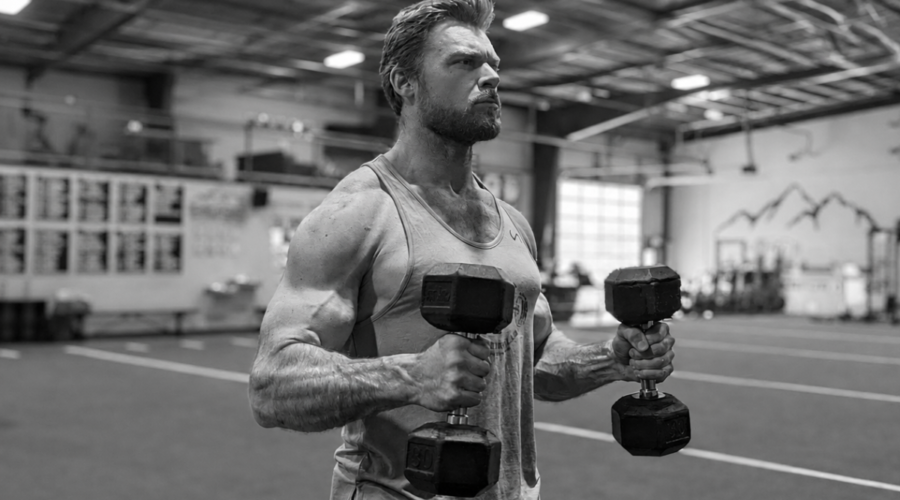
In a hammer curl, the palms face each other, as if you were holding the handles of two hammers. This is a neutral grip. The biceps brachii still bends the elbow, but it loses some of the mechanical advantage it has in a fully supinated position. The brachialis remains active because it bends the elbow in every forearm position, while the brachioradialis can contribute strongly in the neutral position.
Muscle activity does not perfectly predict long term muscle growth, but it can help explain why exercises feel different. Research on elbow flexion shows that forearm position changes how the biceps brachii and brachioradialis coordinate, especially when the biceps is placed at a mechanical disadvantage. This supports the practical use of neutral grip curls for training the muscles that add density around the side of the arm and upper forearm, while recognizing that no long term trial has directly compared hammer curls and preacher curls for muscle growth.
They Are the Better Choice for Visual Width
For the specific goal of wider arms, hammer curls usually win. The brachialis sits deep to the biceps rather than on top of it. Increasing its size can add thickness beneath the biceps, while the brachioradialis can improve the width and solidity of the arm near the elbow. A beginner will not transform this area after two workouts, but months of progressive hammer curl training can contribute to a fuller arm shape.
This is not an argument for ignoring standard curls. Bigger biceps are still important for bigger arms. It is an argument for avoiding a common beginner mistake: using only palms up curls and assuming every elbow flexion movement does the same job. A program that includes both a supinated curl and a neutral grip curl gives the elbow flexors a broader stimulus.
They Often Feel More Comfortable for Beginners
Many people find a neutral grip more natural at the wrist and elbow than a straight bar with a fixed palms up position. Dumbbell hammer curls also allow each arm to follow its own path, which can be helpful if one wrist, elbow, or shoulder feels restricted. Comfort does not prove that an exercise is superior, but a movement you can perform consistently and pain free is usually more valuable than one that looks ideal on paper.
Keep the dumbbells close to your sides, avoid driving the elbows forward, and lower the weight slowly. You can perform hammer curls with both arms together, alternating arms, or using a rope attachment on a cable station. The important principle is progressive overload, meaning that over time you perform more repetitions with the same good form, use slightly more load, or complete more challenging sets.
Preacher Curls vs Hammer Curls for Beginners
The best answer depends on what you mean by bigger arms. If you want to maximize direct biceps emphasis and need help removing momentum, preacher curls are an excellent first option. They are especially useful if regular standing curls turn into a lower back and shoulder exercise rather than a biceps exercise.
If you want the strongest single option for adding width around the front and side of the arm, choose hammer curls. They still challenge the biceps, but their neutral grip better includes the brachialis and brachioradialis. For a beginner with room for only one direct curl exercise, hammer curls are often the more rounded choice.
The most productive option for many beginners is not choosing one forever. Use hammer curls as the main movement, then add preacher curls if your weekly training volume and recovery allow it. Research on resistance training volume suggests that performing multiple hard sets per muscle group each week generally produces more hypertrophy than very low volumes, although the useful amount varies between individuals. Start with an amount you can recover from and make progress with, rather than copying an advanced bodybuilder’s arm day.
A Simple Beginner Plan
Train your arms two times per week on nonconsecutive days, preferably after your heavier pulling and pressing work. Begin with two or three sets of hammer curls for eight to fifteen controlled repetitions. Choose a load that leaves you with roughly one to three repetitions in reserve on most sets. This means the set is demanding, but you could still perform a small number of additional clean repetitions.
If you have the time and recover well, add two sets of preacher curls for ten to fifteen repetitions. Use a lighter load than you think you need at first. The goal is to keep the upper arm supported, move the elbow through a comfortable range, and avoid bouncing out of the bottom. Add a repetition when you can, then increase the load slightly once you reach the top of your target range with solid form.
Pair this direct work with rows, pull ups or pulldowns, pressing exercises, and direct triceps work. Compound pulling movements train the elbow flexors, while pressing movements and extensions help build the triceps. A balanced program will do more for overall arm size than endlessly changing curl variations.
Form Mistakes That Limit Results
The biggest mistake with either curl is treating load as the only measure of progress. If your shoulders swing, your elbows travel dramatically, or your wrists bend backward under the dumbbell, the target muscles may receive less useful tension. Use a full comfortable range, a steady lowering phase, and a weight you can control.

With preacher curls, avoid allowing the shoulder to rise off the pad as you curl. Do not force the elbow into an aggressive locked position at the bottom. With hammer curls, avoid rotating the dumbbell into a standard curl halfway through the repetition. Keep the neutral grip from beginning to end if you want the particular benefit of the hammer curl pattern.
Pain is another signal worth taking seriously. A normal training effort includes fatigue and a muscle pump. Sharp pain, joint pain, numbness, or discomfort that worsens session after session is different. Reduce the load or range of motion, change the implement, and seek qualified clinical advice if symptoms persist.
The Bottom Line
Preacher curls are a highly effective biceps exercise for beginners who need a strict, stable way to learn elbow flexion. Hammer curls are the better choice when the goal is wider looking arms because the neutral grip trains the biceps while giving the brachialis and brachioradialis a larger role. Those muscles can add thickness beneath and beside the biceps, improving the overall visual width of the arm.
You do not need to declare one exercise the permanent winner. Build your foundation with hammer curls, use preacher curls to add focused biceps work, train your triceps seriously, and progress gradually. The results will come from months of consistent challenging training, adequate protein, sleep, and a program that you can repeat.
References
- American College of Sports Medicine (2009) ‘American College of Sports Medicine position stand: Progression models in resistance training for healthy adults’, Medicine and Science in Sports and Exercise, 41(3), pp. 687 to 708.
- Coratella, G., Longo, S., Cè, E., Esposito, F. and Schena, F. (2023) ‘The effects of resistance training performed to failure or non failure on muscular strength and hypertrophy: A systematic review and meta analysis’, Journal of Sports Sciences, 41(4), pp. 384 to 395.
- Kassiano, W., Costa, B., Kunevaliki, G., Lisboa, F., Stavinski, N., Prado, A., Tricoli, I., Francsuel, J., Lima, L., Nunes, J.P., Ribeiro, A.S. and Cyrino, E.S. (2025) ‘Distinct muscle growth and strength adaptations after preacher and incline biceps curls’, International Journal of Sports Medicine, 46(5), pp. 334 to 343.
- Marcolin, G., Panizzolo, F.A., Petrone, N., Moro, T., Grigoletto, D., Piccolo, D. and Paoli, A. (2018) ‘Differences in electromyographic activity of biceps brachii and brachioradialis while performing three variants of curl’, PeerJ, 6, e5165.
- McMahon, G.E., Morse, C.I., Burden, A., Winwood, K. and Onambélé, G.L. (2014) ‘Impact of range of motion during ecologically valid resistance training protocols on muscle size, subcutaneous fat, and strength’, Journal of Strength and Conditioning Research, 28(1), pp. 245 to 255.
- Nunes, J.P., Jacinto, J.L., Ribeiro, A.S., Mayhew, J.L., Nakamura, M., Capel, D.M.G., Santos, L.R., Santos, L., Cyrino, E.S. and Aguiar, A.F. (2020) ‘Placing greater torque at shorter or longer muscle lengths? Effects of cable vs. barbell preacher curl training on muscular strength and hypertrophy in young adults’, International Journal of Environmental Research and Public Health, 17(16), 5859.
Key Takeaways
| Exercise | Best use for beginners | Why it helps arm size |
|---|---|---|
| Hammer curls | Building wider looking arms | The neutral grip trains the biceps while involving the brachialis and brachioradialis, which add thickness around the side of the arm. |
| Preacher curls | Focused biceps training with strict form | The pad limits momentum and makes it easier to load elbow flexion under control. |
| Both exercises | A complete direct curl routine | Combining a neutral grip curl with a palms up curl gives the elbow flexors a broader training stimulus. |
| Overall program | Long term arm growth | Progressive training, sufficient weekly hard sets, triceps work, protein, and recovery matter more than a single curl variation. |