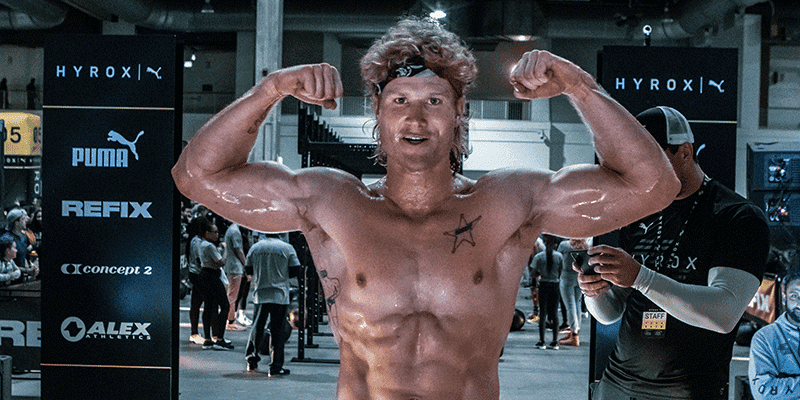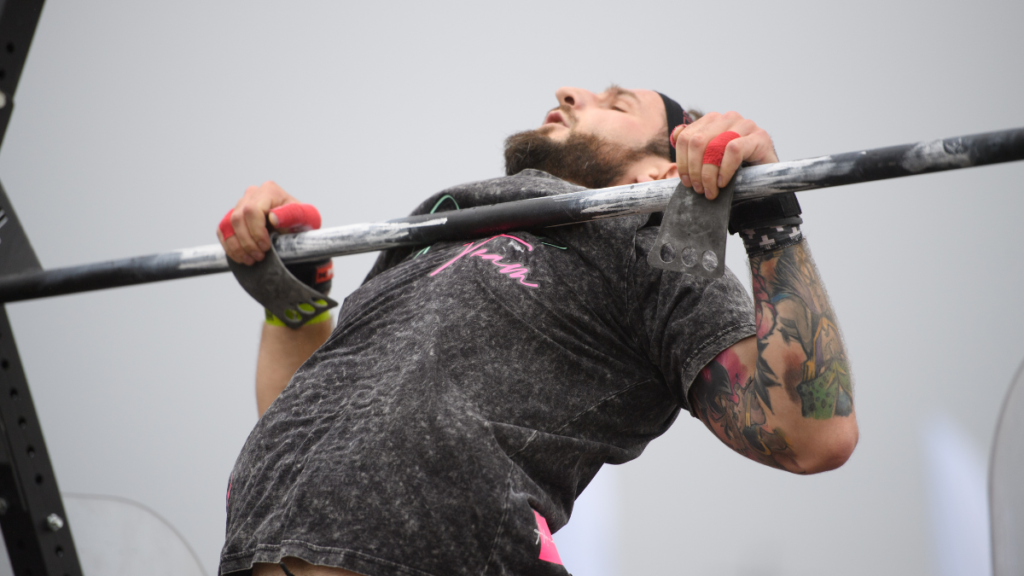


Big arms are not only about what they look like from the side. When your arms look noticeably wider and fuller from the front, they change the shape of your entire upper body. They make a T shirt fit better through the sleeves, add presence to your torso, and make your shoulders appear broader by comparison.
To create that front facing arm size, you need to build more than the visible biceps peak. The biceps brachii matters, particularly when you flex with your palms facing upward, but the brachialis and brachioradialis also contribute to the thickness and width of your upper arm and elbow area. The brachialis sits beneath the biceps and can push it upward as it grows. The brachioradialis runs down the outer side of the forearm and helps create a thicker transition from upper arm to forearm.


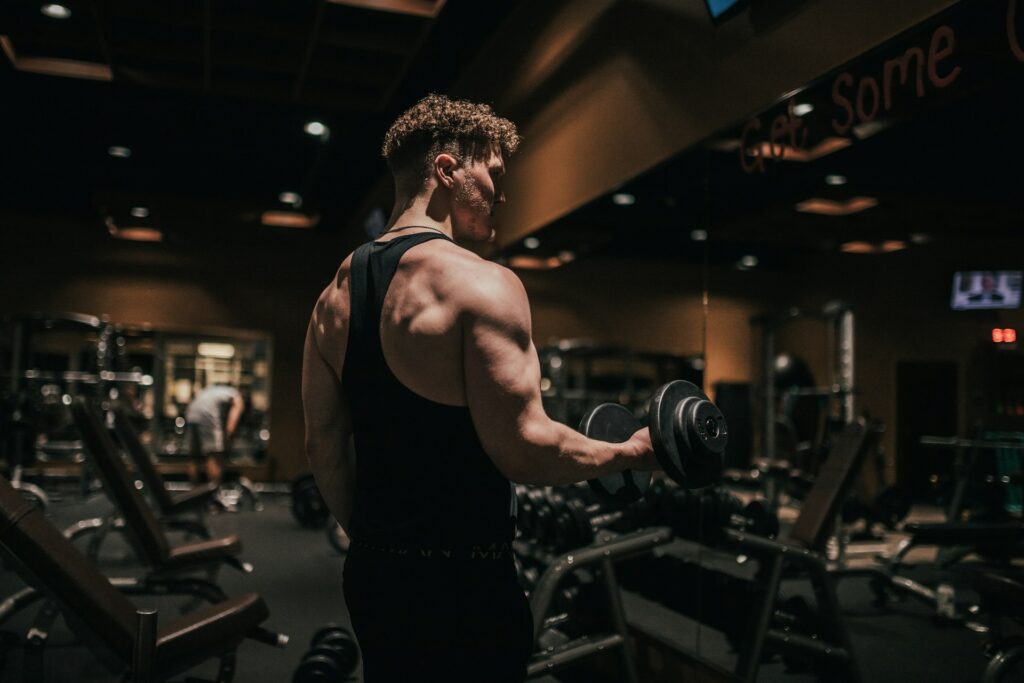
The best approach is not to chase endless variations or train with sloppy, swinging reps. You need a few movements that load the elbow flexors effectively through a large range of motion, then progress them patiently. Research consistently shows that building muscle depends heavily on sufficient hard training volume, progressive overload, and consistent effort over time. The three exercises below cover the major elbow flexors and give you a simple route to arms that look more substantial from the front.
What Makes Biceps Look Bigger From the Front?
Your biceps brachii has two heads, commonly called the long head and short head. Both cross the elbow and help bend it, while the biceps also plays a major role in turning the palm upward. That is why a palm up curl feels different from a neutral grip curl.
However, the front view of your arms is also influenced by the brachialis. This muscle lies deep to the biceps and is a powerful elbow flexor. Building it adds density to the upper arm, especially around the lower and outer portion of the biceps. The brachioradialis also helps flex the elbow and becomes especially relevant during neutral grip and overhand curling movements.
You cannot reshape your muscle insertions or choose exactly where every gram of new muscle will appear. Genetics influence arm length, tendon attachment points, and the overall outline of your biceps. You can, however, make your arms much more muscular by training the muscles that flex the elbow with enough quality work. A varied curl selection is useful because it exposes the elbow flexors to different grip positions and shoulder positions.
A bigger arm is ultimately a more muscular arm. There is no special exercise that replaces progressive training, enough food, recovery, and time. Still, choosing movements that are stable, comfortable, and easy to load can make the process much more productive.
1. Incline Dumbbell Curl
The incline dumbbell curl is one of the best choices for directly building the biceps brachii. Sitting on an incline bench places your upper arm behind your torso, which puts the biceps under tension in a lengthened position at the bottom of the repetition. You can train both arms independently, use a full range of motion, and supinate your wrist as you curl.
Research examining resistance training at different muscle lengths suggests that loading a muscle in a more lengthened position can be a useful hypertrophy stimulus. This does not mean that every set needs to feel like an aggressive stretch or that you should force your shoulder into an uncomfortable position. It does mean that the bottom half of a controlled incline curl deserves your attention.
How to Perform the Incline Dumbbell Curl
Set an adjustable bench to a moderate incline and sit with your back supported. Let the dumbbells hang at your sides with your arms slightly behind your body. Start with your palms facing inward or slightly forward.
Curl the dumbbells upward while gradually turning your palms toward the ceiling. Keep your upper arms still and avoid letting your shoulders roll forward at the bottom. Squeeze your biceps near the top, then lower the dumbbells slowly until your elbows are straight and you feel the biceps lengthen.
Use a load you can control. If your shoulders shift forward, your elbows travel far ahead of your torso, or you have to kick the dumbbells up with momentum, the weight is too heavy for the purpose of the movement.
How to Program It
Perform two to four hard sets of six to 15 repetitions. A moderate load works well, but there is no need to chase very heavy dumbbells. Muscle growth can occur across a wide range of loads when sets are performed with sufficient effort.
Leave roughly one to three repetitions in reserve on most sets. The final repetitions should be challenging, but your technique should remain recognizable. Once you can reach the top of your target repetition range on every set, increase the dumbbell weight by the smallest available amount.
2. Cross Body Hammer Curl
The cross body hammer curl is a strong choice for building the muscles that make the arms look thicker from the front. Its neutral grip places the forearm in a position that reduces the need for aggressive palm up rotation. This allows the brachialis and brachioradialis to contribute strongly while your biceps still works to flex the elbow.
The brachialis is often overlooked because it sits beneath the biceps rather than creating the classic flexed arm shape. That is precisely why it matters. Adding size to this muscle can make the entire upper arm look denser, wider, and more substantial when your arms rest naturally at your sides.
How to Perform the Cross Body Hammer Curl
Stand tall with a dumbbell in each hand and your palms facing your thighs. Curl one dumbbell diagonally across your body toward the opposite side of your upper chest. Keep your wrist neutral, as though you are holding a hammer.
Your elbow can move slightly during the curl, but do not turn the movement into a shoulder swing. Lower the dumbbell under control and repeat on the other side. You can alternate repetitions or complete all repetitions on one arm before switching.
The diagonal path should feel natural. There is no need to force the dumbbell to touch your collarbone. Focus on a smooth elbow flexion movement and keep your torso still.
How to Program It
Perform two to four sets of eight to 15 repetitions per arm. Place this exercise after your more demanding biceps movement, such as the incline dumbbell curl, or pair it with triceps work if you want an efficient arm session.
The cross body hammer curl is particularly useful if ordinary curls irritate your wrists or elbows. The neutral grip is often more comfortable, although discomfort that persists or worsens should be assessed by a qualified health professional.
3. EZ Bar Reverse Curl
The EZ bar reverse curl completes the trio by emphasizing the brachioradialis while still training the elbow flexors as a group. The overhand grip makes this a less biceps dominant curl than a palm up variation, but that is the point. A thicker brachioradialis can improve the visual connection between your upper arm and forearm, especially from the front and at a slight angle.
The EZ bar is a useful tool because its angled handles can be more comfortable than a straight bar for many lifters. It also allows you to load both arms evenly and progress in small jumps. Do not expect to use the same weight as your standard barbell curl. The overhand grip is mechanically demanding, and strict technique matters more than the number on the plates.
How to Perform the EZ Bar Reverse Curl
Stand with your feet about hip width apart and hold an EZ bar using an overhand grip. Let the bar rest in front of your thighs with your arms straight. Keep your chest tall and your ribs down.
Curl the bar upward by bending your elbows. Keep your wrists straight rather than allowing them to fold backward. Stop when your forearms approach vertical, then lower the bar slowly until your elbows are fully extended.
Avoid leaning backward to move the bar. A small amount of natural body movement is not a disaster, but repeated swinging reduces the tension placed on the muscles you are trying to grow. If you cannot control the lowering phase, reduce the load.
How to Program It
Perform two to three sets of 10 to 20 repetitions. Reverse curls can be demanding on the wrists and elbows when loaded too aggressively, so slower progress is sensible. Use clean repetitions and add weight only when you can complete the target range without cheating.
If the EZ bar reverse curl does not suit your joints, use dumbbells with an overhand grip or choose a cable attachment that allows a comfortable hand position. The goal is to train hard without turning a small joint irritation into a problem that limits all of your pulling work.
How Much Direct Biceps Training Do You Need?
Most people can grow their biceps with six to 12 direct sets per week, alongside pulling movements such as rows and pull ups. The right amount depends on your training age, recovery, exercise selection, and how much hard back training you already perform.
Research indicates that greater weekly resistance training volume generally produces greater muscle growth, but the relationship is not unlimited. More sets only help when you can recover from them and perform them with useful effort. Adding six poor quality sets after your elbows are already sore is unlikely to be better than completing a smaller number of focused sets and progressing them over several months.

Train your biceps at least twice weekly if your schedule allows. Splitting your work across two sessions can help you maintain better performance and technique than cramming every set into one arm day. For example, you could perform incline dumbbell curls and hammer curls after an upper body workout, then add reverse curls and another biceps exercise later in the week.
Make Every Rep Count
Use a controlled full range of motion. Begin each repetition from a genuinely lengthened position, curl without throwing your body backward, and lower the weight under control. Research comparing ranges of motion generally supports using a full range for muscle development, provided it is comfortable and technically sound.
You do not need to pause for several seconds at the top of every curl, but you should be able to feel and control the contraction. Equally, do not rush through the lowering phase. The eccentric portion of the repetition contributes meaningful training stimulus and helps keep momentum from taking over.
Keep a simple training log. Record the exercise, load, sets, and repetitions, then aim to improve one of those variables gradually. The most effective biceps program is usually not the most complicated one. It is the one you can repeat long enough to become measurably stronger with good form.
A Simple Front Facing Biceps Workout
Perform the incline dumbbell curl first while you are fresh. Complete three sets of eight to 12 repetitions. Follow with three sets of cross body hammer curls for 10 to 15 repetitions per arm. Finish with two sets of EZ bar reverse curls for 12 to 15 repetitions.
3 Best Cable Back Exercises for a More Attractive V Shaped Torso
Run this session once or twice each week, depending on your overall training volume. Start conservatively if you already perform a lot of rowing, pull ups, chin ups, or heavy deadlifts. Your elbows and forearms need time to adapt to direct curling volume.
Over the coming weeks, add repetitions before adding weight. When you reach the upper end of the prescribed range with strict technique, make a small increase in load and build again. That simple progression, combined with enough protein, calories, and sleep, gives you a far better chance of building arms that look noticeably bigger from the front.
References
- Drake, R.L., Vogl, W. and Mitchell, A.W.M. (2023) Gray’s Anatomy for Students. 5th edn. Philadelphia: Elsevier.
- Grgic, J., Schoenfeld, B.J., Davies, T.B., Lazinica, B., Krieger, J.W. and Pedisic, Z. (2021) ‘Effect of resistance training frequency on gains in muscular strength: A systematic review and meta analysis’, Sports Medicine, 51(6), pp. 1207 to 1220.
- Grgic, J., Schoenfeld, B.J. and Mikulic, P. (2021) ‘Effects of range of motion on resistance training adaptations: A systematic review and meta analysis’, Scandinavian Journal of Medicine and Science in Sports, 31(7), pp. 1260 to 1271.
- Schoenfeld, B.J., Grgic, J., Ogborn, D. and Krieger, J.W. (2017) ‘Strength and hypertrophy adaptations between low versus high load resistance training: A systematic review and meta analysis’, Journal of Strength and Conditioning Research, 31(12), pp. 3508 to 3523.
- Schoenfeld, B.J., Ogborn, D. and Krieger, J.W. (2017) ‘Dose response relationship between weekly resistance training volume and increases in muscle mass: A systematic review and meta analysis’, Journal of Sports Sciences, 35(11), pp. 1073 to 1082.
- Schoenfeld, B.J. and Grgic, J. (2020) ‘Effects of range of motion on muscle development during resistance training interventions: A systematic review’, SAGE Open Medicine, 8, pp. 1 to 10.
- Wolf, M., Lamberts, R.P., Lambert, M.I., Buys, F.J. and St Clair Gibson, A. (2022) ‘Resistance training variables for optimization of muscle hypertrophy: An umbrella review’, Sports Medicine, 52(9), pp. 2035 to 2056.
Key Takeaways
| Focus | What to do |
|---|---|
| Main biceps builder | Use incline dumbbell curls to load the biceps through a large and controlled range of motion. |
| Added upper arm thickness | Use cross body hammer curls to train the brachialis and brachioradialis with a neutral grip. |
| Forearm and arm width | Use EZ bar reverse curls to develop the brachioradialis and improve the upper arm to forearm transition. |
| Weekly training | Start with six to 12 direct biceps sets per week, adjusted for your existing pulling volume and recovery. |
| Progression | Add repetitions with strict form, then make small load increases once you reach the top of your target range. |