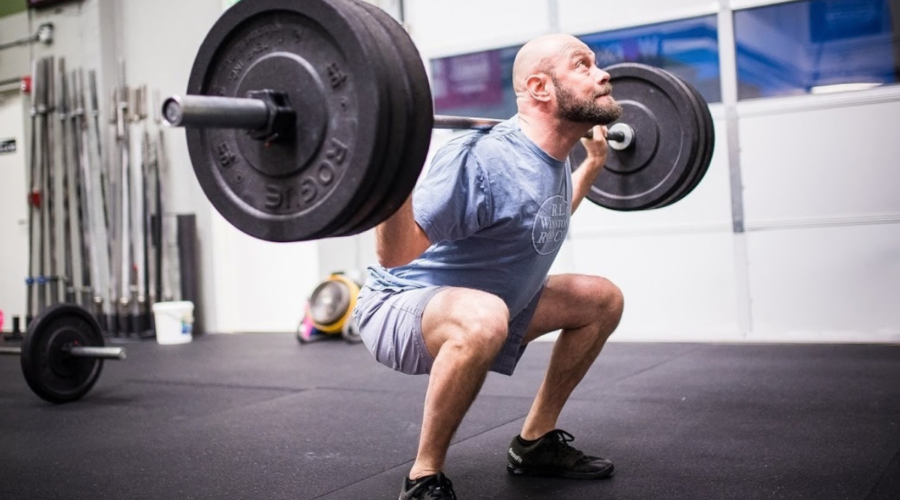


Getting stronger after 30 is not about proving you are still as athletic as you were at 20. It is about building a reserve of lower body strength that makes training, sport, work, and everyday life feel easier for decades to come. The back squat is not the only useful exercise, but it is one of the clearest ways to practice coordinated leg and trunk strength while progressively loading the movement.
The three milestones below are practical targets for a healthy man who has learned a controlled barbell back squat and wants a simple long term direction. They are based on body weight because absolute numbers can be misleading. A 200 pound squat means something very different for a 150 pound lifter than it does for a 250 pound lifter.


These are not diagnostic tests, guarantees of health, or requirements for every person. Height, limb lengths, injury history, training age, and the squat variation you use all affect the number. Think of them as useful performance goals, not a reason to force a lift your body is not ready to own.
First, Define the Squat You Are Measuring
Before comparing any number, make the test consistent. For this article, a squat means a barbell back squat performed under control, with the whole foot in contact with the floor, the knees tracking in line with the toes, and the hip crease reaching at least the top of the knee. Use the same bar position, depth, footwear, and safety setup each time you assess progress.
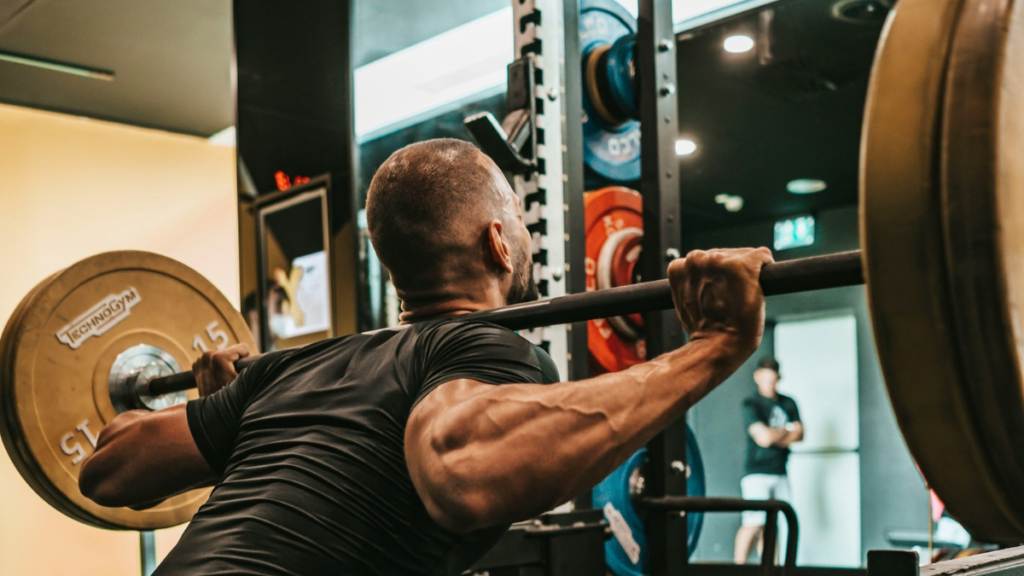
This does not mean every athlete must force a deep, narrow stance. Hip structure, ankle mobility, comfort, and training goals all influence a sensible stance and depth. A repeatable depth is what matters most for comparing one training block with the next. Research shows that bar position and squat depth change joint angles, lifting mechanics, and muscular demands, which is precisely why a number achieved with one style should not be casually compared with one achieved using another.
One repetition maximum strength is a useful way to track progress, but it is not compulsory. If you do not want to test a true maximum, use a hard set of three to five technically sound repetitions and estimate your progress from that. Stop a set if depth changes, your trunk loses control, or a spotter would need to intervene. A milestone only counts when the rep looks like the reps that built it.
Milestone One: Squat Three Quarters of Your Body Weight
Your first meaningful target is a controlled squat of 0.75 times your body weight for one repetition. For a 180 pound man, that is 135 pounds on the bar. For a 200 pound man, it is 150 pounds. It may sound modest, but it represents a very useful transition from learning the movement to producing real lower body force with a barbell.
Why This First Target Matters
Many men can add weight quickly when they first start squatting because they are learning the movement and becoming more comfortable under load. The mistake is treating early progress as a race. The better goal is to build positions that still hold up when the load becomes challenging. At this stage, the squat should look controlled on the way down, stable at the bottom, and deliberate on the way up.
Progressive resistance training reliably improves muscular strength in healthy adults, and it remains effective well into older age. That makes the first milestone valuable even if you never care about a personal record. You are developing the habit of training the hips, knees, and trunk through a loaded pattern while learning how to brace, control range of motion, and add load gradually.
For most beginners, two squat exposures per week work well. One day can use three to five sets of five to eight repetitions with a manageable load, while the other can use lighter repetitions to practice movement quality. Add a small amount of weight only when you complete the planned work with the same depth and control. If adding five pounds changes the movement, keep the weight where it is and earn the increase next week.
The Test You Must Pass First
Before moving toward this milestone, you should be able to perform multiple bodyweight squats and light goblet squats to your chosen depth without pain, collapsing knees, or a loss of balance. You should also be able to maintain a firm brace without holding your breath for an excessively long time. These are not cosmetic details. Good repetitions give you more useful practice and make sensible progression easier to judge.
If a barbell back squat does not currently agree with your body, a safety bar squat, front squat, goblet squat, split squat, or leg press can still build strong legs. The goal is lower body strength, not loyalty to one implement. A qualified coach or clinician can help you select a variation if you have persistent pain, recent surgery, neurological symptoms, or a medical condition that affects exercise tolerance.
Milestone Two: Squat Your Body Weight
The next target is a technically consistent squat equal to your body weight for one repetition. A 180 pound man aims for 180 pounds, and a 220 pound man aims for 220 pounds. Reaching this level is a solid general strength achievement for a recreational lifter because it requires more than a brief beginner phase. It asks for regular training, enough food and recovery, and patience when progress slows.
Why Relative Strength Is More Useful Than One Big Number
Relative strength gives the lift context. Body mass, lean mass, and limb length can all influence squat performance, so two people lifting the same absolute weight are not necessarily demonstrating the same level of strength. Relative targets do not remove every difference, but they make a personal goal more relevant than copying a number from someone with a very different build.
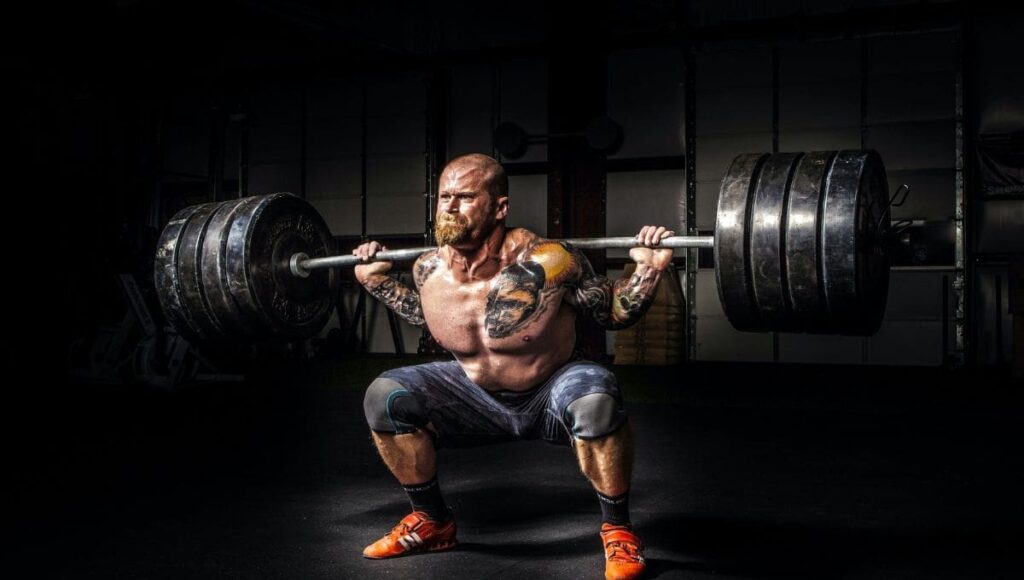
This is also the stage at which a simple plan matters more than novelty. Research comparing resistance training prescriptions supports the value of regular training with enough load and volume to challenge the muscles. Heavy training is particularly effective for improving maximum strength, but you do not need to train at a maximum every week. Productive work often comes from several high quality sets performed below a maximal effort, followed by gradual increases over time.
At this milestone, use a main squat day of three to five sets of three to six repetitions. Add one or two assistance movements that address the parts of the lift you need most, such as Romanian deadlifts for hip strength, split squats for single leg control, or leg curls for hamstring work. Keep the assistance work useful but do not let it compromise your next squat session.
Build Strength Without Making Every Session a Test
Many lifters stall because every workout becomes an attempt to prove strength. Instead, spend several weeks building repetitions with a load you can control, then use a slightly heavier single only when you are rested and the previous training has gone well. A single should feel like a demonstration of training, not a gamble.
Use small jumps as you get stronger. Adding 2.5 to 5 pounds can be enough. When progress stalls, reduce the load slightly, build the repetitions again, or take a lighter week before pushing forward. Strength does not improve in a straight line, especially when work, family, sleep, and other sports compete for recovery.
Milestone Three: Squat 1.5 Times Your Body Weight
The third long term milestone is a squat of 1.5 times body weight for one well performed repetition. For a 180 pound man, that is 270 pounds. For a 200 pound man, it is 300 pounds. This is a strong target for a recreational male lifter over 30, but it is not a universal requirement. It is best treated as an ambitious goal for men who enjoy barbell training, tolerate the movement well, and are willing to build toward it over a long period.
Why It Is an Ambitious Goal
A 1.5 times bodyweight squat takes consistent exposure to progressively heavier training, not a short burst of motivation. It also demands that you maintain technical discipline as the bar gets heavy. The movement may not look identical for every lifter, but the fundamentals should remain: a stable foot, controlled knee path, a braced trunk, consistent depth, and no sharp pain.
The evidence does not identify a single back squat number that every man needs for health. That would be an overclaim. However, muscular strength is strongly associated with physical function across adulthood, and resistance training improves strength and physical function in healthy adults and older populations. Building toward a demanding but realistic lower body goal can therefore be a useful way to keep strength training purposeful as the years pass.
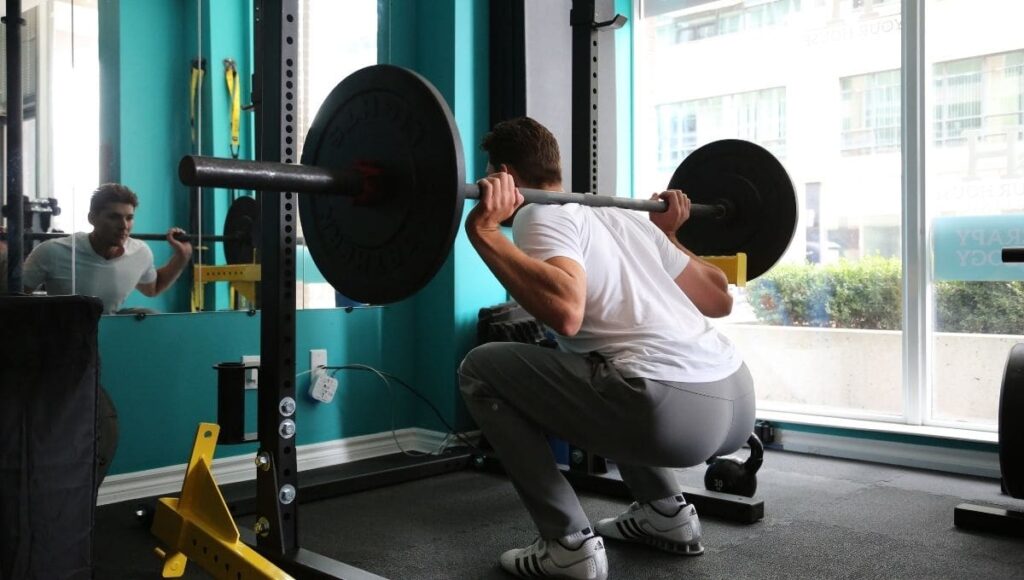
At this stage, periodize your work. Spend most sessions accumulating quality repetitions, then use planned heavier blocks to practice triples, doubles, and occasional singles. Training two times per week is enough for many recreational lifters when the sessions are well organized. One day might emphasize volume, such as four sets of five, and the other might emphasize intensity, such as four sets of three. The precise plan matters less than progressing it patiently and recovering from it.
Know When Not to Chase It
Do not treat 1.5 times body weight as a reason to squat through pain or to make reckless changes to body weight. Some men will be better served by building a strong front squat, trap bar deadlift, step up, or split squat instead. If you have a history of hip, knee, or back problems, modify the exercise and seek individual guidance rather than following a generic milestone.
The strongest long term approach is the one you can keep doing. A pain free, well controlled 1.0 times bodyweight squat performed consistently is more valuable than a short lived attempt at a larger number that leaves you unable to train.
How to Progress Toward the Milestones
Start with two lower body sessions each week, separated by at least 48 hours when possible. Choose loads that allow you to complete the planned repetitions with one to three repetitions still in reserve. This gives you a training stimulus while reducing the temptation to grind every set. As confidence and technique improve, add weight in small increments or add a repetition within the target range before increasing the load.
Warm up with a few gradually heavier sets rather than exhausting yourself before the work begins. Keep your training log simple: record the load, repetitions, sets, and a brief note about depth or discomfort. This turns vague effort into information. If you have not improved for several weeks, inspect sleep, nutrition, stress, total training load, and technique before assuming you need a radically different program.
3 Best Beginner Exercises for Great Looking Arms
The evidence supports many successful resistance training approaches. Higher loads are useful for maximal strength, while a range of loads can build muscle when the work is sufficiently challenging. The practical takeaway is simple: practice the squat consistently, accumulate good repetitions, include enough recovery, and test your progress sparingly.
The Bottom Line
For a healthy man over 30, a three quarters bodyweight squat is a strong first marker that you have moved beyond basic familiarization. Squatting your body weight is a solid recreational strength goal. A 1.5 times bodyweight squat is an ambitious long term target for men who want to pursue barbell strength seriously.
Do not rush the ladder. Use the same honest squat standard each time, build your technique before your ego, and let the milestone guide consistent training rather than define your worth. The number on the bar is useful because it reflects a process. The process is what keeps your legs, hips, and trunk capable for the training and life you want to keep doing.
References
- American College of Sports Medicine (2009) ‘American College of Sports Medicine position stand. Progression models in resistance training for healthy adults’, Medicine & Science in Sports & Exercise, 41(3), pp. 687–708.
- Borde, R., Hortobágyi, T. and Granacher, U. (2015) ‘Dose-response relationships of resistance training in healthy old adults: A systematic review and meta-analysis’, Sports Medicine, 45(12), pp. 1693–1720.
- Grgic, J., Schoenfeld, B.J., Davies, T.B., Lazinica, B., Krieger, J.W. and Pedisic, Z. (2018) ‘Effect of resistance training frequency on gains in muscular strength: A systematic review and meta-analysis’, Sports Medicine, 48(5), pp. 1207–1220.
- Kim, J., Lee, H., Lee, S. and Kim, D. (2023) ‘A systematic review and meta-analysis of resistance training on quality of life, depression, muscle strength, and functional exercise capacity in older adults aged 60 years or more’, Biological Research for Nursing, 25(1), pp. 88–106.
- Nuzzo, J.L. (2024) ‘Normative data for the squat, bench press and deadlift exercises in strength athletes’, Journal of Science and Medicine in Sport, 27(11), pp. 656–662.
- Ralston, G.W., Kilgore, L., Wyatt, F.B., Buchan, D. and Baker, J.S. (2017) ‘The effect of weekly set volume on strength gain: A meta-analysis’, Sports Medicine, 47(12), pp. 2585–2601.
Key Takeaways
| Milestone | Target | What it represents |
|---|---|---|
| First strength marker | 0.75 times body weight | A controlled transition from learning the squat to progressively loaded training. |
| Solid recreational goal | 1.0 times body weight | Consistent training, useful relative lower body strength, and repeatable technique. |
| Ambitious long term goal | 1.5 times body weight | A serious target for men who tolerate barbell squatting well and train patiently over time. |
| Nonnegotiable standard | Consistent depth and control | A milestone only counts when the technique matches the training that built it. |