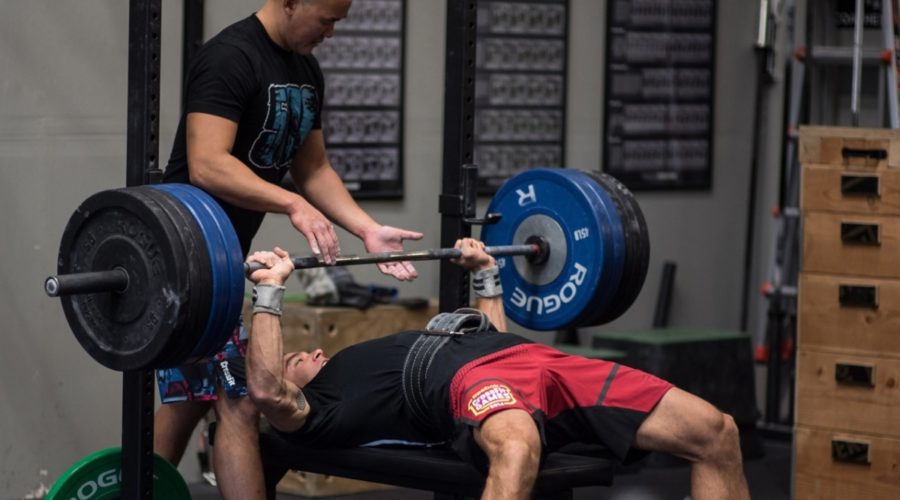


The dead stop bench press is a challenging variation of one of the best known chest exercises. Instead of lowering the bar and using the natural stretch reflex to help begin the next repetition, you bring the bar to a complete stop before pressing again. Depending on how you perform it, the bar may pause lightly on your chest or settle on safety pins set just above chest level.
It looks simple, but this change makes each repetition more demanding. You have to create force from a dead stop, maintain a stable upper body position, and control the bar without bouncing through the bottom position. That makes it an excellent exercise for building pressing strength and improving bench press technique.


But is it the perfect exercise for a more muscular chest? Not quite. It can be a very useful tool, but chest growth is determined by the quality of your overall training program, not one lift alone. The dead stop bench press has clear benefits, especially for lifters who struggle at the bottom of a bench press or rely too heavily on momentum. However, it also has limitations that matter if your main goal is hypertrophy.
What Is a Dead Stop Bench Press?
A dead stop bench press removes momentum between repetitions. In the most common version, you lower the bar under control until it reaches the chest, pause completely, then press it back to lockout. The pause should be long enough to make the bar motionless, usually around one to two seconds.
Another version starts with the bar resting on pins inside a power rack. The pins are set at a height that allows the bar to begin close to the chest while maintaining a safe shoulder position. You press the bar from the pins, return it under control, let it settle completely, and repeat.
The key feature is the absence of a rebound. In a normal touch and go bench press, the muscles and tendons around the chest and shoulders can store elastic energy as the bar is lowered. A controlled pause reduces the contribution from that stretch shortening cycle. Each repetition therefore demands more force production from the chest, triceps, and front delts at the start of the press.
That does not automatically make the movement better for chest growth. It simply changes the training stimulus.
Why the Bottom Position Matters
The bottom phase of a bench press is one of the most difficult positions in the lift. Your pectoralis major is lengthened, your shoulders are under load, and the bar must begin moving upward before your elbows can extend strongly. Research on bench press mechanics shows that the lift commonly includes a sticking region, where the bar slows after the initial press from the chest.
This is important because the ability to produce force in a difficult position is highly specific. If you always bounce the bar from your chest, you may become dependent on momentum and lose control when the load gets heavy. A dead stop forces you to own the bottom position.

For muscle growth, this can have value. Challenging a muscle while it is lengthened is increasingly recognized as a productive hypertrophy strategy. In a full range bench press, the pecs work hard as the bar approaches the chest and during the first part of the press. A well executed dead stop bench keeps that demanding range in the exercise while removing the assistance created by a fast rebound.
However, the pause itself is not magic. The chest still needs sufficient hard sets, progressive overload, recovery, and enough total training over time. A dead stop rep is only useful if it allows you to train productively and consistently.
Does a Dead Stop Bench Press Build More Chest Muscle?
There is no strong direct evidence showing that dead stop bench presses build more chest muscle than conventional bench presses. This is the most important point to understand.
Research does support the bench press as an effective upper body pressing exercise that heavily involves the pectoralis major, triceps, and anterior deltoid. Studies also show that full range resistance training is generally a sensible choice for hypertrophy, although evidence specifically comparing upper body ranges remains limited. A bench press that reaches the chest under control gives the pecs a meaningful loaded stretch and keeps the exercise specific to the goal of building the chest.
The problem is that a dead stop normally reduces the amount of weight you can lift and may reduce the number of repetitions you can perform in a set. If you replace every normal bench press set with paused or pin based work, your total training volume may fall. Since volume is an important driver of hypertrophy, this could work against you.
The answer is to use the movement strategically. Dead stop bench pressing can make your regular bench press stronger, improve your control, and help you train hard in the bottom range. It can be an excellent part of a chest program without needing to become the only chest exercise you do.
The Main Benefits for Chest Development
It Removes Excessive Momentum
A fast touch and go bench press is not inherently bad. Many strong lifters use it effectively. However, allowing the bar to crash into the chest and rebound aggressively can shift attention away from muscular control.
3 Best Beginner Exercises for Great Looking Arms
A dead stop makes it much harder to disguise poor technique. You cannot rely on a bounce to get the bar moving. You have to lower the bar with control, keep your upper back tight, and press with purpose. This can make moderate loads feel significantly more challenging without needing to overload the bar.
For a lifter focused on hypertrophy, that can be useful. It encourages quality repetitions rather than simply moving the biggest possible load.
It Strengthens the Hardest Part of the Lift
The early part of the concentric phase is a weak point for many bench pressers. The bar must move from the chest through the first few inches of the press, before leverage improves and the triceps can contribute more strongly near lockout.
Training this position may improve your ability to use heavier loads in standard bench pressing. Over time, this could create a secondary benefit for hypertrophy because getting stronger allows you to use challenging loads for more repetitions.
The dead stop bench press is particularly useful if you repeatedly fail close to your chest, lose tightness at the bottom, or struggle to maintain a consistent bar path.
It Encourages Better Positioning
A strong bench press begins before the bar leaves the rack. The upper back should be stable, the shoulder blades should be pulled back and down, the feet should be planted, and the torso should stay controlled throughout the rep.
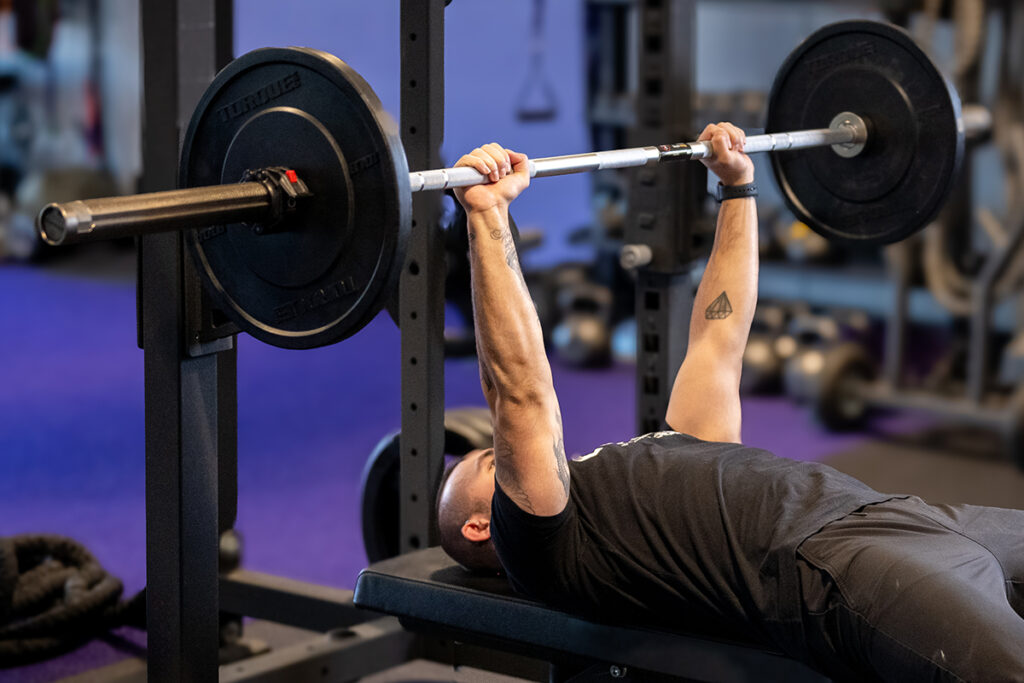
A pause makes poor positioning obvious. If your chest collapses, your elbows flare unpredictably, or your shoulders move forward at the bottom, the bar will feel much heavier after the stop. Practicing controlled pauses can teach you to maintain a more repeatable pressing position.
This matters for chest training because stable shoulders provide a better platform for the pecs to produce force. It also helps you perform repeated hard sets with less unnecessary movement.
Where the Dead Stop Bench Press Falls Short
It Is Not a Complete Chest Program
The bench press trains the chest well, but it does not cover every useful pattern on its own. Your pectoralis major performs horizontal adduction, meaning it brings the upper arm toward the center of the body. A barbell bench press challenges this movement, but your hands remain fixed on the bar.
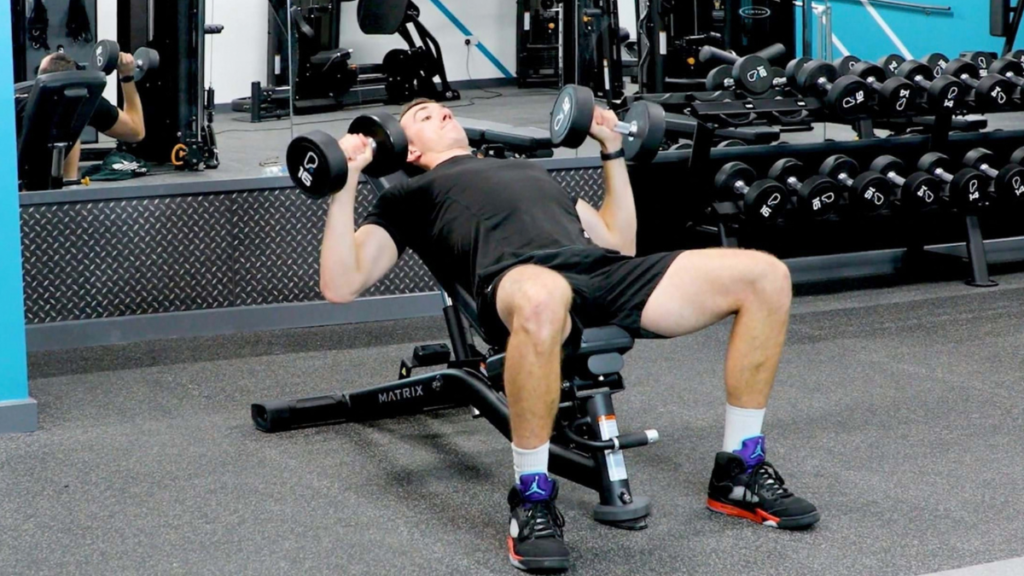
For many lifters, adding a cable fly, machine fly, dumbbell press, or chest press machine provides useful variety. These exercises can offer a different resistance profile and may allow you to train close to failure with less technical fatigue.
If your goal is a more muscular chest, think in terms of a weekly plan rather than searching for one perfect exercise. The dead stop bench press can be your main strength focused press, while other movements provide additional chest volume.
It Can Limit Your Productive Volume
Pausing increases difficulty. That is its appeal, but it can also be its drawback. If every set is extremely slow, heavy, and mentally demanding, you may struggle to accumulate enough high quality weekly work.
A brief pause is usually enough. You do not need to hold the bar on your chest for several seconds or use an exaggerated stop on every rep. For most people, a one second pause gives the benefits of improved control without turning every set into a maximal strength test.
Pin based dead stop bench presses can be even more demanding. They are valuable, but they often work best with lower repetitions and careful loading. Treat them as a focused strength variation, not as the only chest exercise in your program.
It May Not Suit Every Shoulder
The bottom position of a barbell bench press can irritate some shoulders, particularly when grip width, elbow position, or range of motion is poorly matched to the individual. A dead stop does not automatically solve this issue. In fact, starting from a completely motionless position can feel more demanding for some lifters.

If you feel sharp pain, pinching, or worsening discomfort, do not push through it because the exercise is supposed to be good for your chest. Adjust your grip, reduce the range, use dumbbells or machines, or consult a qualified health professional if pain persists.
How to Perform It Properly
Set up as you would for a conventional bench press. Plant your feet firmly, create a stable upper back, and position your eyes beneath the bar. Use a grip that allows your forearms to remain close to vertical when the bar reaches your chest.
Unrack the bar and lower it under control toward the lower to middle portion of your chest. Keep your shoulder blades set and avoid letting the shoulders roll forward. Once the bar reaches your chest, pause until it is completely still. Do not relax your body or sink into the bottom position.
Press the bar up and slightly back toward the rack. Think about driving your body into the bench while pressing the bar away. Finish with controlled elbows rather than aggressively slamming the bar into lockout.
For a pin version, set the safety pins at a height that lets you use a comfortable, repeatable range. Begin each rep from a complete stop, but do not relax your upper back or lose tension while the bar settles.
How to Program It for a Bigger Chest
The dead stop bench press works well at the start of an upper body or chest session, when your technique and concentration are highest. For most lifters, two to four sets of five to eight repetitions is an effective starting point. Use a load that is challenging but leaves your form intact.
If you are new to paused bench pressing, begin with a lighter load than your normal touch and go bench press. Your first sessions may feel humbling, particularly if you are used to relying on a rebound. That is normal. Progress gradually by adding repetitions or small amounts of weight when every rep remains controlled.

You can also use it as one exercise in a broader chest session. After the dead stop bench press, use a more stable movement such as a machine chest press or dumbbell press for moderate to higher repetitions. Finish with a cable or machine fly if you want more chest focused work with less triceps limitation.
A productive chest plan should include enough hard weekly sets, usually spread across at least two sessions for many lifters. The exact number depends on training experience, recovery, exercise selection, and how close each set is taken to failure. The best approach is to begin with an amount you can recover from, then adjust based on strength progress, performance, and how your chest responds over several weeks.
Is It the Perfect Chest Exercise?
The dead stop bench press is not the perfect chest exercise because no single exercise can guarantee maximum hypertrophy for every person. It does not replace sufficient training volume, progressive overload, good technique, nutrition, or recovery.
However, it is an excellent exercise for lifters who want a more controlled, honest, and challenging bench press. It trains the chest through a full range, reduces excessive momentum, strengthens the bottom position, and can help make your standard bench press stronger over time.
Use it as a high quality primary press, not as a magic shortcut. Combine it with enough total chest work and keep your technique consistent. Done this way, the dead stop bench press can be one of the most valuable tools in your program for building a stronger and more muscular chest.
References
- Androulakis Korakakis, P., Fisher, J.P. and Steele, J. (2020) ‘The effect of range of motion on muscle hypertrophy: A systematic review and meta analysis’, Sports Medicine, 50(2), pp. 371–387.
- Grgic, J., Schoenfeld, B.J., Davies, T.B., Lazinica, B., Krieger, J.W. and Pedisic, Z. (2018) ‘Effect of resistance training frequency on gains in muscular strength: A systematic review and meta analysis’, Sports Medicine, 48(5), pp. 1207–1220.
- Martínez Cava, A., Hernández Belmonte, A., Courel Ibáñez, J., Morán Navarro, R., González Badillo, J.J. and Pallarés, J.G. (2019) ‘Range of motion and sticking region effects on the bench press load velocity relationship’, Journal of Sports Science and Medicine, 18(4), pp. 769–777.
- Rodríguez Rosell, D., Torres Torrelo, J., Franco Márquez, F., González Badillo, J.J. and Pareja Blanco, F. (2020) ‘Effects of velocity loss in the bench press exercise on strength gains, neuromuscular adaptations and muscle hypertrophy’, Scandinavian Journal of Medicine and Science in Sports, 30(11), pp. 2154–2166.
- Schoenfeld, B.J., Ogborn, D. and Krieger, J.W. (2017) ‘Dose response relationship between weekly resistance training volume and increases in muscle mass: A systematic review and meta analysis’, Journal of Sports Sciences, 35(11), pp. 1073–1082.
- Tillaar, R. van den and Ettema, G. (2010) ‘The sticking period in a maximum bench press’, Journal of Sports Sciences, 28(5), pp. 529–535.
- Wilk, M., Krzysztofik, M., Gepfert, M., Poprzecki, S., Gołaś, A. and Maszczyk, A. (2021) ‘The influence of movement tempo during resistance training on muscular adaptations: A systematic review’, Sports Medicine, 51(6), pp. 1253–1273.
- Wirth, K., Hartmann, H., Mickel, C., Szilvas, E., Keiner, M. and Sander, A. (2016) ‘Core stability in athletes: A critical analysis of current guidelines’, Sports Medicine, 47(3), pp. 401–414.
Key Takeaways
| Takeaway | What it means for your chest training |
|---|---|
| Dead stop pressing removes momentum | A pause forces you to produce force from the bottom position instead of relying on a rebound. |
| It is highly useful, but not perfect | There is no direct evidence that it builds more chest muscle than every conventional bench press variation. |
| Full range and hard sets matter | Use a controlled range that suits your shoulders and accumulate enough productive weekly chest work. |
| Keep the pause brief | A one second pause is usually sufficient for control without reducing training volume too severely. |
| Combine it with other chest work | Pair dead stop bench presses with presses and fly variations to build a more complete chest program. |