

Broad shoulders can change the look of your whole physique. They make your waist appear narrower, improve the upper body silhouette in a T shirt, and add more presence from the front, back, and side. Genetics determine the width of your clavicles and rib cage, so training cannot change your skeletal frame. It can, however, add size to the muscles that sit on the outer edge of your shoulders and upper back. That is where the visual difference comes from.
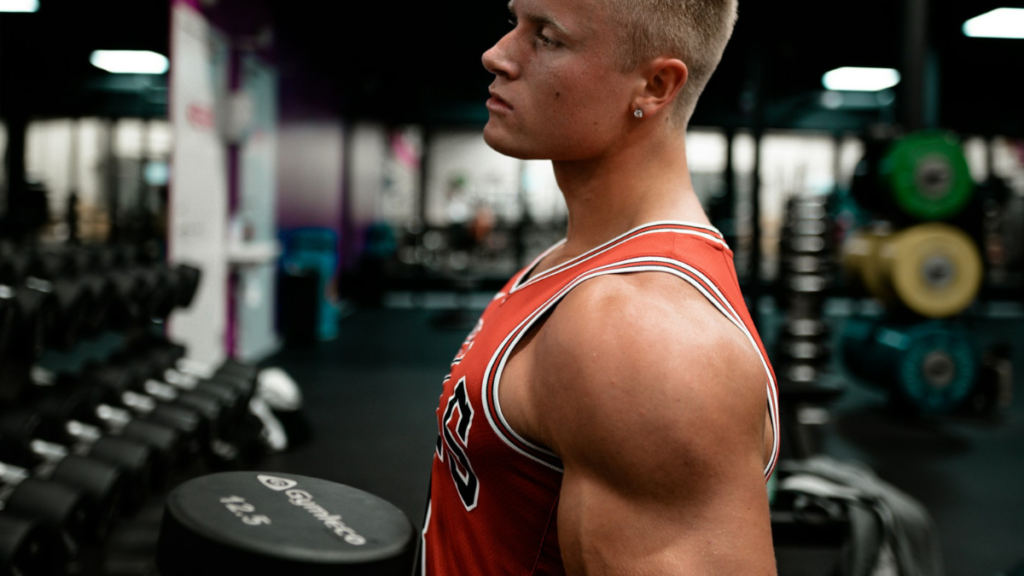
The deltoid is not one uniform muscle. It has anterior, middle, and posterior portions with different lines of pull and different roles during shoulder movement. For the widest possible look, the middle deltoid deserves the most attention because it adds visible mass to the sides of the upper arm. The posterior deltoid also matters because it helps the shoulder look rounder and fuller from the side and back.



Pressing exercises are useful, but they do not automatically solve this problem. Bench presses, push ups, and overhead presses provide plenty of work for the anterior deltoid. A shoulder specialization plan should therefore include movements that directly train the middle and posterior deltoid rather than simply adding more pressing volume.
The three exercises below are practical choices for building that wider appearance. They are simple enough for beginners, easy to load progressively, and supported by research on muscle function, exercise activation patterns, and hypertrophy training principles.
What Actually Makes Shoulders Look Wider?
A wider shoulder appearance is mainly a matter of muscle size in the right places. The middle deltoid sits on the outside of the shoulder and contributes strongly to arm abduction, which is the action of lifting the arm away from the body. Adding muscle to this region increases the distance between the outer edges of your upper arms. That creates the visual width most people are chasing.
The posterior deltoid sits at the back of the shoulder. It contributes to horizontal abduction and external rotation of the shoulder, and it supports a more complete shoulder shape when viewed from the side or rear. Training it will not replace middle deltoid work, but it can make the shoulder cap look more three dimensional.

This is why a plan built entirely around chest pressing and front raises is usually unbalanced for aesthetics. Research using electromyography shows that different shoulder exercises emphasize different portions of the deltoid. Electromyography does not prove long term muscle growth by itself, but it is useful for understanding which muscles are working hardest during an exercise. For muscle growth, the bigger picture is progressive resistance training, sufficient hard sets, and consistent effort over time.
Research reviews show that resistance training increases muscle size across a wide range of loading styles. You do not need extremely heavy weights to grow your delts. Lighter loads can also build muscle when the sets are challenging and performed with controlled technique. This is good news because lateral raise variations are usually more comfortable and more controlled with moderate or light resistance.
Exercise One: Single Arm Cable Lateral Raise
The single arm cable lateral raise is one of the best choices for targeting the middle deltoid. Unlike a dumbbell, a cable can provide meaningful resistance from the lower part of the movement onward. This helps make the exercise challenging through a larger portion of the range of motion.
How to Perform It
Set a cable pulley near ankle height and attach a single handle. Stand sideways to the machine with the working arm farther from the cable. Hold the handle with that arm and take a small step away from the machine so the cable has tension before you begin.
Keep a soft bend in your elbow and raise your arm out to the side until your upper arm is roughly parallel to the floor. Your hand does not need to travel dramatically higher than your shoulder. Lower the handle slowly and keep tension as you return to the start. Your torso should stay mostly still throughout the set.
Think about moving your upper arm outward rather than lifting the handle with your hand. This cue can help you avoid turning the movement into a shrug.
Why It Works
The lateral raise directly trains shoulder abduction, the major action of the middle deltoid. In a study of trained bodybuilders, lateral raise variations produced substantial activity in the medial deltoid, with the neutral arm position producing greater medial deltoid activity than several other tested variations. This supports the basic practical point that a controlled lateral raise is a direct way to load the muscle that creates shoulder width.
Keep the weight modest enough to avoid swinging. If your body rocks from side to side, the resistance has probably become too heavy for the middle deltoid to control. The cable is especially useful because small load increases are easy to make, which is valuable for an isolation movement where a large jump in weight can change technique quickly.
Aim for two to four sets of about 10 to 20 repetitions. Stop the set when you feel that your form is about to change, rather than when you need to use momentum to finish the repetition. You should feel the outer shoulder doing most of the work, not your lower back or upper traps.
Exercise Two: Dumbbell Lateral Raise
The dumbbell lateral raise is simple, accessible, and still highly effective. Almost every gym has dumbbells, and you can use this exercise at home if you have a pair of adjustable weights. It is also easy to learn once you respect the fact that it is not a strength test.
How to Perform It
Stand tall with a dumbbell in each hand and your arms resting by your sides. Slightly bend your elbows, then raise the dumbbells outward in a smooth arc. Stop around shoulder height and lower under control. Keep your palms facing the floor or slightly toward each other as you move.
Use a natural shoulder position. You do not need to force an exaggerated internal or external rotation. A comfortable, controlled path that lets you feel the side of the shoulder working is a sensible place to start.
Avoid aggressively shrugging the weights upward. Your upper traps will always contribute to some degree, but the goal is to keep the shoulder blades relatively calm while the upper arms move away from the body. If every repetition ends with your shoulders close to your ears, reduce the load and slow the lowering phase.
Why It Works
The dumbbell lateral raise is a direct isolation exercise for the middle deltoid, and it can be loaded effectively with lighter weights. This matters because research comparing resistance training loads has found similar muscle growth across low and high load conditions when sets are taken to a sufficiently challenging effort. For a movement such as the lateral raise, this means there is no need to force very heavy dumbbells simply because heavy training is often associated with muscle gain.
The dumbbell version has a resistance profile that becomes more challenging as the arm rises because gravity acts downward. That makes the upper half of the lift demanding, so control matters. A brief pause near the top can help you prevent momentum from taking over and make each repetition more consistent.
Start with two or three sets of 12 to 20 repetitions. Once you can reach the top of your target repetition range without swinging or shrugging, increase the weight by the smallest available amount. This slow progression may feel less exciting than adding plates to a barbell, but it is exactly what effective shoulder isolation training often requires.
Exercise Three: Reverse Pec Deck Fly
The reverse pec deck fly is an excellent choice for the posterior deltoid. It is more stable than many free weight rear delt exercises, which makes it easier for beginners to focus on the target muscle and repeat the same movement pattern from set to set.
A fuller posterior deltoid does not expand your frame in exactly the same way as a middle deltoid. Still, it adds visible roundness to the shoulder cap and improves the look of your upper body from angles that lateral raises alone do not fully address.
How to Perform It
Sit facing the pad of a reverse pec deck machine. Adjust the seat so your hands are roughly in line with your shoulders. Hold the handles with a relaxed grip and keep a slight bend in your elbows.
Move your arms outward and backward until they are roughly in line with your torso. Focus on driving your upper arms apart rather than squeezing your shoulder blades as hard as possible. Return slowly until you feel a comfortable stretch across the back of the shoulders.
Keep your chest against the pad throughout the movement. The pad removes the temptation to swing the torso backward, which is one reason the machine works so well for this exercise. If you do not have a reverse pec deck, an incline dumbbell rear delt fly is a practical alternative.
Why It Works
The posterior deltoid is active during shoulder horizontal abduction, which is the main action in a reverse fly. Research examining lateral raise variations also found that changes in arm position can alter posterior deltoid activity, reinforcing the idea that the different portions of the deltoid respond differently to the movement you choose.
The reverse pec deck allows you to train the posterior deltoid without requiring heavy loads. That is helpful because the posterior deltoid is a relatively small muscle and often responds better when you can maintain a controlled path and avoid turning the movement into a row. A slightly higher repetition range is usually practical here because it lets you accumulate quality work without sacrificing technique.
Use two to four sets of 12 to 20 repetitions. Keep the return portion slow and controlled. The goal is not to move the biggest stack on the machine. The goal is to make the rear delts do repeated, demanding work over a comfortable range of motion.
How to Build These Exercises Into Your Training
You do not need a complicated shoulder day. A straightforward approach is to perform one lateral raise variation and one rear delt movement two or three times per week. You can alternate cable and dumbbell lateral raises across sessions, or choose the one that feels more stable and easier to progress.
Weekly training volume matters. A systematic review and meta analysis found a dose response relationship between the number of weekly resistance training sets and muscle growth. More is not always better if recovery, technique, or motivation collapse, but doing only a handful of easy sets is unlikely to maximize results.
A sensible starting point is six to 10 direct sets per week for the middle deltoid and four to eight direct sets for the posterior deltoid. Pressing work contributes to the total shoulder workload, particularly for the anterior deltoid, so do not treat all shoulder training as separate from your chest and upper body sessions.
The 3 Best Exercises that Make Your Biceps Look Wider
For example, you could do cable lateral raises and reverse pec deck flyes after an upper body workout, then use dumbbell lateral raises later in the week after a full body or push session. Keep at least some sets challenging. You do not need to hit complete muscular failure every time, but finishing each set with several effortless repetitions left is unlikely to provide the same growth stimulus as working closer to your current capacity.
A large research review found that multi set resistance training prescriptions consistently promote hypertrophy, while the exact load is less important than many lifters assume. That gives you room to choose exercises you can perform comfortably, consistently, and with good control.
Common Mistakes That Limit Shoulder Growth
The first mistake is using too much weight. Shoulder exercises look simple, but they are easy to cheat. Momentum, spinal extension, and shrugging can make a dumbbell move upward while shifting work away from the middle deltoid. Use a load that lets you control both the lift and the lowering phase.
The second mistake is relying on presses alone. Overhead pressing is a good compound exercise and can build the anterior deltoid, triceps, and upper chest. However, it is not a substitute for direct lateral raise work when your goal is a wider look. The middle deltoid needs specific attention.
The third mistake is treating rear delts as optional. Rear delt training can improve the complete look of the shoulder and provides valuable balance alongside the pressing that many gym programs already contain. Give it regular training rather than saving it for an occasional finishing exercise.
Finally, do not change exercises every session. Give a movement enough time to practice it and progress it. Track the weight, repetitions, and quality of your form. Over several months, these modest improvements accumulate into the muscle growth that changes your shoulder shape.
The Bottom Line
If you want shoulders that look wider, prioritize exercises that directly train the middle deltoid and support it with consistent posterior deltoid work. The cable lateral raise, dumbbell lateral raise, and reverse pec deck fly cover those priorities without unnecessary complexity.
Use controlled repetitions, challenging but manageable loads, and enough weekly sets to create a real training stimulus. Your bone structure sets the starting point, but building the delts can make a meaningful difference to how broad and athletic your upper body looks.
References
- Coratella, G., Tornatore, G., Longo, S., Esposito, F. and Cè, E. (2020) ‘An electromyographic analysis of lateral raise variations and frontal raise in competitive bodybuilders’, International Journal of Environmental Research and Public Health, 17(17), 6015.
- Currier, B.S., McLeod, J.C., Banfield, L., Beyene, J., Welton, N.J., D’Souza, A.C., Keogh, J.A., Lin, L., Coletta, G., Yang, A., Colenso Semple, L., Lau, K.J., Verboom, A. and Phillips, S.M. (2023) ‘Resistance training prescription for muscle strength and hypertrophy in healthy adults: A systematic review and Bayesian network meta analysis’, British Journal of Sports Medicine, 57(18), pp. 1211 to 1220.
- Nunes, J.P., Schoenfeld, B.J., Grgic, J., Cunha, P.M., Ribeiro, A.S. and Cyrino, E.S. (2021) ‘The influence of resistance training volume on muscular adaptations in trained men: A systematic review’, Sports Medicine, 51(5), pp. 1011 to 1025.
- Schoenfeld, B.J., Grgic, J., Ogborn, D. and Krieger, J.W. (2017) ‘Strength and hypertrophy adaptations between low versus high load resistance training: A systematic review and meta analysis’, Journal of Strength and Conditioning Research, 31(12), pp. 3508 to 3523.
- Schoenfeld, B.J., Ogborn, D. and Krieger, J.W. (2017) ‘Dose response relationship between weekly resistance training volume and increases in muscle mass: A systematic review and meta analysis’, Journal of Sports Sciences, 35(11), pp. 1073 to 1082.
Key Takeaways
| Focus | Best exercise | Practical application |
|---|---|---|
| Add visible shoulder width | Single arm cable lateral raise | Use controlled sets of 10 to 20 repetitions to directly train the middle deltoid. |
| Build the outer shoulder with minimal equipment | Dumbbell lateral raise | Use light to moderate dumbbells and avoid swinging or shrugging. |
| Create fuller shoulders from the side and back | Reverse pec deck fly | Train the posterior deltoid with controlled sets of 12 to 20 repetitions. |
| Drive muscle growth | All three exercises | Build weekly volume gradually and progress repetitions or load while preserving technique. |