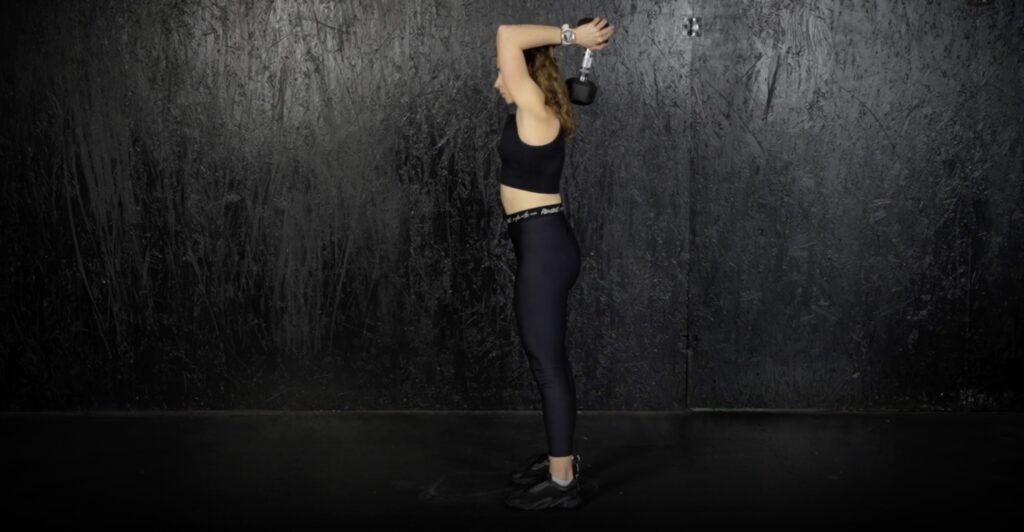


Building wider shoulders is one of the fastest ways to create a stronger looking upper body. While the shoulder press develops overall pressing strength, lateral raises directly target the lateral deltoid, which is the portion of the shoulder that adds width when viewed from the front or back.
Beginners often face a simple choice. Should you use dumbbells, which are available in almost every gym and easy to understand, or cables, which appear to keep more consistent tension on the muscle? Both exercises can be effective, but they do not feel identical and each has practical advantages.


The most useful answer is reassuring: both cable and dumbbell lateral raises can build the lateral deltoids when you perform them with sound technique, sufficient effort, and steady progression. The current direct research does not show that cables produce more lateral deltoid growth than dumbbells when training conditions are matched. Your best choice is therefore the variation you can perform comfortably, control well, and progress over time.
What Makes Shoulders Look Wider?
The deltoid is made up of three main regions. The anterior deltoid sits toward the front of the shoulder and contributes strongly to pressing movements. The posterior deltoid sits toward the rear and contributes to pulling movements and shoulder extension. The lateral deltoid runs along the outer shoulder and has the greatest direct influence on the broad, capped appearance most people associate with wide shoulders.
The lateral deltoid is responsible for moving the upper arm away from the body. A lateral raise trains this action directly, which is why it deserves a place in a beginner program focused on shoulder size. Compound exercises such as overhead presses can certainly involve the lateral deltoid, but a lateral raise allows you to dedicate work specifically to it without requiring heavy loads.
Crunches vs Hanging Leg Raises: Which Builds Better Abs for Beginners?
Resistance training increases muscle size when it provides repeated, challenging mechanical loading over time. Research on training volume consistently finds that more productive sets generally lead to greater muscle growth, although the benefit gradually becomes smaller as volume rises. For beginners, this means regular, well performed lateral raises matter more than finding a supposedly perfect piece of equipment.
Dumbbell Lateral Raises Explained
A dumbbell lateral raise is performed by holding a dumbbell in each hand and lifting the arms outward until the upper arms are approximately parallel with the floor. The exercise is simple, portable, and easy to fit into almost any upper body workout.
The Resistance Profile of Dumbbells
A dumbbell’s resistance is affected by gravity. At the bottom of a dumbbell lateral raise, when your arms hang close to your sides, the dumbbell has a very small leverage advantage against the shoulder. The exercise becomes harder as the arms move farther away from the body, with the greatest challenge usually occurring near the top portion of the movement.
This means the bottom portion can feel relatively easy, while the upper half demands more effort. That is not a flaw. It is simply the resistance pattern created by a free weight and gravity. A beginner can still gain substantial shoulder muscle from dumbbell lateral raises when the set is challenging and the movement is controlled.
Why Dumbbells Work Well for Beginners
Dumbbells are convenient and require very little setup. You can train both arms together, use them in a crowded gym, and make small adjustments to your body position as needed. They also encourage you to learn how to stabilize the shoulder and control the arms through space.
The main limitation is that small increases in dumbbell weight can feel dramatic. Moving from a 10 pound dumbbell to a 15 pound dumbbell raises the load by 50 percent, which may be too large a jump for an isolation exercise. If your gym has limited dumbbell options, you may need to progress by improving repetitions, control, or range of motion before moving to the next weight.
Cable Lateral Raises Explained
A cable lateral raise is commonly performed one arm at a time with the pulley set close to floor level. You stand beside the machine, grasp the handle with the far hand, and raise the arm outward. Some lifters position the cable slightly behind the body or begin with the arm crossing lightly in front of the torso.
How Cables Change the Feel of the Exercise
A cable can apply meaningful resistance earlier in the movement because the line of pull does not rely solely on gravity. When the pulley is low and the cable passes across the body, the lateral deltoid can experience tension closer to the bottom position than it does during a standard dumbbell raise.
Many people find this smoother and more comfortable. It can also make it easier to keep tension through a longer part of the repetition. However, continuous tension does not automatically guarantee more muscle growth. It is one training characteristic, not a shortcut around the need for enough hard sets and progressive overload.
Why Cables Can Be Useful for Beginners
Cable stacks usually allow smaller weight increases than dumbbells. This makes progression easier, particularly when you are training a smaller muscle group like the lateral deltoid. One arm cable work may also help you focus on keeping the torso still and the shoulder movement controlled.
The drawback is setup. You need an available cable station, and the exercise can feel awkward until you find a position that suits your limb length and the machine’s pulley height. Beginners who are still learning basic gym confidence may find dumbbells less intimidating at first.
What the Research Says About Cable and Dumbbell Raises
The strongest direct evidence comes from an eight week study comparing cable and dumbbell lateral raises in resistance trained men and women. Each participant used a cable variation with one arm and a dumbbell variation with the other. The researchers matched range of motion, training frequency, sets, and effort across both conditions.
Both variations increased lateral deltoid muscle thickness. The increases ranged from 3.3 percent to 4.6 percent across the measured regions, but the researchers found no meaningful advantage for either cables or dumbbells. This is important because the cable variation was designed to provide greater resistance at the more lengthened bottom portion of the movement, while the dumbbell variation became hardest higher in the range of motion.
The study involved trained lifters rather than beginners, so it cannot prove that every novice will respond in exactly the same way. Still, beginners usually have plenty of potential to gain muscle from basic resistance training. There is no good reason to believe that a beginner must use cables to develop wider shoulders.
Research on different lateral raise techniques also supports a simple technical point. A neutral arm position can produce greater medial deltoid activity than some common alternatives, including internally rotated raises. Electromyography does not measure long term muscle growth directly, but it can help identify whether a variation is placing more emphasis on a target muscle during the movement.
The practical conclusion is clear. Neither cables nor dumbbells have a proven hypertrophy advantage when the important training variables are matched. The better exercise is the one that lets you train the lateral deltoid hard with stable technique and minimal joint discomfort.
How to Perform Each Variation Well
Dumbbell Lateral Raise Technique
Stand tall with the dumbbells beside your thighs and keep a soft bend in the elbows. Raise the arms outward in a controlled arc, stopping around shoulder height or slightly below if that feels more comfortable. Your hands do not need to rise higher than your elbows, and your shoulders should not shrug toward your ears.
Use a load that allows you to avoid swinging. A small amount of natural body movement can occur during a demanding set, but repeated momentum from the legs or lower back shifts work away from the shoulder. Lower the dumbbells under control and allow the arms to return close to your sides before starting the next repetition.
Cable Lateral Raise Technique
Set the pulley at its lowest position and stand side on to the machine. Hold the handle with the outside hand, keeping the cable in front of or lightly across your body. Start with the working arm close to your side, then raise it outward in the same controlled arc used with a dumbbell.
Avoid twisting toward the machine or leaning excessively away from it. Keep the rib cage steady, use a comfortable elbow bend, and focus on moving the upper arm rather than pulling with the hand. If the cable rubs against your body or the starting position feels restrictive, take a small step farther from the stack or adjust your stance.
Which Exercise Should Beginners Choose?
Choose dumbbells if you want the simplest option, train at home, or prefer performing both arms at the same time. Dumbbell raises are an excellent foundation exercise, and their simplicity makes it easier to build a consistent habit.
Choose cables if you have easy access to a cable station, want smaller load increases, or find that cable resistance feels more comfortable and controlled. They can be especially useful once your dumbbell progress slows because cable stacks often provide more manageable increments.
You can also use both. For example, a beginner could perform dumbbell raises for several weeks while learning the movement, then use cables for an additional shoulder exercise or alternate the variations across training days. Variety is useful when it helps you train consistently, but it is not required for growth.
Your program should prioritize gradual progression. Start with a weight that lets you complete controlled repetitions while still making the final repetitions challenging. As you improve, add repetitions, improve control, add a small amount of weight, or complete another productive set. The goal is not to force a heavier load every session. The goal is to give the lateral deltoids a stronger training stimulus over time.
Sets, Repetitions, and Weekly Frequency
Lateral raises work well with moderate to high repetitions because the lateral deltoid is relatively small and heavier loads can make cheating more likely. Many beginners do well with sets of roughly 10 to 20 controlled repetitions. The final repetitions should require concentration, but you do not need to take every set to absolute failure.
Two or three weekly shoulder sessions can work well if they allow you to recover and maintain good form. Total weekly volume is likely more important for muscle growth than how that volume is divided across the week. Start conservatively, then add work only when you are recovering well and your technique remains solid.
A sensible starting point is several direct lateral raise sets per week, in addition to any pressing you already perform. You can build from there based on progress, soreness, joint comfort, and your ability to keep the movement strict.
The Verdict
Cable lateral raises are not superior to dumbbell lateral raises for building wider shoulders. Direct research shows that both can increase lateral deltoid size to a similar degree when effort, volume, and range of motion are matched.
Dumbbells win on simplicity and convenience. Cables win on adjustable resistance and smoother loading through the lower portion of the movement. For a beginner, the most productive choice is the variation that feels comfortable, allows clean repetitions, and encourages consistent progression.

If both options feel good, use the one you enjoy more. Shoulders grow from repeated, challenging training performed well over months, not from chasing a marginal equipment advantage.
Key Takeaways
| Decision | Best choice | Why |
|---|---|---|
| Building wider shoulders | Either cables or dumbbells | Both can grow the lateral deltoids effectively |
| Simplest beginner option | Dumbbell lateral raise | It is easy to learn, set up, and use almost anywhere |
| Easiest load progression | Cable lateral raise | Cable stacks often provide smaller weight increases |
| Resistance near the bottom position | Cable lateral raise | The cable can maintain more tension when the arm is close to the body |
| Most important training factor | Consistent hard sets with good technique | Volume, effort, and progression matter more than equipment choice |
| Best long term strategy | Use the variation you can control and progress | Comfort and consistency support better training adherence |
References
- Coratella, G., Tornatore, G., Longo, S., Esposito, F. and Cè, E. (2020) ‘An electromyographic analysis of lateral raise variations and frontal raise in competitive bodybuilders’, International Journal of Environmental Research and Public Health, 17(17), 6015.
- Larsen, S.S., Wolf, M., Schoenfeld, B.J., Sandberg, N.Ø., Fredriksen, A.B., Kristiansen, B.S., van den Tillaar, R., Swinton, P.A. and Falch, H.N. (2025) ‘Dumbbell versus cable lateral raises for lateral deltoid hypertrophy: an experimental study’, Frontiers in Physiology, 16, 1611468.
- Pelland, J.C., Remmert, J.F., Robinson, Z.P., Hinson, S.R., Steele, J. and Zourdos, M.C. (2026) ‘The resistance training dose response: meta regressions exploring the effects of weekly volume and frequency on muscle hypertrophy and strength gains’, Sports Medicine, 56, pp. 481 to 505.
- Schoenfeld, B.J., Ogborn, D. and Krieger, J.W. (2017) ‘Dose response relationship between weekly resistance training volume and increases in muscle mass: a systematic review and meta analysis’, Journal of Sports Sciences, 35(11), pp. 1073 to 1082.