

There is no single bench press number every man over 30 should be able to lift. Your body weight, training history, technique, and the way the lift is tested all affect the result. Still, research offers a useful reference point: in one large group of men aged 24 to 39 who completed fitness examinations, the average one repetition maximum bench press was about 78 kilograms, or 172 pounds.
That figure is a comparison point, not a pass or fail mark. The group was not a random sample of every man in the population, and its age range included men younger than 30. A more useful personal benchmark is often your bench press relative to your body weight. For a healthy man who trains consistently, pressing your own body weight once with controlled technique is a reasonable strength goal. It is not a requirement for health, and it may not be appropriate for everyone.


What Is the Average Bench Press for a Man Over 30?
A study using data from the Cooper Center Longitudinal Study reported an average bench press one repetition maximum of 78.0 kilograms, or about 172 pounds, among men aged 24 to 39. The standard deviation was 17.7 kilograms, which shows that individual results varied considerably around the average.
The age group is close to, but not exactly the same as, men aged 30 and older. The study also involved people who attended preventive medical examinations, rather than a randomly selected sample of all men. That means the result is a helpful real world reference, but it should not be treated as a definitive national average or a target that every man should reach.
Body weight matters when interpreting the number. A 172 pound bench press means something different for a man who weighs 150 pounds than for a man who weighs 230 pounds. That is why strength comparisons often use a relative measure: the weight lifted divided by the lifter’s body weight. A man weighing 180 pounds who benches 180 pounds has a one times body weight bench press.
For a broad, practical reference, a man in his 30s who is new to lifting might work toward a controlled bench press around half his body weight, then build from there. A consistent recreational lifter may aim for a one times body weight single over time. These are coaching benchmarks, not scientific rules or medical standards. The available research does not establish one exact barbell bench press that every man over 30 should be able to perform.
How Strong Is a Body Weight Bench Press?
A one times body weight bench press is a useful strength milestone for many recreational lifters. It means you can press a barbell loaded to your own body weight for one repetition, with a consistent range of motion and control. It is a more meaningful comparison than a fixed number because it accounts for some of the difference in body size.
It still does not tell the whole story. Body weight is not the same as muscle mass, and two men of equal weight can have different builds, limb lengths, and training backgrounds. A taller lifter with longer arms may have to move the bar farther than a shorter lifter. A larger body weight also does not guarantee that a lifter can press more.
Push-Ups vs Dumbbell Press: Which Builds a Bigger Chest?
It is also important to distinguish a one repetition maximum from a weight you can lift for several repetitions. A one rep max is the heaviest weight you can lift once with safe, consistent technique. If you have not tested a true maximum, you can track progress with a weight you can lift for several repetitions and estimate your maximum, but the estimate will not be exact.
Powerlifting data can provide another comparison, but it represents a very different group. A large study of nearly 810,000 competition entries reported bench press results from drug tested, unequipped powerlifters. These athletes had chosen to train for competition, so their results should not be presented as the average for all men or even all men who visit a gym. Competition standards can help describe strength among trained lifters, but they are not a sensible baseline for someone who does not train specifically for powerlifting.
Does Turning 30 Change Your Bench Press?
Turning 30 does not suddenly reduce your strength. Age is only one factor, and changes in training, activity, health, and body composition can influence lifting performance. Research using strength data across age groups suggests that strength can be maintained through much of midlife, while average values tend to be lower in older groups. That pattern describes groups, not a fixed timetable for each person.
The Cooper Center study included men in several age bands and found that average bench press strength was not the same across every age group. However, it cannot tell an individual how much strength they will lose as they age. Many men continue to build strength in their 30s, 40s, and beyond, especially when they train regularly and adjust their sessions to their needs.
Age also does not determine your starting point. A 35 year old who has never followed a strength program may have less bench press experience than a 55 year old who has trained for years. If you are new to lifting, compare your progress with your own previous performance before comparing yourself with people in a different training group.
How to Judge Your Bench Press Fairly
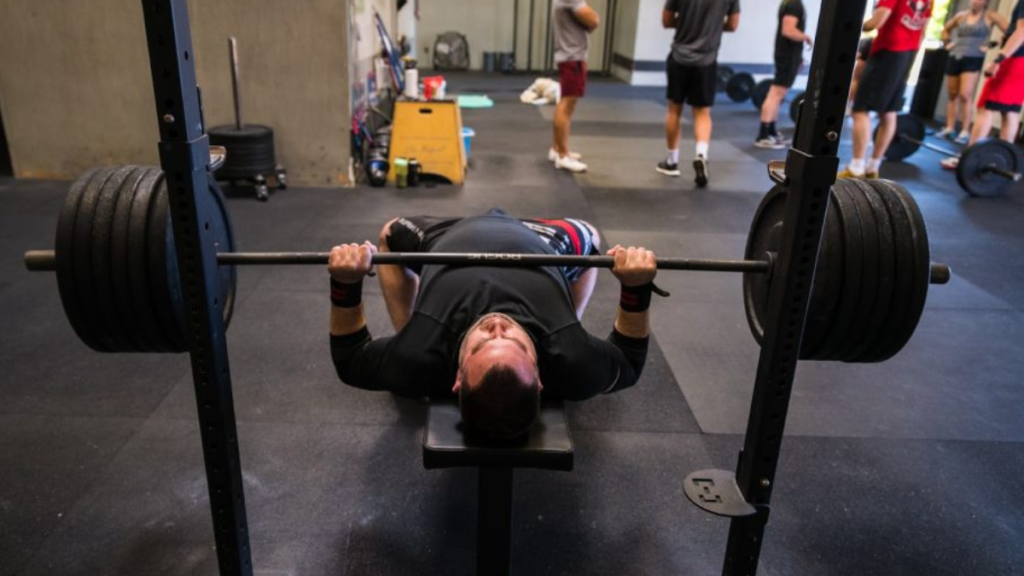
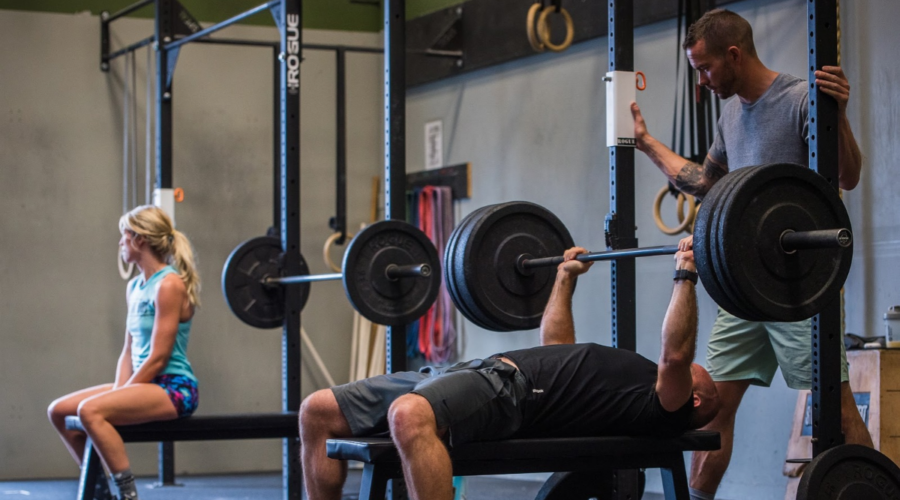
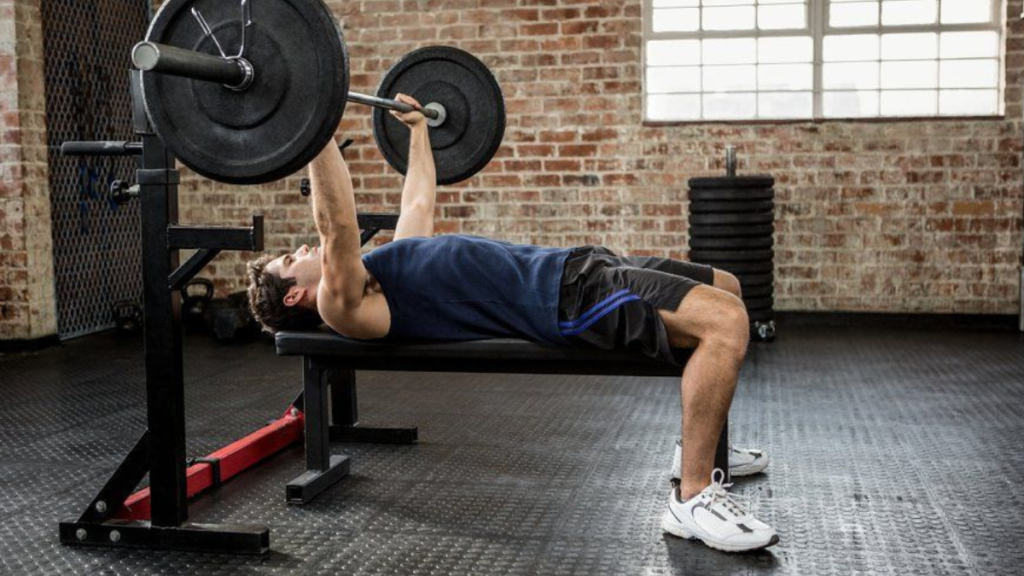
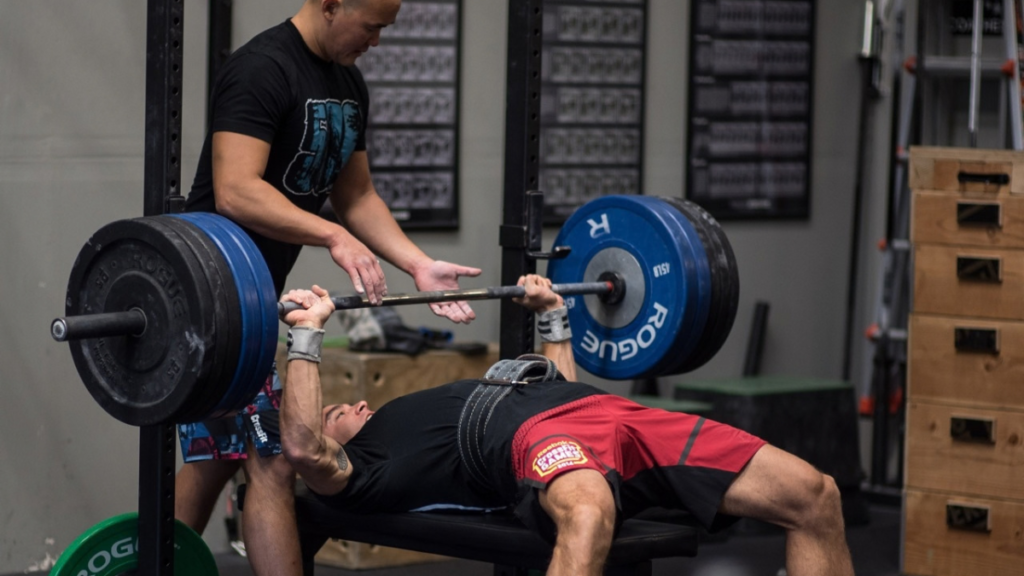
For a meaningful comparison, use the same equipment and technique each time. Set up with your feet planted, your upper back supported by the bench, and your grip in a comfortable position. Lower the bar under control to your chest, then press it up without bouncing it or lifting your hips from the bench. A spotter or safety bars can help reduce risk when you are lifting heavy.
Range of motion and rules matter. A partial repetition, a bounced bar, or help from a spotter changes what the number means. There is no need to use powerlifting rules for every gym lift, but repeating the same standard makes your training log more useful.
If you are not experienced with heavy lifting, you do not need to test a true one rep maximum to measure progress. Instead, record the weight and repetitions you complete with good form. For example, being able to press a slightly heavier weight for the same number of controlled repetitions is a clear sign of progress. A qualified coach can help you choose a suitable test if you need a more formal measurement.
Do not treat a bench press score as a measure of overall health. The exercise tests a specific type of upper body strength. It does not measure your cardiovascular fitness, mobility, lower body strength, or general physical function. A strong bench press can be a satisfying goal, but a lower number does not mean you are unhealthy.
How to Build Toward a Stronger Bench Press
The most reliable starting point is a routine you can follow consistently. The American College of Sports Medicine’s 2026 position stand supports resistance training for healthy adults and emphasizes that programs can be tailored to a person’s goals, abilities, and experience. For strength, heavier loads can be useful, but they are not the only way to make progress.
Bench press two or more times per week if that fits your schedule and recovery. Start with a weight you can control for several repetitions, leaving some effort in reserve rather than straining through every set. Add a small amount of weight or repetitions when your technique remains steady. If progress stalls or your joints feel persistently uncomfortable, reduce the load or volume and review your form.
Supporting exercises can help develop the muscles used in pressing. Dumbbell presses, pushups, triceps exercises, and upper back work can all fit into a balanced program. They do not need to be complicated. The main goal is to train the major muscle groups regularly, use a manageable progression, and allow time to recover.
Give yourself time to improve. A new lifter may gain strength quickly at first as they learn the movement and become more comfortable with the bar. Progress often slows as training experience grows. Your rate of improvement will also depend on how often you train, the quality of your technique, your sleep, nutrition, and whether you can train without pain.
So, How Much Should You Bench?
For an approximate comparison, the average bench press one repetition maximum reported for men aged 24 to 39 in the Cooper Center study was about 172 pounds. Because the sample was not a random survey of all men and the age range was not limited to 30 and older, treat that number as a reference rather than a universal standard.
If you are a healthy man who lifts recreationally, reaching a controlled one repetition bench press around your body weight can be a reasonable longer term goal. If you are new to training, returning after time away, or managing an injury, start at a level that lets you lift safely and build gradually. Your age alone does not decide what you should be able to bench, and your progress is more useful than a single comparison with an average.
Key Takeaways
| Topic | Key takeaway |
|---|---|
| Average reference | One study reported an average bench press of about 172 pounds for men aged 24 to 39. |
| Body weight | A one times body weight bench press is a practical recreational strength milestone, not a health requirement. |
| Age | Turning 30 does not create a sudden drop in strength, and individuals progress at different rates. |
| Tracking progress | Use consistent technique and track weights and repetitions over time. |
| Safety | Build gradually and use a spotter or safety bars for heavy attempts. |
References
- American College of Sports Medicine (2026) ‘Resistance training prescription for muscle function, hypertrophy, and physical performance in healthy adults: An overview of reviews’, Medicine & Science in Sports & Exercise, 58(4), pp. 851–872.
- Farrell, S.W., Leonard, D., Li, Q. and Barlow, C.E. (2024) ‘Association between baseline levels of muscular strength and risk of stroke in later life: The Cooper Center Longitudinal Study’, Journal of Sport and Health Science, 13(5), pp. 642–649.
- van den Hoek, D.J., Beaumont, P.L., van den Hoek, A.K., Owen, P.J., Garrett, J.M., Buhmann, R. and Latella, C. (2024) ‘Normative data for the squat, bench press and deadlift exercises in powerlifting: Data from 809,986 competition entries’, Journal of Science and Medicine in Sport, 27(10), pp. 734–742.