

Building a bigger chest does not require a complicated exercise menu. For most beginners, the real question is whether they should focus on the bench press, use chest flyes, or try to make both fit into a simple training plan. Both exercises train the pectoralis major, but they do it in different ways and ask different things from your shoulders, elbows, and coordination.
The short answer is that the bench press is usually the better primary chest exercise for beginners. It allows most people to use more load, improve upper body pressing strength, and make clear progress over time. Chest flyes are still valuable, especially as a secondary exercise that gives the chest more direct work through a large range of motion. They are not, however, a required replacement for pressing.


A recent study comparing dumbbell bench press and dumbbell flyes found similar pectoralis major growth when recreationally trained participants performed either exercise as part of a structured program. That is useful news because it shows that a fly is not automatically an inferior chest builder. Still, beginners need to consider more than muscle growth in isolation. Exercise technique, the ability to add weight or repetitions safely, overall strength development, and shoulder comfort all matter.
Understanding the Muscles You Are Training
The pecs are not one simple, flat muscle that works in exactly the same way in every chest exercise. The pectoralis major has a clavicular portion, commonly called the upper chest, and a larger sternocostal portion across the mid and lower chest. Its main roles include moving the upper arm toward the body, bringing the arm across the body, and assisting with internal rotation of the shoulder.
Both the bench press and chest flyes use the pectoralis major to bring the arms toward the midline. The bench press also requires substantial contribution from the triceps and front deltoids because the elbows must extend as the weight moves upward. A fly keeps the elbow angle mostly fixed, so the chest has a more direct role in moving the arms together.
That difference does not mean the bench press is only a triceps exercise or that flyes isolate the chest completely. No chest exercise removes the need for stabilizing muscles. The meaningful difference is that pressing spreads the task across multiple joints and muscles, while flyes place more emphasis on shoulder horizontal adduction.
Why the Bench Press Is Usually the Better Starting Point
It Builds Chest Size and Pressing Strength Together
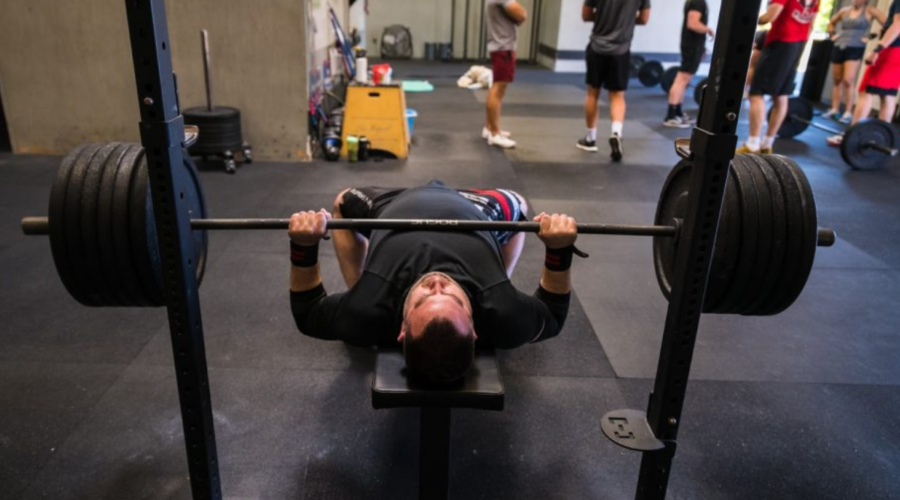
The bench press is a compound movement. This means it involves more than one joint and trains several major upper body muscles at once. For a beginner who has limited training time and limited experience with resistance exercise, this is highly useful.
The bench press can produce meaningful increases in pectoralis major size when performed consistently. It also improves the ability to press external loads, which carries over to dumbbell pressing, push ups, floor presses, and many everyday pushing tasks. A ten week training study found that bench press training increased the size of muscles involved in the movement, including the pectoralis major.
Strength is not the only goal if you want a more muscular chest, but it supports long term progress. As beginners become more skilled and stronger in the bench press, they can gradually challenge the chest with heavier loads or additional repetitions. This is progressive overload, one of the central principles of resistance training adaptation.
It Is Easier to Progress Systematically
Progression is especially important for beginners because early improvements come quickly when training is regular and technique improves. With a barbell or dumbbell bench press, you can record the load, repetitions, and sets, then aim to improve one of those variables over time.
For example, if you can perform three sets of eight controlled dumbbell bench presses with a given weight, you might first work toward three sets of ten. Once you can complete that target with clean form, you can use a slightly heavier pair of dumbbells and repeat the process. This approach gives you a clear, measurable path forward.
The American College of Sports Medicine recommends that novice lifters use planned progression and increase load when they can exceed their target repetition number by one or two repetitions. This is a practical guideline because it encourages progress without forcing constant maximal lifting.
It Can Be Adapted to Your Equipment and Experience
The bench press is not limited to a barbell. Beginners can use dumbbells, a chest press machine, a Smith machine, or even a push up variation. Each option has a slightly different learning curve, but all can provide a stable and effective base for chest training.
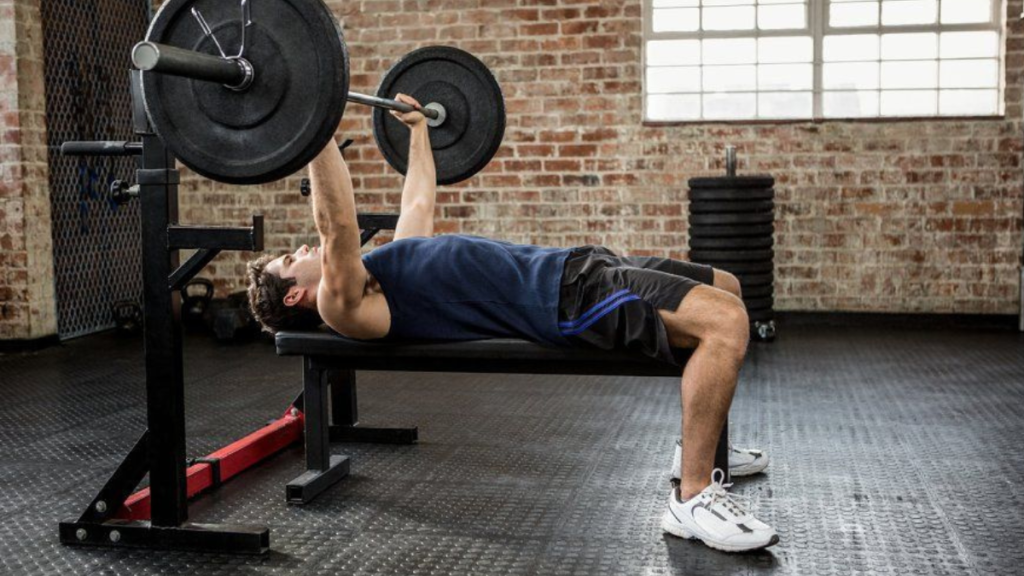
A machine chest press can be particularly useful if balancing dumbbells or controlling a barbell feels intimidating. Dumbbell bench pressing is also an excellent option because each arm works independently and the hands can move through a more natural path. A barbell bench press is highly efficient for loading, but it is best learned with a conservative weight and, when possible, an experienced spotter or properly set safety arms.
Where Chest Flyes Fit Into a Beginner Program
Flyes Give the Chest More Direct Work
Chest flyes can be performed with dumbbells, cables, resistance bands, or a pec deck machine. The movement is based on bringing the upper arms inward in a hugging motion while maintaining a slight bend in the elbows.
Because the elbows do not straighten and bend much during a fly, the triceps contribute less than they do in a press. This can make flyes feel more chest focused. That sensation is not the same thing as proving that an exercise builds more muscle, but flyes can provide a useful additional chest stimulus after pressing.
Direct evidence comparing dumbbell flyes and dumbbell bench presses found similar pectoralis major hypertrophy in recreationally trained people over the study period. In practical terms, this means a well performed fly can contribute to muscle growth when it is trained with sufficient effort and volume.
The Stretched Position May Be Useful, but It Needs Control
The bottom part of a fly places the pectoralis major at a longer muscle length. Research comparing resistance training at longer versus shorter muscle lengths suggests that training muscles under load at longer lengths can often promote greater hypertrophy. This does not prove that every deep fly is better than every press, but it supports the idea that controlled work in a lengthened position can be valuable.
This is also the point where beginners must be careful. The deep stretch in a fly can place substantial stress on the front of the shoulder, particularly when the weight is too heavy, the elbows are locked, or the shoulders roll forward. More range of motion is not automatically better if you cannot control it comfortably.
A good beginner fly uses a load that allows smooth control through the entire repetition. Stop the lowering phase when you feel a clear chest stretch but before your shoulders lose their stable position. The goal is tension in the pecs, not an extreme range of motion that causes discomfort.
Cable and Machine Flyes Are Often Easier Than Dumbbell Flyes
Dumbbell flyes become easier near the top because gravity no longer creates much resistance when the dumbbells are directly over the chest. Cable flyes and pec deck machines can maintain tension more consistently through the movement.
For a beginner, a pec deck or cable fly may also be easier to learn than a dumbbell fly. The setup reduces the balance requirement and can help you focus on keeping the chest lifted, shoulders controlled, and repetitions smooth. This does not make dumbbell flyes ineffective. It simply means the machine or cable version may be a more forgiving way to add chest isolation work.
Bench Press Versus Flyes for Muscle Growth

Neither Exercise Has a Magical Advantage
The evidence does not support treating either movement as a guaranteed winner for pectoralis major growth. The direct comparison between dumbbell bench press and dumbbell flyes found similar chest hypertrophy when training conditions were structured and effort was high.
Muscle growth is influenced by several factors, including enough challenging sets, appropriate effort, consistency, recovery, food intake, and progression over time. Exercise selection matters, but it is one piece of a larger picture.
Bench pressing gives you an efficient way to train the chest while also developing pressing strength. Flyes let you add direct chest work with less triceps involvement and a different resistance profile. For most beginners, this makes them complementary rather than competing exercises.
Muscle Activation Is Not the Final Answer
Electromyography studies measure the electrical activity associated with muscle contraction. These studies can be interesting, but they do not directly measure long term hypertrophy. A muscle can show high activity during an exercise without that exercise automatically producing superior growth.
A systematic review and meta analysis examining pectoralis major activation across bench press and related chest exercises concluded that exercise variations can influence activation patterns. However, beginners should not choose their entire program based on activation charts. The best movement is one that targets the intended muscles, feels comfortable, can be performed with consistent technique, and can be progressed over many weeks.
How Beginners Should Use Both Exercises
Start With a Pressing Movement
Make one press the foundation of your chest training. A dumbbell bench press, machine chest press, or barbell bench press can all work well. Choose the version you can perform with confidence and without pain.
Train it two or three times each week as part of a full body or upper body plan. Use controlled repetitions, a stable shoulder position, and a range of motion that is comfortable for you. A moderate repetition range is practical for beginners because it provides enough practice without requiring maximal loads.
For most people, two or three hard working sets of six to twelve repetitions is a useful starting point. Keep one to three repetitions in reserve on most sets. In other words, finish each set knowing you could likely have done a small number of additional clean repetitions. This lets you train hard while preserving technique.
Add Flyes After Pressing, Not Before
If you enjoy flyes and have time for more chest work, include them after your pressing exercise. Pre tiring the chest with flyes can reduce your performance on the bench press and make it harder to practice the compound movement with solid form.
Perform two or three sets of eight to fifteen repetitions using a light to moderate load. Lower the weight slowly, pause briefly in the stretched position if it feels comfortable, then bring the arms together without slamming the handles or dumbbells into each other.
Avoid turning a fly into a press. Keep a soft bend in the elbows and hold that elbow angle relatively steady. If your elbows are bending substantially as you bring the weight up, the load is probably too heavy for a true fly.
The Best Choice for Most Beginners
The bench press is the better primary pec builder for beginners because it combines chest training, strength development, practical progression, and efficiency. It allows a new lifter to get stronger while putting the pectoralis major under meaningful mechanical tension.
Chest flyes are an excellent secondary option rather than a mandatory main lift. They can add chest focused volume, expose the pecs to a controlled stretch, and make training more enjoyable for people who like the movement. The available direct research suggests that they can build the pecs effectively, but their greater shoulder demand in the stretched position makes careful technique and conservative loading particularly important.
If you only have time for one chest exercise, choose a press. If you can perform two exercises and your shoulders feel good, use a press first and flyes second. That combination gives a beginner a straightforward, evidence informed path toward stronger and better developed pecs.
Key Takeaways
Table: Chest Flyes vs Bench Press for Beginners
| Question | Best Answer for Beginners |
|---|---|
| Which exercise should come first? | The bench press or another chest press variation should usually be the main exercise because it is efficient, easy to progress, and builds pressing strength alongside chest size. |
| Can chest flyes build the pecs? | Yes. Direct research found similar pectoralis major growth from dumbbell flyes and dumbbell bench presses when training was structured and sufficiently challenging. |
| Which movement allows heavier loading? | The bench press generally allows heavier external loads because the triceps and front deltoids assist the chest. |
| Are flyes necessary for chest growth? | No. A well progressed pressing movement can build the chest effectively, although flyes can be useful additional work. |
| When should flyes be performed? | After pressing, using a controlled range of motion and a load that does not cause shoulder discomfort. |
| What is the simplest beginner approach? | Perform a pressing exercise two or three times per week and add two or three lighter fly sets afterward only if recovery, technique, and shoulder comfort are good. |
References
- Enes, A., Nunes, J.P., Ribeiro, A.S., Schoenfeld, B.J., Cyrino, E.S. and Brigatto, F.A. (2025) ‘Dumbbell bench press and dumbbell fly elicit similar pectoralis major muscle hypertrophy in recreationally trained individuals’, Journal of Strength and Conditioning Research.
- López Vivancos, A., González Gálvez, N., Orquín Castrillón, F.J., Gomes de Souza Vale, R. and Marcos Pardo, P.J. (2023) ‘Electromyographic activity of the pectoralis major muscle during traditional bench press and other variants of pectoral exercises: A systematic review and meta analysis’, Applied Sciences, 13(8), 5203.
- Pedrosa, G.F., Bortolozo, H.I., Lacerda, L.T., Schoenfeld, B.J., de Souza, E.O. and Baroni, B.M. (2025) ‘Does longer muscle length resistance training cause greater longitudinal growth in humans? A systematic review and meta analysis’, Sports Medicine and Health Science, 7(1), 39–50.
- Ratamess, N.A., Alvar, B.A., Evetoch, T.K., Housh, T.J., Kibler, W.B., Kraemer, W.J. and Triplett, N.T. (2009) ‘Progression models in resistance training for healthy adults’, Medicine & Science in Sports & Exercise, 41(3), pp. 687–708.
- Vieira, A.F., Umpierre, D., Teodoro, J.L., Lisboa, S.C., Baroni, B.M., Izquierdo, M. and Cadore, E.L. (2024) ‘Muscle hypertrophy response across four muscles involved in the bench press exercise after a 10 week resistance training program’, Journal of Sports Sciences, 42(20), pp. 1891–1899.