

Pull-ups are a useful way to train your back and arms, but doing your first strict repetition can take time. The exercise asks you to lift most or all of your body weight with your upper body, so a beginner may need an assisted version before a full pull-up feels manageable.
Changing your grip gives you a few ways to practice the movement. A shoulder-width overhand pull-up, a neutral-grip pull-up, and a chin-up are three good options to learn. Each trains many of the same muscles, including the latissimus dorsi, the large muscles along the sides of your back, as well as muscles around your shoulder blades and elbows. The grip can change how those muscles share the work, but no single grip guarantees a wider back.


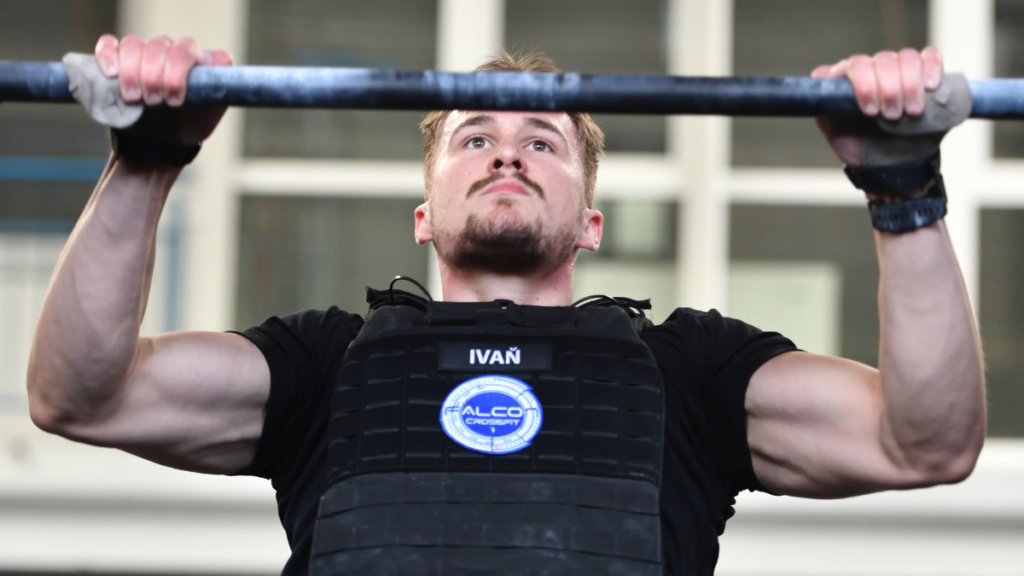
A stronger V-shaped appearance comes from building the upper back and shoulders while considering your overall body composition and natural proportions. Pull-ups can help develop the muscles of the upper body, but they cannot change bone structure or determine where your body stores fat. For beginners, good technique and steady progress matter more than chasing the widest possible grip.
What Beginners Should Know About Pull-Ups
A pull-up is a vertical pulling exercise. You hold a bar overhead and pull your body upward, then lower yourself under control. Your back muscles help move your upper arms toward your body, while your biceps and other elbow flexors help bend your elbows. Muscles around the shoulder blades and trunk also contribute to the movement.
Research comparing pull-up variations finds differences in how muscles are recruited, but the findings do not support the idea that one grip is universally best for building a V-shaped torso. Studies also have limits: many involve small groups of trained adults, and measurements of muscle activity during a single workout do not prove which exercise builds the most muscle over time. Choose a grip that lets you use a comfortable range of motion and train consistently.
If you cannot yet do a full repetition, you can practice with an assisted pull-up machine or a resistance band. Assistance reduces the amount of body weight you need to lift. A lat pulldown is another useful way to train a similar pulling pattern while adjusting the load. These exercises do not need to replace pull-ups forever. They can help you build strength while you work toward performing more of the movement without assistance.
1. Shoulder-Width Overhand Pull-Up
Why this is a useful starting point
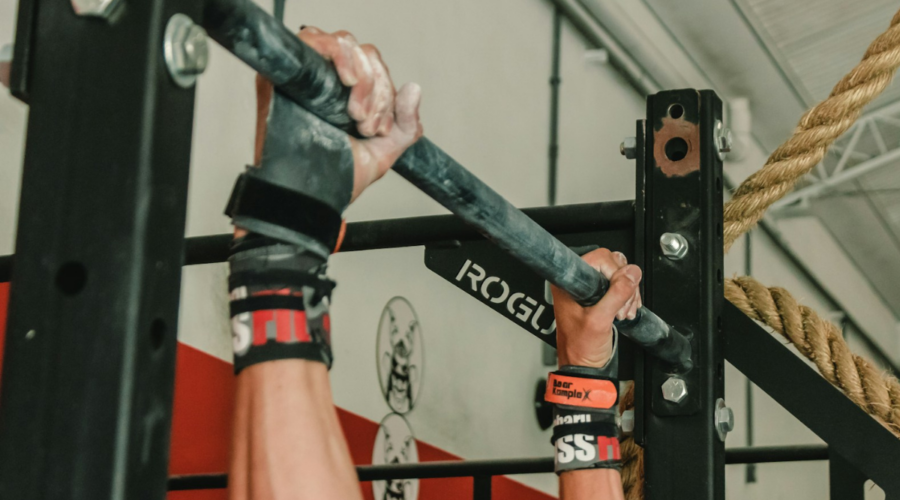
The shoulder-width overhand pull-up is a straightforward version to learn. Hold the bar with your palms facing away from you and your hands around shoulder width apart. This grip is often called pronated. It gives you a clear way to practice the standard pull-up pattern without choosing an unusually wide hand position.
A biomechanics study that compared shoulder-width overhand pull-ups, wide overhand pull-ups, and shoulder-width chin-ups found that each variation involved the main pulling muscles, although the relative contributions differed. The researchers observed greater relative activity in some back muscles during the wide version and greater contributions from the biceps and brachialis during the shoulder-width overhand version. The study involved 11 experienced male pull-up performers, so its results should not be treated as a universal ranking for beginners.
How to do it
Grip the bar with your palms facing away and your hands just outside shoulder width. Begin from a controlled hang that feels comfortable for your shoulders. Brace your midsection so your legs do not swing, then pull your elbows down toward your sides as you raise your body. Finish when your chin reaches bar height without stretching your neck to force the position. Lower yourself slowly until your arms are extended again, keeping control throughout the descent.
For a beginner, the assisted machine is a practical way to learn this grip. Set enough assistance to complete several smooth repetitions without swinging or shortening the movement. If your gym has no assisted machine, try a band that loops over the bar and supports a knee or foot. Keep track of the assistance you use, since reducing it gradually gives you a simple way to measure progress.
Avoid making your hands extremely wide in an attempt to target your lats more effectively. Research on grip width has not shown that a wider position automatically improves performance, and a very wide grip can make the movement harder to perform through a comfortable range. A grip around shoulder width is a sensible place to begin.
2. Neutral-Grip Pull-Up
Why this grip can feel approachable
For a neutral-grip pull-up, your palms face one another. You can use parallel handles attached to a pull-up station or a bar with neutral-grip handles. Some beginners find this position more comfortable for their wrists or elbows, although comfort varies from person to person.
In a study comparing pronated, supinated, neutral, and rope pull-ups, researchers measured muscle activity in trained men. The results showed that different grips changed activity in some muscles, but did not establish a single grip as best for every muscle or every trainee. These measurements describe muscle activity during the tested exercises. They do not directly measure how much muscle a beginner will gain from one grip compared with another.
How to do it
Hold the neutral handles with your palms facing one another and your hands about shoulder width apart. Start from a controlled hang, then pull your elbows down while keeping your body steady. Bring your chin to handle height if you can do so without craning your neck, then lower under control. If you use an assisted machine, choose a level that lets you keep the same steady rhythm from the first repetition to the last.
Neutral-grip handles are not available on every bar, so this variation may require a specific station or attachment. If you do not have access to one, there is no need to buy equipment just to vary your pull-up training. The overhand version and chin-up can still provide effective vertical pulling practice.
3. Chin-Up
Why it adds variety
A chin-up uses an underhand grip, with your palms facing you. Many beginners find they can complete more repetitions with this grip, in part because the biceps contribute strongly to elbow flexion. Research comparing chin-ups with overhand pull-ups has found differences in muscle activity, including greater biceps activity in the chin-up in one study. The back still works during the movement, so a chin-up is a useful option for training both the back and arms.
A chin-up is not a shortcut that removes the work from your back. It is a variation with a different hand position and a different balance of muscular effort. If the underhand position bothers your wrists, elbows, or shoulders, choose another grip or use an assisted version. Do not force a position that causes pain.
How to do it
Hold the bar with your palms facing you and your hands around shoulder width apart. Begin from a controlled hang, brace your torso, and pull your elbows toward your sides. Raise yourself until your chin reaches bar height, then lower slowly to the starting position. Keep your legs still rather than kicking to get through the hardest part of the movement.
If you cannot complete a chin-up yet, use the same assistance methods as for an overhand pull-up. A machine or band can help you practice the full movement while lifting less than your full body weight. You can also use a lat pulldown with an underhand grip to practice a similar pulling pattern at a load you control.
How to Progress as a Beginner
Choose one or two variations that feel comfortable and practice them consistently. Two sessions per week is a reasonable starting point for many beginners. In each session, try two or three sets of assisted pull-ups, aiming for a number of smooth repetitions that leaves you able to maintain your form. Rest long enough between sets to repeat the movement with control.
When you can complete the top end of your chosen repetition range with steady technique, reduce the assistance slightly. With unassisted pull-ups, add a repetition when you can do so without swinging, shortening the movement, or losing control on the way down. You do not need to train to complete failure every set. Resistance-training research indicates that muscle growth can occur across a range of loads, and that reaching momentary failure is not required in every set.

If pull-ups are currently too difficult, use a lat pulldown, assisted pull-up, or another manageable vertical pulling exercise while building strength. You can include rows in your broader training plan to practice horizontal pulling as well. These exercises train related muscles, but they are not identical to pull-ups, so keep practicing the pull-up pattern as your strength improves.
Shoulder Press vs Arnold Press: Which Builds Better Shoulders for Beginners?
The best grip is one you can perform comfortably, with a repeatable range of motion and a level of assistance or difficulty that lets you progress. You can rotate between overhand, neutral, and underhand grips over time, but you do not need to switch grips every workout. Consistent training, gradual increases in challenge, and good control are more useful than searching for a special variation.
Key Takeaways
| Key takeaway | What to remember |
|---|---|
| Start with a manageable variation | Use an assisted machine, band, or lat pulldown if you cannot yet complete a controlled pull-up. |
| Learn three useful grips | Shoulder-width overhand pull-ups, neutral-grip pull-ups, and chin-ups train similar pulling muscles with some differences in emphasis. |
| Do not rely on an extra-wide grip | Wider hand placement is not a guarantee of better back growth or a more pronounced V-shaped torso. |
| Progress gradually | Add repetitions or reduce assistance when you can maintain smooth, controlled technique. |
| Think beyond pull-ups | A V-shaped appearance also reflects shoulder development, natural proportions, and overall body composition. |
References
- Dickie, J.A., Faulkner, J.A., Barnes, M.J. and Lark, S.D. (2017) ‘Electromyographic analysis of muscle activation during pull-up variations’, Journal of Electromyography and Kinesiology, 32, pp. 30–36.
- Lopez, P., Radaelli, R., Taaffe, D.R., Newton, R.U., Galvão, D.A., Trajano, G.S., Teodoro, J.L., Kraemer, W.J., Häkkinen, K. and Pinto, R.S. (2021) ‘Resistance training load effects on muscle hypertrophy and strength gain: Systematic review and network meta-analysis’, Medicine & Science in Sports & Exercise, 53(6), pp. 1206–1216.
- Ortega-Rodríguez, R., Feriche, B., Almeida, F., Bonitch-Góngora, J. and Padial, P. (2021) ‘Effect of the pronated pull-up grip width on performance and power-force-velocity profile’, Research Quarterly for Exercise and Sport, 92(4), pp. 651–658.
- Urbanczyk, C.A., Prinold, J.A.I. and Reilly, P. (2020) ‘Avoiding high-risk rotator cuff loading: Muscle force during three pull-up techniques’, Scandinavian Journal of Medicine & Science in Sports, 30(11), pp. 2205–2214.
- Youdas, J.W., Amundson, C.L., Cicero, K.S., Hahn, J.J., Harezlak, D.T. and Hollman, J.H. (2010) ‘Surface electromyographic activation patterns and elbow joint motion during a pull-up, chin-up, or Perfect-Pullup rotational exercise’, Journal of Strength and Conditioning Research, 24(12), pp. 3404–3414.