

You do not need sit ups to build a stronger midsection. Planks, dead bugs, reverse crunches, and other controlled movements can train the abdominal muscles while giving beginners simple ways to adjust the difficulty.
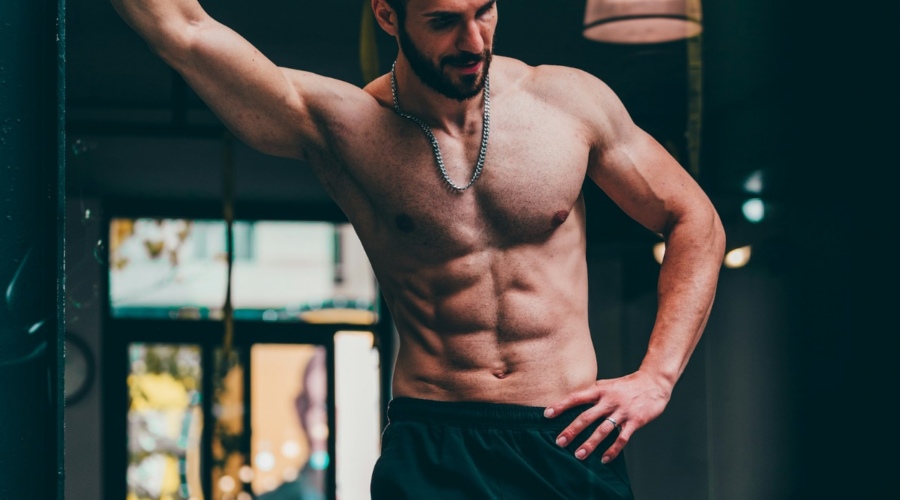
There are two parts to developing visible six pack abs. You can strengthen and build the muscles through training, but how clearly they show also depends on the amount and distribution of body fat, as well as individual differences in anatomy. Ab exercises alone cannot guarantee a defined look. They can, however, make your midsection stronger and develop the muscles underneath.


What Your Abs Do
The rectus abdominis is the long muscle at the front of your abdomen, commonly called the six pack. The external and internal obliques sit along the sides of your trunk and help you rotate and resist rotation. The transverse abdominis is a deeper muscle that helps brace the trunk.

These muscles work together during everyday tasks such as bending, reaching, carrying, and keeping your torso steady. A useful beginner routine therefore includes more than one type of movement. Exercises that resist extension, rotation, or side bending train the trunk differently from movements that bring the ribs and pelvis closer together.
Electromyography research has measured how abdominal muscles respond during different exercises. These studies can help describe which muscles are active, but a short term muscle activity measurement does not prove that one exercise will build more muscle over time. Choose movements you can perform with control and gradually make them more challenging.
The Best Beginner Exercises for Stronger Abs Without Sit Ups
1. Dead Bug
The dead bug teaches you to keep your trunk stable while moving your arms and legs. It is a good starting point if you are still learning how to brace your midsection, because the movement can be made easier by keeping your feet on the floor or moving only one limb at a time.
Lie on your back with your arms reaching toward the ceiling and your knees bent above your hips. Gently brace your abdomen, then slowly lower one arm and the opposite leg toward the floor. Stop before your lower back begins to lift or arch. Return to the starting position and repeat on the other side. Keep your movements smooth rather than trying to reach as far as possible.
Start with two sets of six to eight controlled repetitions per side. As your control improves, extend your leg farther or lower your heel closer to the floor. The goal is to maintain the same trunk position through each repetition. If you feel your lower back arching, reduce the range of motion or return to the easier version.
2. Front Plank
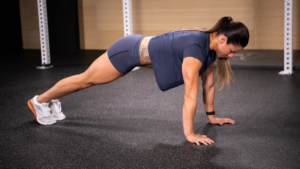
A front plank trains you to resist extension, which means keeping your trunk from sagging as gravity pulls your hips toward the floor. It also gives you a simple way to build time under tension without repeatedly bending your spine.
Place your forearms on the floor with your elbows below your shoulders. Extend your legs behind you and keep your body in a straight line from your head to your heels. Brace your abdomen as though preparing for a gentle poke, and keep breathing instead of holding your breath. End the set when you can no longer maintain your body position.
Beginners can start with a plank from their knees or with their hands elevated on a sturdy bench. Try two or three holds of 15 to 30 seconds. When you can complete the holds without your hips sagging or rising, gradually increase the time or use a lower support. Longer is not always better if your position breaks down.
3. Side Plank
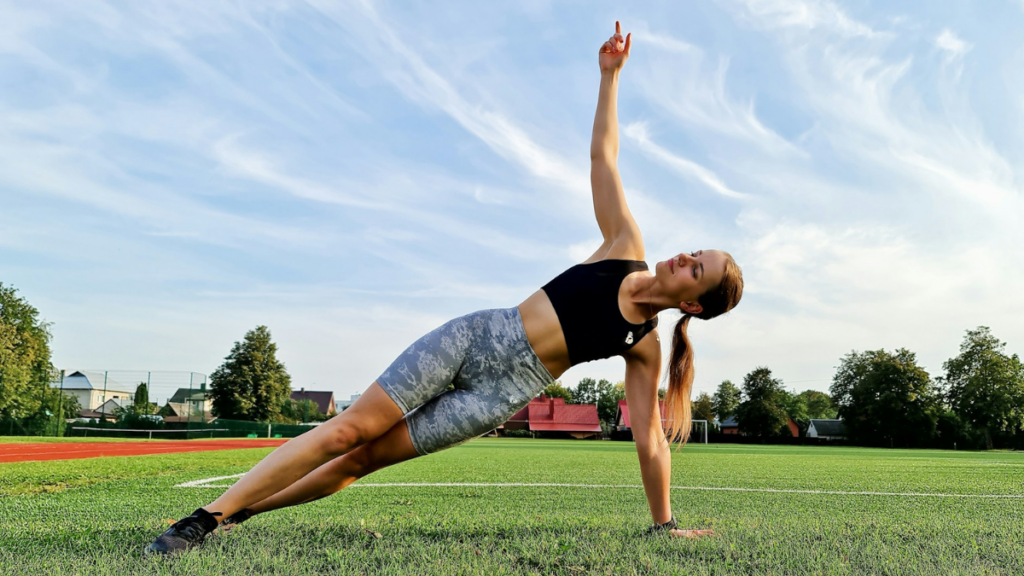
The side plank challenges the muscles along the sides of your trunk. It trains you to resist side bending, which complements the front plank and dead bug.
Lie on your side with your elbow under your shoulder and your knees bent. Lift your hips until your body forms a straight line from your head to your knees. Keep your shoulders stacked and your hips facing forward. Hold the position while breathing steadily, then lower with control and repeat on the other side.
Start with two holds of 15 to 25 seconds per side. If that feels too difficult, keep your knees bent and rest your lower knee on the floor. To progress, straighten your legs so your feet support you. Keep the hold short enough that you can maintain a steady position throughout.
4. Reverse Crunch
A reverse crunch uses controlled movement of the pelvis and legs to challenge the abdominal muscles. It is different from a sit up because you do not repeatedly raise your entire torso from the floor.
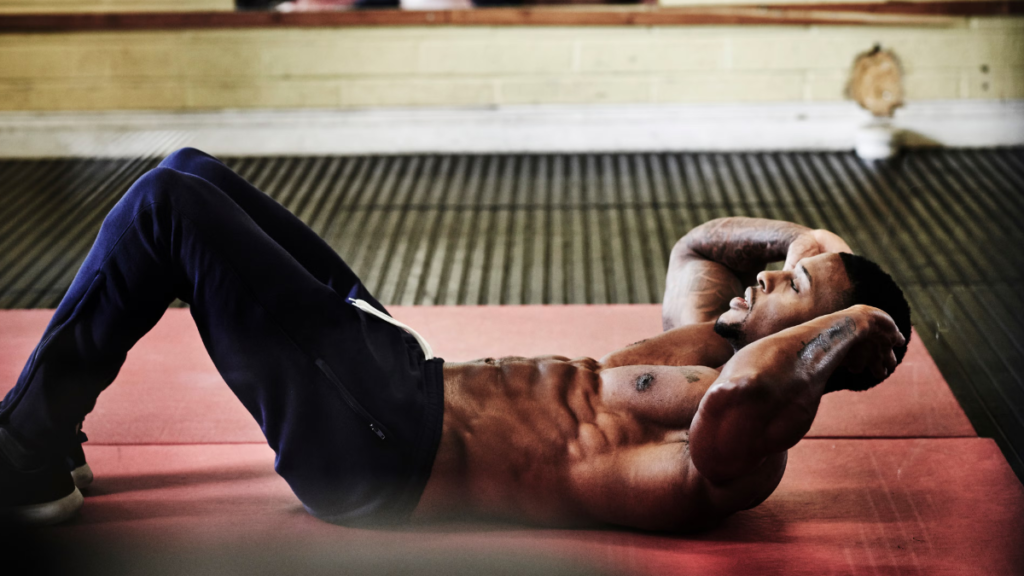
Lie on your back with your knees bent and your feet lifted so your knees are above your hips. Gently brace your abdomen, then curl your pelvis a few inches toward your ribs. Lower it slowly until your hips return to the floor. Avoid swinging your legs or using momentum to lift your hips.
Begin with two sets of eight to 12 repetitions. Move only as far as you can while keeping the movement controlled. If the exercise feels too demanding, keep your feet on the floor and practice small pelvic curls. When you can perform the repetitions smoothly, slow the lowering phase before adding more repetitions.
How to Make the Exercises Work
A beginner does not need to train abs every day. Two or three short sessions per week can provide regular practice while allowing time to recover. Choose three or four of the exercises above and perform two sets of each. Begin with a variation that lets you maintain control, then progress by adding a few repetitions, extending a hold, or choosing a slightly harder version.
Resistance training research supports gradually increasing the challenge over time to improve strength and muscle size. You do not need to push every set until you physically cannot do another repetition. Aim to finish most sets feeling that you could complete one or two more good repetitions or a few more seconds with sound technique. If form starts to fail, end the set.
Keep the rest of your training in view, too. Exercises such as squats, rows, carries, and presses also require the trunk to stabilize the body. They can complement direct abdominal work, but they do not replace it if your goal is to train the abs specifically.
What Helps Make Abs More Visible
Stronger abdominal muscles and visible abdominal definition are related, but they are not the same goal. Ab exercises can improve strength and muscular development. They do not reliably remove fat from only the area being exercised. In one controlled study, six weeks of abdominal exercise improved muscular endurance but did not significantly reduce abdominal fat or other body composition measures.
Research on local fat loss is not completely settled. A small 2023 trial reported greater trunk fat loss after a high volume abdominal endurance program than after treadmill training alone. That study involved only 16 men with overweight, and the abdominal sessions lasted close to an hour, four days per week. It is not enough evidence to promise that doing a few sets of ab exercises will selectively reduce belly fat.
For many people, changes in overall body fat are part of making abdominal muscles more visible. That involves broader habits, including eating patterns and physical activity, rather than a specific ab exercise. Genetics also influence where the body stores fat and how abdominal muscles appear. A sensible goal is to develop strength and consistent habits instead of expecting a particular exercise to reveal a defined six pack.
A Simple Beginner Routine
Perform this routine two or three times per week, with at least a day between sessions when possible. Start with two sets of each exercise, resting long enough to regain control and breathe comfortably before the next set. For the dead bug, perform six to eight repetitions per side. Hold the front plank and side plank for 15 to 30 seconds. Perform eight to 12 reverse crunches.
Use the easier versions whenever needed. For example, perform the plank from your knees, shorten the dead bug range, or keep your feet on the floor during the reverse crunch. Progress only when you can complete every repetition or hold without losing your position. If you experience sharp pain, stop and choose a more comfortable variation.
Key Takeaways
| Goal | What to do |
|---|---|
| Build beginner core strength | Practice dead bugs, front planks, side planks, and reverse crunches with control. |
| Progress safely | Add a few repetitions or seconds, or choose a harder variation when your form stays consistent. |
| Train regularly | Complete a short routine two or three times per week and leave time to recover. |
| Improve definition | Train the abdominal muscles and build broader habits that support changes in overall body fat. |
| Set realistic expectations | Ab exercises strengthen the midsection, but they cannot guarantee visible six pack abs. |
References
- Brobakken, M.F., Krogsaeter, I., Helgerud, J., Wang, E. and Hoff, J. (2023) ‘Abdominal aerobic endurance exercise reveals spot reduction exists: a randomized controlled trial’, Physiological Reports, 11(22), e15853.
- Currier, B.S., D’Souza, A.C., Singh, M.A.F., Lowisz, C.V., Rawson, E.S., Schoenfeld, B.J., Smith-Ryan, A.E., Steen, J.P., Thomas, G.A., Triplett, N.T., Washington, T.A., Werner, T.J. and Phillips, S.M. (2026) ‘American College of Sports Medicine position stand: resistance training prescription for muscle function, hypertrophy, and physical performance in healthy adults: an overview of reviews’, Medicine & Science in Sports & Exercise, 58(4), pp. 851–872.
- Refalo, M.C., Helms, E.R., Trexler, E.T., Hamilton, D.L. and Fyfe, J.J. (2023) ‘Influence of resistance training proximity-to-failure on skeletal muscle hypertrophy: a systematic review with meta-analysis’, Sports Medicine, 53(3), pp. 649–665.
- Vispute, S.S., Smith, J.D., LeCheminant, J.D. and Hurley, K.S. (2011) ‘The effect of abdominal exercise on abdominal fat’, Journal of Strength and Conditioning Research, 25(9), pp. 2559–2564.
- Willett, G.M., Hyde, J.E., Uhrlaub, M.B., Wendel, C.L. and Karst, G.M. (2001) ‘Relative activity of abdominal muscles during commonly prescribed strengthening exercises’, Journal of Strength and Conditioning Research, 15(4), pp. 480–485.