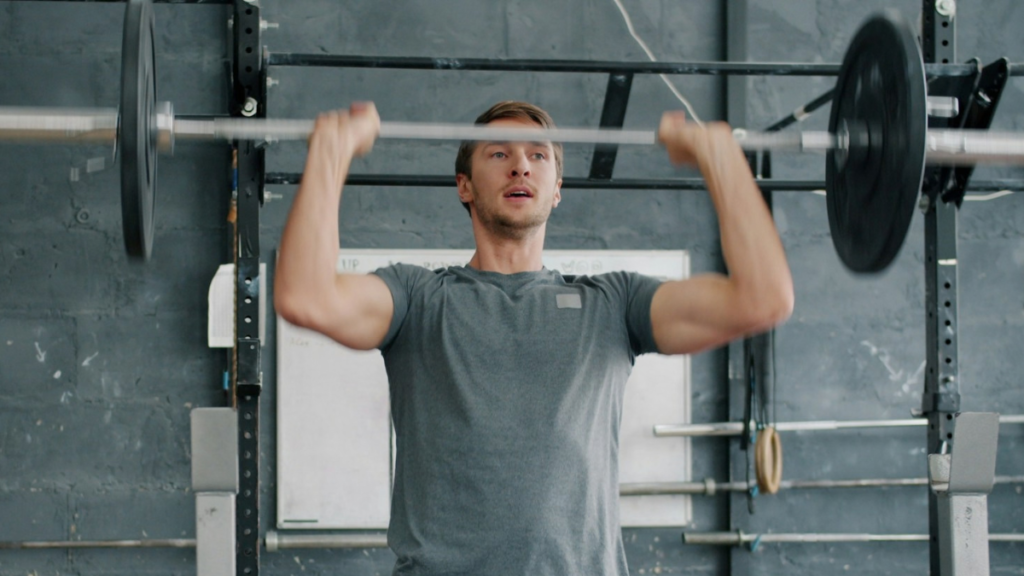
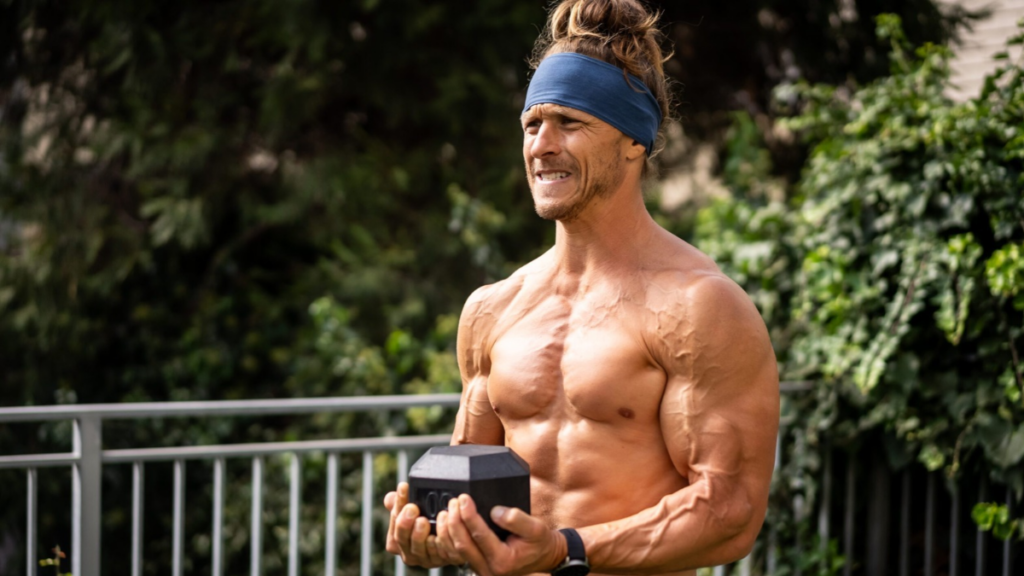
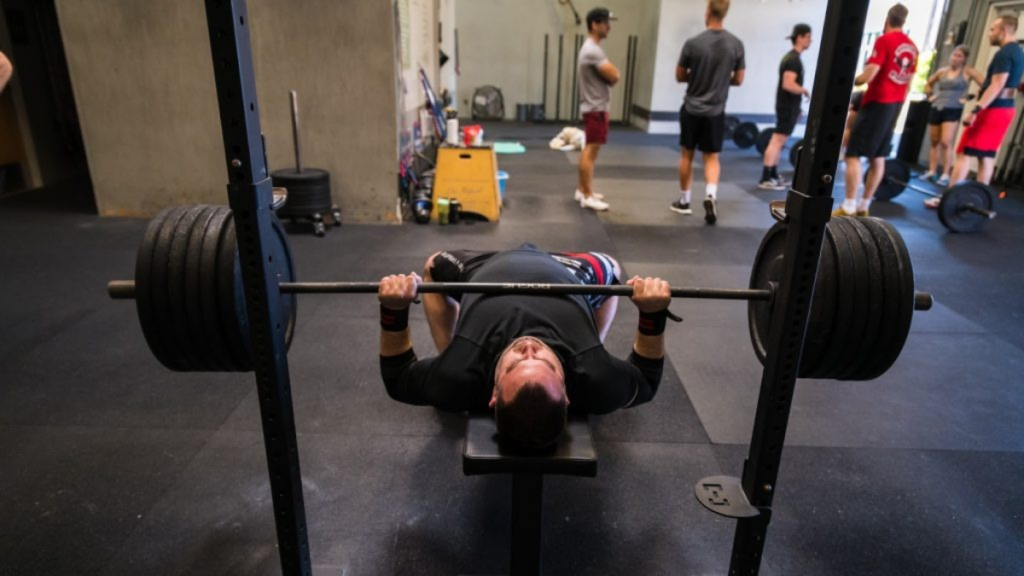
If you are new to lifting, choosing between dumbbell curls and barbell curls can seem like a big decision. Dumbbells let each arm move independently, while a barbell lets you curl with both hands on one bar. Both train the elbow flexors, including the biceps brachii, and both can be useful for building stronger, bigger arms.
There is no strong long-term evidence showing that one of these exercises consistently builds bigger biceps than the other. The research directly comparing them is limited, and much of it measures muscle activity during a single workout rather than changes in muscle size over months. The practical answer is that either can work well when you use a comfortable range of motion, train consistently, and gradually make the exercise more challenging.


For beginners, the best choice is usually the one that feels comfortable, is easy to control, and helps you train hard without swinging the weight. You can also use both.
What the Biceps Do During a Curl
The biceps brachii is the prominent muscle on the front of your upper arm. It helps bend your elbow and turn your palm upward. Other muscles, including the brachialis and brachioradialis, also help bend the elbow, so curls train more than just the visible biceps.
Dumbbell curls allow you to rotate your forearms as you lift. For example, you can start with your palms facing your body and turn them upward during the curl. This movement is called supination. A barbell keeps your hands in a fixed position, which means the grip depends on the bar you choose. A straight bar usually places your palms facing forward, while an EZ curl bar lets you hold a more angled grip.
These differences change how the movement feels and how your wrists and forearms are positioned. They do not automatically make one exercise better for muscle growth.
Dumbbell Curls: Benefits and Drawbacks
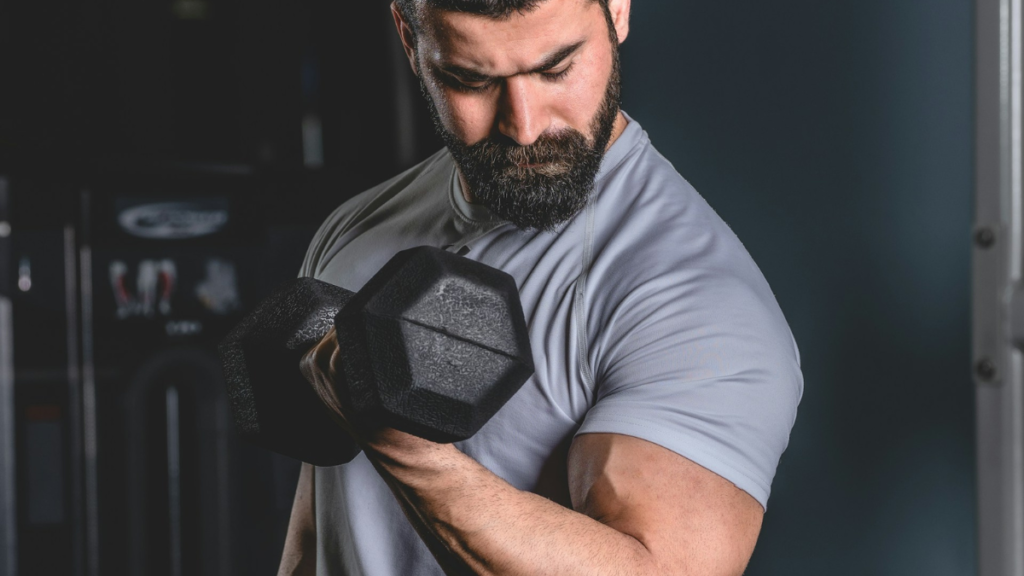
Dumbbells allow each arm to work independently. This can make it easier to notice if one side is doing more work or if you are moving one arm differently from the other. Each hand can also settle into a position that feels comfortable for your wrist and elbow.
The freedom to rotate your forearm is another useful feature. You can perform a supinating curl by turning your palm upward as you lift, or keep your wrist in a neutral position with a hammer curl. These are variations of the movement, and they shift the way the exercise feels across the elbow flexors.
The main challenge for beginners is controlling both dumbbells while keeping the shoulders and torso still. If you use more weight than you can manage, it is easy to swing the body or move the elbows forward to get the weight up. That turns the curl into a less controlled movement and makes it harder to judge whether you are improving.
Dumbbells can also make it harder to add small amounts of weight, depending on the equipment at your gym. If the next pair is a large jump, you may need to build up repetitions first or use a different progression.
Barbell Curls: Benefits and Drawbacks
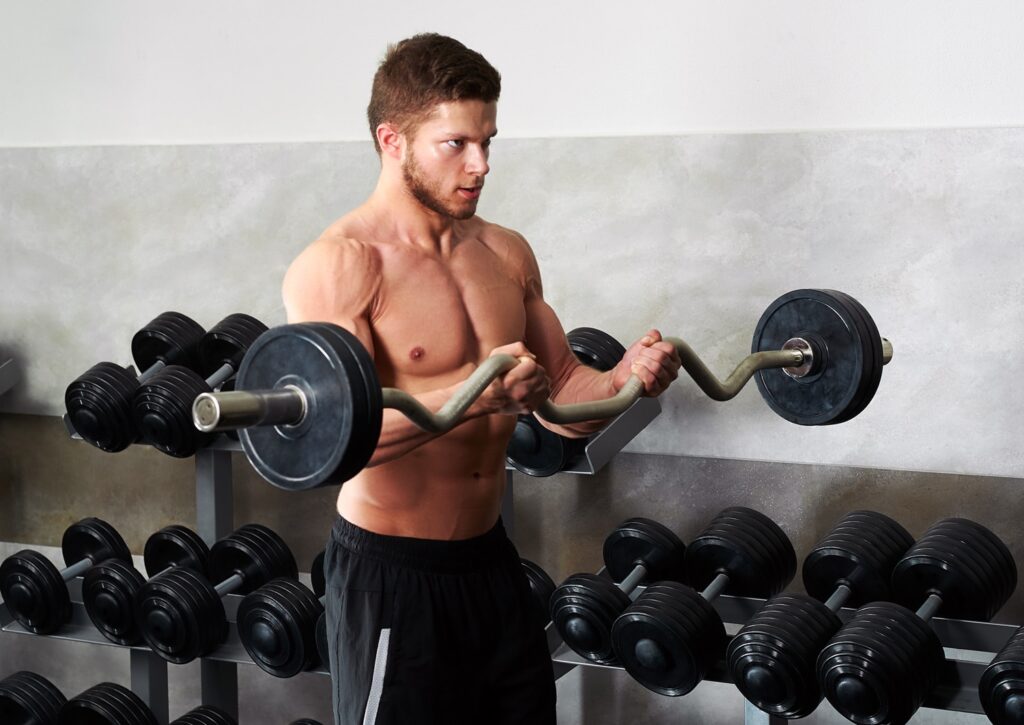
A barbell lets you lift with both hands on the same implement. Many beginners find this straightforward because they can focus on one movement and use the same grip on every repetition. Barbells also make it easy to track how much weight you are lifting and to add small increments when your gym has lighter plates.
The fixed hand position can be a drawback if it feels uncomfortable. Some lifters find a straight bar bothers their wrists or elbows, especially when they use a narrow grip or try to force their hands into a position that does not suit them. An EZ curl bar offers a more angled grip, which some people prefer.
Using both arms at once does not guarantee that they contribute equally. You may unconsciously let your stronger side do more work, particularly when the weight is too heavy. Watch your form and choose a load that lets you lift without leaning back, jerking the bar, or letting your elbows drift substantially.
A barbell curl is also easy to overload. That can be useful as you get stronger, but lifting a heavier bar is not progress if you have to shorten the movement or use momentum to complete your repetitions.
Which One Builds Bigger Biceps?
For muscle growth, the best-supported answer is that both can work. Research on resistance training shows that muscle can grow across a range of loads when training provides a suitable challenge. Heavier loads tend to be more useful for improving maximal strength, but they are not required for hypertrophy when the training is otherwise appropriate.
One small study compared dumbbell curls with straight barbell and EZ barbell curls by measuring electrical activity in the biceps brachii and brachioradialis. The EZ barbell curl produced higher activity than the dumbbell curl in some comparisons, while the straight barbell and EZ barbell results were relatively close. The study involved only one set of curls and measured acute muscle activity, so it cannot tell us which exercise produces more biceps growth over time. A higher EMG reading during one workout is not proof of superior long-term muscle growth.
A separate study compared barbell and cable preacher curls over ten weeks. It found that the two setups could produce similar improvements in biceps thickness, although the exercise conditions placed more resistance at different parts of the movement. It was not a direct comparison of ordinary dumbbell curls against ordinary barbell curls, but it supports the broader point that exercise setup can influence the training stimulus without making equipment alone the deciding factor.
For beginners, a dumbbell curl may be better if you want each arm to move naturally or if the barbell grip feels awkward. A barbell curl may be better if it feels comfortable, is easier to load in small increments, or helps you keep the exercise simple. Either can build your biceps when you can perform it with control and progress over time.
How Beginners Should Choose
Start with the version that feels comfortable in your wrists and elbows. Try a light set of dumbbell curls and a light set with a barbell or EZ bar. Keep your upper arms close to your sides, move through a comfortable range, and lower the weight under control. If one option causes pain or makes you change your technique, choose the other.
You do not need to test your maximum strength. Pick a load that allows you to complete a set with steady form and leaves you able to perform a few more repetitions if needed. As you become familiar with the exercise, you can work closer to the point where another good repetition would be difficult. Research does not show that every set must reach complete muscular failure to stimulate growth, so beginners can focus on consistent effort and sound technique.
A practical starting point is two or three sets of curls in a session, performed in a moderate repetition range such as 8 to 15 repetitions. This is a useful starting framework, not a uniquely proven prescription for every beginner. Keep the weight the same until you can complete the top end of your chosen repetition range with controlled technique. Then add a small amount of weight and build up again.
Train your arms as part of a balanced program. Rows and pulldowns also involve the elbow flexors, while curls provide a more direct way to train them. One study in untrained men found greater elbow flexor growth from single-joint curls than from dumbbell rows over eight weeks. However, it was a small study and compared curls with rows, not one curl implement with another. It supports including curls in a beginner program, but does not establish that dumbbells or barbells are superior.
A Simple Beginner Curl Plan
Choose either dumbbell curls or barbell curls and perform two or three sets of 8 to 15 controlled repetitions. Rest long enough between sets to perform the next set with good form. Start with a weight that feels manageable and add repetitions over time. When you can complete all your sets at the top of your target range without swinging or shortening the movement, increase the weight slightly.
You can keep the same exercise for several weeks so you have time to learn it and track progress. If the movement becomes uncomfortable or you stop making progress despite consistent training, try the other version. You do not need to switch exercises every workout, and you do not need to perform both in the same session to get results.
The Verdict
Dumbbell curls and barbell curls can both help beginners build bigger biceps. Current evidence does not show that one reliably produces more long-term growth than the other. The small amount of research directly comparing curl variations mostly measures short-term muscle activity, which cannot settle the question of which exercise builds more muscle over time.
The Famous 5 Exercises for Beginners to Get A Muscular Upper Body
Choose the version that feels comfortable and lets you train with control. Progress the weight or repetitions gradually, and stick with your training long enough to see whether it is working. If both options feel good, use one as your main curl and occasionally include the other for variety.
Key Takeaways
| Question | Answer |
|---|---|
| Which builds bigger biceps, dumbbell or barbell curls? | There is no clear long-term evidence that one is consistently better. Both can build muscle. |
| What should beginners choose? | Choose the curl that feels comfortable and lets you use controlled technique. |
| Do higher EMG readings prove more growth? | No. Short-term muscle activity measurements do not establish which exercise builds more muscle over time. |
| How should beginners progress? | Add repetitions with good form, then increase the weight slightly when you reach the top of your target range. |
| Do you need both exercises? | No. One is enough to start, though you can use both if each feels comfortable. |
References
- Carvalho, L., Moriggi Junior, R., Barreira, J., Schoenfeld, B.J., Orazem, J. and Barroso, R. (2022) ‘Muscle hypertrophy and strength gains after resistance training with different volume-matched loads: a systematic review and meta-analysis’, Applied Physiology, Nutrition, and Metabolism, 47(4), pp. 357–368.
- Mannarino, P., Matta, T., Lima, J., Simão, R. and Freitas de Salles, B. (2021) ‘Single-joint exercise results in higher hypertrophy of elbow flexors than multijoint exercise’, Journal of Strength and Conditioning Research, 35(10), pp. 2677–2681.
- Marcolin, G., Panizzolo, F.A., Petrone, N., Moro, T., Grigoletto, D., Piccolo, D. and Paoli, A. (2018) ‘Differences in electromyographic activity of biceps brachii and brachioradialis while performing three variants of curl’, PeerJ, 6, e5165.
- Nunes, J.P., Jacinto, J.L., Ribeiro, A.S., Mayhew, J.L., Nakamura, M., Capel, D.M.G., Santos, L.R., Santos, L., Cyrino, E.S. and Aguiar, A.F. (2020) ‘Placing greater torque at shorter or longer muscle lengths? Effects of cable vs. barbell preacher curl training on muscular strength and hypertrophy in young adults’, International Journal of Environmental Research and Public Health, 17(16), 5859.
- Refalo, M.C., Helms, E.R., Trexler, E.T., Hamilton, D.L. and Fyfe, J.J. (2023) ‘Influence of resistance training proximity-to-failure on skeletal muscle hypertrophy: a systematic review with meta-analysis’, Sports Medicine, 53(3), pp. 649–665.