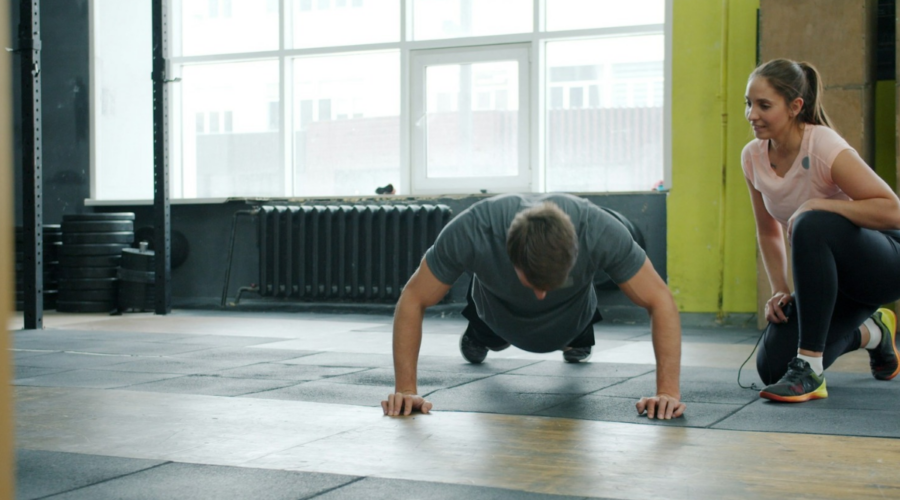


Mixing new exercises into your training is always a great way to keep your body guessing, and your sessions fun.
Let’s find out if this effective exercise could be the perfect addition to your routine.
What Makes a Dive Bomber Push Up Different From a Standard Push Up
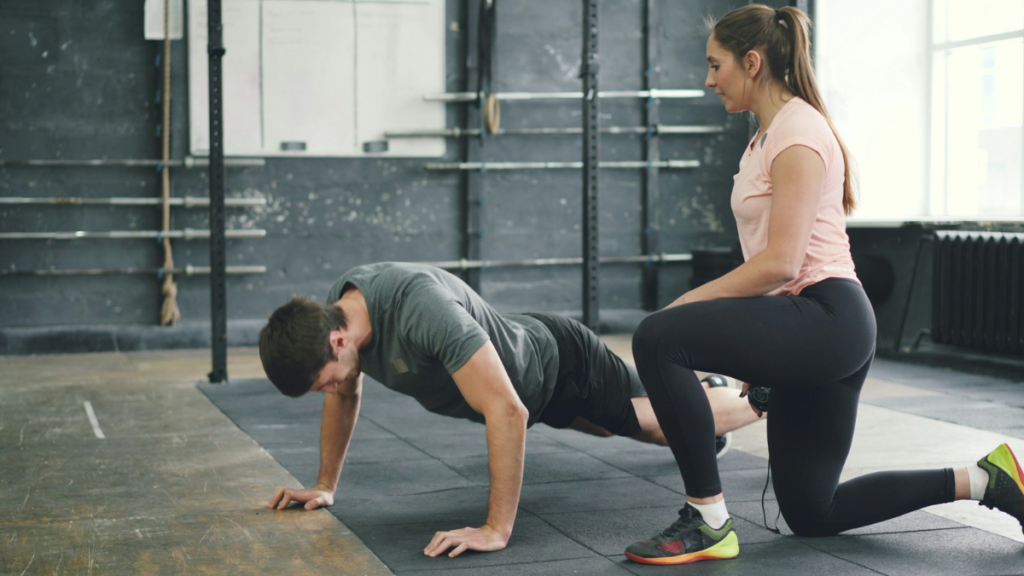
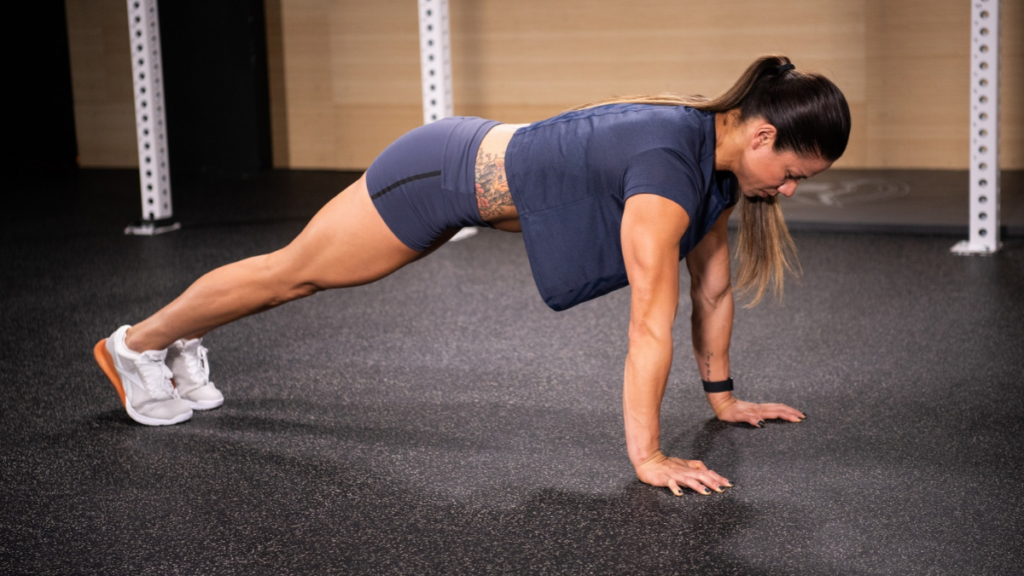
A standard push up is a linear horizontal pressing exercise where your torso remains rigid like a plank from head to heel while your elbows flex and extend. A dive bomber push up transforms that static plank into a dynamic, multi-planar wave that shifts your center of mass and alters the angle of resistance from start to finish.
You begin in a downward-facing pike position with your hips pushed high toward the ceiling, your heels pressing toward the floor, and your hands planted slightly wider than shoulder width.
From that inverted V shape, you bend your elbows and swoop your chest forward and down, grazing just an inch above the floor as your torso glides between your hands. As your chest clears your hands, you press upward into a hyperextended upward dog position with your chest proud, your arms locked out, and your hips hovering just above the ground.
What separates the dive bomber from its close cousin, the Hindu push up, happens on the return trip. While a Hindu push up simply pikes the hips straight back up to the starting position, a true dive bomber forces you to reverse the exact path you just traveled. You bend your elbows again, dip your chest low to the floor, and push your torso backward through the bottom of the arc until your hips return to the high pike stance.
That reversal doubles the time your pushing muscles spend under mechanical tension during every single repetition and eliminates the momentum that athletes often use to cheat through bodyweight sets.
The Biomechanics of Sweeping Through Multiple Pressing Angles
To understand why this movement feels so demanding on the chest, you have to look at the anatomy of the pectoralis major. Rather than acting as one uniform slab of muscle, the pectoralis major is divided into distinct functional regions, primarily the upper clavicular head and the middle and lower sternocostal heads.
Biomechanical research examining upper extremity muscle activation across different pressing angles consistently shows that no single angle maximizes recruitment across the entire chest simultaneously. Horizontal pressing elicits the highest electromyographic activity in the middle and lower sternocostal fibers, whereas inclined pressing angles around thirty degrees significantly increase activation in the upper clavicular fibers while shifting secondary load toward the anterior deltoids.
Because a dive bomber push up moves continuously from an inverted pike into a flat floor graze and finishes in an upward press, your shoulder joint travels through flexion, horizontal adduction, and extension within one fluid repetition. At the top of the pike position, your torso angle mimics an overhead or steep incline press, placing heavy mechanical demand on the upper clavicular chest fibers and the anterior deltoid. As your chest swoops down toward the floor, the angle of your humerus relative to your torso shifts into horizontal adduction, lighting up the sternal head of the pectoralis major. When you press up into the extended finish position, your lower pectoral fibers and triceps brachii take over to lock out the movement.
Phase by Phase Muscular Recruitment During a Dive Bomber Push Up
| Movement Phase | Body Position and Joint Action | Primary Muscles Recruited |
|---|---|---|
| Descent from Pike | Hips high, elbows flexing as head and chest dive forward toward the floor | Anterior deltoid, clavicular pectoralis major, triceps brachii |
| Bottom Floor Sweep | Torso parallel to the floor, chest grazing inches above the ground | Sternal pectoralis major, serratus anterior, core stabilizers |
| Upward Extension | Chest pressing upward, hips dropping low, spine extending into upward dog | Lower pectoralis major, triceps brachii, spinal erectors |
| Reverse Return Arc | Elbows bending again to push chest backward along the floor into pike | Entire pectoralis major, anterior deltoid, serratus anterior |
What Scientific Research Reveals About Push Up Variations and Muscle Growth
Many lifters assume that bodyweight push up variations are only useful for muscular endurance or warm ups because they lack external iron plates. Controlled training studies directly challenge that assumption when mechanical tension and proximity to failure are properly matched.
Research comparing load-matched push ups against traditional barbell bench pressing over multi-week training blocks demonstrates that both movements produce virtually identical increases in pectoralis major muscle thickness and upper body maximal strength. When you manipulate body leverage to increase the percentage of body mass supported by your hands, a bodyweight press delivers more than enough mechanical stimulus to drive hypertrophy.
Force plate analyses of push up mechanics reveal that a standard flat push up requires you to support roughly sixty-four to sixty-nine percent of your total body weight at the top of the movement and up to seventy-five percent at the bottom. Elevating the hips or shifting the center of mass forward over the hands substantially increases ground reaction forces through the upper extremities. During the pike and bottom sweep phases of a dive bomber push up, your feet support a much smaller fraction of your mass while your shoulders and chest absorb the vertical load.
Furthermore, studies investigating hand placement and dynamic movement trajectories show that bringing the hands closer to shoulder width and moving through multi-directional paths increases electromyographic activity in both the pectoralis major and the triceps brachii compared to wide, static hand positions.
The Hidden Advantage for Shoulder Health and Scapular Stability
Heavy barbell pressing pins your shoulder blades tightly against a padded bench, preventing the scapulae from moving naturally around your rib cage. Over months and years of heavy benching, restricted scapular motion often contributes to shoulder impingement and anterior joint irritation. Dive bomber push ups operate in a closed kinetic chain where your hands remain fixed on the floor while your torso moves around them, forcing your shoulder blades to glide freely through upward rotation, protraction, and retraction.
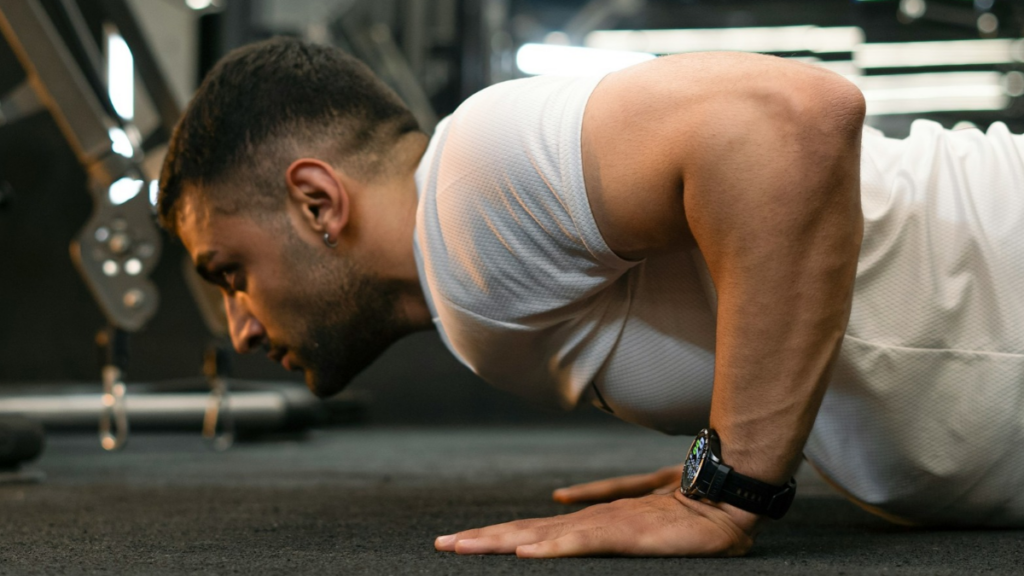
Scoping reviews of shoulder electromyography across push up variations highlight that dynamic and closed-chain movements dramatically elevate activation in the serratus anterior. The serratus anterior is the primary muscle responsible for anchoring the medial border of the shoulder blade against the rib cage and rotating it upward when you reach overhead. By moving seamlessly from an overhead pike position into a horizontal press, the dive bomber trains the rotator cuff and scapular stabilizers to coordinate under load, building the kind of dynamic joint stability that protects your shoulders during heavy overhead lifts, gymnastics movements, and high-volume pressing workouts.
Are Dive Bomber Push Ups Actually the Perfect Chest Exercise
Despite their impressive biomechanical resume, calling dive bomber push ups the single perfect chest exercise goes one step too far. Exercise science is clear that skeletal muscle hypertrophy depends heavily on mechanical tension, progressive overload, and taking muscles close to momentary muscular failure. Because a dive bomber push up distributes workload across the anterior deltoids, triceps, serratus anterior, and spinal erectors throughout a long range of motion, your shoulders or triceps will frequently fatigue before your pectoral fibers reach complete mechanical exhaustion.
In addition, progressive overload becomes tricky once you master the bodyweight movement. Unlike a barbell or dumbbell press where you can add two and a half kilograms every couple of weeks, loading a dive bomber push up with a weight vest or resistance band can feel awkward and place excessive shear stress on the lumbar spine during the upward dog extension. Therefore, while dive bomber push ups are an exceptional compound movement for hitting multiple chest regions, building pressing endurance, and bulletproofing your shoulders, they work best as a dynamic companion to heavy horizontal pressing rather than a complete replacement for it.
Dive Bomber Push Ups Compared to Traditional Chest Exercises
| Training Factor | Dive Bomber Push Ups | Standard Push Ups | Flat Barbell Bench Press |
|---|---|---|---|
| Chest Regions Targeted | Upper, middle, and lower fibers across one repetition | Primarily middle and lower sternal fibers | Primarily middle and lower sternal fibers |
| Secondary Muscle Demand | Very high on anterior delts, triceps, and serratus anterior | Moderate on anterior delts, triceps, and core | Moderate on anterior delts and triceps |
| Scapular Mobility | High freedom of movement in a closed kinetic chain | Moderate scapular protraction and retraction | Low because the bench pins the scapulae |
| Progressive Overload | Moderate via tempo, pauses, and volume | Moderate via bands, vests, or elevation | High via incremental weight plate loading |
How to Program Dive Bomber Push Ups Into Your Training Routine
To get the most out of dive bomber push ups without wrecking your lower back or burning out your shoulders before heavy sets, placement and tempo matter tremendously. Because the movement requires significant thoracic extension and shoulder mobility, avoid rushing through sloppy repetitions for time. Instead, perform each repetition with a controlled three-second descent, a brief pause at the bottom sweep, and a deliberate reverse arc back to the pike position. Keep your abdominal muscles braced firmly as you press into the upward dog phase so that your glutes and core support your lower spine rather than letting your hips sag passively toward the floor.
If you are programming a dedicated chest or upper body strength session, perform your heavy barbell or dumbbell pressing first while your nervous system and prime movers are completely fresh. Follow your main strength lifts with three to four sets of eight to fifteen controlled dive bomber push ups to flood the upper, middle, and lower chest fibers with metabolic stress and reinforce healthy scapular mechanics. On days when you are traveling, training outdoors, or working out with minimal equipment, pairing high-tension dive bomber push ups with slow eccentric standard push ups creates a remarkably effective hypertrophy stimulus anywhere you have six feet of floor space.
Key Takeaways for Using Dive Bomber Push Ups
| Key Takeaway | Practical Application |
|---|---|
| Multi-Angle Chest Activation | Sweeping from a pike to an upward press recruits upper, middle, and lower pectoral fibers in one repetition. |
| Comparable Hypertrophy Potential | Load-matched push up variations produce similar chest muscle growth to moderate-load bench pressing. |
| Superior Shoulder Resilience | Closed-chain movement frees the shoulder blades and maximizes serratus anterior stability. |
| Not a Standalone Replacement | Shoulder fatigue and loading limits mean dive bombers work best alongside heavy progressive pressing. |
| Form Over Speed | Brace your core during the upward extension and reverse the exact arc slowly to maximize tension. |
References
- Calatayud, J., Borreani, S., Colado, J.C., Martin, F., Tella, V. and Andersen, L.L., 2015. Bench press and push-up at comparable levels of muscle activity results in similar strength gains. Journal of Strength and Conditioning Research, 29(1), pp.246-253.
- Cogley, R.M., Archambault, T.A., Fibeger, J.F., Koverman, M.M., Youdas, J.W. and Hollman, J.H., 2005. Comparison of muscle activation using various hand positions during the push-up exercise. Journal of Strength and Conditioning Research, 19(3), pp.628-633.
- Ebben, W.P., Wurm, B., VanderZanden, T.L., Spadavecchia, M.L., Durocher, J.J., Bickham, C.T. and Petushek, E.J., 2011. Kinetic analysis of several variations of push-ups. Journal of Strength and Conditioning Research, 25(10), pp.2891-2894.
- Kikuchi, N. and Nakazato, K., 2017. Low-load bench press and push-up induce similar muscle hypertrophy and strength gain. Journal of Exercise Science and Fitness, 15(1), pp.37-42.
- Lauver, J.D., Cayot, T.E. and Scheuermann, B.W., 2016. Influence of bench angle on upper extremity muscular activation during bench press exercise. European Journal of Sport Science, 16(3), pp.309-316.
- Maciejczyk, M., Szymura, J. and Cempla, J., 2022. Shoulder electromyography activity during push-up variations: a scoping review. Sports Health, 14(4), pp.540-550.
- Rodríguez-Ridao, D., Antequera-Vique, J.A., Martín-Fuentes, I. and Muyor, J.M., 2020. Effect of five bench inclinations on the electromyographic activity of the pectoralis major, anterior deltoid, and triceps brachii during the bench press exercise. International Journal of Environmental Research and Public Health, 17(19), p.7339.
- Schoenfeld, B.J., Ratamess, N.A., Peterson, M.D., Contreras, B., Sonmez, G.T. and Alvar, B.A., 2014. Effects of different volume-equated resistance training loading strategies on muscular adaptations in well-trained men. Journal of Strength and Conditioning Research, 28(10), pp.2909-2918.
- Suprak, D.N., Dawes, J. and Stephenson, M.D., 2011. The effect of position on the percentage of body mass supported during traditional and modified push-up variants. Journal of Strength and Conditioning Research, 25(2), pp.497-503.
- Trebs, A.A., Brandenburg, J.P. and Pitney, W.A., 2010. An electromyography analysis of 3 muscles surrounding the shoulder joint during the performance of a chest press exercise at several angles. Journal of Strength and Conditioning Research, 24(7), pp.1925-1930.