

Bigger arms are a goal of most guys in the gym. The common basics always offer and effective foundation, however switching things up can often accelerate your progress and gains.
Time to find out whether The Zottman Curls might just be perfect for you.
Why Standard Curls Often Leave Forearms And Complete Arm Growth Behind
Traditional biceps curls are straightforward and effective for training elbow flexion, yet performing them with a locked supinated grip throughout the entire repetition leaves specific muscles of the upper arm and forearm under-stimulated. When your palms stay facing upward from start to finish, the biceps brachii and brachialis do the heavy lifting during elbow flexion, while the brachioradialis and wrist extensors play a more limited role than they do when the forearm shifts toward neutral or pronated positions.
Because the brachioradialis originates on the lateral supracondylar ridge of the humerus and inserts near the distal radius of the forearm, it bridges both the upper arm and the forearm, making it a critical contributor to apparent arm thickness and forearm girth.
Another practical limitation of standard curls is that many lifters focus their attention and energy almost exclusively on the lifting phase while rushing or dropping the weight during the lowering phase. In real-world gym training, letting gravity pull the dumbbells back down quickly reduces the time the working muscles spend resisting load in a lengthened state.
Over months of training, a lifter can build decent curling strength on a standard movement while still ending up with a noticeable size discrepancy between their upper arms and their forearms, especially when wearing short sleeves or gripping heavy bars and dumbbells during compound lifts.
How The Zottman Curl Works From Start To Finish
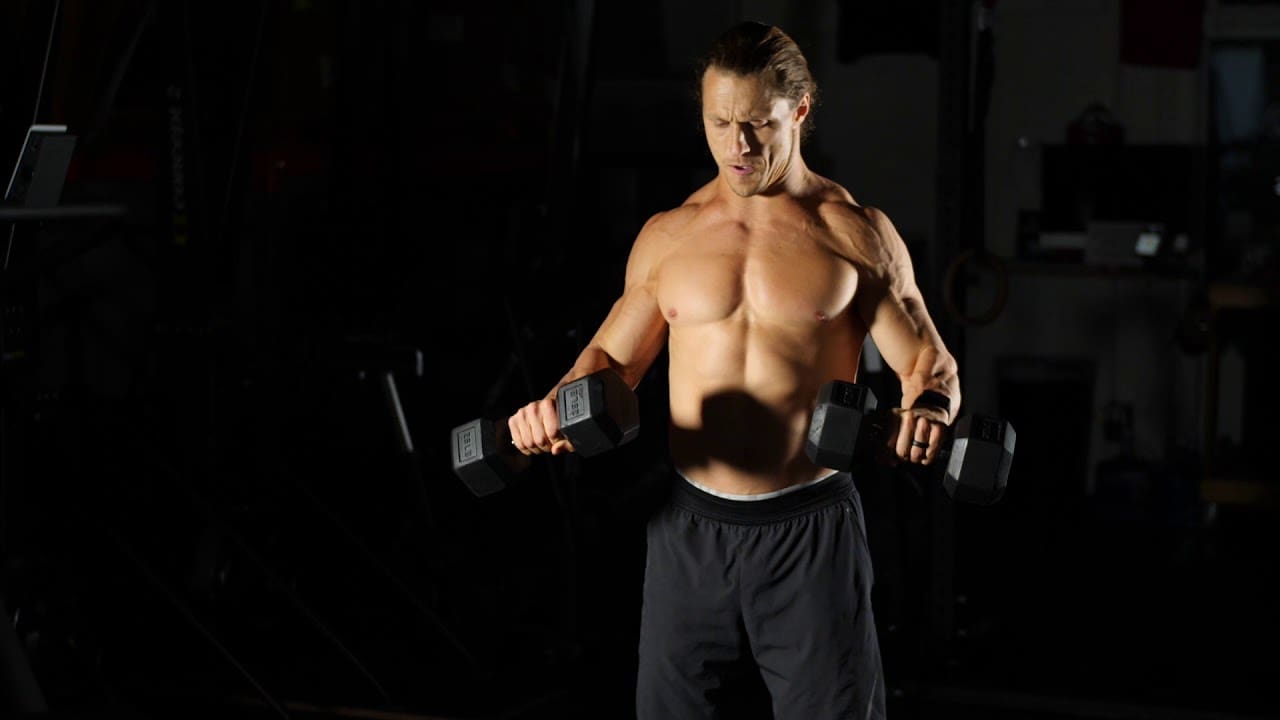
The movement in question is the Zottman curl, a classic dumbbell exercise that pairs a supinated curling phase with a pronated lowering phase in every single repetition. You begin standing tall with a dumbbell in each hand, arms hanging naturally by your sides with your palms facing forward in a supinated position and your core gently braced.
Keeping your upper arms steady against your sides without swinging your torso, you curl both dumbbells upward by flexing your elbows until your hands reach the top of the curl with a strong contraction in the biceps.
Once you reach the top position, you rotate your forearms inward so your palms face downward in a pronated grip, then lower the dumbbells slowly and under strict control back down toward your thighs.
When the weights reach the bottom of the lowering phase, you rotate your forearms back to the starting supinated position so your palms face forward again for the next repetition. Because the lifting phase uses a palm-up grip and the lowering phase uses a palm-down grip, each repetition trains elbow flexion and forearm rotation together while placing substantial eccentric demand on the forearm extensors and brachioradialis.
Comparing Zottman Curls and Standard Supinated Dumbbell Curls
| Training Characteristic | Zottman Curl | Standard Supinated Curl |
| Lifting Phase Grip | Supinated grip with palms facing upward | Supinated grip throughout the entire movement |
| Lowering Phase Grip | Pronated grip with palms facing downward | Supinated grip maintained on the way down |
| Forearm Muscle Demand | High demand on brachioradialis and forearm extensors | Lower direct emphasis on forearm extensors |
| Typical Working Load | Moderate loads due to pronated lowering control | Generally slightly heavier loads than Zottman curls |
What Science Says About Forearm Rotation, Eccentrics, And Arm Growth
Electromyographic and anatomical research on the elbow flexors shows that forearm position changes the relative contribution of muscles crossing the elbow joint. Studies examining electromyographic activity across supinated, neutral, and pronated forearm positions demonstrate that forearm rotation alters activation patterns in the biceps brachii and brachioradialis, with pronated and neutral positions engaging the brachioradialis prominently during elbow flexion and forearm control.
Because the biceps brachii also acts as a powerful supinator of the forearm in addition to flexing the elbow, changing forearm orientation alters how mechanical load is shared across the elbow joint.

Exercise science research on eccentric training and muscle hypertrophy also helps explain why controlling a pronated lowering phase can be valuable for arm and forearm development.
Controlled eccentric contractions generate high mechanical tension at relatively lower metabolic cost and stimulate strong hypertrophic and architectural adaptations when performed consistently over weeks of training. In addition, research on forearm musculature and grip strength highlights the role of the forearm flexors and extensors in stabilizing the wrist and hand during lifting tasks, meaning targeted eccentric work with a pronated grip can support both forearm size and joint resilience when progressed sensibly.
Why Weight Selection Matters For Joint Comfort
Because the wrist extensors and brachioradialis are smaller than the large hip, thigh, or chest muscles, trying to force heavy standard-curl weights through a slow pronated lowering phase is a fast route to elbow or wrist irritation. Using a slightly lighter dumbbell than you would pick for a strict supinated curl lets you control the rotation smoothly and feel the working muscles rather than yanking on tendons.
Paying close attention to how your elbows and forearms feel during the first few weeks helps you dial in a load that builds muscle without triggering lateral epicondyle discomfort.
Is The Zottman Curl Actually The Perfect Missing Exercise
Calling the Zottman curl the single perfect missing exercise for bigger biceps and forearms goes a bit too far because no single movement can replace heavy compound pulling or cover every angle of arm hypertrophy on its own.
Heavy multi-joint pulling exercises like chin-ups and rows allow you to handle substantial loads that challenge the elbow flexors and upper back together, while dedicated heavy supinated curls or incline curls let you load the biceps brachii heavily through a deep stretch. Furthermore, because the pronated lowering phase limits how much weight you can safely control on the way down, relying solely on Zottman curls may not maximize peak load on the biceps brachii.
How to Get a Jacked Chest Without Using Barbell Bench Press
Even so, the Zottman curl is an extraordinarily smart accessory exercise for lifters whose forearms lag behind their upper arms or who want to get more value out of every dumbbell repetition. By combining a classic curling motion with a controlled pronated eccentric, it addresses forearm and brachioradialis development in a compact footprint without adding an extra twenty minutes of wrist isolation exercises to your routine. Think of it not as a magic replacement for every other arm exercise, but as a high-utility bridge that ties biceps and forearm training together cleanly.
How To Program Zottman Curls For Noticeable Results
To get the most out of Zottman curls without turning your arm session into a sloppy swinging contest, treat every repetition as two distinct, deliberate phases. Stand with your feet roughly shoulder-width apart, brace your midsection lightly, and keep your elbows tucked close to your sides so your shoulders do not roll forward as you curl. Curl the dumbbells smoothly up to the top, rotate your forearms under control so your knuckles point forward and your palms face down, and lower the weights over two to three seconds until your arms are nearly straight before rotating back to the start.
For most lifters looking to boost forearm and upper arm development, programming two to three working sets of eight to twelve controlled repetitions once or twice per week works well alongside your existing upper body or pull workouts. Place Zottman curls after your heavier compound pulls or primary curling movement so you can focus on crisp forearm rotation and steady eccentric control while still pushing close to muscular failure.
Track your progress gradually by adding clean repetitions or slowing the lowering tempo before stepping up to heavier dumbbells.
Practical Programming Guide For Zottman Curls
| Programming Factor | Recommended Approach | Practical Purpose |
| Weekly Frequency | One to two sessions per week | Provides steady forearm and arm stimulus while allowing recovery |
| Repetitions Per Set | Eight to twelve controlled repetitions | Builds muscular tension without excessive wrist or elbow strain |
| Lowering Tempo | Two to three seconds on the pronated descent | Maximizes controlled eccentric tension on forearms and flexors |
| Exercise Order | After primary pulls or heavy curls | Preserves grip and joint readiness while targeting forearm growth |
Key Takeaways For Bigger Biceps And Forearms
| Key Takeaway | Practical Application |
| Standard Curls Miss Rotation Nuance | Keeping palms up throughout every rep limits forearm rotation and extensor demand. |
| Zottman Curls Combine Two Grips | Curling supinated and lowering pronated trains biceps and forearms in one movement. |
| Forearm Position Alters Muscle Demand | Changing forearm rotation shifts recruitment across elbow flexors and forearm muscles. |
| Not A Complete Standalone Fix | Pair Zottman curls with heavy pulls and standard curls for complete arm growth. |
| Controlled Tempo Protects Joints | Use moderate weights and smooth lowering speeds to build size safely. |
References
- Bolgla, L.A., Malone, T.R., Umphlett, B.R. and Vance, M.C., 2008. Electromyographic analysis of the biceps brachii and brachioradialis during various elbow flexion exercises. Journal of Strength and Conditioning Research, 22(5), pp.1489-1495.
- Douglas, J., Pearson, S., Ross, A. and McGuigan, M., 2017. Chronic adaptations to eccentric training: a systematic review. Sports Medicine, 47(5), pp.917-941.
- Frangolini, C.A., et al., 2021. Forearm position affects muscle activity of the biceps brachii and brachioradialis during elbow flexion. Journal of Bodywork and Movement Therapies, 26, pp.214-220.
- Haff, G.G. and Triplett, N.T., 2016. Essentials of Strength Training and Conditioning. 4th ed. Champaign: Human Kinetics.
- Naito, H., et al., 1995. Electromyographic analysis of the elbow flexors during isometric and dynamic contractions with different forearm positions. European Journal of Applied Physiology and Occupational Physiology, 71(6), pp.481-486.
- Schoenfeld, B.J., Ogborn, D.I. and Krieger, J.W., 2017. Dose-response relationship between weekly resistance training volume and increases in muscle mass: a systematic review and meta-analysis. Journal of Sports Sciences, 35(11), pp.1073-1082.