

When athletes look to build an impressive upper body, traditional bodyweight movements are often used.
For decades, the standard push up has served as one of the baseline standards for developing pecs, upper body stamina, and shoulder health. It requires no gear, utilizes closed kinetic chain mechanics, and recruits a massive amount of surrounding muscle mass.
Yet despite its popularity, many lifters reach a plateau with bodyweight pressing. Adding reps can sometimes just result in local endurance rather than hypertrophy if not done properly, while elevated foot variations often transfer the workload onto the anterior deltoids rather than the chest.
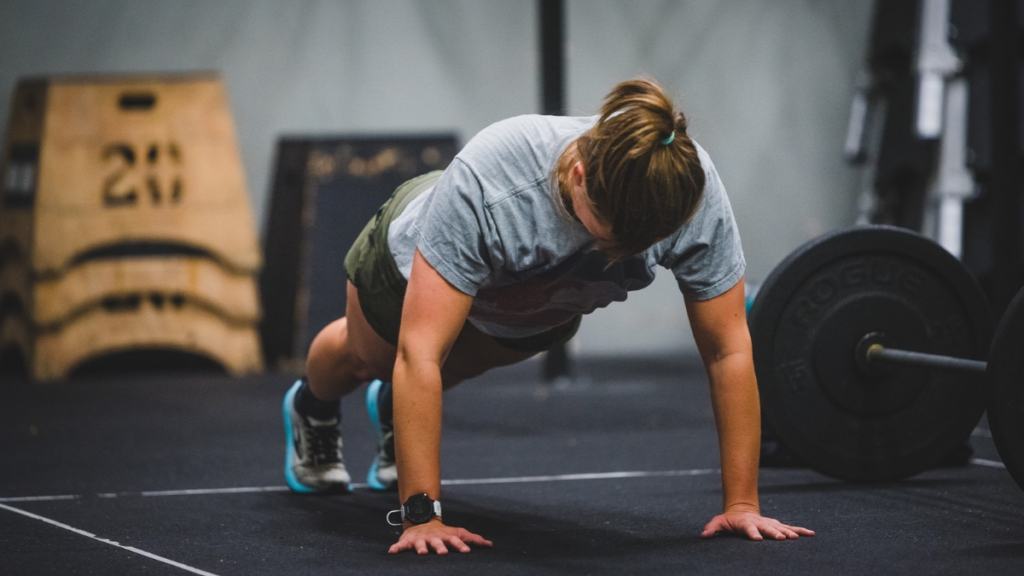
The primary limitation of traditional pressing lies in the path of resistance. Mechanical tension on the pectoralis major peaks at the bottom of a push up, but drops rapidly at the top lockout position where your arms align vertically under your shoulders. This is important, in order to overload the muscles, but there are other movements that can be introduced to shock your body into growth.
This lesser known movement changes everything by applying relentless isometric adduction combined with forward horizontal extension. Rather than fighting gravity vertically through a lever, this movement forces your chest fibers to contract inward against each other while simultaneously pushing forward.
The Biomechanics of Pectoral Hypertrophy
Understanding why traditional pressing falls short requires examining muscle architecture. The pectoralis major features two primary heads: the clavicular head on the upper chest and the sternocostal head across the middle and lower chest. The main anatomical function of these fibers is horizontal adduction, bringing the arms toward the midline of the body.
In a standard push up, your hands remain anchored to the floor at a fixed distance. While your upper arm moves through horizontal flexion, there is zero inward force pressing your palms together. Once you reach the top of the movement, the chest relaxes slightly because the skeletal structure bears much of the gravitational load.
Introducing the Svend Press
By contrast, the movement that outpaces standard bodyweight pressing is the Svend press. Named after iconic Norwegian strongman Svend Karlsen, this exercise involves sandwiching weight plates between your flat palms at sternum height and pressing them horizontally straight out in front of your body.
It can also be performed with dumbbells, and in both vertical and horizontal planes of motion.
The secret to the effectiveness of the Svend press is the total elimination of passive rest points. Because you are squeezing two smooth surfaces together to keep them from dropping, your pectoralis major experiences uninterrupted isometric adduction. When you extend your elbows forward, that force vector creates massive leverage against the sternal insertion points, resulting in superior motor unit recruitment across the inner chest line.
Why Constant Tension Outperforms Standard Bodyweight Moves
Electromyography research consistently shows that muscle activation patterns depend on continuous tension rather than pure load alone. Traditional push ups generate a peak contraction during the initial concentric phase, but force rapidly decays near full elbow extension.
The Svend press maintains constant peak isometric tension throughout the full range of motion. Because you must apply inward pressure continuously to prevent the plates from slipping, the sternal head of the pectoralis major remains fully engaged from start to finish.
Furthermore, muscle hypertrophy is governed by three primary mechanisms: mechanical tension, metabolic stress, and muscle damage. While heavy barbell presses excel at mechanical tension, the Svend press excels at generating localized metabolic stress and cell swelling.
Because oxygen flow to the working muscles is restricted by continuous isometric contraction, lactic acid and hydrogen ions accumulate rapidly within the muscle tissues. This high level of intracellular pressure signals localized growth pathways, driving rapid hypertrophy without punishing your shoulder joints or wrists.
Exercise Mechanics and Muscle Activation Profile
The table below contrasts how mechanical tension, joint impact, and inner chest isolation compare across popular chest exercises based on electromyographic studies and biomechanical modeling.
| Exercise Variety | Inner Pectoral Isolation | Joint Impact Level | Continuous Muscle Tension | Primary Kinetic Chain Type |
| Standard Bodyweight Push Up | Low | Moderate | Variable | Closed Kinetic Chain |
| Flat Barbell Bench Press | Moderate | High | Moderate | Open Kinetic Chain |
| Dumbbell Chest Fly | High | High At Stretch | High At Bottom Only | Open Kinetic Chain |
| Standing Svend Press | Extremely High | Extremely Low | 100% Constant | Open Hybrid Chain |
Step by Step Execution of the Svend Press
Performing the Svend press correctly requires strict attention to form. Because this is an isolation movement designed to maximize inner chest tension, using heavy weights will compromise your results.
To execute the movement, stand upright with your feet shoulder width apart and your core tightly braced. Place two light weight plates together, flat against each other, holding them vertically between the palms of your hands at chest height. Keep your fingers pointed straight forward or slightly upward, ensuring you do not wrap your thumbs or fingers around the outer edges of the plates.
Squeeze your palms together as hard as possible, creating intense isometric pressure across your chest. While maintaining this maximum inward squeeze, slowly press the plates straight out in front of your breastplate until your elbows are almost fully locked out. Pause for two full seconds at full extension while continuing to crush the plates together.
Slowly pull the plates back toward your sternum under strict control, taking roughly three seconds on the return path. Throughout the entire set, keep your shoulders depressed and drawn back to prevent your upper traps from taking over the workload.
Programming for Maximum Chest Hypertrophy
Because the Svend press relies on continuous metabolic stress rather than heavy loads, it fits best into high repetition schemes or as a finisher at the end of an intense push workout.
When added to a traditional hypertrophy protocol, performing this movement after your heavy compound pressing ensures that your motor units are fully exhausted. You can also pair the Svend press in a superset immediately after a set of standard push ups to instantly drive fresh blood and metabolic fatigue into tired muscle fibers.
Recommended Sets and Repetition Schemes
| Training Goal | Volume Set Count | Repetition Range | Rest Interval | Tempo Pace |
| Hypertrophy Finisher | 3 to 4 Sets | 15 to 20 Reps | 45 Seconds | 2-2-2-0 Tempo |
| Pre-Exhaustion Protocol | 3 Sets | 12 to 15 Reps | 60 Seconds | 3-2-1-0 Tempo |
| Push Up Superset | 3 Sets | To Failure | 30 Seconds | Controlled Squeeze |
Common Mistakes That Kill Chest Activation
The most frequent error lifters make with the Svend press is attempting to use heavy weight plates. When the load is too heavy, your shoulders and arms naturally collapse inward, forcing your anterior deltoids and triceps to shoulder the burden. Two small five-pound or ten-pound plates are more than enough to create intense localized fatigue.
3 Best Muscle Building Barbell Exercises for Beginners in The Gym
Another common mistake is relaxing the inward compression force during the outer extension phase. The key to triggering faster growth than standard bodyweight pressing is maintaining absolute maximum force pressing your palms together throughout every rep. If the plates feel easy to hold, you are not squeezing hard enough.
Finally, avoid allowing your chest to cave inward or your shoulders to roll forward. Maintain an upright posture with a proud chest and an engaged core to keep the focus directed on the pectoral muscle fibers.
Key Takeaways
| Metric Focus | Core Summary | Hypertrophy Benefit |
| Primary Mechanism | Continuous isometric adduction combined with horizontal extension | Triggers rapid cell swelling and metabolic stress |
| Form Requirement | Squeeze two plates tightly between flat palms without gripping edges | Maximizes internal pectoral motor unit recruitment |
| Joint Health | Removes heavy spinal loading and reduces shoulder shear stress | Provides safe, high-intensity training for all levels |
| Workout Placement | Ideal as an end-of-workout finisher or paired in supersets | Pre-exhausts or fully drains remaining pectoral fibers |
References
- Akagi, R., Tohdoh, Y., Hirayama, K. and Takahashi, H., 2014. Relationship of pectoralis major muscle size with bench press and push-up strength. Journal of Strength and Conditioning Research, 28(6), pp.1778-1782.
- Calatayud, J., Borreani, S., Colado, J.C., Martin, F., Tella, V. and Andersen, L.L., 2015. Bench press and push-up at comparable levels of muscle activity result in similar strength gains. Journal of Sports Science & Medicine, 14(1), pp.25-32.
- Cogley, R.M., Archambault, T.A., Fibeger, L.D., Koverman, M.M., Youdas, J.W. and Hollman, J.H., 2005. Comparison of muscle activation using various hand positions during the push-up exercise. Journal of Strength and Conditioning Research, 19(3), pp.628-633.
- Gottschall, J.S., Hastings, B. and Becker, Z., 2018. Muscle activity patterns during push-up and bench press exercises. Journal of Applied Biomechanics, 34(4), pp.273-278.
- Schoenfeld, B.J., 2010. The mechanisms of muscle hypertrophy and their application to resistance training. Journal of Strength and Conditioning Research, 24(10), pp.2857-2872.
- Stastny, P., Goolas, A., Blazek, D., Maszczyk, A., Wilk, M., Pietraszewski, P., Petr, M. and Jelen, K., 2017. A systematic review of surface electromyography analyses of the bench press movement block. PLoS ONE, 12(2), p.e0171632.