
























Seated vs Standing Shoulder Press: Which Builds Bigger Shoulders?


The shoulder press is a tried and tested way to strengthen and bulk up your upper body, but which variation is better for you?
How Body Position Changes Deltoid Mechanics and Stability
Overhead pressing targets the anterior and lateral deltoids alongside the triceps and upper trapezius, yet the way your body is supported changes how force travels from the floor into the weight.
When you press from a seated position with a back pad, the bench provides external trunk stability so your hips and lower back do not have to brace against sway or momentum. By contrast, standing up removes that external backrest and requires your core, glutes, and lower-body stabilizers to keep your center of gravity aligned directly under the load.
Electromyography and biomechanical studies comparing seated and standing overhead presses show that both positions elicit substantial deltoid activation, while standing variations naturally place greater demand on trunk and stabilizing musculature to control posture. Meanwhile, seated pressing often allows lifters to maintain a slightly more upright torso angle and handle comparable or slightly higher pressing loads without worrying about lower-back lean or leg drive.
Because muscle hypertrophy depends on mechanical tension, sufficient volume, and progressive overload across well-controlled repetitions, both setups can build serious shoulder size when programmed thoughtfully.
Seated vs Standing Shoulder Press Comparison
| Feature | Seated Shoulder Press | Standing Shoulder Press |
| Trunk Support | Back pad provides external stability | Unassisted standing requires active core bracing |
| Lower-Back Stress | Lower shear demand when posture stays upright | Higher risk of lumbar arch if weight gets heavy |
| Core and Stabilizer Demand | Lower overall trunk stabilization demand | Higher core, glute, and full-body balance demand |
| Best Training Role | Hypertrophy-focused pressing and higher reps | Full-body strength, posture, and athletic control |
Where the Seated Shoulder Press Shines
Sitting on a bench with a slight upright angle gives you a rock-solid base that lets you pour focus directly into pressing the bar or dumbbells overhead. Without having to balance your feet or prevent your hips from drifting forward, you can keep your shoulder blades positioned cleanly and push close to muscular failure with greater control.
For lifters who want to accumulate clean hypertrophy volume without taxing their lower backs or full-body energy reserves, seated pressing is tough to beat.
Controlling Torso Angle and Fatigue
Many lifters accidentally turn a strict standing overhead press into a standing incline press by leaning their chest back as the weight gets heavy. A supportive seat helps keep your torso consistent from set to set so your anterior and lateral deltoids carry the load rather than shifting stress onto your upper chest and lower spine. That lower systemic fatigue cost also makes seated pressing especially helpful later in a workout or during high-volume shoulder blocks.
Where the Standing Shoulder Press Shines
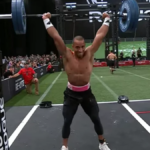
Standing up for your overhead press turns a pure upper-body movement into an integrated full-body strength and stability exercise. Research on standing overhead pressing highlights meaningful activation of the trunk stabilizers alongside shoulder prime movers as your body resists subtle shifts in balance.
If your training goals include athletic transfer, upright posture, and full-body tension, standing presses teach your midsection and hips to lock in while your arms work overhead.
Avoiding Momentum and Lower-Back Overload
The biggest trap with standing shoulder presses is using a quick knee dip or excessive lower-back arch just to get a heavy weight moving off the shoulders. While a slight natural brace is healthy, leaning way back puts unnecessary compressive and shear stress on the lumbar spine while cutting down strict shoulder tension.
Resistance Bands vs Dumbbells: Which Builds More Muscle at Home?
Keeping your glutes squeezed, ribs stacked over your pelvis, and knees gently braced keeps the standing press honest and effective.
Which One Should You Choose for Bigger Shoulders?
You do not actually have to pick one camp forever because rotating or pairing seated and standing presses gives you the best of both worlds. Use seated dumbbell or machine shoulder presses when you want strict shoulder isolation, steady progression in the eight to twelve repetition range, and minimal lower-back fatigue. Use standing barbell or dumbbell presses when you want full-body core integration, upright strength work, or a fresh stimulus that keeps your shoulder routine engaging.
Whichever variation you pick, prioritize smooth range of motion, steady weekly progression, adequate daily protein, and consistent recovery. Bigger shoulders come from repeating high-quality sets over months and years rather than obsessing over a single angle in isolation.
Key Takeaways for Bigger Shoulders
| Decision Point | Practical Recommendation | Why It Matters |
| Primary Growth Driver | Focus on mechanical tension, clean reps, and progressive overload | Both seated and standing presses can build deltoid size |
| Seated Press Advantage | Use for strict hypertrophy sets and lower-back friendliness | External back support reduces whole-body fatigue |
| Standing Press Advantage | Use for core bracing, posture, and full-body coordination | Standing demands greater trunk and stabilizer control |
| Smart Programming | Rotate or combine both based on fatigue and goals | Balances targeted shoulder growth with athletic strength |
References
- Behm, D.G., Leonard, A.M., Young, W.B., Bonsey, W.A. and MacKinnon, S.N. (2005) ‘Trunk muscle electromyographic activity with unstable and unilateral exercises’, Journal of Strength and Conditioning Research, 19(1), pp. 193–201.
- Flores, V.E., Gentil, P., Braga, M.A.O., Mendes, G.P., Suchomel, T.J. and Bottaro, M. (2020) ‘Effects of standing versus seated overhead press on muscle activation and kinematics’, Journal of Strength and Conditioning Research, 34(7), pp. 1916–1923.
- Saeterbakken, A.H. and Fimland, M.S. (2013) ‘Muscle activity and force output in standing versus seated shoulder press’, European Journal of Sport Science, 13(5), pp. 480–486.
- Schoenfeld, B.J. (2010) ‘The mechanisms of muscle hypertrophy and their application to resistance training’, Journal of Strength and Conditioning Research, 24(10), pp. 2857–2872.
Robbie Wild Hudson
Editor-In-Chief at BOXROX. I come from a background of rugby and weightlifting. Growing up in the English Lake District, I spent a great deal of time swimming in its stunning lakes and rivers. In 2015 my brothers and I became the first people to swim the 145km length of the River Eden, from source to mouth, in 9 days. We also swam the Corryvreckan whirlpool, the third largest in the world, and Crossfit is a huge part of my training for these events.
More from Robbie Wild Hudson