




















The Best 5 Exercises for Beginners to Build a More Attractive Body

With training, fitness and health, it’s always worth placing health, longevity and physical performance as higher priorities as the way you look.
However, getting in great shape makes us feel good, confident, and is a fantastic ancillary benefit of all the work you put in in the gym or box. If it is your primary motivator, that is also completely fine, because it is a personal journey.
Why Aesthetic Body Composition Starts With Big Movers
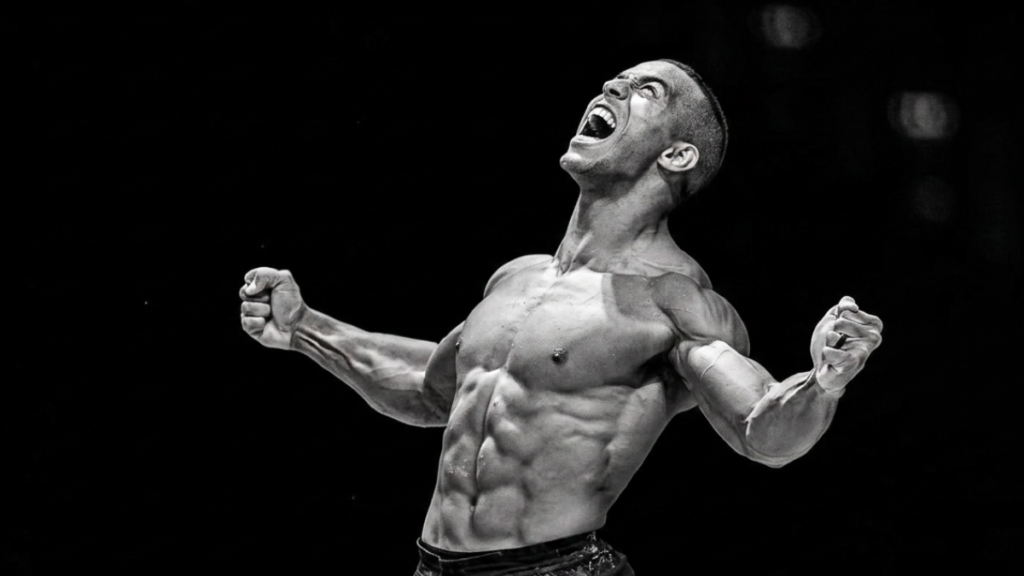
Attractiveness in physique terms is closely tied to healthy body composition, balanced muscular proportion, and upright posture rather than extreme size or single-muscle isolation. Research on perceptions of male physique attractiveness shows that observers consistently favor a healthy balance of muscularity and leanness along with a strong upper-to-lower body proportion, such as broader shoulders relative to the waist.
For beginners, multi-joint compound exercises recruit large amounts of muscle mass simultaneously and allow you to progress weights steadily over time, driving whole-body strength and shape far more efficiently than isolated exercises alone.
Beginners also benefit tremendously from learning coordinated movement patterns early because the nervous system adapts quickly to consistent resistance training. Meta-analyses comparing multi-joint and single-joint exercises indicate that compound movements produce substantial muscle hypertrophy and strength gains while saving valuable workout time.
Rather than scattering your energy across a dozen machines, anchoring your training around five fundamental exercises builds the core structural shape that makes every other detail look better.
Beginner Core Movement Overview
| Movement Pattern | Primary Physique Focus | Beginner Starting Option | Key Benefit for New Lifters |
| Knee Dominant Push | Quads, glutes, and trunk | Goblet squat or bodyweight squat | Builds leg shape and upright posture |
| Hip Hinge Pull | Hamstrings, glutes, and back | Romanian deadlift or trap bar deadlift | Shapes posterior chain and back thickness |
| Horizontal Push | Chest, front delts, and triceps | Incline dumbbell press or pushup | Develops upper chest and pressing strength |
| Vertical Pull | Lats, upper back, and biceps | Lat pulldown or assisted pullup | Creates a wider V-taper back silhouette |
| Loaded Carry or Core Brace | Core stability, traps, and grip | Farmer carry or plank variation | Reinforces midsection tightness and posture |
The 5 Best Exercises for Beginners
1. The Squat Pattern
Squatting teaches your body how to lower and raise a load smoothly through the hips and knees while keeping your torso strong and upright. Building solid leg and glute development balances out upper-body training so you never end up top-heavy with thin legs. Starting with a goblet squat or controlled bodyweight squat helps beginners master depth and balance before loading a barbell on their back.
2. The Hip Hinge Pattern
A well-executed hip hinge such as a Romanian deadlift or trap bar deadlift targets the hamstrings, glutes, and erector spinae along the back of your body.
Because beginners often focus only on the muscles they can see in a mirror, training the posterior chain creates a major visual upgrade from the side and back while supporting healthy spine mechanics. Keep the weight close to your body, push your hips backward smoothly, and stop lowering as soon as your hamstrings feel a firm stretch without rounding your lower back.
3. The Incline Press or Pushup
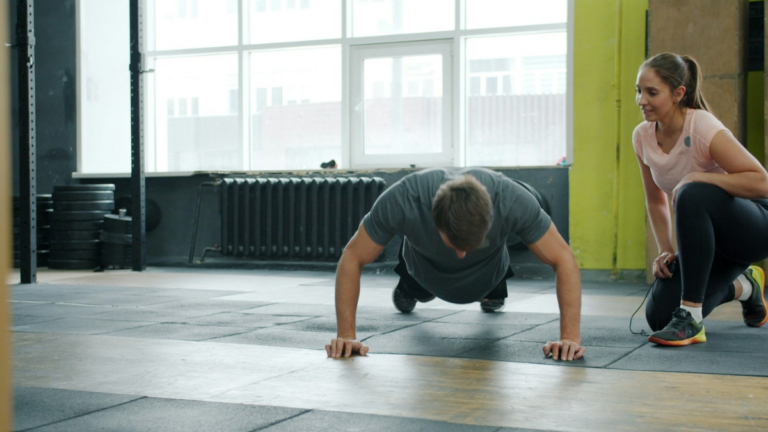
Pressing away from your torso develops the chest, anterior deltoids, and triceps, which together give the upper body fullness and crisp definition. Using a slight incline angle or mastering clean pushups places strong mechanical tension on the upper chest while letting your shoulder blades move naturally.
Focus on lowering yourself under control and pressing smoothly rather than bouncing at the bottom or flaring your elbows straight out to the sides.
4. The Vertical Pull
Vertical pulling movements like lat pulldowns or assisted pullups build width across the upper back and lats, directly shaping the taper from your shoulders down toward your waist. Many beginners struggle with unassisted pullups at first, so starting with a lat pulldown or band-assisted pullup lets you train full ranges of motion with proper form.
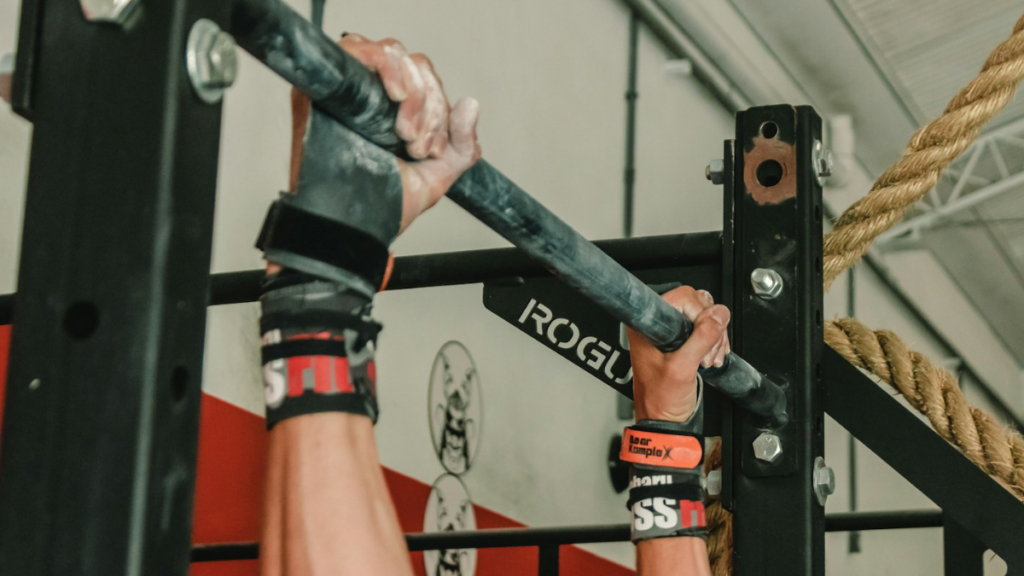
Pull your elbows downward toward your ribs and keep your chest lifted so your back muscles do the work instead of shrugging your shoulders up to your ears.
5. The Loaded Carry
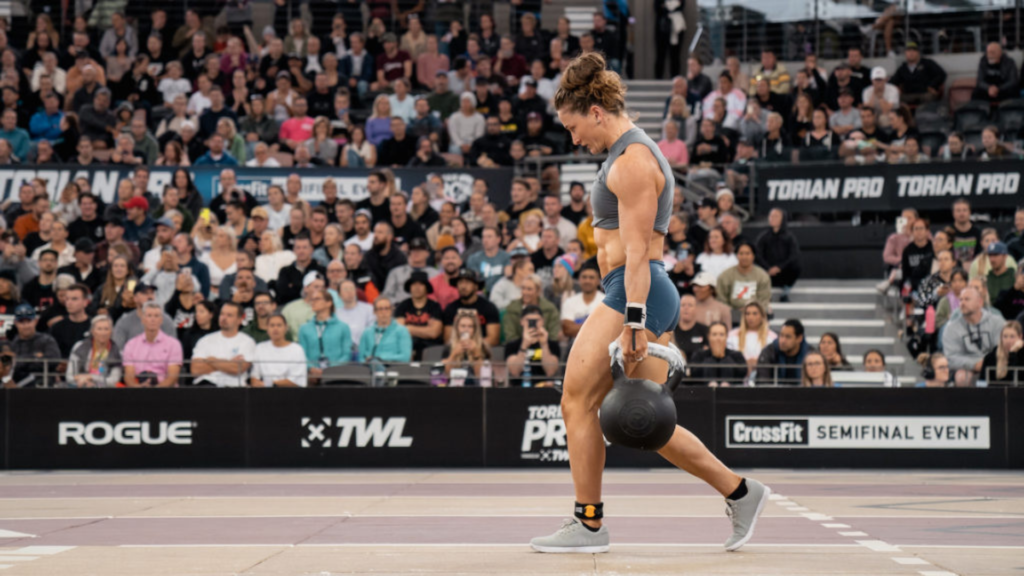
Carrying a pair of dumbbells or kettlebells at your sides while walking tall looks simple on paper, yet it challenges your core, upper traps, forearms, and postural endurance all at once. Loaded carries require your trunk muscles to resist side-bending and rotation with every step, building a tight, athletic midsection without endless sit-ups. Walk with controlled posture, tall shoulders, and steady breathing for thirty to forty-five seconds per set.
How to Progress Without Burning Out
The biggest mistake beginners make is trying to go all-out every single workout until they feel exhausted and sore for days. Research on resistance training load and proximity to failure shows that training with moderate loads in roughly the eight to twelve repetition range while stopping a couple of repetitions shy of complete failure builds muscle effectively without excessive fatigue. Adding one extra repetition per set or bumping the weight up slightly over consecutive weeks is all it takes to keep your body adapting.
Why the Meadows Row Might Be the Best Back Exercise Your Workout Is Missing
Consistency across two to three full-body sessions per week beats sporadic marathon workouts every single time. Pair these five core lifts with adequate daily protein, solid sleep, and gradual progression, and your physique will steadily reshape itself into something stronger, leaner, and more confident.
Key Takeaways for Beginners
| Topic | Practical Rule | Why It Matters |
| Exercise Selection | Center workouts on five core movement patterns | Builds balanced whole-body muscle efficiently |
| Repetition and Effort | Aim for 8 to 12 reps stopping 1 to 2 reps shy of failure | Drives muscle growth with manageable recovery cost |
| Posture and Proportion | Pair back and posterior chain work with pressing | Creates balanced proportions and upright posture |
| Weekly Consistency | Train two to three times per week and log progress | Turns steady weekly improvements into visible change |
References
- Camara, K.D., Coburn, J.W., Dunnick, D.D., Brown, L.E., Galpin, A.J. and Costa, P.B. (2016) ‘An examination of muscle activation and power characteristics while performing the deadlift exercise with straight and hexagonal barbells’, Journal of Strength and Conditioning Research, 30(5), pp. 1183–1188.
- Paoli, A., Gentil, P., Moro, T., Marcolin, G. and Bianco, A. (2017) ‘Resistance training with single vs. multi-joint exercises at equal total load volume: Effects on body composition, cardiorespiratory fitness and muscle strength in men’, Frontiers in Physiology, 8, p. 1105.
- Rosa, A., Coleman, M., Aguiar, A.F., et al. (2025) ‘Effects of single-joint vs. multi-joint resistance training on muscle hypertrophy: A systematic review and meta-analysis’, Sports Medicine, 55(4), pp. 845–860.
- Schoenfeld, B.J., Grgic, J., Van Every, D.W. and Plotkin, D.L. (2021) ‘Loading recommendations for muscle strength, hypertrophy, and local endurance: A re-examination of the repetition continuum’, Sports, 9(2), p. 32.
- Tovée, M.J., Swami, V., Furnham, A. and Mangalparsad, R. (2006) ‘Changing perceptions of attractiveness as observers are exposed to a different culture’, Evolution and Human Behavior, 27(6), pp. 443–456.
Ben Roberts
I first got into Crossfit from a background in powerlifting. I love that Crossfit trains everything and turns you into an all-round athlete: strong, fast, supple and skillful. I've been doing Crossfit now for 2.5 years and never looked back!
More from Ben Roberts