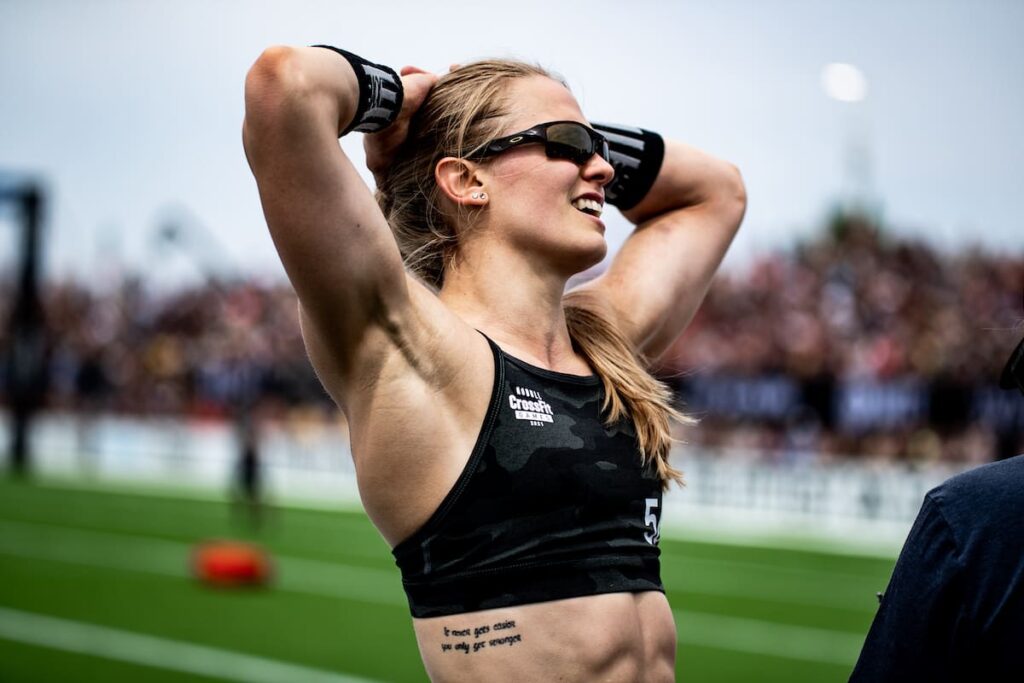
Both are important arm building exercises, but which one is right for you?
Decoding the Anatomy and Mechanics of the Biceps Brachii
To evaluate the true effectiveness of the barbell curl versus the dumbbell curl, we must first examine how the biceps brachii actually operates under load. The biceps muscle complex sits on the front of your upper arm and is made up of two distinct heads known as the long head and the short head.
The long head originates on the supraglenoid tubercle of the scapula and sits on the outer portion of your arm, creating the classic high bicep peak. The short head originates on the coracoid process of the scapula and sits on the inner portion of your arm, contributing directly to overall arm thickness and width.
| Bicep Compartment | Anatomical Position | Primary Mechanical Action | Contribution to Arm Aesthetic |
|---|---|---|---|
| Long Head | Outer portion of the upper arm | Flexion and shoulder abduction | Creates the vertical bicep peak |
| Short Head | Inner portion of the upper arm | Flexion and horizontal adduction | Adds overall thickness and inner width |
| Brachialis | Deep muscle sitting beneath biceps | Pure elbow flexion regardless of grip | Pushes bicep upward for overall height |
Grasping these anatomical actions changes how you view arm training equipment completely. Evaluating your exercise selection through the lens of muscular mechanics allows you to determine how each implement challenges your target tissue.
The Biomechanical Case for the Barbell Curl
The barbell curl has earned its legendary status in strength sports because it provides an unmatched environment for raw progressive overload. By locking both hands onto a single rigid iron bar, you create a stable symmetrical structure that allows your nervous system to recruit motor units without worrying about controlling two separate paths of resistance. This mechanical stability enables you to handle significantly heavier absolute loads compared to unilateral or dumbbell variations.
Research confirms that mechanical tension is the primary driving force behind skeletal muscle hypertrophy, and heavy barbell pressing and pulling patterns deliver tension in massive quantities. When you load a straight barbell, your entire upper body works synergistically to stabilize the weight while your bicep fibers contract against a high absolute resistance. Furthermore, straight barbells force your forearms into complete full supination throughout the entire movement, keeping high baseline tension on both heads of the biceps from the bottom stretch all the way to the top lockout.
| Barbell Curl Variable | Mechanical Advantage | Potential Disadvantage |
|---|---|---|
| Absolute Load Capacity | Extremely high mechanical overload potential | Increased risk of momentum cheating |
| Hand Supination Alignment | Fixed complete supination through full range | Can cause wrist or elbow discomfort for some lifters |
| Bilateral Stability | High neural drive and high motor unit recruitment | Dominant arm can compensate for weaker side |
However, the fixed nature of a straight barbell can present challenges for lifters with limited wrist mobility or anatomical carrying angle restrictions. Forcing your wrists into strict flat alignment while lifting heavy iron can transfer unwanted shear stress into your wrist and elbow joints over time. Despite this limitation, the straight barbell curl remains a absolute powerhouse for packing raw tissue onto the front of your upper arms.
The Biomechanical Case for the Dumbbell Curl
While the barbell delivers raw heavy loading, the dumbbell curl introduces an incredible level of rotational freedom and muscular isolation that a fixed bar simply cannot replicate. Because each hand holds an independent weight, your limbs move along their natural movement path without being forced into an uncomfortable rigid position. This independence completely eliminates hand or wrist compensation, ensuring that your dominant arm cannot secretly carry extra load for your weaker arm.
The single greatest scientific advantage of using dumbbells lies in the ability to actively rotate your wrists against resistance during the concentric phase of the lift. Starting a curl with a neutral grip and actively supinating your forearms as you curl upward engages the full physiological function of the biceps brachii. Electromyography data demonstrates that active supination against dynamic dumbbell resistance produces exceptionally high localized motor unit firing at the absolute peak of contraction.
| Dumbbell Curl Variable | Mechanical Advantage | Potential Disadvantage |
|---|---|---|
| Rotational Freedom | Permits full wrist supination during concentric phase | Lower overall absolute weight capacity |
| Independent Limb Loading | Corrects strength asymmetries between arms | Greater neural demand for balance and stabilization |
| Joint Compatibility | Reduces wrist and elbow strain significantly | High potential for momentum if unbraced |
Additionally, dumbbells allow you to manipulate your torso position in ways that alter muscle stretch. Performing incline dumbbell curls places the long head of the bicep into an extreme pre stretched state, subjecting the muscle fibers to stretch mediated hypertrophy. This versatile exercise selection makes dumbbells a formidable tool for building detailed, fully developed biceps.
The Scientific Verdict on Accelerated Bicep Growth
Comparing these two classic arm exercises reveals that asking which one is absolute best is actually asking the wrong question entirely, because they stimulate muscle growth through two distinct physiological mechanisms. The barbell curl excels at delivering raw mechanical tension through heavy progressive overload, creating systemic neural signals that trigger foundational tissue growth. The dumbbell curl excels at maximizing active muscle shortening through complete dynamic supination while offering targeted isolation and joint comfort.
Sports science literature shows that optimal muscle growth occurs when you combine high mechanical tension with comprehensive exercise variety that targets a muscle through different resistance curves and joint angles. Relying strictly on barbells means missing out on the hyper localized activation offered by rotational supination, while relying exclusively on dumbbells deprives your nervous system of the systemic overload offered by heavy rigid barbell work.
| Training Variable | Barbell Curl Application | Dumbbell Curl Application |
|---|---|---|
| Primary Growth Trigger | High mechanical tension and heavy progressive load | Active full supination and localized peak contraction |
| Joint Stress Profile | Fixed wrist angle requiring adequate mobility | Natural rotational path reducing joint fatigue |
| Symmetry Corrections | Bilateral loading best for raw overall volume | Unilateral loading best for fixing muscle imbalances |
| Training Placement | Primary movement early in the workout | Secondary movement for targeted isolation work |
The ultimate strategy for building massive, powerful biceps involves combining both implements strategically within your weekly training split. Using heavy barbell curls as your main compound overload builder early in your workout lays down the structural foundation of strength.
Every Guy Needs These 3 Compound Exercises for a Strong and Jacked Body
Following up with controlled, supinating dumbbell curls ensures you maximize peak contraction, target the long head in deep stretches, and fix any subtle strength imbalances between your arms.
Key Takeaways
| Strategic Focus Area | Practical Application Summary |
|---|---|
| Mechanical Tension | Use heavy barbell curls to drive maximum absolute overload and stimulate high threshold motor units. |
| Dynamic Supination | Incorporate dumbbell curls to actively rotate wrists and recruit biceps through their full anatomical range. |
| Structural Balance | Utilize independent dumbbell work to prevent the dominant arm from compensating during heavy lifts. |
| Synergistic Programming | Combine both implements by leading workouts with barbells and finishing with targeted dumbbell variations. |
References
- Campos, G. E., Luecke, T. J., Wendeln, H. K., Toma, K., Hagerman, F. C., Murray, T. F., Ragg, K. E., Ratamess, N. A., Kraemer, W. J., and Staron, R. S. 2002. Muscular adaptations in response to three different resistance-training regimens: Specificity of repetition maximum training zones. European Journal of Applied Physiology, 88(1), pp. 50-60.
- Marcolin, G., Panizzolo, F. A., Petrone, N., Moro, T., Grigoletto, D., Bossi, D., and Paoli, A. 2018. Differences in electromyographic activity of biceps brachii and brachioradialis while performing three different bicep curl exercises. PeerJ, 6, e4408.
- Oliveira, L. F., Matta, T. T., Alves, D. S., Garcia, M. A., and Vieira, T. M. 2009. Effect of the elbow angle on the electromyographic activity of biceps brachii heads during isometric contraction. Brazilian Journal of Kinanthropometry and Human Performance, 11(2), pp. 160-165.
- Schoenfeld, B. J. 2010. The mechanisms of muscle hypertrophy and their application to resistance training. Journal of Strength and Conditioning Research, 24(10), pp. 2857-2872.