

Big arms are a popular training goal, but most lifters approach it backward. They add more curls, more triceps extensions, and more arm days before building the conditions that allow those exercises to work well. The result is often slow progress, irritated elbows, and a program that feels busy without producing much measurable change.
Your biceps and triceps do not grow in isolation. They respond to challenging resistance training, enough productive volume, adequate recovery, and a body that is supported by quality nutrition. Research consistently shows that muscle growth depends on the total training stimulus and the ability to recover from it. A smarter arm building plan starts with the foundations that make direct arm work more effective.


This does not mean curls and extensions are unnecessary. Direct work can be very useful, especially when arm size is a priority. However, it works best when it is placed on top of a strong base. Before you chase bigger arms, build these three foundations.
Foundation One: Build Strength and Muscle With Big Pulling and Pressing Movements
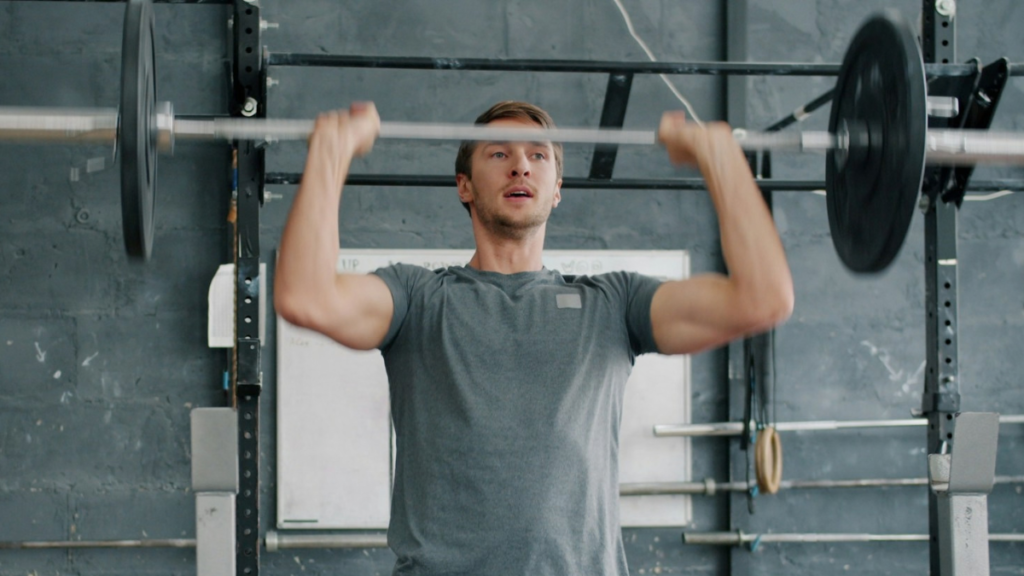
The biceps and triceps are heavily involved in many compound lifts. Rows, pull ups, chin ups, and pulldowns require elbow flexion, which challenges the biceps and related muscles of the upper arm. Bench presses, overhead presses, dips, and push ups require elbow extension, which places the triceps under meaningful load.
Compound training gives your arms a large amount of productive work while also improving the bigger movements that support long term progress. When your back, chest, and shoulders become stronger, you can usually handle heavier loads or more high quality repetitions in the exercises that involve your arms.
Why Compound Exercises Matter for Arm Growth
Muscle growth is driven largely by mechanical tension. Mechanical tension occurs when a muscle produces force against resistance through a meaningful range of motion. Compound exercises allow you to apply substantial loads while training multiple muscle groups at the same time.

Research comparing single joint and multi joint resistance training suggests that both can build muscle effectively when training volume is matched. This is important because it shows that curls and extensions are not magically superior for muscle growth simply because they target one muscle. Compound lifts can provide a strong hypertrophy stimulus, particularly for people who are still building their training base.
For the biceps, chin ups are especially useful because the underhand grip places the elbow flexors in a strong position to contribute. For the triceps, pressing movements provide a large training stimulus, particularly when the movement includes a deep and controlled elbow bend. The exact exercise matters less than progressing it over time with sound technique.
How to Apply This Foundation
Include regular horizontal and vertical pulling in your weekly training. A combination of rows and chin ups or pulldowns gives the biceps repeated exposure to loaded elbow flexion while building the upper back. Include horizontal and vertical pressing as well. Bench press variations and overhead press variations challenge the triceps while developing the chest and shoulders.
Cardio vs Strength Training – Which Is More Important After 40?
You do not need to turn every compound lift into an arm exercise. Use a full range of motion you can control, keep the repetitions consistent, and focus on getting stronger over time. If a chin up, row, bench press, or overhead press has stalled for months, adding more isolation work may not solve the real problem. Better technique, better exercise selection, or a more sensible training progression may be the bigger opportunity.
Foundation Two: Accumulate Enough High Quality Weekly Training Volume
Once compound lifts are in place, direct arm training helps you target the biceps and triceps with more precision. The key is not to perform as many exercises as possible. The goal is to accumulate enough challenging work each week while keeping performance high and recovery manageable.
Training volume is commonly measured as the number of hard sets performed for a muscle group. Research has found a dose response relationship between weekly resistance training volume and muscle growth. In general, doing more sets can produce more growth, but the return from each additional set becomes smaller as volume rises. Very high volumes can also create more fatigue than benefit, particularly if sleep, food intake, or exercise technique are poor.
Productive Sets Matter More Than Busy Work
A productive set is challenging enough to require strong effort, but controlled enough that the target muscle is doing the work. For arm training, this means avoiding the common habit of swinging a curl or turning a triceps extension into a whole body movement. Momentum may allow more weight, but it can reduce the tension placed on the muscle you want to grow.

Evidence indicates that muscle growth can occur across a wide range of repetition targets when sets are performed with sufficient effort. Moderate loads are practical for many arm exercises because they make it easier to control the movement and train through a comfortable range of motion. Higher repetition work can also be effective, provided the set becomes genuinely difficult.
You do not need to train to absolute failure on every set. Studies suggest that working close to failure can support hypertrophy, while repeated all out effort can create unnecessary fatigue. Leave a small margin when needed, especially on early sets, then use excellent form as the set becomes harder.
A Practical Volume Starting Point
For many lifters, six to ten direct weekly sets for biceps and six to ten direct weekly sets for triceps is a reasonable starting range when compound pulling and pressing are already part of the program. This is not a universal prescription. A beginner may grow with less direct work because compound lifts provide a large stimulus. An experienced lifter with arms as a clear weakness may benefit from gradually moving above this range if recovery remains good.
Split the work across at least two sessions when possible. This often improves set quality because you are less fatigued than you would be after cramming all arm work into one long session. For example, you could train a few biceps sets after pulling work on two separate days and a few triceps sets after pressing work on two separate days.
Track your performance. If you can gradually add repetitions, load, or control while keeping your technique consistent, your plan is likely working. If performance declines, joints ache, and motivation drops, adding more sets is rarely the right first move.
Foundation Three: Eat and Recover Like Muscle Growth Is the Goal
Training creates the signal to grow, but recovery is when adaptation occurs. Your arms cannot consistently add size if you train hard while eating too little, sleeping poorly, and stacking fatigue week after week.
Protein intake is particularly important because resistance training and dietary protein work together to support muscle protein synthesis. Large reviews of the research indicate that daily protein intake of about 1.6 grams per kilogram of body mass is sufficient to maximize average gains in lean mass from resistance training for many healthy adults. Some individuals may benefit from somewhat more, especially during energy restriction or when dietary preferences make protein distribution harder.
Energy Intake Influences the Result
Building noticeable muscle is usually easier when you are not in a large calorie deficit. Energy restriction can reduce the body’s ability to gain lean mass, even when resistance training and protein intake are present. If bigger arms are a major goal, eating at maintenance calories or using a modest calorie surplus is generally more supportive than aggressive dieting.

A modest surplus does not mean eating without structure. Rapid weight gain can add more body fat than you want and may not improve muscle growth proportionally. Use gradual changes, monitor body weight and gym performance, and adjust based on your results over several weeks.
Carbohydrates can also help support training performance by contributing to glycogen availability. Hard resistance sessions rely substantially on carbohydrate metabolism, particularly when you perform multiple sets at moderate to high repetitions. Adequate carbohydrate intake can make it easier to maintain quality training volume, which matters for hypertrophy.
Sleep Is Not Optional Recovery
Sleep loss can interfere with the recovery environment that supports muscle growth. Experimental research has found that a single night of total sleep deprivation can reduce muscle protein synthesis rates in healthy young adults. Although everyday training rarely involves total sleep deprivation, the finding reinforces a practical point: consistently poor sleep makes it harder to get the most from your training and nutrition.
Aim for a consistent sleep schedule that gives you enough time in bed to recover. Adults generally benefit from seven or more hours of sleep per night, and athletes with demanding training schedules may need more. If your arm workouts feel flat despite a sensible program, look at sleep before adding another exercise.
Putting the Foundations Together
The best arm program is not the one with the most curl variations. It is the one that lets you train hard, progress steadily, and recover well enough to repeat that process for months.
Build your week around pulling and pressing movements that you can progressively overload. Add a manageable amount of direct biceps and triceps work with controlled technique. Eat enough protein, avoid prolonged underfueling when size is the goal, and protect your sleep. These foundations make your direct arm training far more valuable.
Your arms will not suddenly grow because you found a new exercise. They grow because you repeatedly give them a strong stimulus, then provide the recovery resources needed to adapt. Get the fundamentals right first, and your curls and extensions will finally have something solid to build on.
Key Takeaways
| Foundation | What it does | Practical focus |
|---|---|---|
| Compound pulling and pressing | Trains the arms while building the larger muscle groups that support strength and progressive overload | Include rows, chin ups, presses, and other controlled compound lifts every week |
| Productive weekly volume | Provides enough repeated tension for muscle growth without creating unnecessary fatigue | Start with manageable direct arm work and add volume only when recovery and performance support it |
| Nutrition and recovery | Supplies the energy, protein, and recovery needed to turn training into muscle growth | Eat adequate protein, avoid aggressive dieting when size is the goal, and prioritize consistent sleep |
References
- American College of Sports Medicine, 2009. American College of Sports Medicine position stand. Progression models in resistance training for healthy adults. Medicine and Science in Sports and Exercise, 41(3), pp. 687 708.
- Baz Valle, E., Balsalobre Fernandez, C., Alix Fabregas, A. and Santos Conejero, J., 2018. The effects of exercise selection on muscle activation, strength, and size in resistance trained women. Sports, 6(3), 59.
- Grgic, J., Schoenfeld, B.J., Davies, T.B., Lazinica, B., Krieger, J.W. and Pedisic, Z., 2018. Effect of resistance training frequency on gains in muscular strength: A systematic review and meta analysis. Sports Medicine, 48(5), pp. 1207 1220.
- Grgic, J., Schoenfeld, B.J., Orazem, J. and Sabol, F., 2022. Effects of resistance training performed to repetition failure or non failure on muscular strength and hypertrophy: A systematic review and meta analysis. Journal of Sport and Health Science, 11(2), pp. 202 211.
- Isenmann, E., Ritzmann, R., Stamm, H., Lehnert, K., Gollhofer, A. and Bloch, W., 2019. The role of sleep in skeletal muscle regeneration and function. Frontiers in Physiology, 10, 101.
- Morton, R.W., Murphy, K.T., McKellar, S.R., Schoch, R.D., Henselmans, M., Helms, E., Aragon, A.A., Devries, M.C., Banfield, L., Krieger, J.W. and Phillips, S.M., 2018. A systematic review, meta analysis and meta regression of the effect of protein supplementation on resistance training induced gains in muscle mass and strength in healthy adults. British Journal of Sports Medicine, 52(6), pp. 376 384.
- Murphy, C.H., Saddler, N.I., Devries, M.C., McGlory, C., Baker, S.K. and Phillips, S.M., 2016. Snacking on whole eggs versus egg whites: A difference in muscle protein synthesis rates after resistance exercise. American Journal of Clinical Nutrition, 103(1), pp. 123 130.