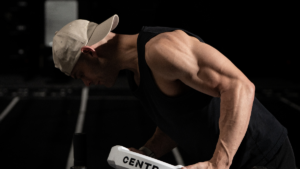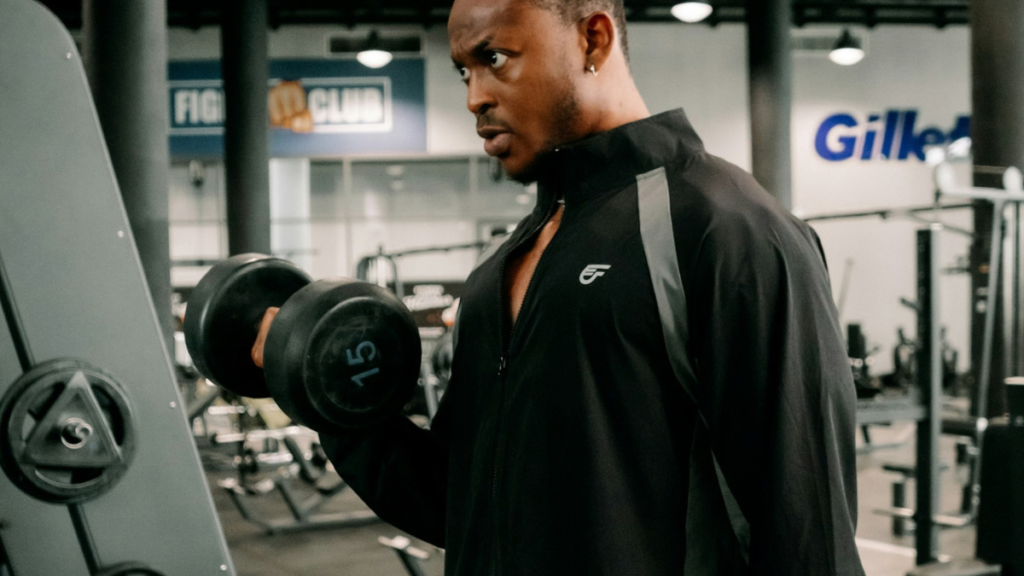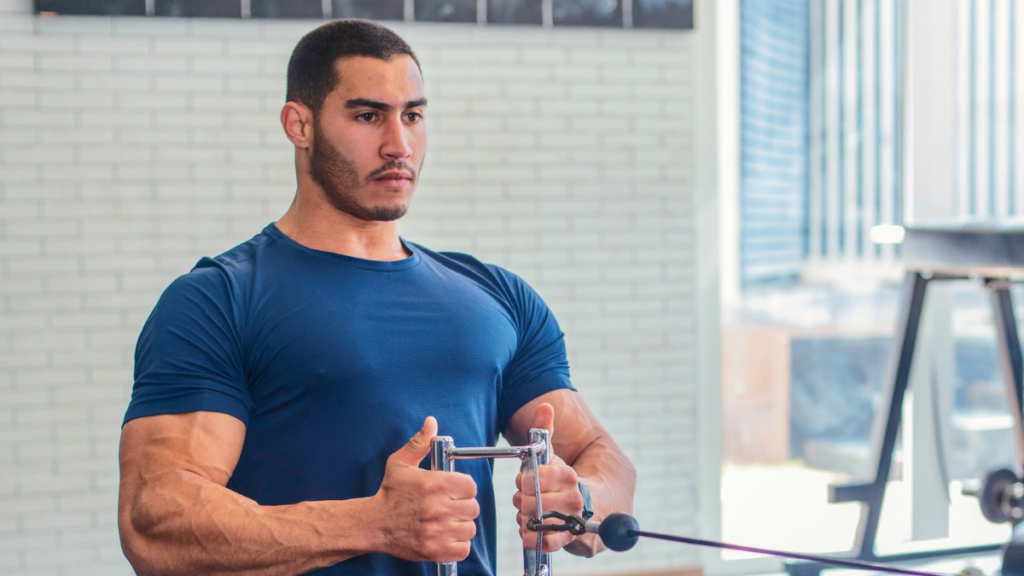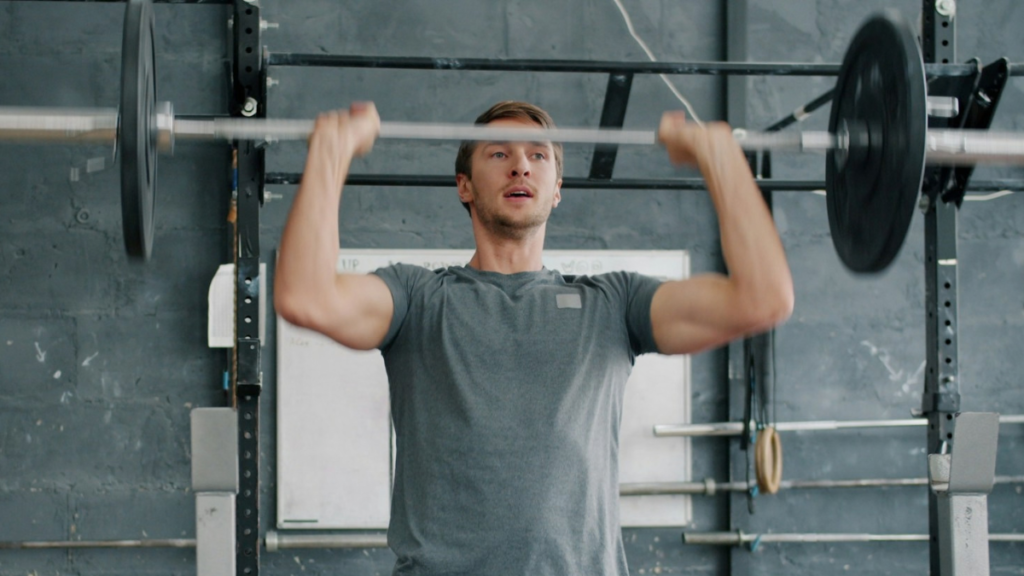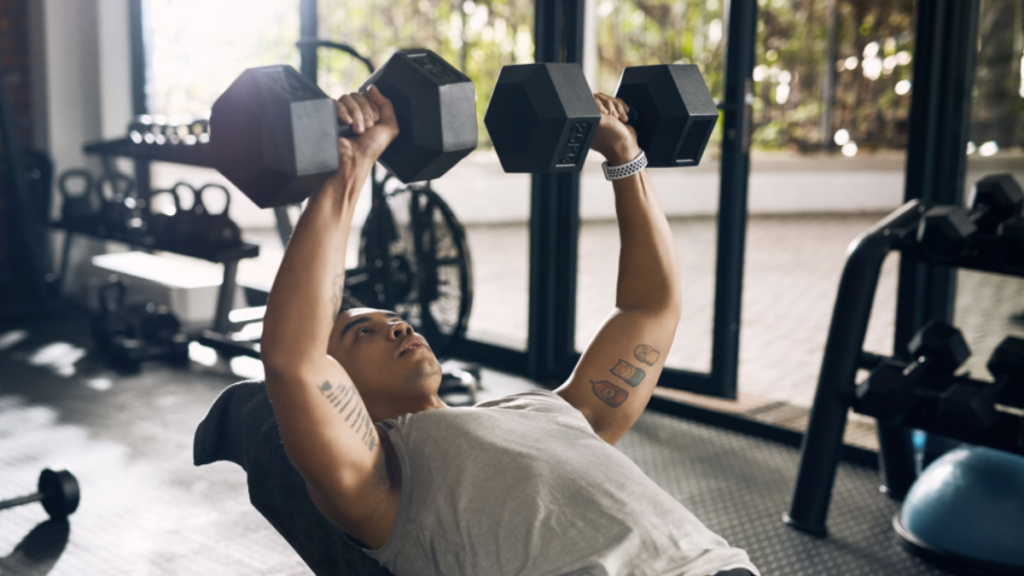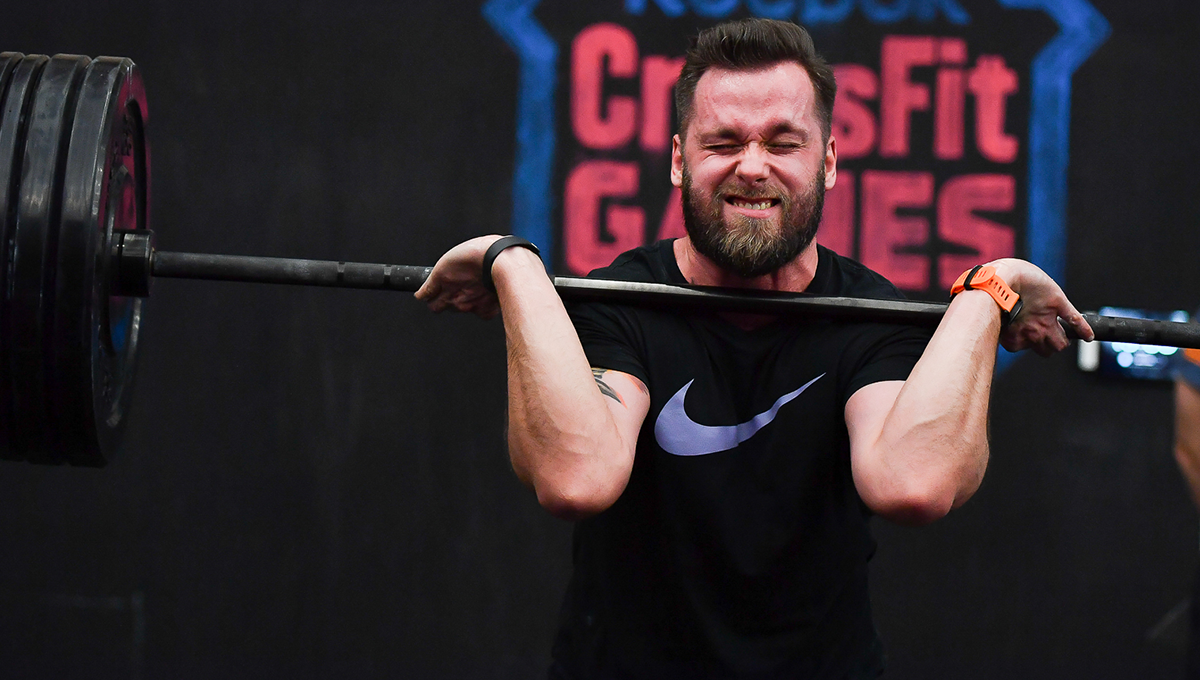


Compound exercises can build an impressively strong and muscular upper body. Presses, rows, pull ups, dips, and similar movements train several joints and muscle groups at once, which makes them efficient and highly transferable to everyday physical tasks and many sports.
However, doing only compound movements changes what your training emphasizes. You will likely develop substantial pressing and pulling strength, but some muscles may receive less direct stimulus than others. Whether that matters depends on your goals, current training experience, exercise selection, and how well you progress the movements over time.


This article explains what research suggests happens when compound exercises are the only tools in your upper body program.
What Counts as a Compound Upper Body Exercise?
A compound exercise involves movement at more than one joint. In an upper body bench press, the shoulder and elbow joints move while the chest, triceps, and front shoulder muscles contribute force. In a pull up, the shoulder and elbow move while the back, biceps, forearms, and muscles around the shoulder blade work together.
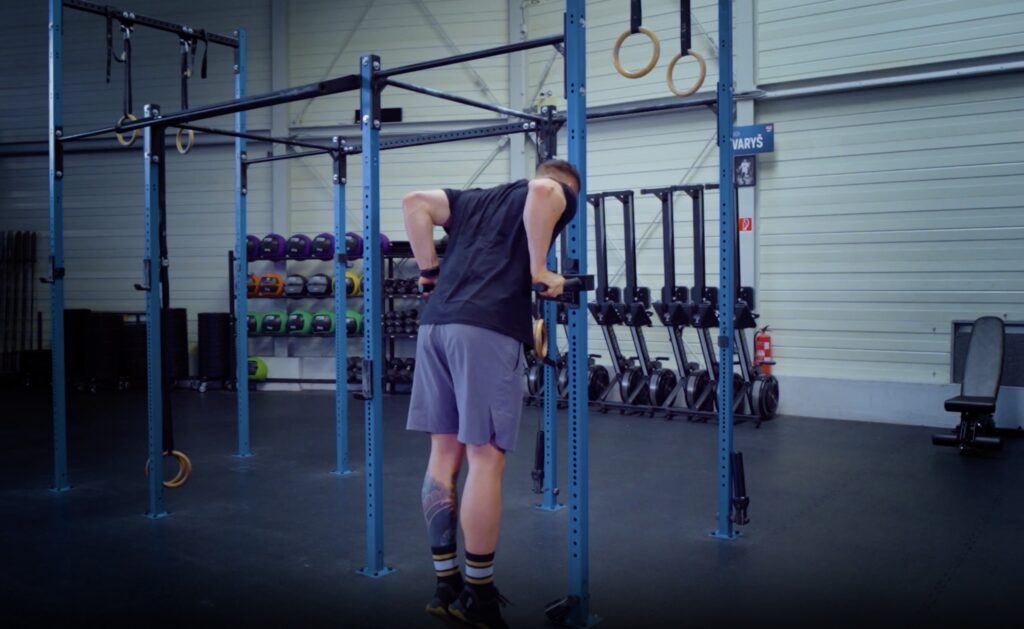
Common compound upper body exercises include bench presses, overhead presses, dips, push ups, pull ups, chin ups, rows, and variations of these exercises. These movements can be performed with barbells, dumbbells, cables, machines, rings, or body weight.
By comparison, a single joint exercise primarily moves one joint. A biceps curl mainly trains elbow flexion, while a lateral raise primarily trains shoulder abduction. Isolation exercises can still involve other muscles that stabilize the body, but the target muscle is usually asked to do a more focused job.
Before You Bench 100kg, You Should Be Able to Do These 3 Things
Research consistently shows that resistance training improves muscular strength and size when exercises are loaded, performed through a practical range of motion, and progressed over time. Compound exercises satisfy all of these requirements and can therefore form the foundation of a productive upper body routine.
The Biggest Change: You Get More Work Done Per Exercise
Efficient Strength Development
Compound lifts allow you to train several muscle groups during the same set. A horizontal press can challenge the chest, triceps, and front deltoids together, while a rowing movement can train the latissimus dorsi, middle back, rear deltoids, and elbow flexors.
This efficiency is especially useful when training time is limited. Rather than completing separate exercises for every muscle, you can train the major upper body movement patterns with a relatively short session. Large multi joint movements also create a strong practice effect, meaning you become better at coordinating the specific skill of pressing, pulling, bracing, and producing force across several joints.
Strength gains tend to be specific to the movements practiced. Someone who regularly performs heavy rows and presses should expect meaningful improvement in those lifts because the nervous system becomes more efficient at coordinating the muscles involved. That does not automatically mean identical strength gains in an exercise that was never practiced, such as a strict curl or lateral raise.
More Total Muscle Can Be Trained With Fewer Movements
A simple compound focused program can cover most major upper body muscles. A pressing movement for the chest and triceps, an overhead press for the shoulders and triceps, a vertical pull for the lats and biceps, and a horizontal row for the upper back and biceps gives broad coverage.
For general health, strength, and an athletic upper body, this can be enough. Resistance training guidelines emphasize training all major muscle groups regularly, and compound movements can help meet that goal efficiently. The key is choosing both pushing and pulling patterns rather than relying on presses alone.
Can Compound Exercises Build Muscle as Well as Isolation Exercises?
Most Beginners Will Grow Very Well
For beginners, compound exercises are often sufficient for strong upper body muscle growth. Early training adaptations come from learning the movements, improving coordination, and exposing previously undertrained muscles to challenging mechanical tension. Pressing and pulling exercises provide that tension to many muscles at once.
Studies comparing programs built around multi joint exercises with programs that also add single joint work often find similar overall gains in muscle size and strength, particularly in untrained participants. This suggests that a beginner does not need a long menu of isolation work to make meaningful progress.
The practical lesson is simple: if you can progressively perform presses, rows, pull ups, and related movements with solid technique, you are not missing the basics of muscle building.
The Main Muscles Usually Receive Plenty of Stimulus
Your chest generally receives substantial work from horizontal pressing. Your triceps work hard in pressing movements, especially when the elbows extend against challenging resistance. Your back receives broad stimulation from rows and vertical pulls. Your biceps contribute substantially to chin ups, pull ups, and rows, although their contribution changes with grip choice, elbow path, and exercise technique.
Muscle growth is strongly related to sufficient hard sets, progressive overload, and training volume that can be recovered from. Compound exercises can provide a large portion of that effective volume. When sets are performed with an appropriately challenging load and close enough to muscular fatigue, the involved muscles receive a meaningful growth signal.
Where a Compound Only Plan Can Fall Short

Some Muscles May Become the Limiting Factor
The most important limitation is that the muscle you want to develop is not always the muscle that fails first. During a bench press, the chest may still have more capacity when the triceps become the limiting factor. During a pull up, grip strength or elbow flexors may limit the set before the lats receive as much work as you would prefer.
This does not make compound exercises ineffective. It means the stimulus is shared among several muscles. As training experience increases, small differences in how much direct work each muscle receives can become more important.
A lifter focused on maximum chest development may eventually benefit from work that challenges the chest without the triceps setting the limit. A lifter who wants larger biceps may need more direct elbow flexion work if rows and chin ups are not producing the desired change. The same logic applies to muscles of the shoulder.
Side Deltoids Often Need More Attention
Overhead pressing is excellent for developing pressing strength and the front portion of the shoulder. It also involves the triceps and upper chest to varying degrees. However, the side deltoids are not usually challenged as directly as they are during movements that raise the arm out to the side.
This matters most for physique focused training. Broad shoulder development often requires enough stimulus for the side deltoids and rear deltoids, not only the front deltoids. Rows can contribute to rear shoulder development, but their effect depends heavily on the row angle and technique.
If appearance is your priority, compound exercises may build a strong shoulder girdle without producing completely balanced deltoid development. This is one of the clearest reasons advanced lifters sometimes add a small amount of targeted work.
Elbow Flexors and Triceps Can Respond Differently
Research has found that adding single joint exercises to a multi joint program does not always improve whole arm growth or strength. Yet individual responses vary, and different exercises place muscles under challenge at different joint angles and muscle lengths.
For example, chin ups often involve the biceps more than overhand pull ups, while close grip presses may increase the triceps contribution compared with wider grip pressing. Exercise selection can therefore make a compound only approach more complete.
If your arms are growing and your pressing and pulling numbers are progressing, direct arm work is optional. If arm development stalls while other muscles continue progressing, direct work becomes a reasonable solution rather than a mandatory rule.
Joint Health and Movement Balance Still Matter
A compound only program should not mean repeating the same movement pattern. Heavy pressing without enough pulling can create an unbalanced workload across the shoulder complex. Including horizontal and vertical pulls alongside presses gives the upper back and muscles around the shoulder blade regular training exposure.
Technique also matters. Compound exercises place larger coordination demands on the body, and poor form can shift stress toward joints or tissues that are not intended to be the primary target. Controlling the load, using a range of motion you can own, and progressing gradually are sensible ways to manage this challenge.
There is no single ideal exercise list for every shoulder, elbow, or wrist. Individual comfort, prior injuries, and available equipment can influence the best choice. A neutral grip dumbbell press may suit one person better than a barbell bench press, while a chest supported row may suit someone who struggles to keep the lower back comfortable during unsupported rows.
How to Make a Compound Only Program Work
Choose at least one horizontal press, one vertical press if tolerated, one horizontal pull, and one vertical pull. This combination gives broad coverage of chest, shoulders, triceps, lats, upper back, and biceps. Train these movements consistently and record your loads, repetitions, and technique.
Progress can mean adding repetitions, increasing load, improving range of motion, or performing the same work with better control. A small improvement sustained over months is more valuable than frequent exercise changes that prevent consistent progression.
Use enough weekly hard sets for each movement pattern to create progress, while keeping fatigue manageable. Research indicates that higher weekly resistance training volume often supports greater muscle growth, although the useful amount differs between people. Compound lifts can become fatiguing because several muscles and joints work hard at once, so quality work matters more than simply adding endless sets.
A compound only routine is also easier to sustain when exercise choices are enjoyable. The most effective plan is one you can train consistently, recover from, and progress for a long period.
Who Should Add Isolation Exercises?
Isolation exercises are most useful when you have a specific muscle that is lagging, a physique goal that requires extra detail, or a joint issue that makes some compound exercises uncomfortable. They can also be useful when you want to add training volume to a muscle without adding another demanding heavy compound lift.
They are not a replacement for fundamental pressing and pulling strength, but they can be a precise tool. Think of compound exercises as the broad structure of upper body training and isolation exercises as optional adjustments when the structure needs refinement.
For a beginner, compound movements alone can provide almost everything necessary for progress. For an experienced lifter, a compound only approach can still work, but it may leave a few muscles with less direct work than is ideal for maximum development.
The Bottom Line
Only doing compound exercises for your upper body can build significant strength, muscle, and athletic function. It is an efficient approach that covers the major movement patterns and works particularly well for beginners, busy lifters, and anyone focused on broad performance rather than detailed physique development.
The tradeoff is precision. Compound exercises distribute effort across several muscles, so side deltoids, arms, or other specific areas may not receive the exact amount of stimulus needed for your personal goals. Start with well chosen presses and pulls, progress them consistently, and add isolation work only when your results show that it would solve a real problem.
Key Takeaways
| Topic | What the evidence suggests | Practical meaning |
|---|---|---|
| Strength | Strength improves most in movements that are practiced regularly. | Use presses, rows, and vertical pulls if you want to become stronger in those patterns. |
| Muscle growth | Compound exercises can stimulate substantial growth in several muscles at once. | Beginners can build an effective program without isolation exercises. |
| Efficiency | Multi joint exercises train several major muscle groups in each set. | A short program can still cover the chest, back, shoulders, triceps, and biceps. |
| Potential gaps | Some muscles may not be the limiting factor during compound lifts. | Add targeted work only if a specific muscle is not progressing as desired. |
| Balance | Combining pushing and pulling patterns supports more complete upper body training. | Avoid building a program around presses alone. |
References
- American College of Sports Medicine (2009) ‘American College of Sports Medicine position stand: Progression models in resistance training for healthy adults’, Medicine and Science in Sports and Exercise, 41(3), pp. 687 to 708.
- Gentil, P., Soares, S. and Bottaro, M. (2015) ‘Single versus multi joint resistance exercises: Effects on muscle strength and hypertrophy’, Asian Journal of Sports Medicine, 6(2), e24057.
- Krieger, J.W. (2010) ‘Single versus multiple sets of resistance exercise for muscle hypertrophy: A meta analysis’, Journal of Strength and Conditioning Research, 24(4), pp. 1150 to 1159.
- Schoenfeld, B.J., Ogborn, D. and Krieger, J.W. (2017) ‘Dose response relationship between weekly resistance training volume and increases in muscle mass: A systematic review and meta analysis’, Journal of Sports Sciences, 35(11), pp. 1073 to 1082.
- Schoenfeld, B.J., Grgic, J., Ogborn, D. and Krieger, J.W. (2017) ‘Strength and hypertrophy adaptations between low versus high load resistance training: A systematic review and meta analysis’, Journal of Strength and Conditioning Research, 31(12), pp. 3508 to 3523.
- Simao, R., de Salles, B.F., Figueiredo, T., Dias, I. and Willardson, J.M. (2012) ‘Exercise order in resistance training’, Sports Medicine, 42(3), pp. 251 to 265.
- Wernbom, M., Augustsson, J. and Thomee, R. (2007) ‘The influence of frequency, intensity, volume and mode of strength training on whole muscle cross sectional area in humans’, Sports Medicine, 37(3), pp. 225 to 264.