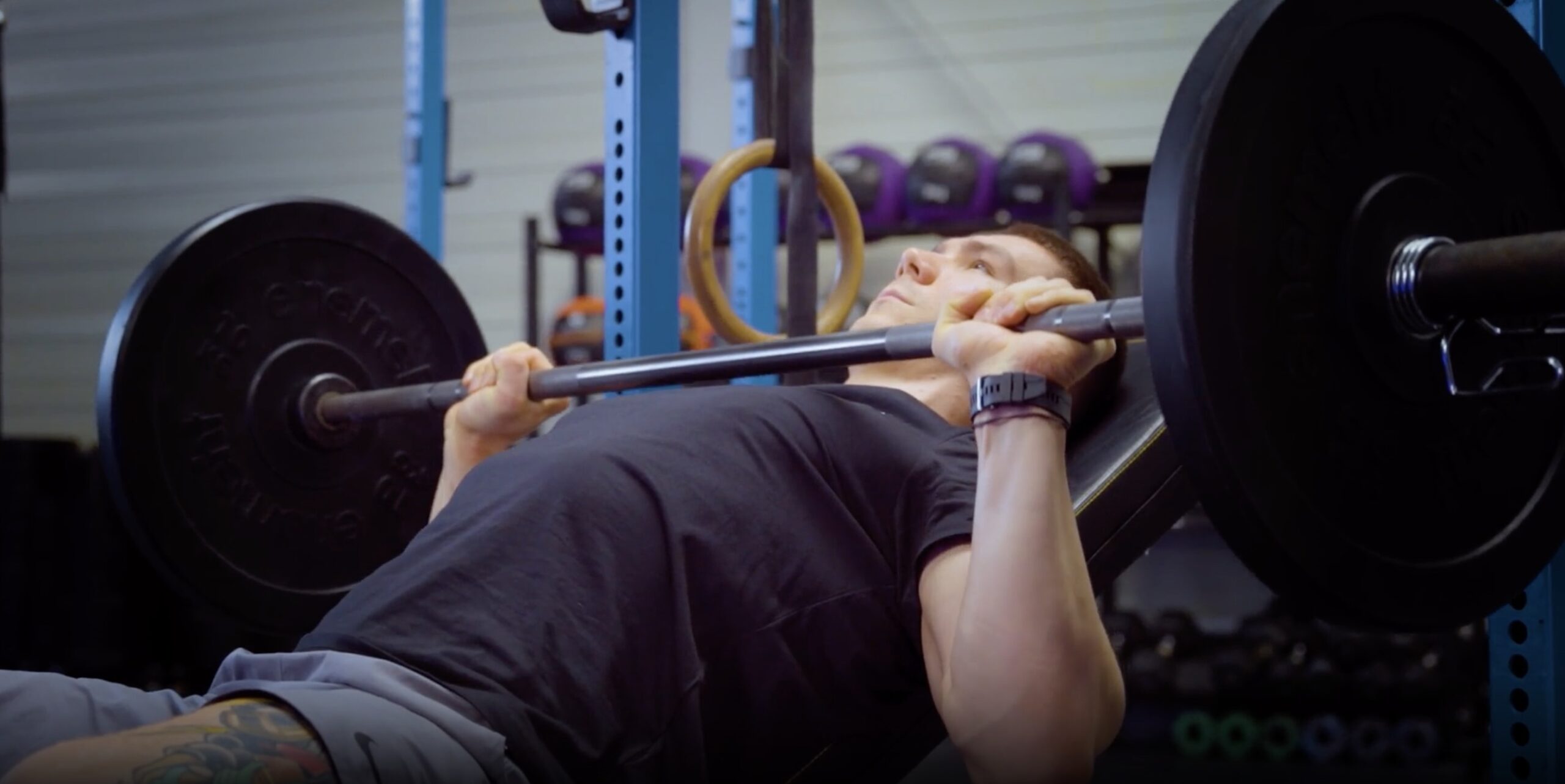


The barbell bench press has earned its reputation as one of the most effective upper body exercises ever created. It is the centerpiece of countless strength programs, the first lift many beginners learn, and often the movement people associate with building a massive chest. Yet even great exercises have limitations. Training the same movement pattern week after week can become mentally stale, progress can slow, and aches in the shoulders, elbows, or wrists may begin to appear.
If your goal is building a bigger, stronger chest, you do not have to stay married to the flat barbell bench press. In fact, replacing it for a training block or rotating other pressing movements into your program may actually improve muscle growth while reducing repetitive stress on your joints.



The key is understanding what makes an exercise effective for hypertrophy. Muscle growth depends on creating high levels of mechanical tension, training through a long range of motion, accumulating enough weekly volume, and progressively increasing the challenge over time. Several exercises satisfy these requirements just as well as the traditional bench press, and in some situations they may even outperform it.
Why You Do Not Need the Barbell Bench Press to Build a Bigger Chest
The bench press is an outstanding compound movement because it allows heavy loading while training the pectoralis major, anterior deltoids, and triceps. However, research consistently shows that muscle growth depends more on total training stimulus than on any single exercise.
Different chest exercises recruit the pectoral muscles in slightly different ways because of changes in shoulder angle, grip position, and resistance profile. Studies examining muscle activation through electromyography show that multiple pressing variations produce high activation of the pectoralis major when performed with sufficient effort.
3 Reasons Why Most Men Never Build Big Arms
The bench press also has practical drawbacks. A fixed bar path may not suit every lifter’s shoulder anatomy. Some people struggle with shoulder discomfort during heavy barbell pressing, while others simply stop progressing because they have repeated the same movement for years without introducing meaningful variation.
Replacing or rotating the bench press is not giving up on a classic exercise. It is using exercise selection strategically to maximize muscle growth while minimizing unnecessary wear and tear.
Alternative One: Dumbbell Bench Press

Why It Works
The dumbbell bench press is probably the closest substitute for the traditional bench press, yet it offers several unique advantages that may enhance chest development.
Unlike a barbell, dumbbells allow each arm to move independently. This creates a more natural pressing path that often feels better on the shoulders. Lifters can rotate their hands slightly during the movement, allowing their joints to settle into positions that feel comfortable rather than forcing every repetition through the same fixed path.
Perhaps more importantly, dumbbells usually allow a greater stretch at the bottom of the repetition. Since each dumbbell can travel below chest level, the pectoral muscles experience greater lengthening under load.
Recent research has highlighted the importance of loaded stretching for hypertrophy. Muscles trained at longer lengths often demonstrate superior growth compared with muscles trained over shorter ranges of motion.
The Science
Several studies comparing dumbbell and barbell pressing show similar levels of pectoralis major activation despite the lighter absolute loads used with dumbbells. Because each arm stabilizes its own weight, additional stabilizing musculature is recruited while maintaining comparable chest involvement.
Research investigating range of motion also suggests that greater muscle length during loaded exercises may stimulate more muscle growth over time. This makes the deeper stretch possible with dumbbells particularly valuable for hypertrophy focused training.
Another advantage is reduced bilateral deficit. Since each side works independently, stronger muscles cannot compensate for weaker ones, helping improve muscular balance while increasing stability demands.
How to Perform It
Lie on a flat bench with a dumbbell in each hand positioned beside your chest. Plant both feet firmly on the floor and maintain a slight arch in your upper back. Press the weights upward while bringing them toward each other without banging them together. Lower them under control until your elbows descend slightly below your torso before pressing again.
Use a controlled tempo rather than allowing gravity to drop the weights. The lowering phase creates substantial mechanical tension and should never be rushed.
Best Programming
For muscle growth, perform three to four sets of six to twelve repetitions while stopping one or two repetitions before complete failure on most sets.
Alternative Two: Weighted Dips

Why They Work
Few exercises challenge the lower and middle fibers of the chest as effectively as weighted dips performed with a forward torso lean.
Many people think of dips as primarily a triceps exercise, but body position changes everything. Leaning forward while allowing the elbows to flare naturally shifts much of the workload onto the pectoralis major.
Dips also train the chest at a long muscle length because the shoulders move into substantial extension at the bottom of the movement. This creates a deep stretch that is difficult to replicate with many pressing exercises.
Unlike machines that stabilize the movement for you, dips require full body coordination and shoulder stability while simultaneously producing high levels of chest activation.
The Science
Electromyography studies consistently report high activation of both the lower and sternal portions of the pectoralis major during dips. In some cases, muscle activation rivals or exceeds that observed during traditional bench pressing.
Weighted dips also allow progressive overload in exactly the same way as barbell exercises. Once bodyweight becomes manageable for higher repetitions, additional resistance can be added with a dipping belt or weighted vest.
The ability to progressively increase load while training through a deep range of motion satisfies two of the most important drivers of hypertrophy.
Important Considerations
Dips are not suitable for everyone. Individuals with previous shoulder injuries or limited shoulder mobility may experience discomfort at the deepest portion of the movement.
Depth should always be dictated by comfort rather than ego. Lower yourself only until you feel a deep stretch across the chest while maintaining full control of your shoulders.
How to Perform Them
Grip parallel bars and support yourself with locked elbows. Lean your torso slightly forward while crossing your feet behind you. Lower under control until your upper arms move just below parallel to the floor or until your comfortable range ends. Drive yourself back upward by squeezing the chest and extending the elbows. Avoid remaining perfectly upright, since this shifts more emphasis toward the triceps.
Best Programming
Three to five sets of six to ten repetitions works well for strength and hypertrophy. Beginners should first master bodyweight dips before adding external resistance.
Alternative Three: Deficit Push Ups With Weight

Why They Work
Many lifters underestimate push ups because they associate them with beginner training. In reality, weighted deficit push ups can become one of the most effective chest builders available.
Performing push ups on handles or elevated platforms increases the range of motion, allowing the chest to descend lower than the hands. Adding resistance with weight plates, chains, or a weighted vest transforms the movement into a serious hypertrophy exercise.
Unlike the bench press, the shoulder blades move freely during push ups. This natural scapular motion often reduces stress on the shoulder joint while improving shoulder function.
The Science
Research comparing push ups performed with sufficient resistance to traditional bench pressing has demonstrated remarkably similar improvements in upper body strength and muscle development. When resistance is matched appropriately, the muscles respond primarily to tension rather than the specific exercise chosen.
The increased range of motion during deficit push ups also trains the pectoralis major at longer muscle lengths, which current evidence suggests may provide additional hypertrophy benefits.
Furthermore, push ups require significant activation of the serratus anterior and core musculature, creating a more integrated upper body movement.
How to Perform Them
Place your hands on sturdy push up handles or parallettes. Wear a weighted vest or have a training partner carefully position a weight plate across your upper back. Maintain a straight body position from head to heels. Lower your chest below hand level before pressing powerfully back to the starting position.
Avoid allowing the hips to sag or the lower back to overextend.
Best Programming
Complete three or four sets of eight to fifteen repetitions. Continue adding resistance whenever you consistently reach the upper end of the repetition range.
What Makes These Exercises So Effective?
Although these movements look different, they all share characteristics that support muscle growth.
- They allow progressive overload. You can gradually increase resistance over time.
- They train the chest through large ranges of motion. Longer muscle lengths appear especially beneficial for hypertrophy.
- They produce high mechanical tension. Heavy loading combined with controlled repetitions creates the stimulus required for muscle growth.
- They reduce repetitive stress from performing identical movement patterns every workout. Rotating exercises may improve long term training sustainability while reducing overuse discomfort.
How to Build a Chest Without Bench Pressing
A successful chest program does not require endless exercise variety. Instead, focus on mastering a small number of effective movements while gradually increasing training demands.
Most evidence suggests training the chest approximately twice per week with ten to twenty challenging weekly sets provides an effective volume range for hypertrophy in trained individuals. Beginners generally require less volume, while advanced lifters often benefit from working toward the upper end of that range.
Train each set close to muscular failure while maintaining excellent technique. Leave one or two repetitions in reserve during most sets, reserving true failure for occasional isolation work or the final set of an exercise. Adequate protein intake also plays a critical role. Current research supports consuming approximately 1.6 to 2.2 grams of protein per kilogram of bodyweight each day to maximize muscle protein synthesis during resistance training.
Sleep, recovery, and consistency remain just as important as exercise selection. Even the perfect training program will produce disappointing results if recovery is neglected.
Should You Stop Bench Pressing Completely?
Not necessarily. The barbell bench press remains one of the best compound upper body exercises ever developed. If you enjoy it, remain pain free, and continue making progress, there is no compelling reason to remove it from your program.
However, if motivation is fading, progress has stalled, or your shoulders complain every pressing session, replacing the bench press for several weeks with other effective movements can refresh training while continuing to build muscle. Many successful bodybuilders and physique athletes rotate pressing exercises throughout the year rather than relying exclusively on one movement.
The best exercise is rarely the one that looks most impressive. It is the one that allows you to train hard, recover well, remain injury free, and consistently apply progressive overload over months and years.
Final Thoughts
A bigger chest is built through intelligent training rather than loyalty to a single exercise. The barbell bench press deserves its legendary status, but it is not the only path to impressive pectoral development.
The dumbbell bench press provides greater freedom of movement and a deeper stretch. Weighted dips deliver tremendous loading through a long range of motion while emphasizing the lower chest. Weighted deficit push ups combine joint friendly mechanics with outstanding muscle activation and progressive overload.
Choose the movements that suit your body, train them consistently, and focus on gradually becoming stronger over time. That combination, rather than any single exercise, is what builds an impressive chest.
Key Takeaways
| Topic | Summary |
|---|---|
| Dumbbell bench press | Allows greater range of motion, natural shoulder movement, and high chest activation. |
| Weighted dips | Excellent for lower chest development and progressive overload when performed with a forward lean. |
| Weighted deficit push ups | Provide bench press level training stimulus when properly loaded while allowing natural scapular movement. |
| Hypertrophy principles | Mechanical tension, progressive overload, sufficient weekly volume, and training close to failure drive muscle growth more than exercise selection alone. |
| Bench press replacement | Rotating alternative exercises can improve motivation, reduce joint stress, and continue producing excellent chest growth. |
References
- Ahtiainen, J.P., Pakarinen, A., Alen, M., Kraemer, W.J. and Häkkinen, K., 2003. Muscle hypertrophy, hormonal adaptations and strength development during strength training in strength trained and untrained men. European Journal of Applied Physiology, 89(6), pp.555 to 563.
- American College of Sports Medicine, 2021. ACSM position stand: Progression models in resistance training for healthy adults. Medicine and Science in Sports and Exercise, 53(11), pp.2316 to 2331.
- Gentil, P., Soares, S. and Bottaro, M., 2015. Single versus multi joint resistance exercises for muscle strength and hypertrophy. Sports Medicine, 45(6), pp.841 to 851.
- Grgic, J., Schoenfeld, B.J., Orazem, J. and Sabol, F., 2020. Effects of resistance training performed to repetition failure or non failure on muscular strength and hypertrophy. Journal of Sport and Health Science, 10(3), pp.275 to 280.