

The bench press is often treated as a chest exercise, but it is more accurately a coordinated upper body strength movement. The pectoralis major, triceps, and front of the shoulders produce much of the pressing force. The upper back, shoulder blade muscles, trunk, legs, and grip help create a stable position so that force can transfer effectively into the bar.
For beginners, the fastest way to improve the bench press is not to collect endless exercise variations. It is to practice the movement consistently, improve pressing strength, strengthen the muscles that stabilize the shoulders, and use loads that allow clean repetitions. The five exercises below cover those needs. They are not the only useful exercises, and no single movement guarantees a bigger bench press. However, each one has a clear role in developing the strength, control, and muscle mass that support better pressing.


The most important rule is to use these exercises as part of a progressive training plan. Add weight, repetitions, range of motion, or control gradually over time. A useful exercise only works when it is performed consistently and challenged appropriately.
1. The Barbell Bench Press
Why It Must Be the Foundation
The best way to get better at the barbell bench press is to practice the barbell bench press. Strength is specific to the movement you train. A person can build strong chest muscles with machines, dumbbells, and pushups, but they still need practice with the barbell to learn the bar path, balance, setup, and coordination required by the lift.
The horizontal barbell bench press trains the pectoralis major, triceps, and anterior deltoid while requiring the lifter to stabilize a free moving bar. Research in untrained men found that horizontal bench press training improved pressing strength over eight weeks. The study also found that horizontal, incline, and combined bench press training could all improve general pressing strength in beginners.
For a beginner, the bench press should be treated as a skill. Start with a manageable load that allows consistent technique. Use a rack with safety arms when available, or ask a qualified person for a spot when attempting challenging sets.
How to Perform It
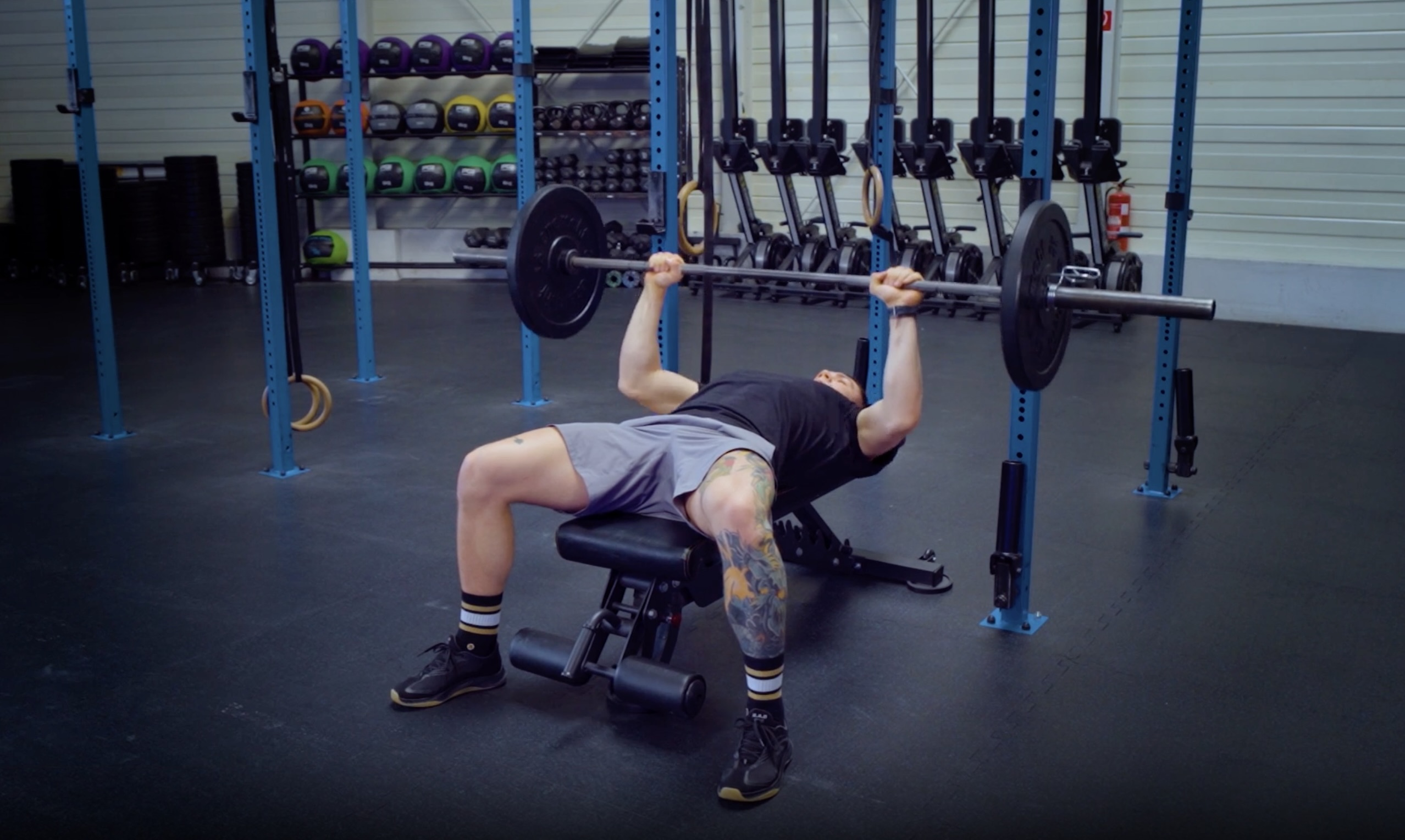
Lie on the bench with your eyes roughly under the bar. Place the feet firmly on the floor and keep them there throughout the set. Grip the bar with hands slightly wider than shoulder width, although the ideal grip depends on arm length, shoulder comfort, and personal preference.
Pull the shoulder blades gently back and down against the bench. Lower the bar with control toward the lower chest or upper sternum area. Press the bar upward and slightly back toward the rack, keeping the wrists stacked over the forearms.
5 Best Beginner Training Tips for Wider Biceps
Beginners should avoid bouncing the bar off the chest, flaring the elbows aggressively, or allowing the hips to rise off the bench. The goal is a repeatable path that feels stable and pain free.
How to Program It
Start with two bench press sessions each week. Perform two or three sets of six to ten repetitions using a weight that leaves around two or three good repetitions in reserve. As technique improves, add small amounts of weight when all planned sets are completed with control.
Research on training frequency suggests that weekly volume is more important than frequency alone when total work is matched. However, training a lift twice per week can be practical for beginners because it provides more chances to practice technique without cramming all pressing work into one session.
2. Pushups
Why Pushups Transfer to Bench Press
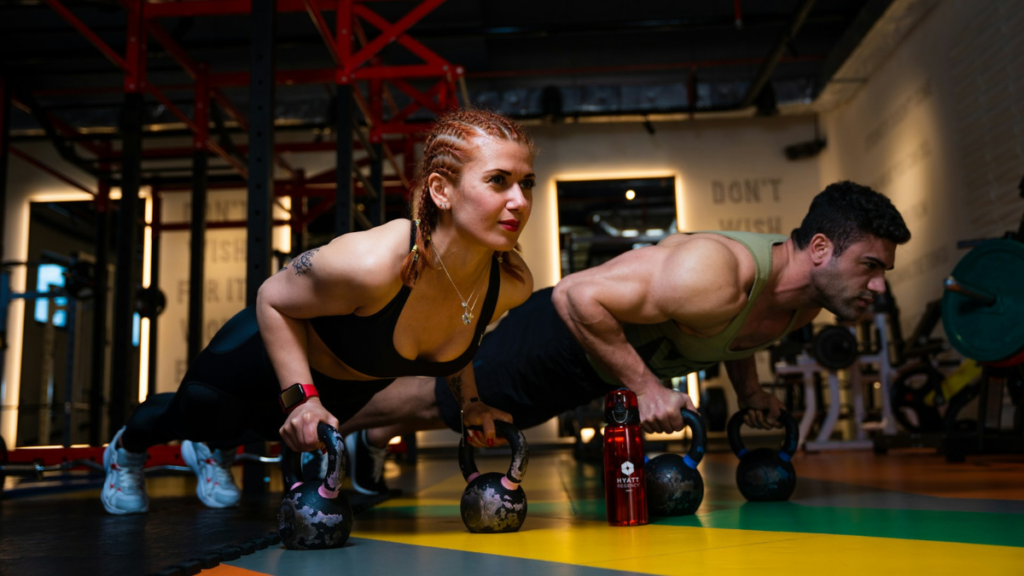
Pushups train many of the same pressing muscles as the bench press. The chest, triceps, and anterior deltoids all contribute, while the trunk and shoulder blade muscles work to keep the body stable. Unlike the bench press, the hands are fixed on the floor and the body moves around them.
This closed chain position can make pushups especially useful for beginners learning upper body control. They teach the lifter to maintain a straight body position, control the shoulder blades, and press without letting the shoulders collapse forward.
Research comparing pushups and bench press variations has shown that pushups can create substantial activation of the chest and triceps when the load is challenging enough. The exercise can therefore support muscle growth and pressing strength, particularly for people who are still building the capacity to bench press heavier loads.
How to Perform Them
Set the hands slightly wider than shoulder width and form a straight line from head to heels. Lower the chest toward the floor while keeping the elbows angled naturally between the sides and a fully flared position. Press the floor away and return to the starting position without letting the hips sag or rise excessively.
If standard pushups are too difficult, elevate the hands on a bench, bar, or sturdy box. If they are too easy, elevate the feet, slow the lowering phase slightly, add a weighted vest, or use resistance bands. The best variation is the one that allows controlled repetitions close enough to fatigue to challenge the pressing muscles.
How to Program Them
Use two or three sets of eight to fifteen controlled repetitions after bench press or on a separate upper body day. Stop each set with one to three good repetitions left. As pushups become easier, progress the variation rather than performing endlessly high repetitions.
Pushups are useful because they require little equipment and can be adjusted for almost any strength level. They also provide extra pressing volume without always requiring heavy barbell loading.
3. Dumbbell Bench Press
Why Dumbbells Build Control
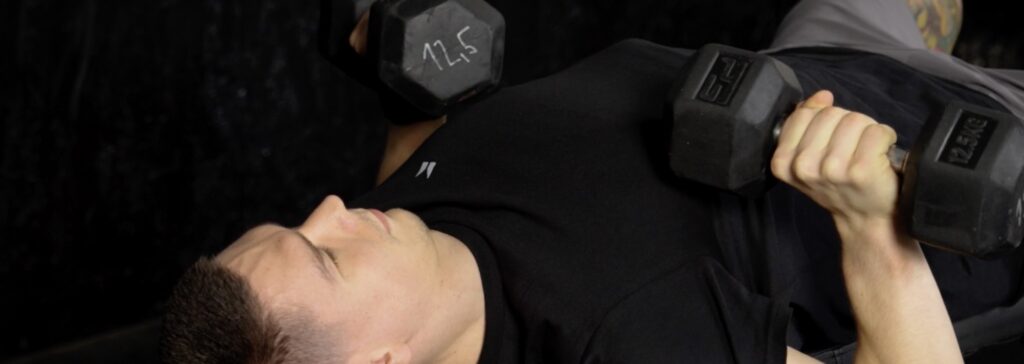
The dumbbell bench press trains the same major pressing muscles as the barbell bench press while requiring each arm to control its own load. This can make it useful for beginners who notice that one side of the barbell moves differently or feels less stable.
Dumbbells allow the hands to move independently and can offer a comfortable grip path for some lifters. They also make it easier to use a neutral grip, where the palms face each other. This may be more comfortable for people whose shoulders do not enjoy a fully pronated barbell grip.
The dumbbell bench press should not replace the barbell bench press if the goal is to improve barbell performance. Instead, it can provide additional pressing volume, help develop confidence with independent arm control, and build the chest, triceps, and shoulders through a slightly different range of motion.
How to Perform It
Sit on the end of a bench with the dumbbells resting on the thighs. Use the thighs to help guide the dumbbells into position as you lie back. Hold the dumbbells over the chest with the wrists straight and elbows below the hands.
Lower the dumbbells with control until the upper arms reach a comfortable depth. Press upward while keeping the dumbbells balanced. Avoid allowing the weights to drift far out to the sides or collide at the top.
A beginner should use a load that can be lowered and raised without losing wrist, elbow, or shoulder control. If the dumbbells feel unstable, reduce the weight rather than shortening the movement excessively.
How to Program It
Perform two or three sets of eight to twelve repetitions once or twice each week. Keep the load moderate and focus on a controlled lowering phase. Dumbbells are often better suited to moderate repetition work than maximal strength testing, especially for beginners.
The added range and independent control can make dumbbells feel harder than a barbell even when the total weight is lower. That is normal. Progress by adding repetitions first, then move to the next available dumbbell size.
4. Seated Cable Row or Chest Supported Row

Why Rows Help a Bench Press
A stronger bench press is not built only by pressing. The upper back provides a stable base for the shoulder blades and helps the lifter maintain position on the bench. During the bench press setup, the shoulder blades are usually held back against the bench to create a stable platform for pressing.
Rows train muscles of the upper back, including the latissimus dorsi, trapezius, rhomboids, and rear deltoids. These muscles do not press the bar upward in the same way as the chest and triceps, but they help control shoulder and shoulder blade position. They also balance a training program that includes substantial pressing volume.
A row will not automatically add pounds to the bench press. Its value is that it develops the upper body strength and control needed for more durable and stable pressing. Beginners who only train chest and arms often miss this foundation.
How to Perform It
A seated cable row is a practical starting choice. Sit tall with the feet braced and hold the handle with straight arms. Pull the handle toward the lower ribs or upper abdomen while keeping the chest tall. Allow the shoulder blades to move naturally, but avoid leaning far backward to turn the row into a body swing.
A chest supported dumbbell row is another excellent option because the bench supports the torso and reduces the temptation to use the lower back. Pull the dumbbells toward the ribs, pause briefly when the upper back is engaged, then lower under control.
The goal is not to pull the heaviest possible weight. It is to train the upper back through a controlled range of motion.
How to Program It
Perform two or three sets of eight to fifteen repetitions at least twice per week. Many beginners benefit from matching or slightly exceeding their pressing volume with pulling work. This is not a rigid rule, but it is a useful way to make sure upper back training is not neglected.
Rows can be placed after bench press, between bench press sets if they do not interfere with performance, or on another upper body training day. Keep the repetitions controlled and avoid turning every set into a grip test.
5. Triceps Pressdowns
Why Triceps Strength Matters
The triceps extend the elbow during the bench press. They contribute throughout the movement and become especially important as the bar approaches lockout. A beginner whose bench press slows dramatically near the top may benefit from stronger triceps, although technical issues, fatigue, and poor bar path can also contribute.
Cable pressdowns are a simple way to train the triceps without the balance demands of a barbell. They allow the beginner to add direct elbow extension work after compound pressing movements.

Research on bench press biomechanics and muscle activation confirms that the triceps contribute significantly to the lift. Direct triceps work is therefore a logical accessory exercise, provided it does not create so much fatigue that it interferes with bench press practice and recovery.
How to Perform Them
Stand facing a cable machine with the pulley set high. Hold a rope or straight bar attachment with the elbows close to the sides. Start with the elbows bent and press the handle down by straightening the elbows.
Keep the shoulders relatively still and avoid leaning the torso forward to move more weight. At the bottom, straighten the elbows fully if this is comfortable, then return slowly until the triceps are lengthened again.
If the elbows become irritated, reduce the load, use a rope attachment, adjust the grip, or choose a different triceps variation. Pain should not be treated as a normal part of effective triceps training.
How to Program Them
Use two or three sets of ten to fifteen repetitions after bench pressing. Leave one to three repetitions in reserve and prioritize smooth elbow extension over maximum stack weight.
Pressdowns work well in moderate to higher repetition ranges because they allow direct triceps training with relatively low technical complexity. They are an accessory exercise, not the main source of bench press progress. The bench press itself should remain the priority.
How to Combine These Exercises
A beginner does not need to perform all five exercises in every workout. A simple two day weekly setup is enough.
On the first upper body day, perform the barbell bench press first, then add a row, dumbbell bench press, and triceps pressdowns. On the second upper body day, perform the barbell bench press or a lighter bench press variation, then include pushups, rows, and optional triceps work.
The bench press should come early in the session because it requires the most skill and concentration. Accessory exercises should support the main lift rather than exhaust the pressing muscles beforehand.
Begin with a total amount of work you can recover from. For many beginners, four to six challenging bench press sets each week, plus moderate pushup, dumbbell press, row, and triceps work, is enough to create progress. Add volume gradually only if recovery, performance, and technique remain good.
Technique Still Matters More Than Accessories
The best assistance exercises cannot compensate for a poor bench press setup. Beginners should learn a stable position before worrying about advanced programs or specialized variations.
Keep the feet planted, maintain contact between the upper back and bench, control the bar on the descent, and press along a consistent path. Use a grip that feels stable and does not cause shoulder or wrist pain. Start with lighter loads and build confidence through repeated quality repetitions.
A stronger bench press is usually built through months of steady work. The process may feel simple, but simple training done consistently is what creates results.
Key Takeaways
| Exercise | Main role for bench press strength | Beginner approach |
|---|---|---|
| Barbell bench press | Builds skill and strength specific to the lift. | Perform two to three sets of six to ten repetitions twice weekly. |
| Pushups | Add pressing volume while teaching trunk and shoulder control. | Use two to three sets of eight to fifteen controlled repetitions. |
| Dumbbell bench press | Builds pressing muscle and independent arm control. | Perform two to three sets of eight to twelve repetitions. |
| Seated cable row or chest supported row | Strengthens the upper back for shoulder stability and balanced training. | Perform two to three sets of eight to fifteen repetitions twice weekly. |
| Triceps pressdowns | Build elbow extension strength that supports pressing and lockout. | Perform two to three sets of ten to fifteen repetitions after pressing. |
| Progression | Gradually increase the training challenge without losing technique. | Add small amounts of load or repetitions after consistent success. |
| Safety | Bench pressing requires controlled setup and appropriate spotting or safety arms. | Do not test maximum loads before technique is reliable. |
References
- Chaves, S.F.N., Rocha Júnior, V.A., Encarnação, I.G.A., Martins Costa, H.C., Freitas, E.D.S., Coelho, D.B., Franco, F.S.C., Loenneke, J.P., Bottaro, M. and Ferreira Júnior, J.B. (2020) ‘Effects of horizontal and incline bench press on neuromuscular adaptations in untrained young men’, International Journal of Exercise Science, 13(6), pp. 859 to 872.
- Cogley, R.M., Archambault, T.A., Fibeger, J.F., Koverman, M.M., Youdas, J.W. and Hollman, J.H. (2005) ‘Comparison of muscle activation using various hand positions during the push up exercise’, Journal of Strength and Conditioning Research, 19(3), pp. 628 to 633.
- Lauver, J.D., Cayot, T.E. and Scheuermann, B.W. (2016) ‘Influence of bench angle on upper extremity muscular activation during bench press exercise’, European Journal of Sport Science, 16(3), pp. 309 to 316.
- Schoenfeld, B.J., Grgic, J., Ogborn, D. and Krieger, J.W. (2017) ‘Strength and hypertrophy adaptations between low versus high load resistance training: a systematic review and meta analysis’, Journal of Strength and Conditioning Research, 31(12), pp. 3508 to 3523.
- Schoenfeld, B.J., Ogborn, D. and Krieger, J.W. (2016) ‘Effects of resistance training frequency on measures of muscle hypertrophy: a systematic review and meta analysis’, Sports Medicine, 46(11), pp. 1689 to 1697.
- Grgic, J., Schoenfeld, B.J., Davies, T.B., Lazinica, B., Krieger, J.W. and Pedisic, Z. (2018) ‘Effect of resistance training frequency on gains in muscular strength: a systematic review and meta analysis’, Sports Medicine, 48(5), pp. 1207 to 1220.