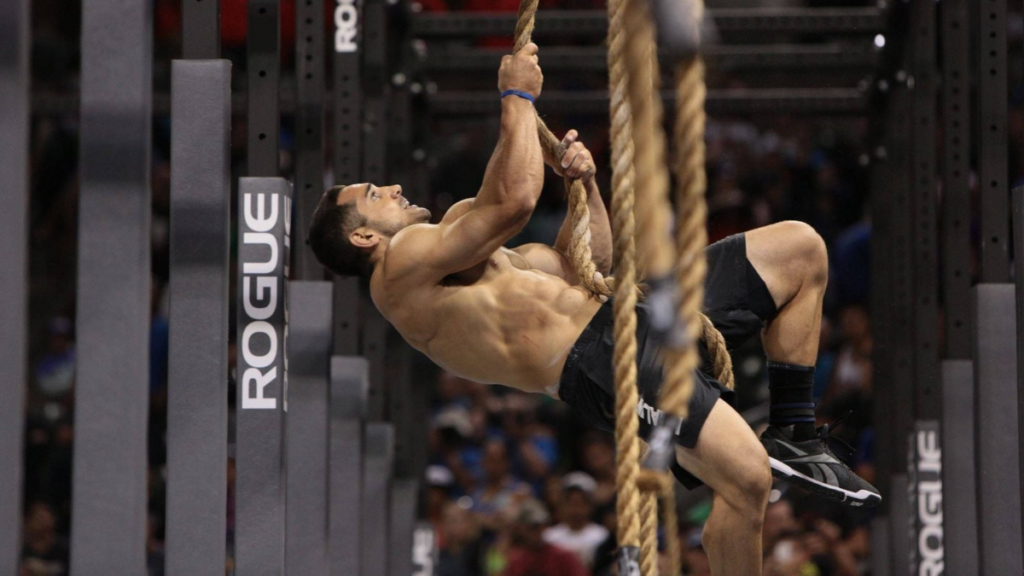


A wider back comes mostly from building the latissimus dorsi, or lats, the large muscles that run down the sides of your back. The muscles around them also matter. Rows train the lats alongside muscles such as the trapezius and rhomboids, which add shape across the upper back. Free weights are useful here because barbells, dumbbells, and a landmine setup let you train from different angles and adjust each movement to suit your body.
No single exercise guarantees a wider back, and research does not give us a definitive ranking of free weight exercises for long term lat growth. Much of the exercise comparison research measures muscle activity during a session rather than changes in muscle size over months. The exercises below are practical options for training the lats and surrounding back muscles. Choose the ones you can perform with control, a comfortable range of motion, and a load you can gradually increase.


What Helps Build a Wider Back?
The lats help pull the upper arm down and back toward the body. They contribute to the broad shape many people associate with a wide back. Rows can train the lats, but the muscles that move and stabilize the shoulder blades also work during these exercises. This means a well planned back routine can build both the sides of the back and the area between the shoulder blades.
Muscle growth depends on consistent resistance training, enough challenging work, and gradual progression. A meta analysis found that higher weekly resistance training volume was associated with greater muscle growth, although that does not mean you should add sets without limit. Another review found that muscle growth can occur across a range of loads, while heavier loads tend to be more useful for maximizing strength. In practice, use a weight that lets you perform each repetition cleanly and finish your sets close to the point where you could no longer complete another good repetition.

Electromyography, or EMG, measures electrical activity in a muscle during an exercise. It can help researchers compare muscle activity in a particular setup, but it does not prove that the exercise will produce more muscle growth over time. For that reason, use exercise research as a guide rather than treating one movement as a guaranteed shortcut.
1. One Arm Dumbbell Row
The one arm dumbbell row is a useful choice when you want to focus on pulling your elbow back without holding a barbell in front of your body. Supporting one hand on a bench can make the setup more stable, while training one side at a time makes it easier to notice differences in control between sides.
Place one hand and knee on a bench, with your other foot on the floor. Hold the dumbbell beneath your shoulder, keep your back steady, and let your working arm reach toward the floor without twisting your torso. Pull your elbow toward your hip, then lower the weight under control until your arm is long again. Keep the movement smooth instead of using your hips to swing the dumbbell upward.
For a lat focused row, keep your elbow relatively close to your side and think about drawing it toward your back pocket. If you flare your elbow out and pull the dumbbell toward your chest, the movement shifts toward the upper back and rear shoulder. Both versions can be useful, but the tucked elbow version fits well when your priority is the lats.
2. Barbell Bent Over Row
The barbell bent over row lets you train both sides of your back at the same time and gradually increase the weight. It also asks your trunk and hips to hold a bent over position, so your lower back and hamstrings contribute to stabilizing your body. Research comparing rowing movements found that a standing bent over row produced substantial activation across the back, along with relatively high lumbar spine loading. That makes technique and load selection important.
Stand with your feet about hip width apart and hold the bar just outside your legs. Bend at the hips, soften your knees, and keep your spine steady. Pull the bar toward your lower ribs or upper abdomen, then lower it until your arms extend without rounding your back. Keep your torso position consistent throughout the set.
A common mistake is using a weight that turns the row into a hip drive. If you have to jerk your torso upward to move the bar, reduce the load. You can also use a more upright torso position if it helps you keep the movement controlled. The goal is to train your back through a repeatable range, not to move the heaviest possible bar by any means available.
3. Chest Supported Dumbbell Row
The chest supported dumbbell row is a good option when you want to train your back without asking your lower back to hold a bent over position throughout the set. Lie face down on an incline bench with a dumbbell in each hand. Let your arms hang beneath your shoulders, then row the weights toward your ribs. Lower them slowly until your arms are extended.
You can adjust which part of your back works hardest by changing your elbow path. Keep your elbows closer to your sides to emphasize shoulder extension and give the lats more of the work. Let your elbows travel farther out to involve more of the upper back and rear shoulders. Keep your chest against the bench so you do not create momentum by lifting your torso.
Chest support does not automatically make a row safer or more effective for everyone, and direct research comparing long term muscle growth from different dumbbell row variations is limited. It does offer a stable setup that many lifters find easier to repeat. That can make it a practical choice when barbell rows leave your lower back tired before your lats have had enough work.
4. Landmine Row
A landmine row uses a barbell anchored at one end, with the other end loaded with plates. You can hold the sleeve or use a handle attachment. The bar travels on an angled path, which can feel comfortable for lifters who find a straight barbell row awkward.
Stand over the bar with your feet stable and hinge forward at the hips. Hold the loaded end with both hands or use a single arm attachment. Pull the bar toward your lower chest or upper abdomen, then lower it with control. Keep your torso steady and avoid turning the movement into a standing shrug.
For more lat emphasis, pull your elbow down and back toward your side rather than lifting it high and wide. A wider elbow path can shift more of the effort toward the upper back. Treat the landmine row as another way to load a horizontal pull, not as a special movement that has been proven superior to other rows. It earns its place because the setup gives you another pulling angle and can be easier to learn than a strict barbell row.
5. Dumbbell Pullover
The dumbbell pullover trains shoulder movement with the arms traveling from overhead toward the chest. It can complement rows because the arms move through a different path. The lats contribute to shoulder extension, but the chest and other muscles can also be active during a pullover. An EMG study of the barbell pullover found that the exercise emphasized the pectoral muscles more than the lats in the tested setup. That is a useful reminder that a pullover should not be treated as a pure lat isolation exercise.
Lie across a bench with your upper back supported, or lie lengthwise on the bench with your head supported. Hold one dumbbell securely above your chest with both hands. Keep a slight bend in your elbows and lower the weight slowly behind your head only as far as your shoulders feel comfortable. Bring it back above your chest by moving at the shoulders, not by bending and straightening your elbows.
Start light while you learn the movement. Avoid forcing a deep stretch or allowing your lower back to arch excessively. If the position causes discomfort, skip the pullover and use a row variation that feels comfortable. A useful exercise is one you can train consistently without making every repetition a test of your shoulder mobility.
How to Put These Exercises Into a Routine
You do not need to perform all five exercises in one workout. Choose two or three that fit your equipment, experience, and recovery. For example, pair a barbell bent over row with a chest supported dumbbell row, or combine a one arm dumbbell row with a dumbbell pullover. If your lower back gets tired during standing rows, choose a supported row for some of your weekly work.
3 Best Dumbbell Exercises for a Strong and Jacked Chest
A practical starting point is two to four sets per exercise, using a moderate repetition range that allows you to control the weight. Keep a training log and aim to add a repetition or a small amount of weight when you can complete all your planned sets with consistent technique. Research supports training across a range of loads for muscle growth, so there is no need to force every exercise into the same repetition target. Heavier sets may suit rows, while lighter, controlled sets may feel better for pullovers.
Give your back enough time between demanding sessions to recover, and increase your weekly sets gradually if you are making progress and recovering well. More training volume can support more muscle growth, but the best amount depends on the person and the rest of the program. If your repetitions become shorter, your torso starts swinging, or you cannot control the lowering phase, the set has likely become less useful for the goal.
Key Takeaways
| Goal | Useful choice | Main cue |
|---|---|---|
| Train the lats one side at a time | One arm dumbbell row | Pull your elbow toward your hip |
| Build strength with a barbell | Barbell bent over row | Keep your torso position steady |
| Reduce the need to brace in a bent over position | Chest supported dumbbell row | Keep your chest on the bench |
| Add another horizontal pulling angle | Landmine row | Pull the bar toward your lower chest |
| Add shoulder extension to your back training | Dumbbell pullover | Use a comfortable range and light control |
References
- Androulakis Korakakis, P., Wolf, M., Coleman, M., Burke, R., Piñero, A., Nippard, J. and Schoenfeld, B.J. (2024) ‘Optimizing resistance training technique to maximize muscle hypertrophy: A narrative review’, Journal of Functional Morphology and Kinesiology, 9(1), p. 9.
- Fenwick, C.M.J., Brown, S.H.M. and McGill, S.M. (2009) ‘Comparison of different rowing exercises: trunk muscle activation and lumbar spine motion, load, and stiffness’, Journal of Strength and Conditioning Research, 23(2), pp. 350–358.
- Lehman, G.J., Buchan, D.D., Lundy, A., Myers, N. and Nalborczyk, A. (2004) ‘Variations in muscle activation levels during traditional latissimus dorsi weight training exercises: An experimental study’, Dynamic Medicine, 3, article 4.
- Marchetti, P.H. and Uchida, M.C. (2011) ‘Effects of the pullover exercise on the pectoralis major and latissimus dorsi muscles as evaluated by EMG’, Journal of Applied Biomechanics, 27(4), pp. 380–384.
- Schoenfeld, B.J., Grgic, J., Ogborn, D. and Krieger, J.W. (2017) ‘Strength and hypertrophy adaptations between low- versus high-load resistance training: A systematic review and meta-analysis’, Journal of Strength and Conditioning Research, 31(12), pp. 3508–3523.
- Schoenfeld, B.J., Ogborn, D. and Krieger, J.W. (2017) ‘Dose-response relationship between weekly resistance training volume and increases in muscle mass: A systematic review and meta-analysis’, Journal of Sports Sciences, 35(11), pp. 1073–1082.