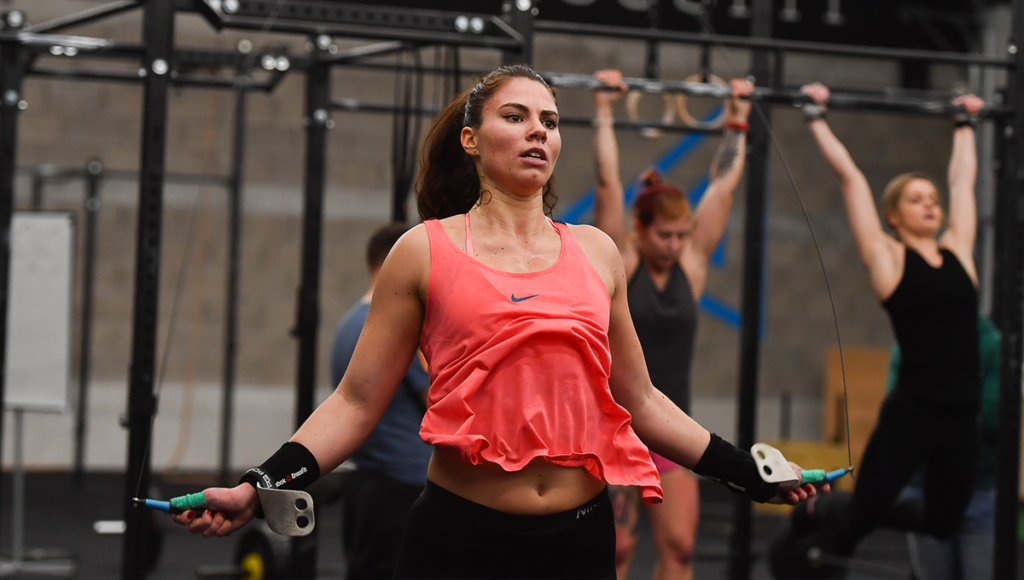


If you still care about barbells, erg pieces, or hybrid conditioning while your bump grows, a pregnancy ball is one of the cheapest home-gym accessories that actually earns its floor space. It is not a replacement for your program—but it can upgrade warm-ups, squat patterning, and recovery between harder sessions.
Most athletes look for a firm, anti-burst pregnancy ball with the right diameter, a pump, and sometimes a base or ring for confidence in the third trimester. Used well, it supports hip mobility and upright posture without turning every day into a high-impact metcon. Get clearance from your obstetric provider before adding new movements, especially if you have placenta previa, cervical insufficiency, preterm labor history, or other high-risk flags.


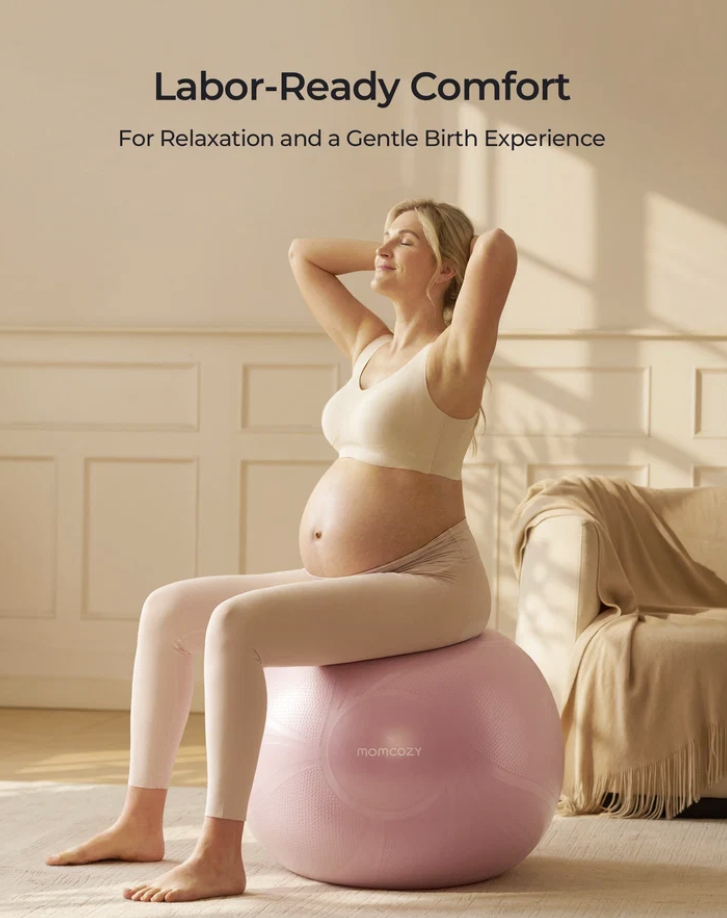
This guide explains what a pregnancy ball is, when to start, how it differs from the yoga ball in your garage, whether it “works,” how to plug it into functional training, and what to believe about dilation myths—plus stop signs every competitive-minded mom should respect.
What Is a Pregnancy Ball?
A pregnancy ball—often called a birthing ball or maternity exercise ball—is a large inflatable stability sphere, typically 55–75 cm, made from anti-burst material. You sit, lean, or squat against it for mobility, comfort, and labor-position practice. It is the same category of equipment as a gym stability ball or yoga ball; the “pregnancy” label usually signals sizing guides, safety copy, and bundles (pump, base) aimed at expectant parents.
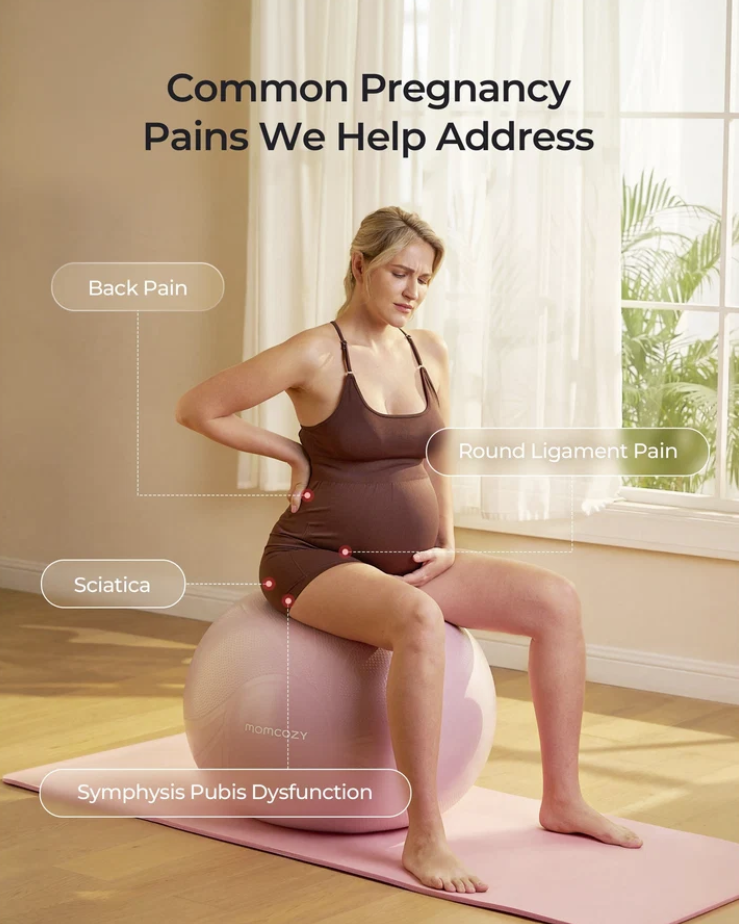
For CrossFit and HYROX readers, think of it as a low-load movement tool: pelvic clocks instead of heavy hinge cycles, wall-supported squats instead of max barbell back squats, forward-leaning rest instead of collapsing on the couch after a session. It keeps you moving without fighting your changing leverage every rep.
When Should You Start Using a Pregnancy Ball?
Many people begin in the second trimester, when the bump is obvious and sitting on flat boxes or benches feels worse. Some use gentle seated rocking earlier if nausea is settling and the provider says activity is OK. There is no universal calendar date—start when:
- You have medical clearance for moderate exercise
- Sitting on the ball feels stable with feet flat and hips at or above knee height
- You can breathe and talk through light movement (talk-test intensity)
Introduce bouncing or rocking gradually in the third trimester if balance feels solid; skip aggressive bounce if you have preterm labor risk or unexplained pain. Treat the ball like a new lift: technique first, volume second.
Does a Pregnancy Ball Actually Work?
“Work” depends on your goal. Evidence and clinical guidance suggest birth balls can help with comfort, pelvic mobility, and upright positioning during pregnancy and early labor for many women. Studies on labor pain and satisfaction often show positive reports when balls are used for movement and rest—not when treated as a magic fix.
A pregnancy ball will not replace strength work, sleep, or medical care. It can help active women:
- Keep hip and spine mobility between barbell or erg sessions
- Practice squat depth with wall support as belly size changes
- Break up long desk or travel days with upright sitting and micro-movement
- Rehearse forward-lean and open-hip positions useful in labor rooms
If you expect automatic shorter labor or guaranteed pain elimination, you will be disappointed. If you want a practical tool for movement and scaling, most users say yes—it works for that.
What’s the Difference Between a Yoga Ball and a Pregnancy Ball?
Often nothing meaningful in the plastic—the difference is sizing advice, anti-burst labeling, and how the product is marketed. A yoga ball, exercise ball, stability ball, and pregnancy ball can all be the same PVC sphere from the same size chart.
What to verify regardless of label:
- Size: Sit test—hips level with or slightly above knees, feet flat.
- Anti-burst: Slow deflation if punctured, not a sudden pop.
- Inflation: Firm with slight give; recheck weekly.
- Extras: Pumps and stability bases help home setup; they do not change the physics of the ball.
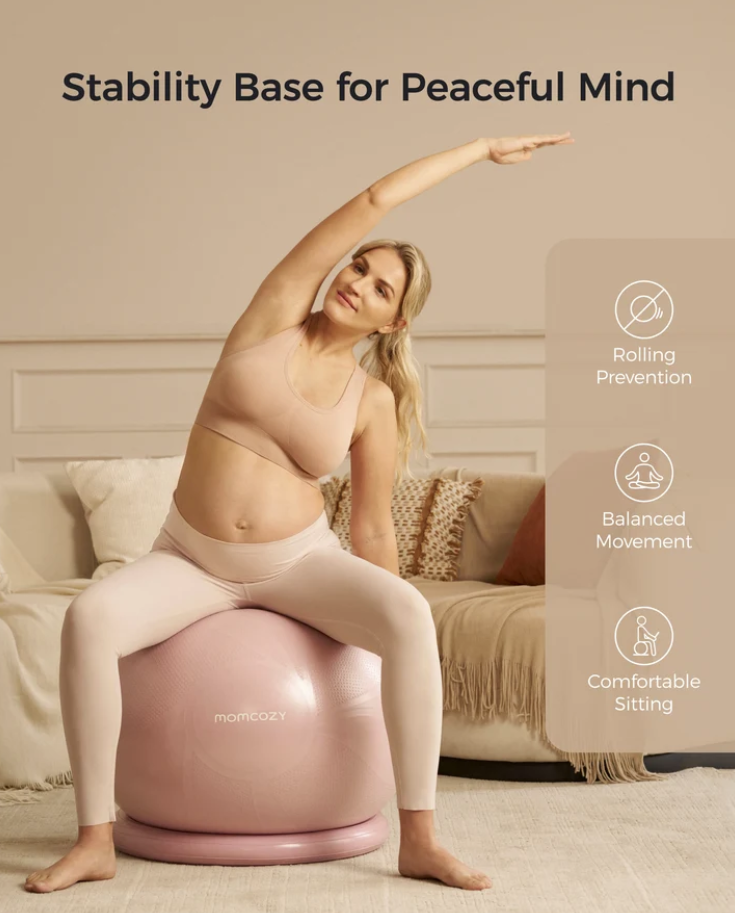
Do not use small pilates balls, medicine balls, or desk “balance” balls for full sit-and-squat work—they are the wrong diameter and material.
Scaling Functional Training Around a Pregnancy Ball
Use the ball on accessory days or after main lifts—10–15 minutes, RPE 6–7, no breath-holding.
Wall squat with ball
Ball between lower back and wall; squat to comfortable depth. Scale: higher squat, hands on wall. Stop for pelvic pressure or doming along the midline.
Seated pelvic clocks
Small circles and figure-eights while tall through the crown. Ideal between erg intervals or as a hip opener before pulling.
Forward-leaning kneel
Knees on mat, torso draped over ball—recovery breathing after conditioning, not a max-effort stretch.
Seated march
Alternate foot lifts without rocking hips. Builds balance when double-unders and box jumps are scaled off the program.
Keep barbell, kettlebell, and metcon work provider-approved; the ball fills gaps when impact, supine work, or bar path no longer fits.
Trimester quick scaling
First trimester: If cleared to train, the ball is optional—use it for hip mobility if floor work feels fine. Second trimester: Main window for daily pelvic clocks and wall squats as barbell load shifts. Third trimester: Narrow stance, shorter ranges, wall and base for balance; swap box jumps and burpees for walking, rowing, and ball-supported mobility. If a movement fails the talk test or triggers pain, it is scaled out—not pushed through.
Dilation, Bouncing, and Labor Myths
Social posts claim bouncing “speeds up” dilation. Cervical change is driven by contractions, hormones, and clinical context—not gym tricks. Gentle rock or bounce may help you stay mobile and cope with early labor sensations, but it is not a medical induction method. If your goal is cervical ripening or labor augmentation, that conversation belongs with your midwife or OB, not a TikTok ball routine.
Water breaking is unrelated to light bouncing for most people; if fluid leaks, stop and call your care team. Same for regular painful contractions before term, bleeding, or reduced fetal movement.
What a Pregnancy Ball Is and Is Not (Quick Reference)
A pregnancy ball is anti-burst inflatable seating and support equipment for gentle mobility, postural endurance, and labor-position rehearsal. It is not a weighted implement, not a substitute for pelvic floor physical therapy when you leak or feel heaviness, and not proof you can ignore trimester-specific contraindications on kipping, heavy bracing, or max lifts.
Use it on clear floor space, switch positions every 20–30 minutes, and wear non-slip footing. Store away from heat and sharp edges. Many people keep the same ball for postpartum seated recovery and breathing work once cleared—still at moderate intensity, still with form over ego.
FAQ
When should you start using a pregnancy ball?
Many start in the second trimester after provider clearance, when sitting on the ball feels stable. Begin with seated rocks and pelvic circles before adding bounce in the third trimester if balance and medical history allow.
Does a pregnancy ball actually work?
It works well for comfort, mobility, and upright labor positioning for many users. It does not guarantee shorter labor or replace prenatal care, strength training, or medical pain management choices.
What’s the difference between a yoga ball and a pregnancy ball?
Often only marketing and bundle extras. Both should be sized by sit test, anti-burst rated, and properly inflated. Avoid using tiny pilates or medicine balls for the same jobs.
How to speed up dilation with a birthing ball?
You should not rely on a ball to accelerate dilation. Stay mobile and use positions that feel comfortable in early labor, but cervical change requires proper medical management. Discuss induction or augmentation only with your healthcare team.
A pregnancy ball lets you stay in the training ecosystem—warm-ups, scaling, and honest recovery—while your body prioritizes growing a human. Use it for control and comfort, not for records. When in doubt, scale down, breathe, and check with the clinician who knows your pregnancy best.