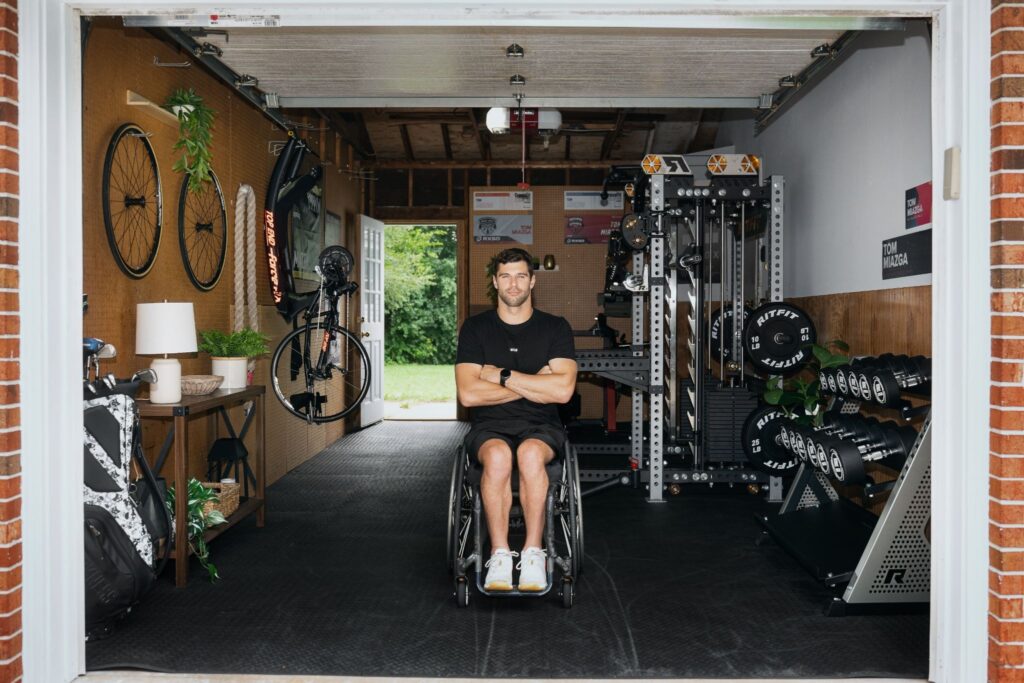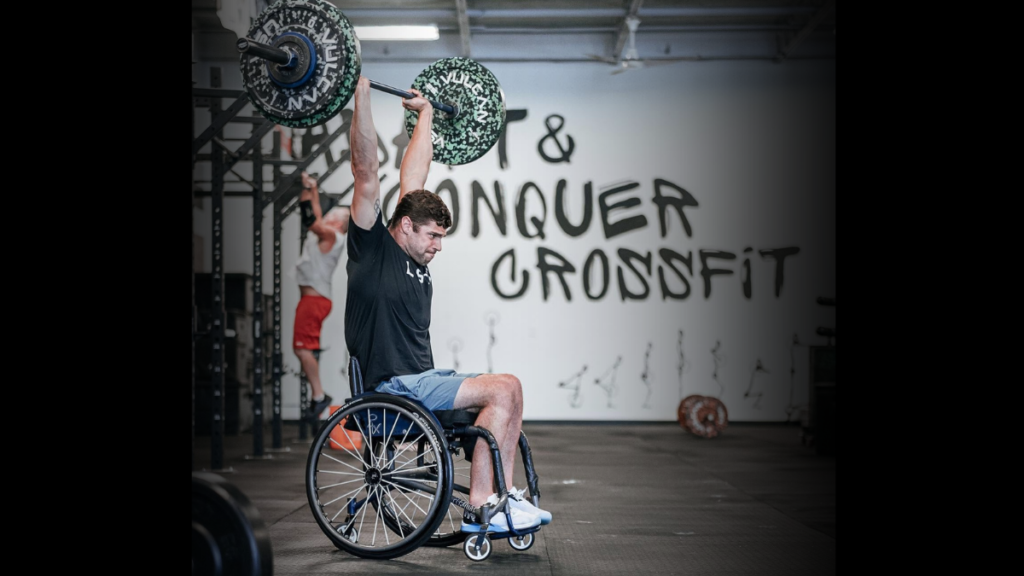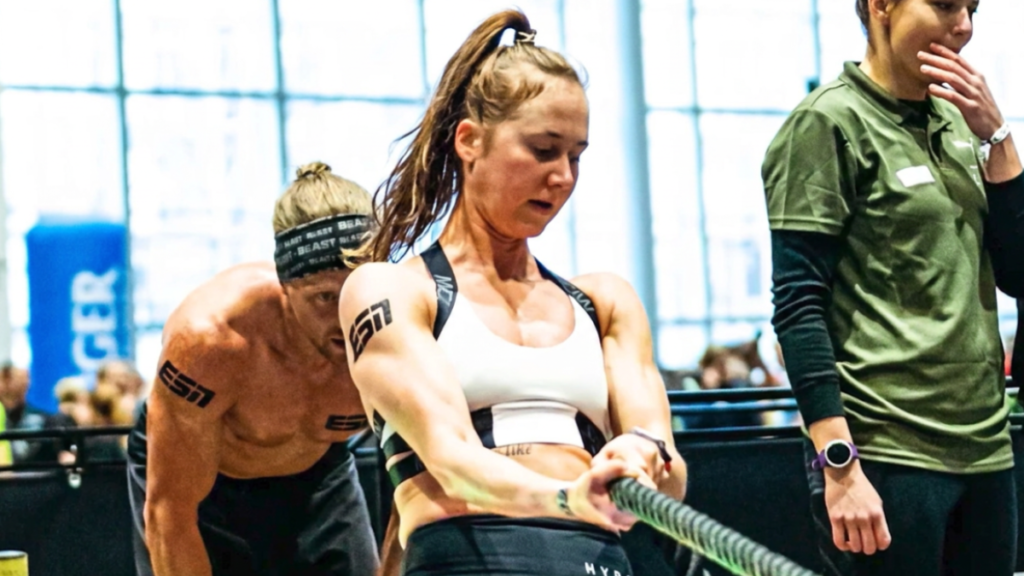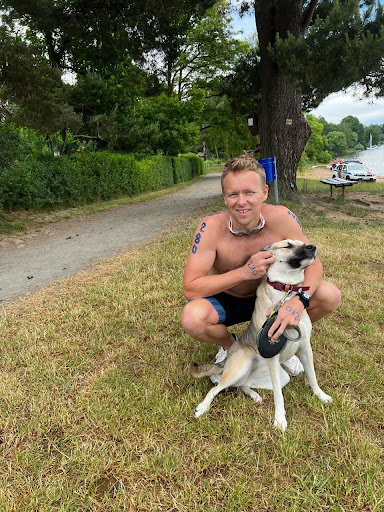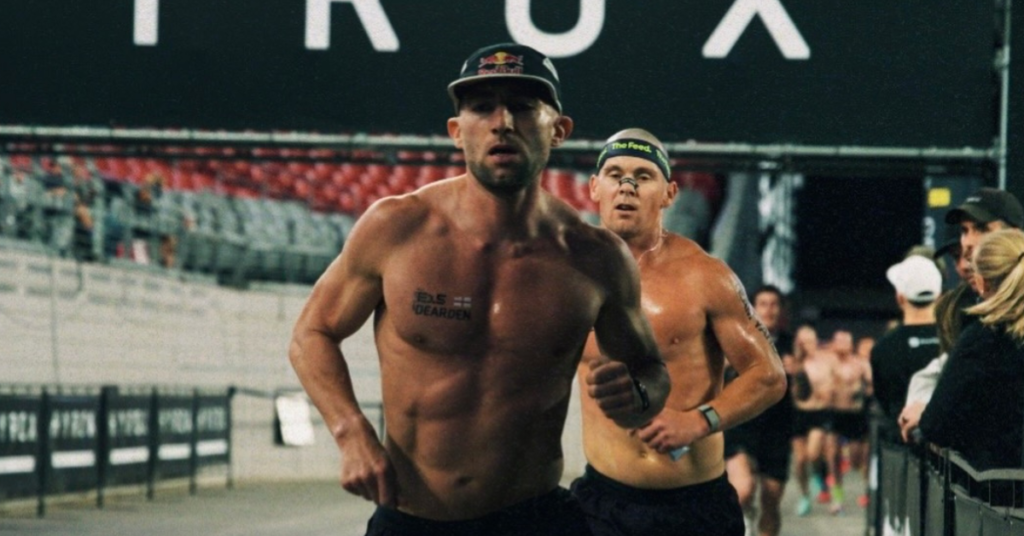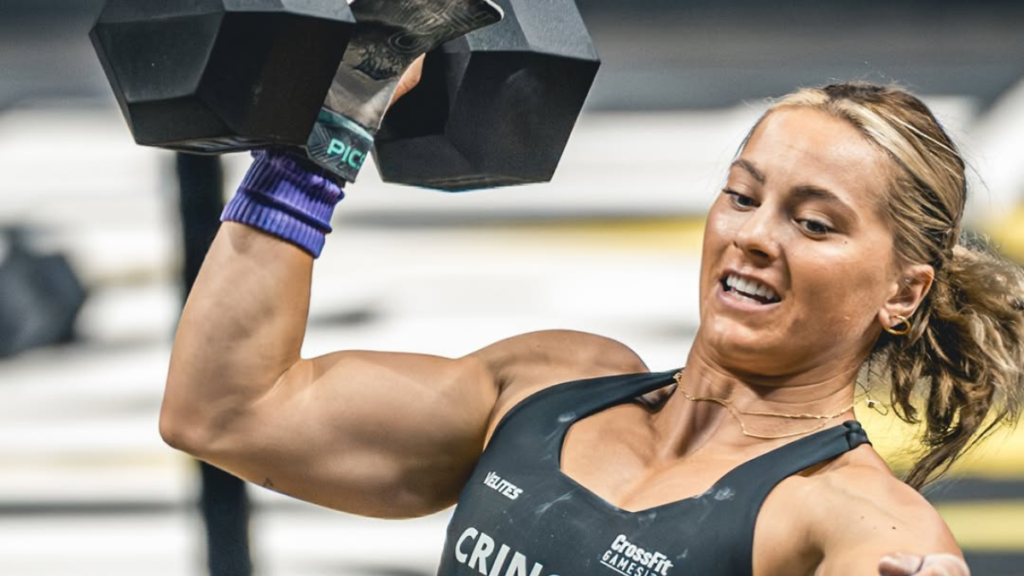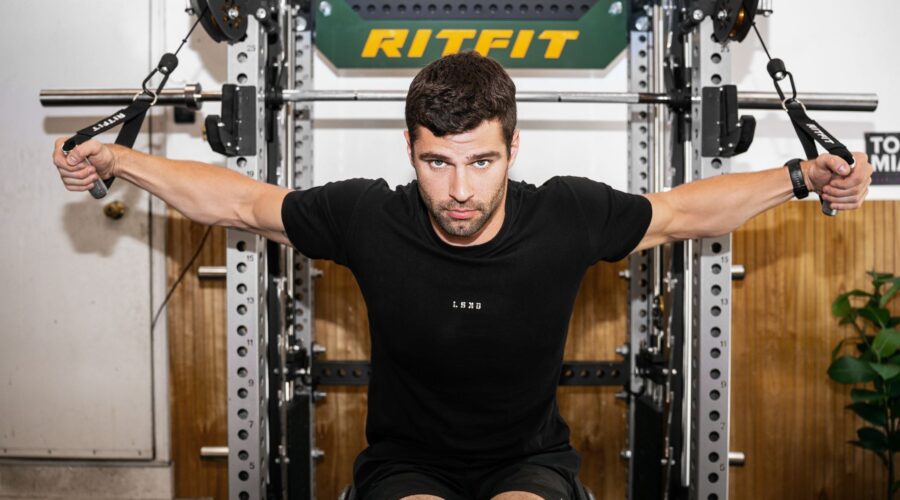


Tom Miazga has built a career across elite adaptive sport through a combination of physical ability, preparation, and persistence. He is an Adaptive HYROX World Champion, a 10 time Adaptive CrossFit Games Champion, and a Paralympian, but his approach to performance reaches far beyond medals.
For Miazga, confidence is earned through action. Discipline is rooted in the independence fitness has given him. Progress comes from repeatedly showing up, even when motivation is lower, the outcome is uncertain, or the next step feels difficult.


We spoke with Miazga about confidence, competition routines, dealing with setbacks, the people who have influenced him, and why access to home fitness can be so meaningful for disabled athletes.
Confidence Is Built Through Hard Work
Miazga has always had a competitive streak. As the youngest of four siblings, competition was part of his early life. Still, he does not see confidence as something that simply arrives naturally.
“As the youngest of four siblings, I’ve always been competitive,” he says. “However, I’ve deliberately built my confidence through preparation and experience. Every time I keep a promise to myself in training or work through something difficult, I add another piece of evidence that I can trust myself.”
That process gives him something reliable to return to when nerves or doubt appear before a major performance.
“Preparation, in all forms, is the largest component of performance. Confidence doesn’t mean having doubts. It means knowing I’ve prepared well enough to move forward despite them.”
This is an important distinction for anyone who waits to feel completely ready before beginning something challenging. Miazga’s mindset is not about eliminating uncertainty. It is about doing enough purposeful work to take action despite it.
The Role of Discipline
Training has given Miazga far more than competitive results. It has shaped his confidence, independence, purpose, and ability to live life on his own terms.
“Fitness has given me confidence, independence, purpose, and opportunities I never could have imagined,” he says. “Most importantly, and why it has imprinted so deeply within me, is that I saw major changes in the accessibility of my daily life because of my training.”
His discipline is also shaped by a long term view of what fitness can make possible.
“Thinking about being available and able to live life on my terms 20 years from now is a blessing. Training is how I continue honoring those gifts.”
Miazga knows motivation is not always dependable. It changes with stress, schedules, fatigue, and life outside the gym. Discipline is what keeps training connected to something more meaningful.
“Motivation will always fluctuate, but discipline keeps me connected to the person I want to be and the example I hope to provide for others.”
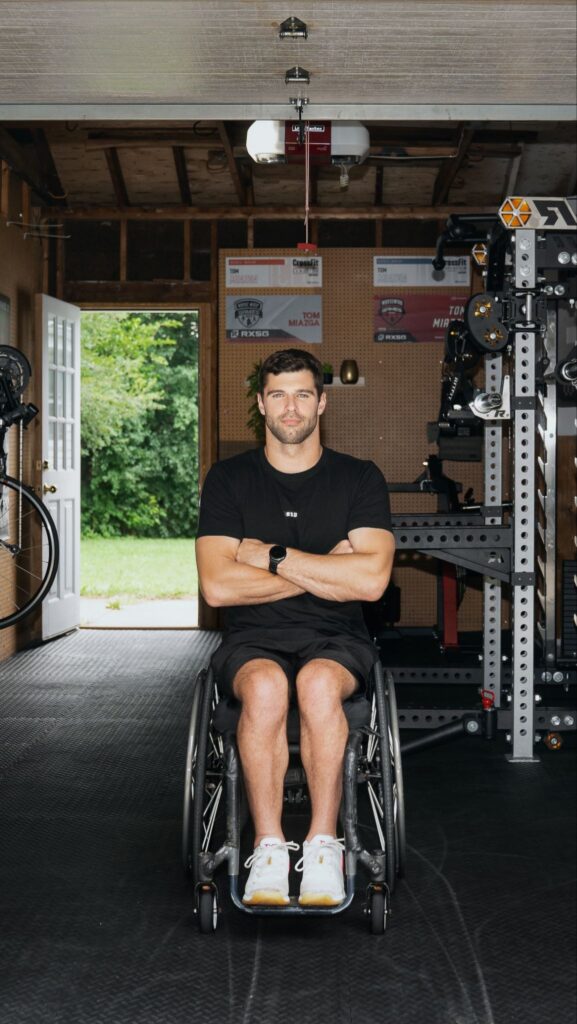
Maintaining High Standards Without Burning Out
Elite athletes often set extremely high standards, but those standards can become difficult to manage when every performance is judged against an ideal. Miazga understands that pressure well.
“I can’t deny that I am my own worst critic,” he says. “I can be pretty hard on myself, and I never settle. It’s a great mentality, but it’s also exhausting.”
He has learned that the drive to improve can create opportunities, including opportunities that can change the direction of a life. However, the goal remains personal rather than focused on comparison with other athletes.
“At the end of the day, pushing myself as I have has continually created opportunities that have provided an incredible amount of extrinsic motivation. Some of those opportunities have been life changing, so, of course, I want to keep going.”
“Yet, to get there, the goal always remains the same. I challenge myself to find a way to be better than I was yesterday. If I keep making improvements that satisfy that inner drive, I’m creating opportunity. You versus you.”
Optimizing his recovery
Miazga believes maintaining high standards does not mean treating every day as a test. Recovery, perspective, and patience are all essential parts of a long athletic career.
“I’ve learned that recovery is part of maintaining a high standard,” he says. “Sometimes you push aggressively. Other times, the most productive decision is to step back.”
He also works to separate performance from identity. One bad session, race, or competition should not define someone’s worth or the direction of their progress.
“I also try not to let one performance define my identity. The goal is sustainable excellence, not perfection every day.”
That perspective matters in sports such as CrossFit and HYROX, where training and competition can expose every physical weakness. It also matters for everyday athletes who can become discouraged when a session does not go to plan.
Staying Calm Under Stressful Competition Conditions
Miazga keeps his competition days as familiar as possible. A predictable routine gives him a sense of calm and helps him direct his energy toward performance.
“I try to keep competition days as familiar and predictable as possible,” he says. “I organize my equipment, review my plan, visualize the opening moments, and use music to gradually bring up my energy.”
Once the event begins, his focus becomes narrow and practical.
“Once competition begins, all that matters is I control the controllables. I focus on the elements I can influence, and know that if I accomplish those little elements during my performance, one by one, I’ve done all I can.”
This approach can be useful for any athlete heading into an important event. You cannot control the field, a last minute schedule change, or every possible problem. You can control preparation, pacing, equipment, nutrition, and the effort you bring to each moment.
The best music for different types of training
Music is also part of Miazga’s preparation, although his playlists depend on the session and the mood he wants to create.
“Music is a very mood dependent thing for me,” he says. “My go to is usually high energy EDM beats, matching my outgoing, enthusiastic personality. Not to mention, a filthy bass drop in the middle of a workout gets me fired up.”
For longer endurance sessions, he uses variety to stay mentally engaged.
“Longer cardio pieces might call for a big shuffle of music, anything from classical to hip hop. It keeps me mentally engaged, always preparing for what comes next.”
Overcoming Major Setbacks, and Coming Back Even Stronger
The first CrossFit Games title
One of the defining moments in Miazga’s career came when he won his first CrossFit Games title. The achievement carried added meaning because it followed one of the most painful disappointments of his life.
“Winning my first CrossFit Games title was huge, because not many knew I was coming off my biggest failure in life,” he says. “After qualifying for the 2008 Beijing Paralympics, I missed qualifying in 2012 by .01 seconds.”
The missed qualification deeply affected how he saw himself as an athlete.
“It left me questioning the validity of my talents, work ethic, and self esteem. But when I used that experience to rediscover my potential in new ways, I didn’t realize the secret weapon I had.”
Winning that first title helped him reconnect with his own potential and gave him a new belief in what could be possible.
“Winning that first Games title brought an overwhelming sense of contentment I yearned for, along with excitement for the future. I learned how to use my experience to my advantage, and I’ve never looked back.”
Mottos and Mental Strength
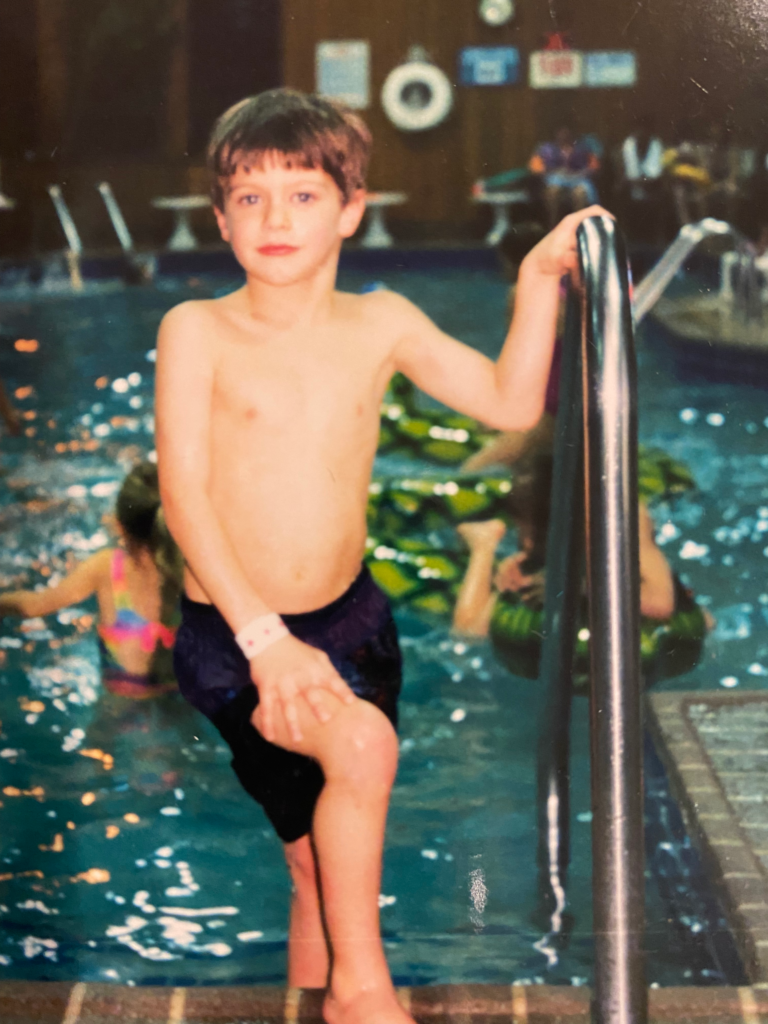
When difficult moments arrive, Miazga returns to a simple phrase: “There’s a version of you who was desperate to be where you are.”
The thought takes him back to the beginning of his fitness journey, when he wanted to find a community and a place where he belonged.
“When I first started this fitness journey, I wanted to find a place I could call home,” he says. “While that was the goal, a part of me shot for the stars and wanted to become a big name in what I was doing.”
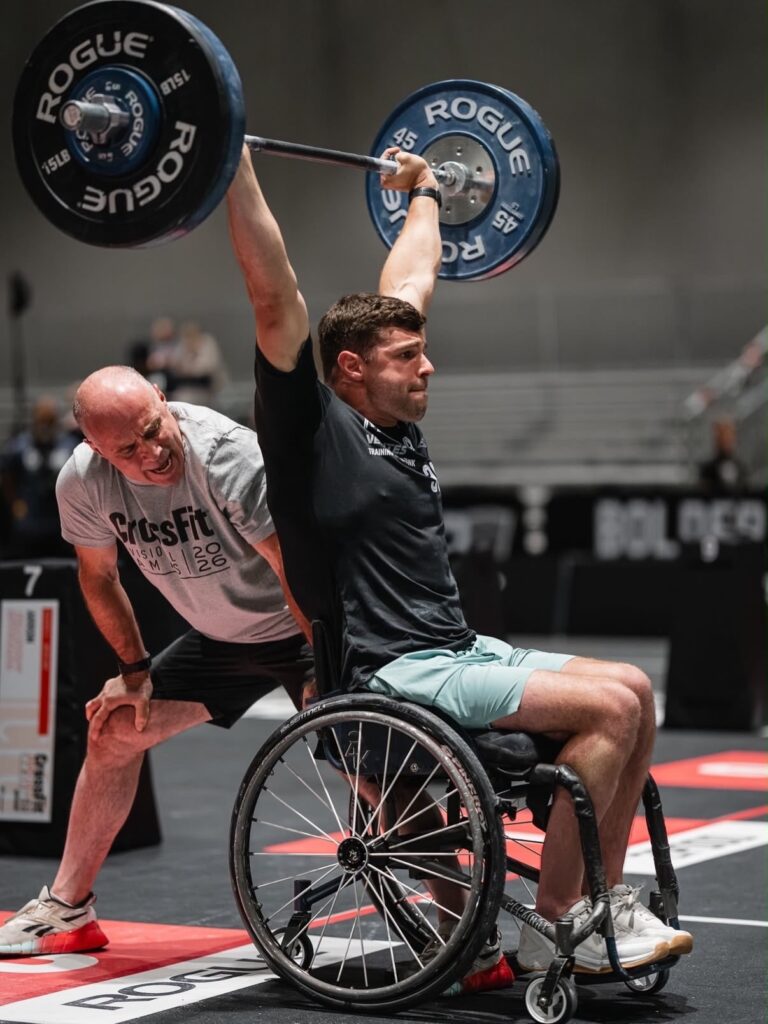
Source: Instagram / @tommiazga
He has achieved both, but the reminder helps keep him grounded when training or life becomes difficult.
“Making both of those dreams a reality feels surreal. So even when I’m at my lowest, reminding myself that I’ve gotten what I’ve wanted by putting in that effort always works. Younger Tom got what he wanted, so we can’t waste it.”
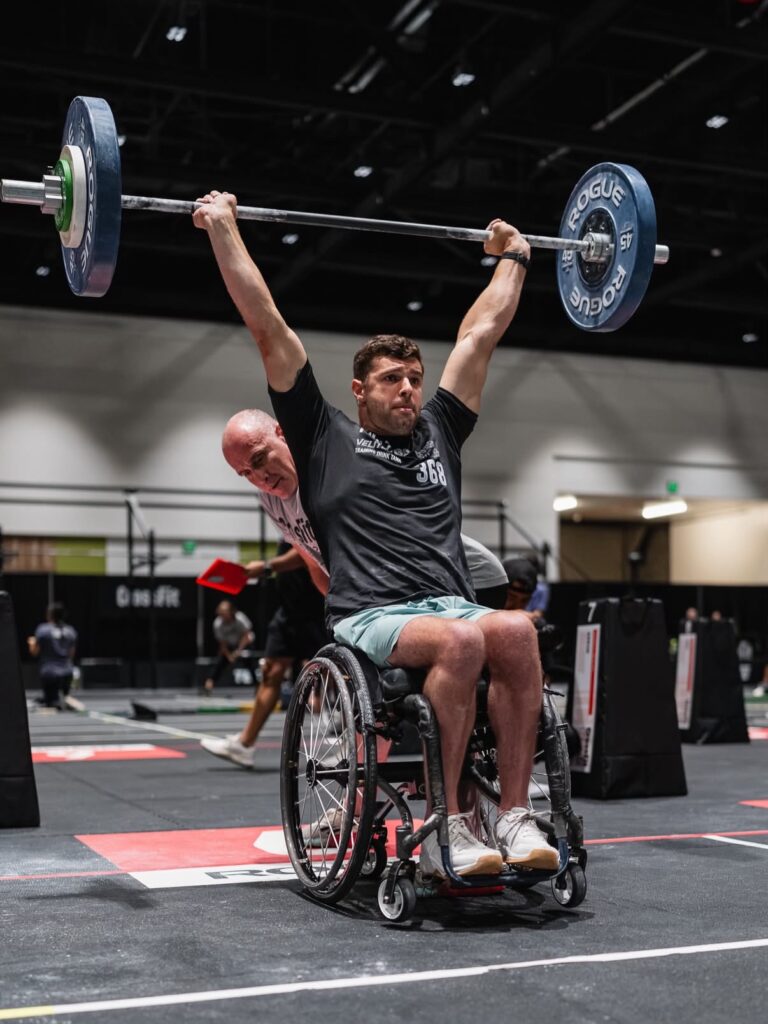
Source: Instagram / @btaysphotos
Defining Success on His Own Terms
Despite his many titles, Miazga does not define his greatest achievement as one particular medal or championship. He sees it as having the courage to follow a path that did not come with certainty.
“My greatest achievement isn’t a single medal or championship,” he says. “It is having the courage to chase my passion when the path offered very little security and no guarantee of success.”
“I chose to believe that the things I loved could become the foundation of a meaningful life. That decision led to opportunities to compete, coach, travel, serve others, and build a life I am incredibly proud of.”
“More than any title, I’m proud that I trusted my passion enough to see where it could take me.”
Source: Tom Miazga
Mentors, friends and inspirations
Miazga credits Steve Keller, his best friend, colleague, and former swim coach, as one of the most important influences in his life and career.
“He has had an enormous influence on me because he believed in my potential often before I could see it myself,” Miazga says. “He consistently challenged me to recognize that I was capable of more, and that belief helped shape both the athlete and person I became.”
He also points to fellow adaptive athlete Mike Egan as a major source of motivation and perspective.
“I’d be remiss not to include fellow adaptive athlete Mike Egan,” he says. “He embodies so many of the beliefs I try to carry through my own journey, and he consistently provides the motivation and assurance that how we approach our lifestyle carries an example greater than ourselves.”
“His courage to pursue what matters, trust the process, and build a meaningful life around his passion inspires me.”
Day One, Never Ends. Defining a Day One Hero
Miazga’s partnership with RITFIT is built around the “Day One, Never End” campaign. For him, a day one hero is not someone who has already achieved a major result. It is anyone willing to begin.
“A day one hero is anyone willing to begin, especially when the world has given them reasons to doubt what is possible,” he says. “In a world where we are always trying to compare ourselves with society, we easily forget how we can be our own hero. It’s okay to be proud of ourselves.”
The idea is rooted in self directed progress rather than comparison.
“Day One, Never End means continuing to show up, adapt, and redefine progress for yourself. The journey is always you versus you.”
“If you can find a way to improve yourself, even in the smallest margins, from the day before, you’re creating opportunity and proving to yourself you are worthy of hero status.”
Miazga began CrossFit because he wanted to stay active. He had no idea where that first decision would lead, and that is part of why the message matters to him.
“I started CrossFit simply because I wanted to stay active. I had no idea where that first day would lead. RITFIT supports that philosophy by helping make fitness accessible enough to become a sustainable part of everyday life, not just a temporary goal.”
Why home fitness can change access
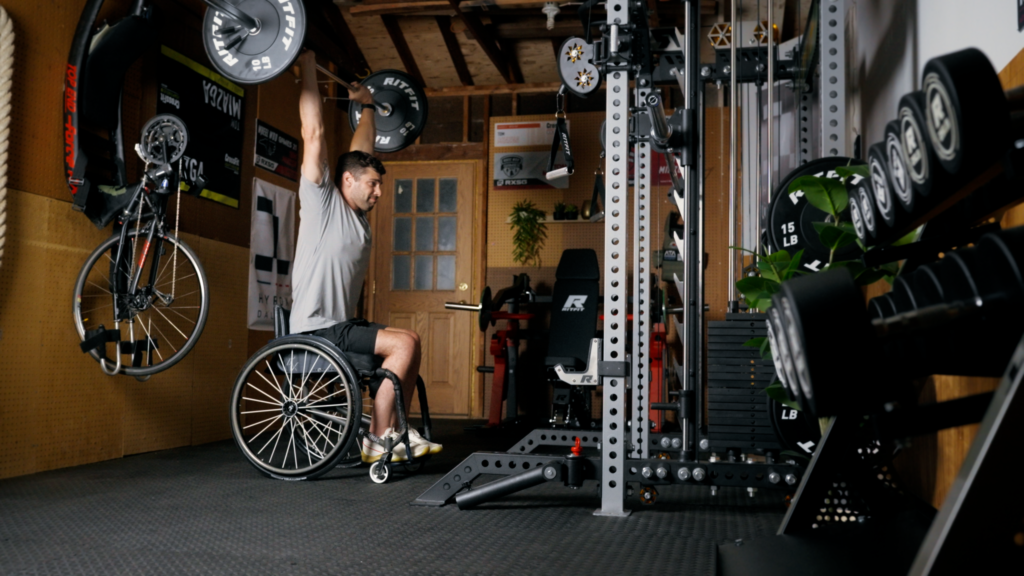
For many adaptive athletes, the challenge is not only what happens inside a gym. It is the entire process required to get there. Transport, cost, time, physical demands, and accessibility can all affect whether a workout is possible.
“One of the most commonly overlooked issues in fitness access for adaptive athletes is the holistic effort to get to a physical space,” Miazga says. “Physical demands, potential financial issues, transportation needs, and time management all factor in. If one of those things goes wrong, the chance to work out can be gone in an instant.”
Having adaptable equipment at home can give athletes more control over how, when, and where they train.
“Having adaptable equipment at home provides control, privacy, and the freedom to discover what works for your body at your own pace. It can give an experienced athlete more independence while helping a beginner build confidence in a comfortable environment.”
“Most importantly, it allows the equipment and training space to adapt to the individual instead of expecting the individual to adapt to the space.”
An investment in true potential
As part of RITFIT’s monthly equipment sponsorship program, five disabled individuals will receive free equipment each month. Miazga believes even one suitable piece of equipment can create changes that extend well beyond training.
“One piece of the right equipment can become the starting point for greater strength, confidence, and independence,” he says. “The progress you make with it can carry into everyday life, whether that means making transfers easier, protecting your body, or simply discovering a new passion.”
“Best of all, it builds confidence in your perception to try challenging things outside of fitness. Once you have that avenue to see what’s possible, you find it present in so many ways you would have never expected.”
His message to each recipient is simple and direct.
“This is an investment in your potential. You already belong in fitness, and your journey does not need to look like anyone else’s to be meaningful. I hope this equipment gives you the freedom to discover what strength can mean in your own life.”
The Future for Miazga
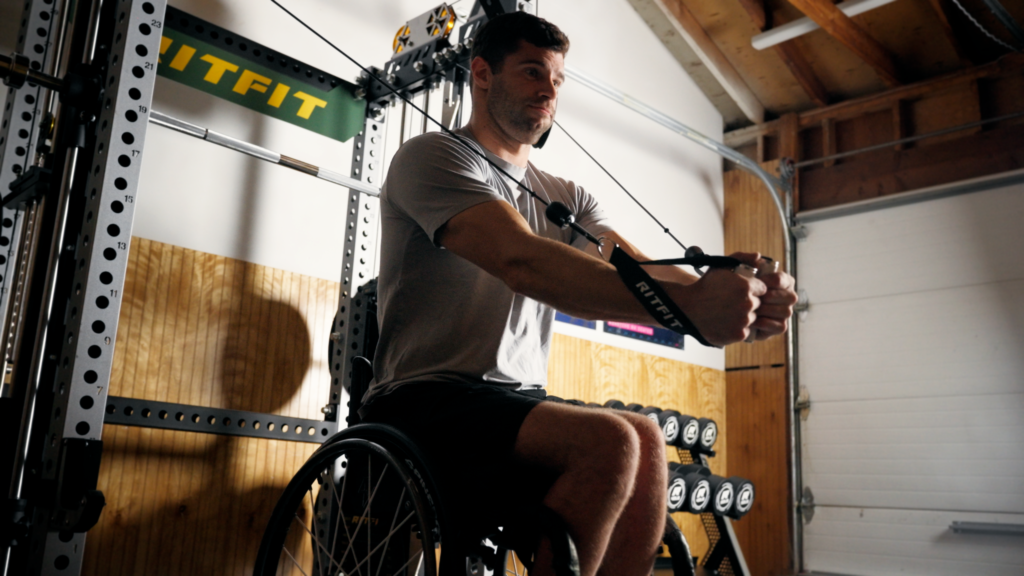
Miazga remains motivated by the fact that there are still new challenges to pursue. After decades of swimming and more than a decade in functional fitness, he is preparing for new endurance goals.
“Competing is phenomenal because the opportunity always exists,” he says. “I have been rooted in functional fitness for well over a decade, after decades of swimming, and yet there are still new ways to pursue each of those that I haven’t even scratched the surface of.”
“I am gearing up for my first attempt at completing an IRONMAN, and a few marathon events as well. More than anything, I have so much experience and knowledge under my belt that I am excited to try new things and see where we can go with it.”
“That’s how this journey started, and I wouldn’t trade that for anything.”
Key Takeaways
| Area | Tom Miazga’s mindset |
| Confidence | Build it through preparation, experience, and repeatedly keeping promises to yourself. |
| Discipline | Stay connected to the person you want to become, especially when motivation changes. |
| High standards | Aim to improve from yesterday while remembering that recovery supports long term progress. |
| Competition | Prepare thoroughly, keep routines familiar, and focus on what you can control. |
| Setbacks | Use disappointment as information and an opportunity to rediscover your potential. |
| Progress | Measure success through consistent small improvements rather than perfection. |
| Accessibility | Home equipment can provide greater independence, privacy, confidence, and control for adaptive athletes. |
| Day One Never End | Begin, adapt, keep showing up, and define progress according to your own journey. |
Tom Miazga was speaking to BOXROX in partnership with RITFIT as part of the ‘Because We All Fit’ initiative.
RITFIT’s ‘Because We All Fit’ initiative is dedicated to breaking down barriers to fitness by helping people with disabilities access home gym equipment and create spaces where they can build strength and confidence.
At the heart of the initiative is RITFIT’s belief that fitness should be for everyone.