Tom Miazga – What It Takes to Become a World Champion in Three Different Sports
Learn more from a multi-disciplinary world champion.


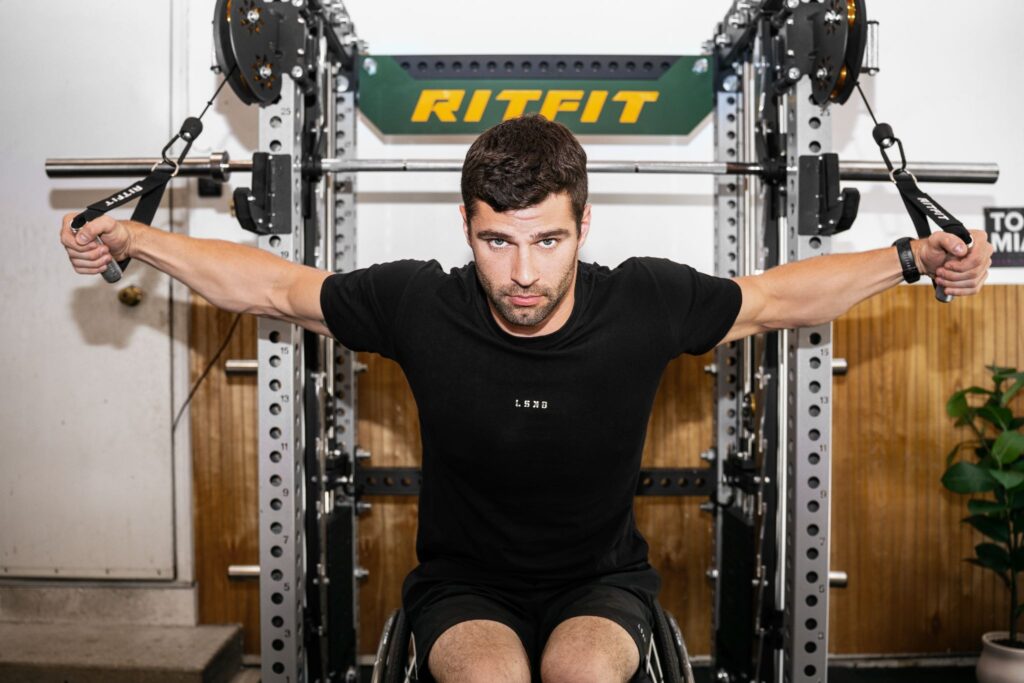
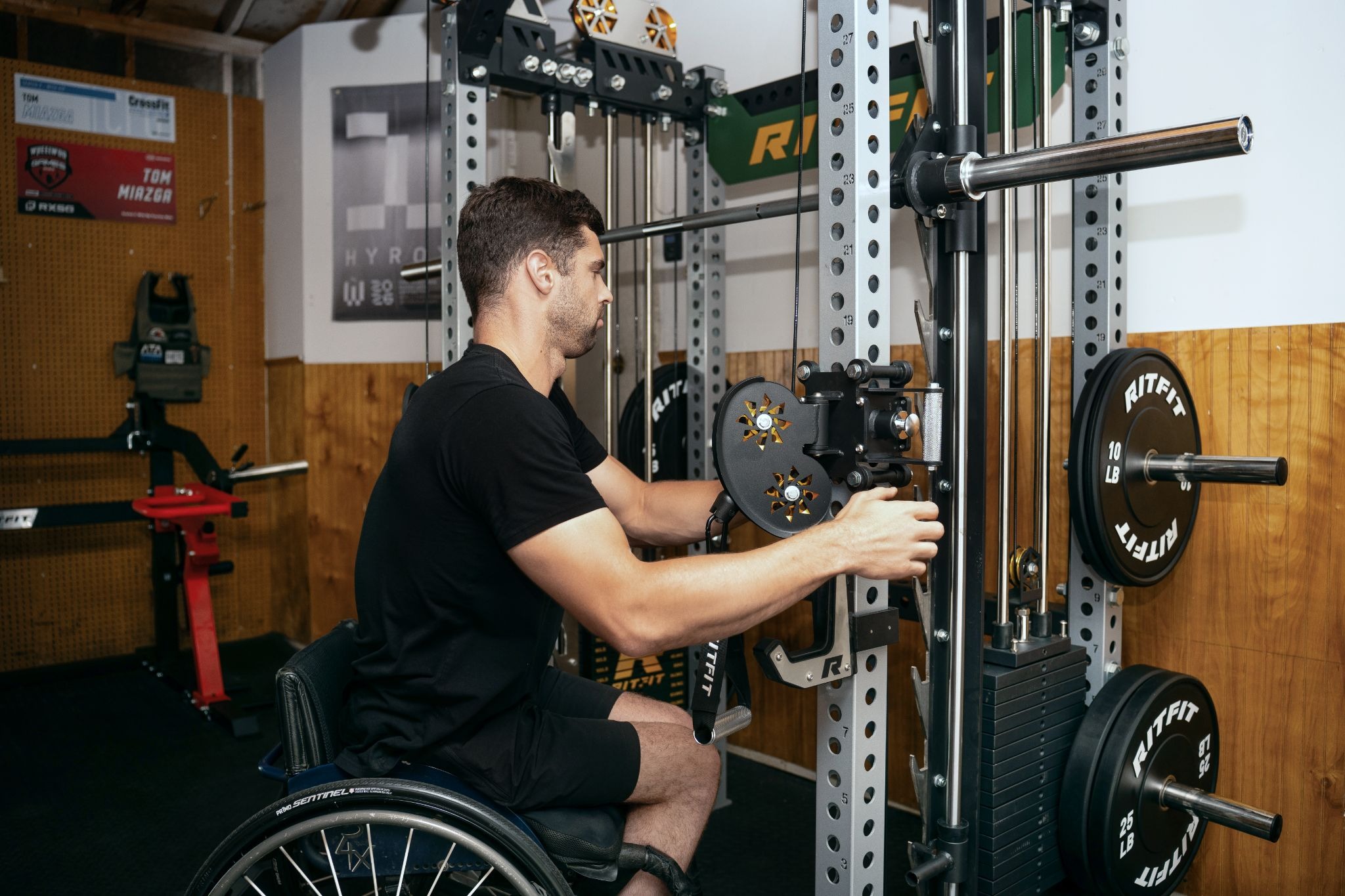
Tom Miazga was speaking to BOXROX in partnership with RITFIT as part of the ‘Because We All Fit’ initiative.
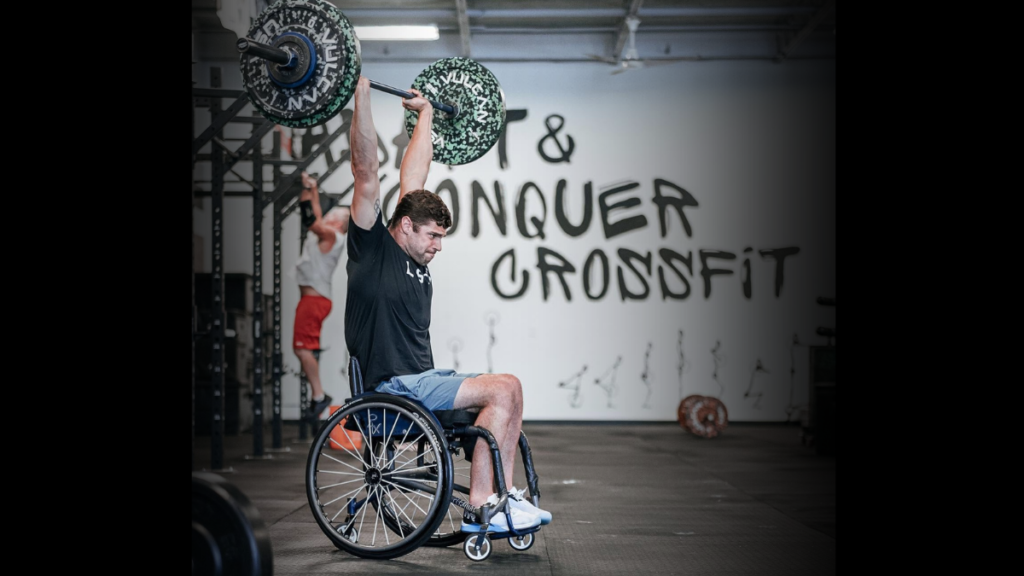
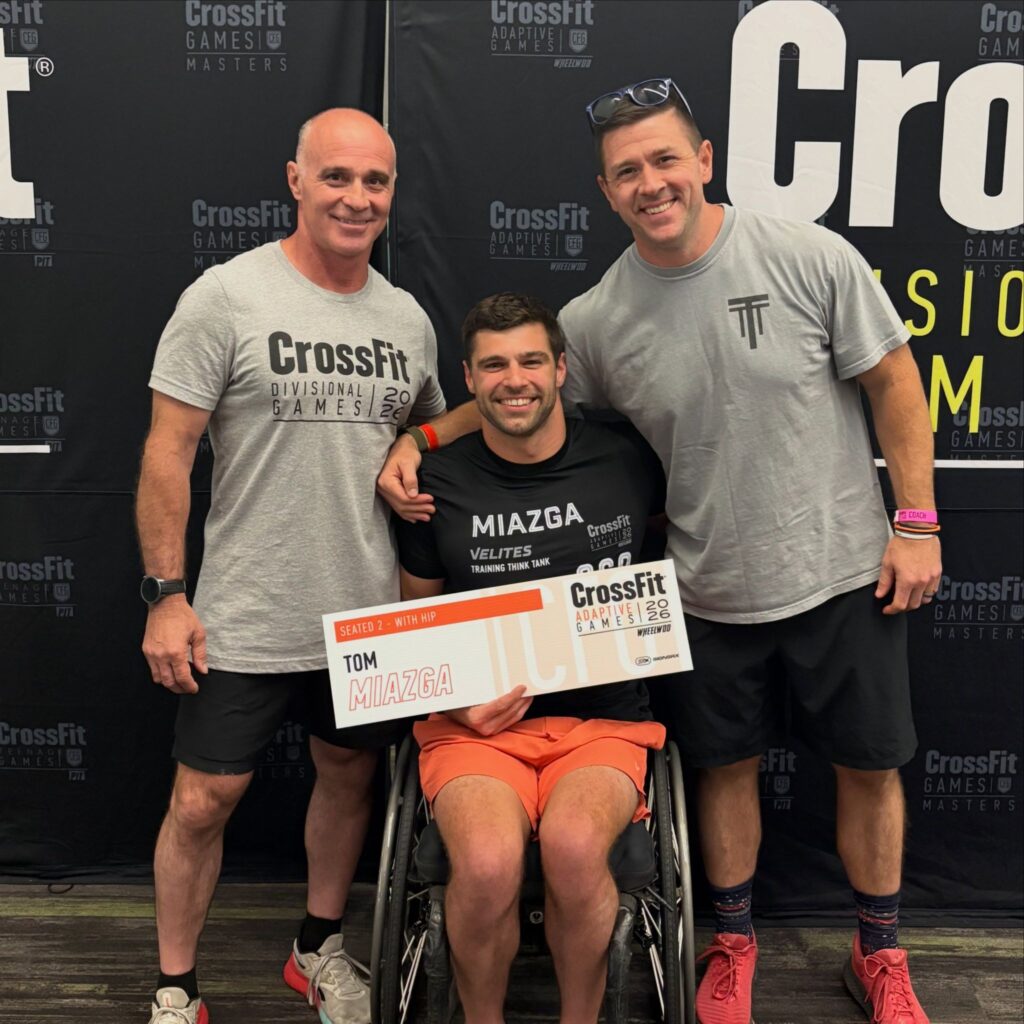
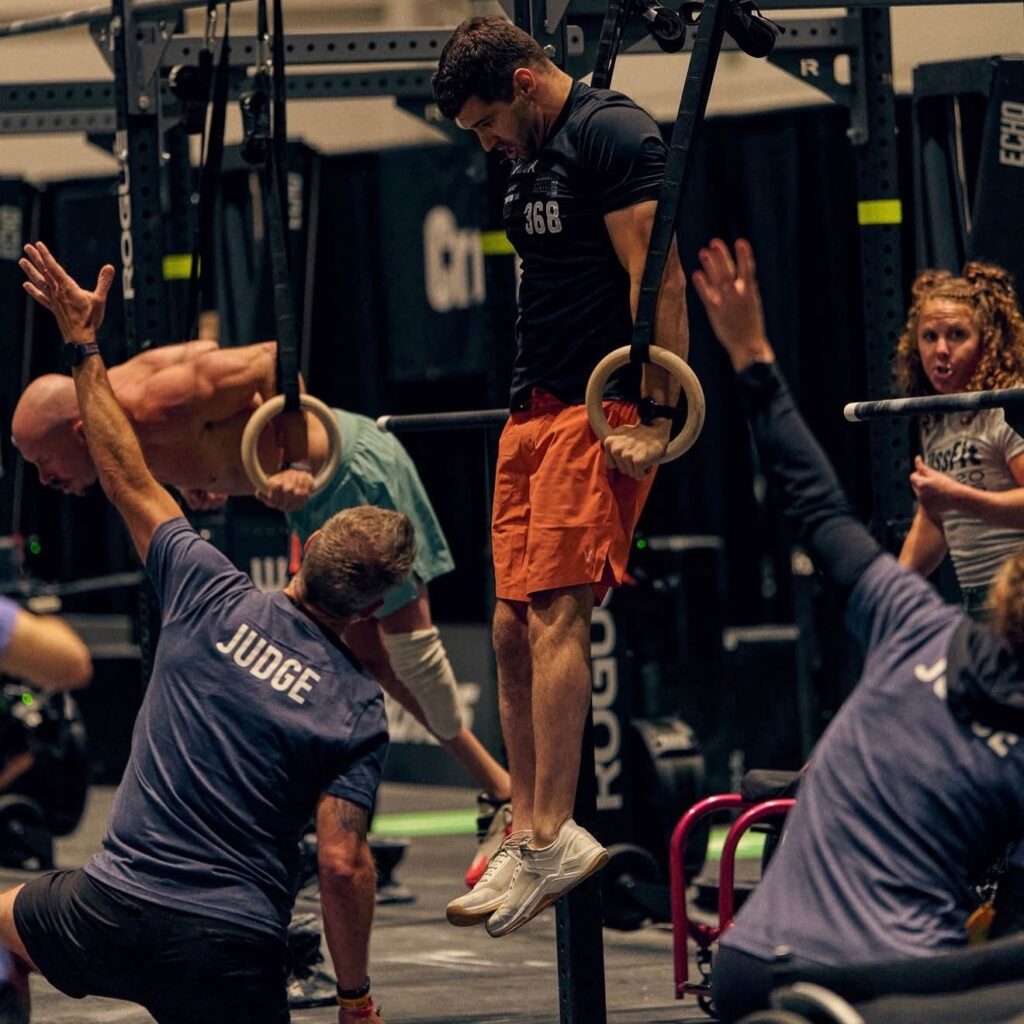
Tom Miazga has competed at the highest level in three very different sporting environments. He is an Adaptive HYROX World Champion, a 10 time Adaptive CrossFit Games Champion, and a Paralympian. His career has demanded endurance, strength, technical skill, emotional control, and a willingness to keep adapting when the plan needs to change.


Known by many as the Fittest Seated Man on Earth, Miazga has built his success through more than hard training. His approach is grounded in problem solving, consistency, and an honest understanding of what his body needs to perform well over a long season.
Source: Instagram / @tommiazga
We spoke to Miazga about competing, training for HYROX and CrossFit, nutrition, recovery, and why creating more access to fitness matters so much to him.
Source: Instagram / @btaysphotos
More Than Just Medals and Physical Fitness
From the outside, it is easy to see medals, event wins, and major competition performances. What people do not always see is the work required to make those moments possible.
“All three require far more than physical fitness,” Miazga says. “As an adaptive athlete, I’m constantly problem solving: figuring out how to make movements work for my body, managing equipment, and preparing for the extra stress on the muscles I rely on every day.”
That process is not only physical. It also requires maturity and patience, especially when ambition is pushing an athlete to do more than their body can realistically handle.
“It’s a fine line between giving everything I’ve got and asking too much of my body,” he explains. “I have to have very realistic conversations with myself about what I can ask of my body, and it takes a lot of strength to be okay with a reality I don’t want to accept.”
For Miazga, success is built through experimentation over years, not just through one hard training block.
“People see the competition, but they don’t always see the years of experimentation behind it. At the highest level, adaptability, patience, and resilience matter as much as strength or endurance.”
Training for The Varied Demands of Multiple Sports
Preparing for CrossFit, HYROX, and other major competition opportunities means managing several physical qualities at once. Miazga usually trains five or six days per week, with a clear goal behind each session.
“I typically train five or six days each week, combining strength, conditioning, sport specific work, and recovery,” he says. “Some days are focused on heavy or explosive movements, while others build aerobic capacity or competition specific endurance.”
Training across multiple disciplines can be demanding, particularly when each one requires different physical qualities. CrossFit rewards broad capability, while HYROX requires an athlete to control pace and keep working as fatigue grows.
“I can’t lie, it can be a little overwhelming at times when I’m trying to train for multiple events at the same time,” Miazga says. “I may train twice in a day, but every session has a purpose. It’s about consistently doing the right work and recovering well enough to benefit.”
CrossFit versus HYROX
Miazga sees a clear difference between the two sports, even though both can push an athlete’s heart rate to its limit.
“CrossFit requires you to prepare for the unknown,” he says. “You need strength, power, gymnastics, endurance, and the ability to quickly adapt when events are announced.”
HYROX offers a more predictable format, but that certainty creates its own challenge. Athletes know the race structure, which means pacing, transitions, and muscular endurance become central to performance.
“HYROX is much more predictable, but that makes pacing and muscular endurance extremely important. You know what is coming, so success depends on how efficiently you manage your effort and transitions.”
He adds: “CrossFit rewards versatility, while HYROX challenges you to sustain output when fatigue continues to accumulate. Regardless, they both crush my heart rate!”
Training Cycles for Strength and Endurance
Building a strong aerobic engine without losing strength and explosiveness is one of the hardest parts of hybrid training. Miazga is realistic about the tradeoffs involved when preparing for a busy and varied competitive season.
“Most importantly, I have to accept that my unique competitive season will likely limit my ability to hit my top end in both strength and engine,” he says. “For how much I love fitness, I have to be okay with the idea that I won’t train each discipline as strictly as I may like.”
Rather than trying to maximize every quality at once, he keeps strength work in his program while adjusting volume and intensity around conditioning demands.
“I keep strength and power as priorities even as my conditioning volume increases. Heavy work usually stays lower in volume and high in quality, while my engine work includes a combination of short intervals, sustained race pace efforts, and easier aerobic sessions.”
Separating training goals where possible helps him avoid turning every session into the same kind of fatigue.
“Separating those training goals, when possible, helps me build endurance without turning every strength session into another conditioning workout.”
Long Term Strength Gains
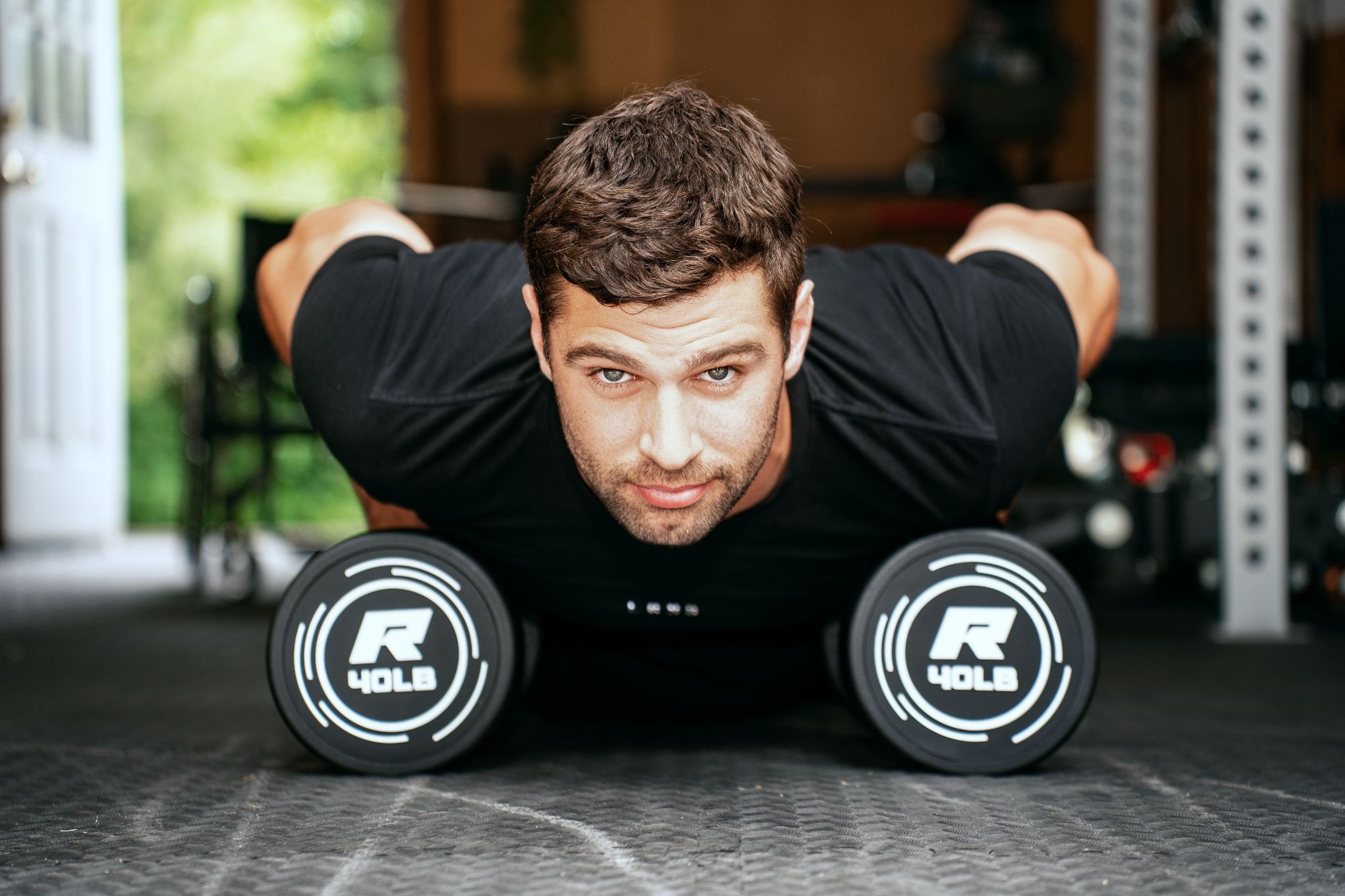
Miazga’s strength training is not simply about lifting as much as possible. It is about developing technique, power, stability, and the resilience needed to keep performing over time.
“I spend a lot of time isolating weightlifting movements so I can focus on developing strength, technique, and power without the added fatigue of a conditioning piece,” he says.
He then uses accessory work to support the areas that need to stay strong and durable through training, competition, and daily life.
“I supplement those primary lifts with accessory movements that support shoulder health, stability, and muscular balance. Because my upper body carries such a significant workload in both competition and daily life, the goal is not only to become stronger, but to build strength that is durable and sustainable.”
Measuring and Tracking Progress Across Many Aspects of Fitness
A strong performance on one good day is useful, but Miazga places more value on the ability to repeat high quality work consistently.
“While competing lets me perform at my best, training splits are key to success,” he says. “I pay attention to whether I can hold the same pace with less effort, recover more quickly between intervals, and maintain good movement under fatigue.”
He also wants to see strength remain stable as conditioning improves. That balance is particularly important when preparing for HYROX, where athletes need to run well while still handling demanding functional stations.
“I also track whether my strength remains stable while my conditioning improves. The best indicator is repeatability, producing a strong performance consistently rather than once under perfect conditions.”
Tom’s Favorite Workout
When asked for a workout that more people should try, Miazga chose one of CrossFit’s best known benchmark sessions, Cindy.
“I would go with the CrossFit benchmark workout, Cindy. It’s a 20 minute workout where you try to complete as many rounds as possible of 5 pull ups, 10 push ups, and 15 air squats.”
However, he has his own version for those looking for more upper body challenge.
“I’m going to add some spice. Swap the air squats for dips and get a serious arm pump!”
The appeal of the workout is that it can be adapted to suit a wide range of fitness levels and then repeated later to assess improvement.
“I love this one because it is infinitely scalable. Anyone and everyone can adapt it to work for them and repeat it to measure progress.”
Nutrition, Discomfort, and Competition Days
Keeping things simple
For Miazga, the days before a major event are not the time to experiment. His focus is routine, familiar foods, hydration, and making sure he arrives with enough energy to perform.
“My big focus is keeping routine. I don’t make dramatic changes immediately before competing,” he says. “I focus on familiar foods, consistent hydration, and a larger emphasis on carbohydrates to keep my energy stores full.”
He aims to keep meals easy to digest while continuing to meet his planned nutrition targets.
“I keep meals simple and easy to digest while making sure I hit my target macronutrients. Carbohydrates are my best friend the week of competitions. The goal is to arrive fueled and comfortable, not to introduce something new at the last minute.”
Fueling before fatigue arrives
Long competition days require preparation. Athletes often lose the chance to eat and drink properly once they are already depleted, so Miazga makes fueling an active part of his performance plan.
“I try to fuel early and consistently instead of waiting until I feel depleted,” he says. “Between events, I rely heavily on easily digested carbohydrates, fluids, and electrolytes, with more substantial food when the schedule allows.”
Planning is important because the products and foods used on the day should already be familiar from training.
“I plan everything in advance and stick with products I’ve already tested in training. On a long competition day, nutrition is part of the performance, not something you can wait to think about when you are already tired.”
Learning when to push and when to pause
Understanding the difference between useful discomfort and a warning sign is a skill that develops through experience. Miazga believes that every athlete has to learn their own signals while still allowing themselves room to work hard.
“This is an interesting question, since everyone will feel this barrier differently,” he says. “However, the way to understand it is the same for all of us: experience.”
“Only you know how your body will react, but we won’t know unless we try. Most often, your mind and body will work in harmony and give you fairly obvious signs that it is time to slow down.”
He believes progress is often built in smaller moments rather than through rare all out efforts.
“If you are giving yourself a chance to feel a little discomfort, don’t lose sight of the fact that this in itself is you already making progress. Consistent progress is far more beneficial than sporadic large efforts. It’s best to stay honest with yourself and capitalize on the little moments each day.”
Creating More Access to Fitness
Why the RITFIT partnership matters
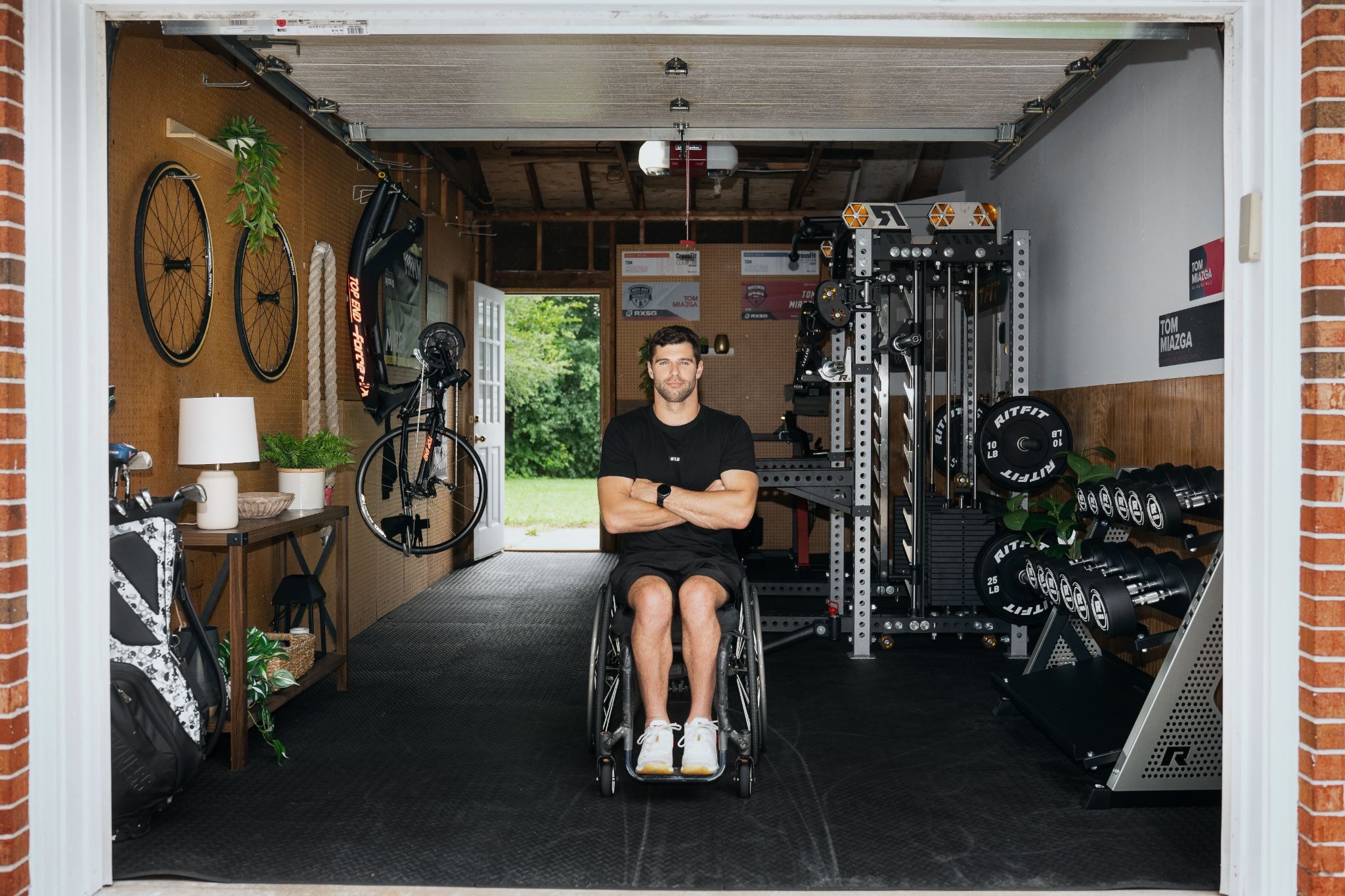
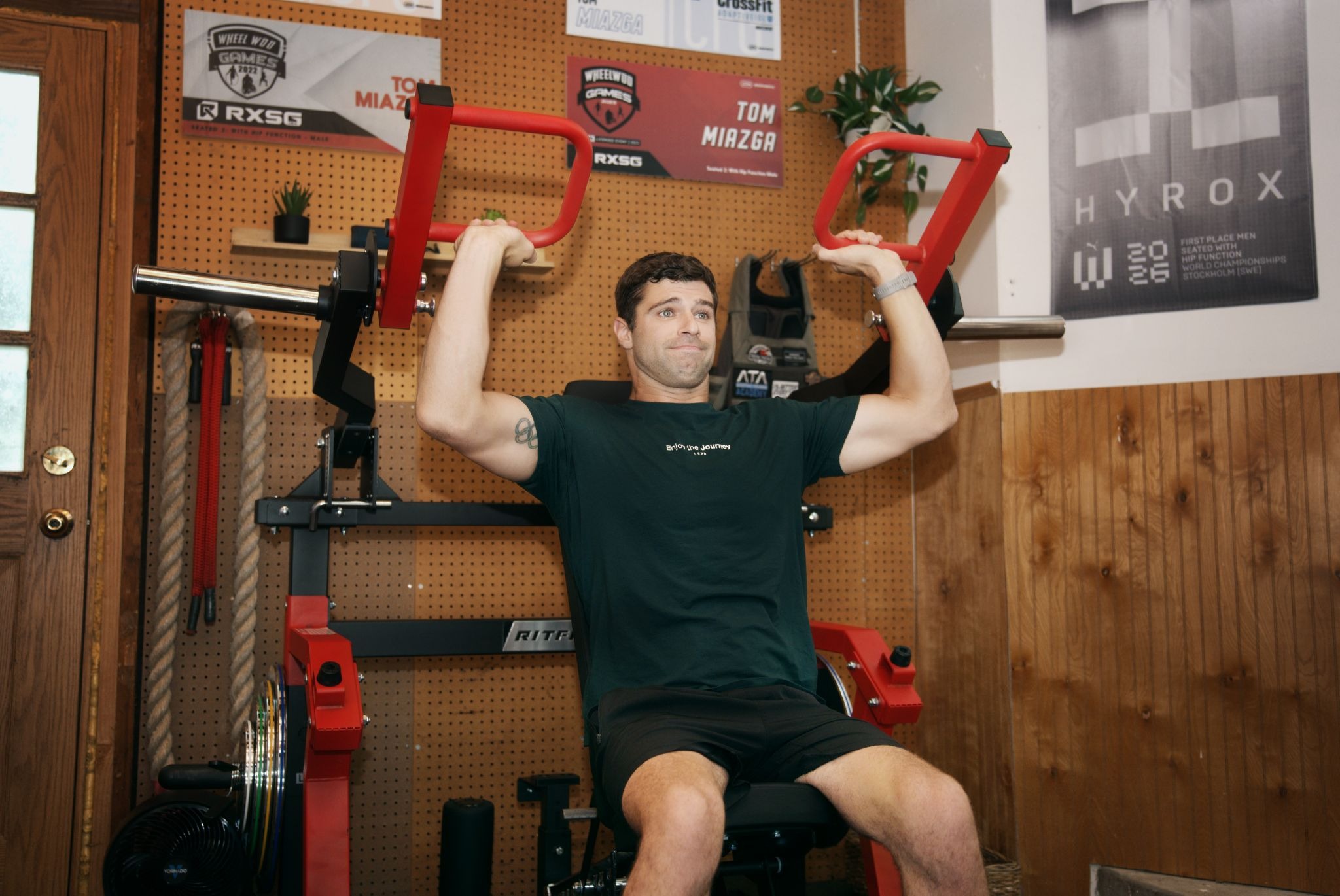
Miazga’s partnership with RITFIT is connected to a mission that extends beyond competition results. Through the company’s Disability Support Program and monthly equipment sponsorship program, he hopes to help remove practical barriers that can prevent disabled people from starting or continuing their fitness journey.
“For years, I’ve had the opportunity to lead by example as an athlete and show what is possible,” he says. “But while achievements can inspire people, providing tangible resources can give them the opportunity to pursue their own potential.”
“That is what makes RITFIT’s Disability Support Program so meaningful to me. The chance to physically help put equipment into the homes of people with disabilities and remove a barrier to fitness is incredibly gratifying.”
The program aims to provide free equipment to five disabled individuals each month. For Miazga, that opportunity connects directly to the support that helped make his own career possible.
“It is easy to think fitness is my dominating persona and has shaped nearly every part of who I am. In reality, I’ve been fortunate to have people invest in me and believe in my potential. I’m nowhere without them, and I can never satisfy the itch to say thank you.”
“This role lets me do that. Helping five disabled individuals each month receive equipment isn’t just about giving them something to train with. It’s about removing a barrier and giving them the opportunity to begin.”
Miazga is proud of what he has achieved across three sports, but he wants his legacy to be measured by the possibilities he helps create for others too.
“I’m proud of what I’ve accomplished as an athlete, but I want my greatest impact to include what I help make possible for someone else.”
Key Takeaways
| Area | Tom Miazga’s approach |
| Elite performance | Adaptability, patience, and resilience are as important as physical fitness. |
| Weekly training | Train with purpose across strength, conditioning, sport specific work, and recovery. |
| HYROX preparation | Prioritize pacing, transitions, muscular endurance, and sustainable output. |
| CrossFit preparation | Develop broad strength, power, gymnastics ability, endurance, and adaptability. |
| Fitness progress | Look for repeatable performances, faster recovery, stable strength, and better movement under fatigue. |
| Competition nutrition | Use familiar foods, prioritize carbohydrates, hydrate consistently, and fuel before fatigue arrives. |
| Long term impact | Help remove barriers to fitness by improving access to equipment and opportunity for disabled athletes. |
Tom Miazga was speaking to BOXROX in partnership with RITFIT as part of the ‘Because We All Fit’ initiative.
RITFIT’s ‘Because We All Fit’ initiative is dedicated to breaking down barriers to fitness by helping people with disabilities access home gym equipment and create spaces where they can build strength and confidence. As part of this program RITFIT provides monthly equipment support for disabled individuals.
At the heart of the initiative is RITFIT’s belief that fitness should be for everyone.