A dead hang is simple: you hold a sturdy overhead bar with straight arms and let your body hang under control. It looks passive, but it is not a rest position for most people. Your hands must hold your body weight, your forearms work continuously, and your shoulders and trunk must tolerate the position.
Doing a dead hang every day for 30 days can improve your familiarity with the movement and may improve your ability to hold it longer. The biggest early changes are likely to come from better coordination, greater tolerance to the position, and improved grip endurance. It is less likely to produce dramatic muscle growth or transform shoulder mobility in one month.


The important scientific detail is that research has not directly tested a standard daily dead hang program in a broad group of adults for exactly 30 days. That means anyone promising guaranteed results is getting ahead of the evidence. Still, research on sustained dead hangs, isometric training, stretching, grip strength, and exercise adaptation gives us a useful picture of what may happen.
What a Dead Hang Actually Trains
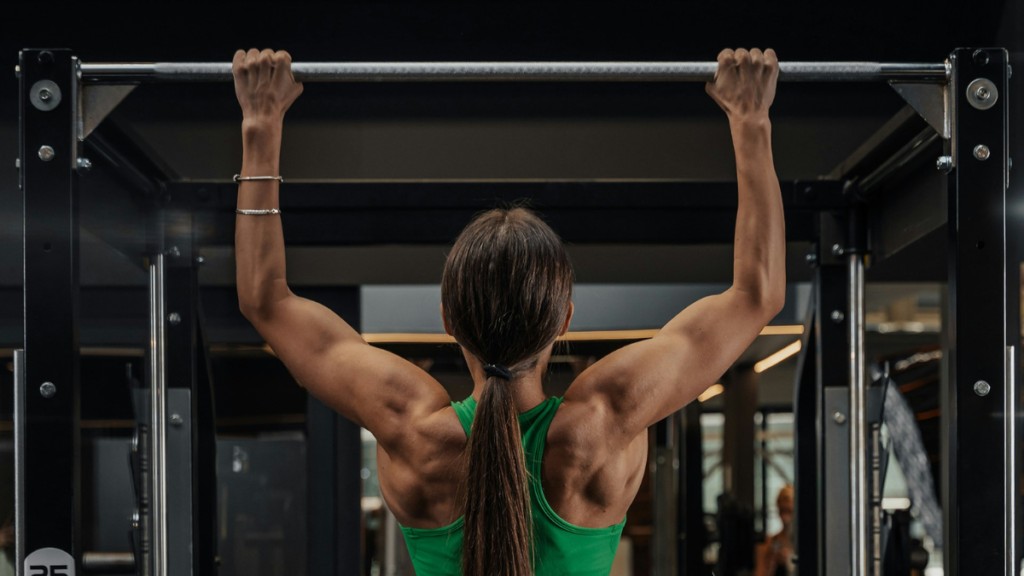
A true passive dead hang places your hands overhead, with your elbows straight and your feet off the floor. Your grip is the obvious limiting factor, but it is not the only system involved. The finger flexors and forearm muscles must maintain a sustained contraction, while the muscles around the shoulder and upper back coordinate to control the hanging position.
A recent study of climbers performing sustained dead hangs showed that fatigue changed coordination across the wrist, elbow, shoulder, and several upper body muscles. This does not prove that daily hanging makes every person stronger, but it confirms that a dead hang is a demanding upper body isometric task rather than a purely passive stretch.
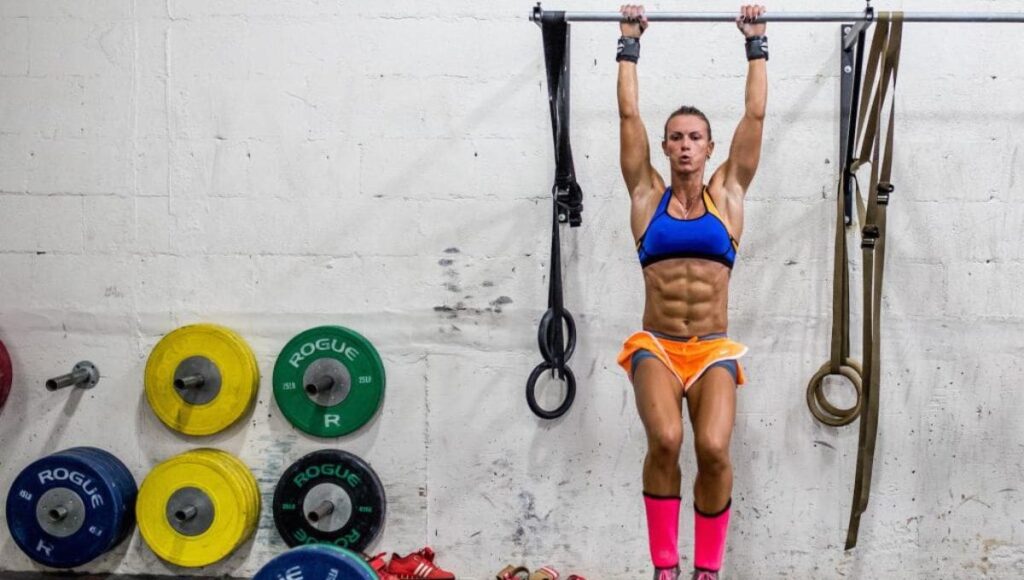
Your experience will depend heavily on your body weight, hand size, bar diameter, grip style, current strength, and shoulder history. A person who already does pull ups or climbing will have a different starting point from someone who has not held their body weight from a bar before.
The Most Likely Changes Over 30 Days
Your Grip Endurance May Improve
The first change many people notice is that their hands stop giving up as quickly. A dead hang requires sustained gripping rather than a brief maximal squeeze. This is an endurance demand, and repeated exposure can improve the nervous system’s ability to recruit and coordinate the muscles involved.
Isometric strength training research shows that sustained muscle contractions can increase strength, particularly when the training is performed consistently and with sufficient effort. A dead hang is not identical to laboratory isometric protocols because the intensity depends on body weight and grip position. Even so, the basic principle applies: the body adapts to a repeated demand.
For a beginner, an increase from a five second hold to a 15 or 20 second hold in a month is realistic. For someone who can already hang for a minute, improvement may be much smaller because training adaptations slow as performance rises. A longer hang time does not necessarily mean that your maximum handgrip force has increased by the same amount, since endurance and maximum strength are related but different qualities.
The Position May Feel More Comfortable
A dead hang exposes you to an overhead shoulder position that many adults rarely use. At first, the sensation can feel intense through the hands, forearms, ribs, shoulders, and upper back. With gradual practice, the position may feel less threatening and more controlled.
Research on stretching shows that regular stretching can increase joint range of motion over time. However, a dead hang should not be treated as a guaranteed shoulder mobility fix. The exact effect depends on how much motion you currently have, whether the position is limited by muscle stiffness or joint structure, and whether you have pain or an injury.
For some people, a hang may feel like a pleasant stretch through the sides of the torso and shoulders. For others, especially those with irritated shoulder tissues, it may provoke discomfort. Improvement in comfort is a useful sign, but pain is not a signal to push harder.
You May Develop Better Shoulder Awareness
A daily hang can teach you whether your shoulders tolerate a relaxed hanging position, an active position, or neither. In a passive hang, the shoulders rise toward the ears. In an active hang, you gently draw the shoulder blades downward without bending the elbows. Both positions require control, but they place different demands on the shoulder complex.
The available dead hang research demonstrates that upper body coordination changes as fatigue develops. In practical terms, that means a hang is not only a hand exercise. Your body must organize the wrist, elbow, shoulder, and trunk as the hold becomes harder.
Thirty days is enough time to improve movement awareness, particularly if you avoid rushing to failure. You may notice that you can keep your ribs from flaring, breathe more steadily, and avoid swinging. These are useful technical improvements, although they should not be confused with proof that a dead hang prevents shoulder injury.
What Probably Will Not Happen
You Will Not Build a Complete Upper Body
A dead hang challenges the grip and upper body, but it has limits. Your elbows do not move, and the major pulling muscles are not working through the same range of motion as they do during rows or pull ups. It can support a strength program, but it cannot replace one.
Research on resistance training shows that strength and muscle gains respond to progressive training variables such as load, volume, and exercise selection. If hanging becomes easy, simply repeating the same short hold every day may not provide enough additional challenge to keep producing meaningful adaptation.
For broader upper body strength, pair hangs with pulling, pressing, and lower body training. A dead hang is best viewed as a focused tool, not a complete workout.
It Will Not Decompress Your Spine Permanently
Many people describe hanging as spinal decompression. A hang may temporarily create a feeling of traction and relief, but there is no strong evidence that it permanently changes spinal alignment or fixes back pain. Research on traction for low back pain has not found a consistent clinically important benefit when traction is used as a treatment.
That does not mean a hang cannot feel good. It means the feeling of relief should not be turned into a medical claim. If you have persistent back pain, numbness, weakness, or symptoms that travel down an arm or leg, seek an assessment from a qualified health professional.
It Will Not Make You Live Longer by Itself
Grip strength has a strong association with health outcomes in large population studies. Lower grip strength is associated with higher risks of death and cardiovascular events. However, these studies measured grip strength with a dynamometer, not dead hang time.
A dead hang can be a practical way to train grip endurance, but it is not a validated longevity test. People who can hang longer may also be more active, leaner, stronger, and less limited by pain. Those factors matter. Use hang time as a personal training measure, not as a prediction of your lifespan.
Is Every Day a Good Idea?
Daily practice can work when the dose is low enough. It can also irritate the hands, elbows, or shoulders when every session is maximal. The goal is repeated practice, not daily punishment.
If you are new to hanging, start with several short sets that stop before your grip completely fails. For example, three sets of 10 to 20 seconds can be enough to practice the movement. If you cannot hang comfortably, use a bar low enough for your feet to stay lightly on the floor. This reduces the load while letting you train the same general position.
As the hold gets easier, increase total hanging time slowly. A useful approach is to keep one or two seconds in reserve rather than dropping from the bar every time. This helps manage fatigue and gives the hands and shoulders time to adapt.
If you already train hard pull ups, rows, climbing, or heavy carries, daily max hangs may add more fatigue than benefit. In that case, two or three hang sessions per week may be more productive.
How to Perform a Safer Dead Hang

Set Up With Control
Use a secure bar that is built to support body weight. Grip the bar with both hands about shoulder width apart, then lift your feet only after you feel stable. Keep your elbows straight and let your body settle without swinging.
Breathe normally throughout the hold. Holding your breath can increase strain and make the exercise feel harder than necessary. Step down when the hold ends instead of dropping from the bar.
Know When to Stop
Muscle fatigue in the hands and forearms is expected. Sharp pain, pinching in the shoulder, numbness, tingling, or an unstable feeling in the joint is not something to train through. Stop and reassess if those symptoms occur.
People with a recent shoulder injury, a history of shoulder dislocation, severe arthritis, hand or elbow pain, uncontrolled high blood pressure, or conditions that affect bone health should get individual advice before attempting full body weight hangs.
A Realistic 30 Day Outcome
The best result from a 30 day dead hang challenge is not a magic number. It is a better baseline. You may have more grip endurance, greater comfort hanging overhead, and a clearer understanding of your current shoulder and upper body capacity.
If you start with short, controlled holds and progress only when the movement feels good, the habit can become a useful part of your training. If you chase a daily maximum, it can become an efficient way to irritate tissues that have not adapted to the load.
The evidence supports a balanced conclusion: dead hangs are a legitimate isometric challenge for the hands and upper body, and regular practice can improve performance in that task. They are not a cure for pain, a complete strength plan, or a scientifically validated shortcut to longevity.
References
- Exel, J., Kaufmann, P., Froschauer, O., Baca, A., Kainz, H. and Mochizuki, L. (2026) ‘Upper body neuromechanical coordination strategies during fatiguing sustained dead hangs in climbers’, European Journal of Sport Science, 26, e70197.
- Edwards, J.J., Deenmamode, A.H.P., Griffiths, M. et al. (2023) ‘Exercise training and resting blood pressure: a large scale pairwise and network meta analysis of randomised controlled trials’, British Journal of Sports Medicine, 57, pp. 1317–1326.
- Konrad, A., Alizadeh, S., Daneshjoo, A. et al. (2024) ‘Chronic effects of stretching on range of motion with consideration of potential moderating variables: a systematic review with meta analysis’, Journal of Sport and Health Science, 13, pp. 186–194.
- Leong, D.P., Teo, K.K., Rangarajan, S. et al. (2015) ‘Prognostic value of grip strength: findings from the Prospective Urban Rural Epidemiology study’, The Lancet, 386, pp. 266–273.
- Lum, D. and Barbosa, T.M. (2019) ‘Brief review: effects of isometric strength training on strength and dynamic performance’, International Journal of Sports Medicine, 40, pp. 363–375.
- Oranchuk, D.J., Storey, A.G. and Nelson, A.R. (2019) ‘Isometric training and long term adaptations: effects of muscle length, intensity, and intent: a systematic review’, Scandinavian Journal of Medicine and Science in Sports, 29, pp. 484–503.
- Wegner, I., Widyahening, I.S., van Tulder, M.W. et al. (2013) ‘Traction for low back pain with or without sciatica’, Cochrane Database of Systematic Reviews, 8, CD003010.
Key Takeaways
| Area | What 30 days of dead hangs may do | What the evidence does not support |
|---|---|---|
| Grip | Improve grip endurance and tolerance to sustained holding | A guaranteed increase in maximum grip strength |
| Shoulders | Increase comfort with an overhead hanging position for some people | A cure for shoulder pain or injury prevention |
| Strength | Improve performance in the hang itself through isometric practice | Complete upper body strength development |
| Spine | Provide a temporary feeling of relief for some people | Permanent spinal decompression or a back pain cure |
| Health | Offer one way to practice a quality related to grip function | Using hang time as a validated longevity test |
| Programming | Build a useful habit when progressed gradually | Daily all out holds for everyone |