

Most beginners who want bigger arms immediately reach for dumbbell curls. While curls are an effective isolation exercise for the biceps, they are far from the only way to build impressive arms. In fact, some of the best arm building exercises do not involve a curl at all.
Your arms work whenever you pull, push, carry, or stabilize heavy loads. Multi joint exercises often allow you to use more weight than curls, creating higher levels of mechanical tension, which is one of the primary drivers of muscle growth. Research consistently shows that compound movements can produce substantial increases in muscle size when they challenge the target muscles through a full range of motion and are performed with enough effort.


For beginners, focusing on a handful of effective exercises is usually more productive than chasing endless variations. Learning good technique, progressively increasing resistance, and training consistently will produce much better results than adding more exercises. Here are three beginner friendly exercises that can help build bigger arms without performing a single curl.
Why You Do Not Need Curls to Build Bigger Arms
The biceps are important, but they make up only part of your upper arm. The triceps account for roughly two thirds of your upper arm muscle mass, meaning that developing them has an even greater impact on overall arm size.
At the same time, many pulling exercises create high levels of biceps activation while also strengthening the back, shoulders, and grip. This means you can train multiple muscles simultaneously while still stimulating arm growth.

Studies comparing single joint and multi joint exercises have shown that compound lifts can produce similar hypertrophy in trained muscles, especially in beginners. Because novice lifters respond very well to almost any well designed resistance program, prioritizing versatile exercises often provides the greatest return on investment.
Exercise 1: Chin Ups
Few exercises build the arms as effectively as the chin up. Using an underhand grip shifts more work onto the elbow flexors, particularly the biceps brachii and brachialis, while also heavily recruiting the muscles of the upper back.
Why Chin Ups Build Bigger Arms
During each repetition, your elbows flex while your shoulders extend. The biceps contribute to both of these actions, making them one of the primary movers throughout the exercise. Electromyography studies consistently demonstrate high levels of biceps activation during chin ups, often exceeding many traditional curl variations. Because you are lifting your entire body weight, the loading stimulus is substantial, creating an excellent environment for muscle growth.
Unlike curls, chin ups also strengthen the forearms, grip, lats, rear deltoids, and core. Beginners who gradually improve their chin up strength often notice visible arm growth without ever performing isolation work.
How Beginners Should Perform Chin Ups
Grip the bar with your palms facing toward you and your hands about shoulder width apart. Start from a dead hang with your shoulders engaged. Pull your chest toward the bar by driving your elbows down and back. Lower yourself under control until your arms are fully extended.
5 Best Beginner Exercises for Wider and More Muscular Shoulders
If you cannot perform a full repetition yet, use an assisted chin up machine or resistance bands. Controlled negative repetitions are another effective option. Research has shown that eccentric training can produce significant increases in muscle size and strength, making negatives especially valuable for beginners.
Aim for three to four sets of six to ten repetitions, or as many quality repetitions as you can perform with good technique.
Exercise 2: Close Grip Push Ups
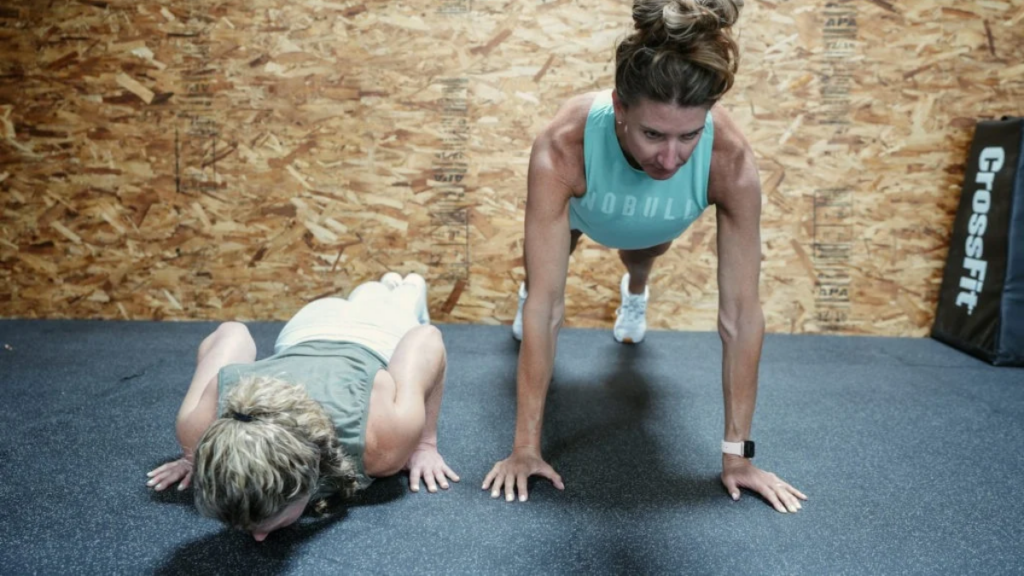
Many people think of push ups as a chest exercise, but narrowing your hand position dramatically increases the demand placed on the triceps.
Since the triceps make up most of your upper arm, strengthening them can noticeably increase arm size.
Why Close Grip Push Ups Work
The triceps extend the elbow during every repetition. A narrower hand placement requires greater elbow extension force, increasing triceps involvement while reducing the contribution of the chest. Research examining muscle activation during push up variations has shown that narrow hand positions significantly increase triceps activity compared to wider positions.
Because the movement also challenges the shoulders and chest, beginners can build upper body strength while simultaneously developing larger arms.
How Beginners Should Perform Close Grip Push Ups
Place your hands slightly narrower than shoulder width. Keep your elbows relatively close to your sides as you lower your chest toward the floor. Press back up until your elbows are fully extended without locking them aggressively.
Maintain a straight line from your shoulders to your ankles throughout the movement. Avoid allowing your hips to sag or rise excessively.
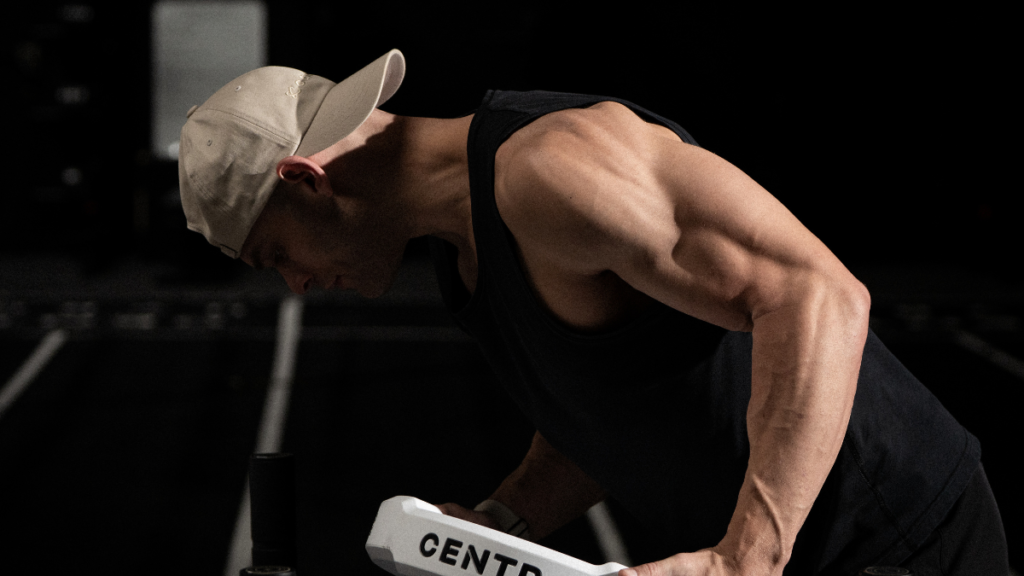
If standard push ups are too difficult, elevate your hands on a bench or sturdy surface. As you become stronger, gradually reduce the height until you can perform the exercise from the floor.
Perform three to four sets of eight to fifteen repetitions while stopping one or two repetitions before complete failure.
Exercise 3: Parallel Bar Dips
Dips are one of the best upper body exercises for developing the triceps, chest, and shoulders simultaneously. While they require more strength than push ups, beginners can still benefit by using assisted dip machines or resistance bands.
Why Dips Are So Effective
The triceps work hard to extend the elbows as you press your body upward. Because dips allow significant loading through a large range of motion, they create excellent mechanical tension across the triceps.
Mechanical tension is widely recognized as one of the primary mechanisms responsible for muscle hypertrophy. Heavy compound exercises like dips allow progressive overload, which remains one of the most important principles for long term muscle growth.
Many experienced strength coaches consider dips to be one of the most effective triceps builders because they allow substantial resistance while also improving overall upper body strength.
How Beginners Should Perform Dips
Grip the bars firmly and support your body with straight arms. Lower yourself under control until your upper arms are approximately parallel to the floor or slightly deeper if your shoulder mobility allows.
Press yourself back upward by extending your elbows while maintaining stable shoulders.
Beginners who cannot yet perform bodyweight dips should use an assisted machine or resistance bands. Gradually reduce the assistance as strength improves.
Aim for three sets of six to twelve controlled repetitions.
Why Compound Exercises Work So Well for Beginners
Beginners experience rapid improvements in muscle size and strength because nearly every training stimulus is new. During the first several months of consistent resistance training, both neural adaptations and muscle hypertrophy contribute to progress.
Compound exercises provide several advantages during this phase.
- They allow greater total loading than isolation exercises.
- They improve coordination between multiple muscle groups.
- They produce efficient full body workouts.
- They save time by training several muscles simultaneously.
Research has shown that training volume and effort are among the strongest predictors of hypertrophy. Compound exercises make it easier to accumulate productive training volume without spending excessive time in the gym.
Progressive Overload Matters More Than Exercise Selection
The best exercise is only effective if you continue making it more challenging over time. Progressive overload simply means gradually increasing the demands placed on your muscles. This can involve adding repetitions, increasing resistance, performing additional sets, or improving technique.
Without progressive overload, muscles quickly adapt and stop growing. For beginners, even small improvements each week can produce impressive long term results. Adding one extra repetition or reducing assistance during chin ups and dips represents meaningful progress.
Studies consistently demonstrate that progressive resistance training increases muscle size across all age groups, including older adults.
Do You Ever Need Curls?
Curls are certainly not a bad exercise. They remain an excellent isolation movement for adding extra biceps volume, especially for intermediate and advanced lifters. However, beginners should not feel obligated to include them immediately. Many new lifters can build impressive arms for months using chin ups, close grip push ups, and dips while simultaneously developing strength across the entire upper body.

Eventually, adding curls may provide additional growth once progress slows, but they are not essential during the early stages of training.
Final Thoughts
If your goal is bigger arms, you do not have to rely on endless sets of curls.
Chin ups, close grip push ups, and parallel bar dips collectively train every major muscle of the upper arm while also developing the chest, back, shoulders, and grip. They provide higher overall training efficiency, greater opportunities for progressive overload, and a stronger foundation for long term strength.
For beginners, mastering these movements while eating enough protein, recovering properly, and gradually increasing training difficulty will deliver excellent results. Bigger arms are built through consistent effort, progressive resistance, and smart exercise selection rather than chasing endless variations of the same curl.
Key Takeaways
| Exercise | Primary Arm Muscles | Main Benefit | Beginner Progression |
|---|---|---|---|
| Chin Ups | Biceps, brachialis, forearms | Excellent pulling strength and arm growth | Resistance bands, assisted machine, negative repetitions |
| Close Grip Push Ups | Triceps | Builds arm size while improving pressing strength | Elevated hands on a bench or box |
| Parallel Bar Dips | Triceps | Heavy loading for maximum triceps development | Assisted dip machine or resistance bands |
| Progressive Overload | Entire upper body | Essential for continued muscle growth | Add repetitions, reduce assistance, or increase resistance over time |
| Nutrition | All muscles | Supports recovery and muscle protein synthesis | Consume adequate protein and calories while prioritizing sleep |
References
- American College of Sports Medicine. (2009). Progression models in resistance training for healthy adults. Medicine & Science in Sports & Exercise, 41(3), 687 to 708.
- Dankel, S.J., Mattocks, K.T., Jessee, M.B., Buckner, S.L., Mouser, J.G., Counts, B.R., Laurentino, G.C. and Loenneke, J.P. (2017). Frequency, volume, and effort and their relationship to muscle hypertrophy. Strength and Conditioning Journal, 39(6), 34 to 42.
- Gentil, P., Soares, S. and Bottaro, M. (2015). Single versus multi joint resistance exercises for muscle strength and hypertrophy. Sports Medicine, 45(6), 841 to 851.
- Grgic, J., Schoenfeld, B.J., Orazem, J. and Sabol, F. (2022). Effects of resistance training performed to repetition failure or non failure on muscular strength and hypertrophy. Journal of Sport and Health Science, 11(2), 202 to 211.
- Maeo, S., Takahashi, T., Takai, Y. and Kanehisa, H. (2021). Trainability of muscle size differs among arm muscles in response to resistance training. European Journal of Applied Physiology, 121(6), 1749 to 1761.
- Schoenfeld, B.J. (2010). The mechanisms of muscle hypertrophy and their application to resistance training. Journal of Strength and Conditioning Research, 24(10), 2857 to 2872.
- Schoenfeld, B.J., Ogborn, D. and Krieger, J.W. (2017). Dose response relationship between weekly resistance training volume and increases in muscle mass. Journal of Sports Sciences, 35(11), 1073 to 1082.