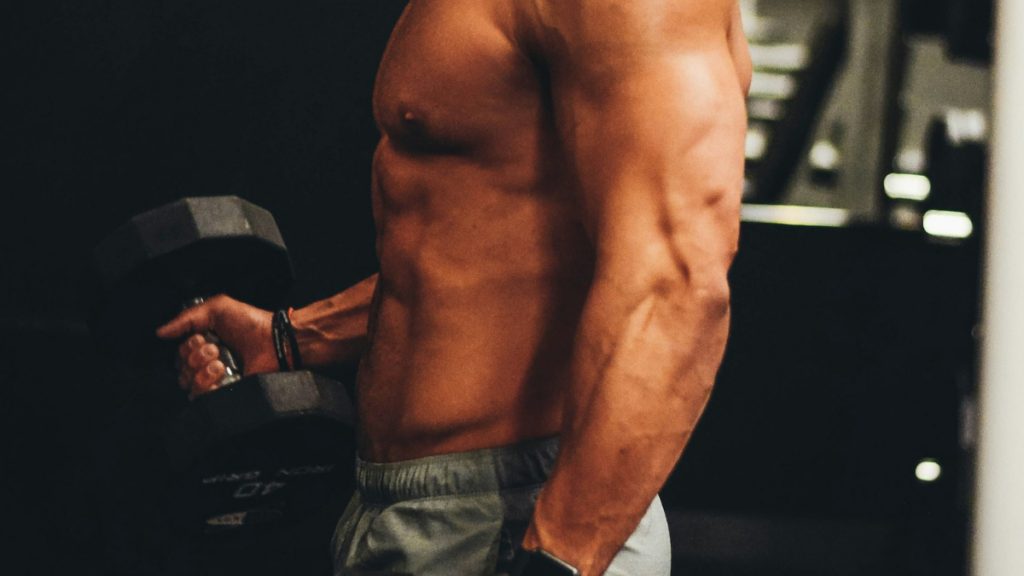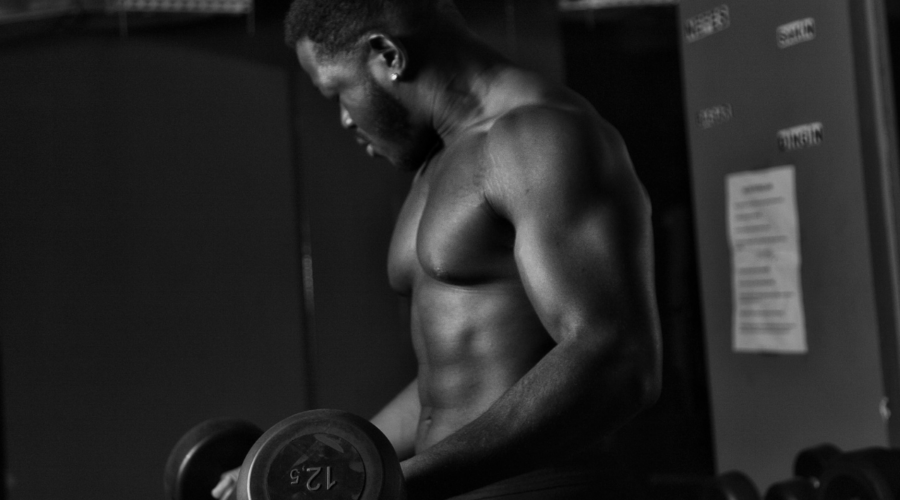


Wider looking arms come from adding muscle to the whole upper arm. The biceps brachii contributes to the shape you see from the front, but it is only part of the picture. The brachialis sits beneath the biceps, and the brachioradialis adds muscle along the forearm near the elbow. Training these elbow flexors can help build a fuller arm, although your muscle insertions and overall proportions also influence how wide your biceps look.
No curl can change your bone structure, and no single exercise can guarantee a wider shape. The useful approach is to train the elbow flexors through different positions, use a hand position that lets you work comfortably, and gradually increase the challenge over time. The three exercises below cover those goals: an incline dumbbell curl, a preacher curl, and a cross body hammer curl.


What Makes Biceps Look Wider?
The biceps brachii has two heads, a long head and a short head. Both contribute to elbow flexion, and the biceps also helps turn the palm upward. The brachialis is another elbow flexor that lies beneath the biceps. Since it sits deep to the biceps, growing the brachialis may contribute to a fuller appearance in the upper arm. The brachioradialis also helps bend the elbow and adds visible size near the upper forearm.
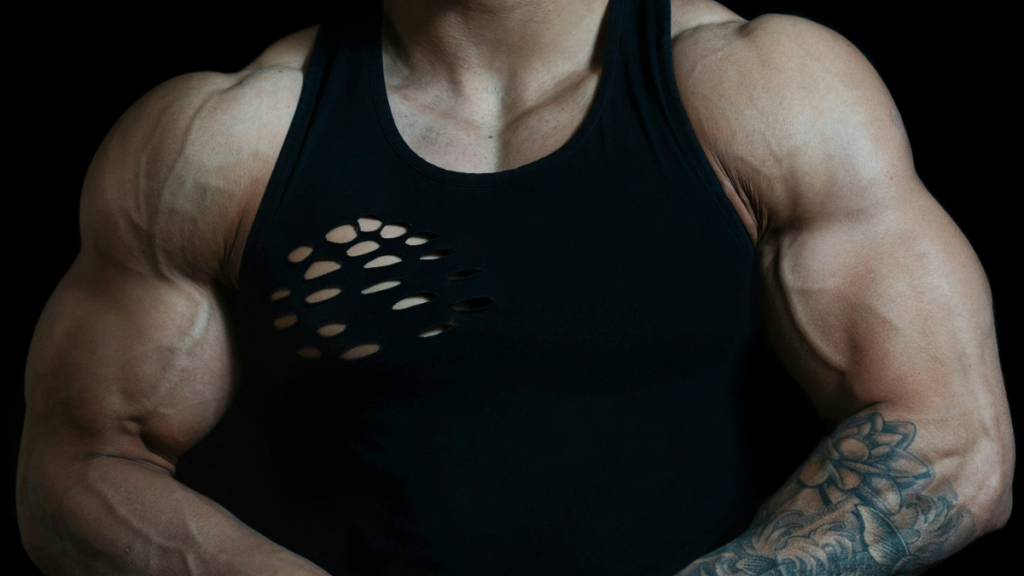
That anatomy helps explain why a biceps workout can include both supinated curls, where the palm faces up, and neutral grip curls, where the palm faces inward. Supination lets the biceps contribute to turning the forearm as well as bending the elbow. A neutral grip still trains the elbow flexors, while changing how the work is shared among the muscles.
It is common to hear that a particular curl isolates the outer or inner biceps head. Exercise position can affect how a muscle works, but current evidence does not support promising that one curl will selectively add width to one head. Incline and preacher curls have produced different regional growth patterns in research, but the results do not establish a simple exercise to head to width formula. Think of exercise selection as a way to train the arm through varied positions, rather than a way to reshape your anatomy.
1. Incline Dumbbell Curl
The incline dumbbell curl is a single joint curl performed while the upper arm rests slightly behind the torso. This shoulder position puts the biceps at a longer muscle length near the bottom of the repetition.
A training study comparing incline curls with preacher curls found different changes in elbow flexor thickness across measurement sites, with incline curl training producing more growth at a proximal site than preacher curl training. Other research has also found that incline and preacher curls can produce distinct regional adaptations, although results vary between studies.
How to do it
Set an adjustable bench to a moderate incline and sit with your back against the pad. Let your arms hang down with your palms facing forward or turned slightly inward. Keep your upper arms close to your sides, then bend your elbows to bring the dumbbells upward. Stop when you can no longer curl without your elbows moving forward or your shoulders lifting.
Lower the weights under control until your arms are almost straight. Do not force the elbow into a locked position or let the dumbbells pull your shoulders forward. Use a load that lets you keep the same path on every repetition, because swinging the weight makes it harder to judge whether the biceps are doing the work.
Why it belongs in the routine
The incline position gives you a curl that challenges the biceps while your arms are behind your torso. This provides a useful contrast to curls performed with the upper arm in front of the body. Research has reported differences in regional elbow flexor growth after incline and preacher curl programs, but the studies are limited and do not show that incline curls guarantee a wider biceps appearance.
If the bottom position feels uncomfortable, reduce the bench angle or use a lighter weight. You should feel a stretch in the front of the upper arm without sharp pain in the shoulder or elbow. A comfortable range of motion that you can repeat is more useful than trying to chase an exaggerated stretch.
2. Preacher Curl
The preacher curl supports the upper arms on a sloped pad while you bend the elbows. You can perform it with dumbbells, a barbell, an EZ bar, or a cable, depending on what is available and comfortable. Because the upper arms are in front of the torso, the biceps works from a different shoulder position than it does during an incline curl.
Preacher curls have been studied alongside incline curls in several training trials. The results suggest that the exercises can lead to different regional changes in the elbow flexors, though the size and location of those changes are not completely consistent. In one study, preacher curl training increased muscle thickness at a distal measurement site, while a more recent trial found some regional differences between preacher and incline curl training. These findings support including different curl positions, but they do not prove that preacher curls target a particular biceps head.
How to do it
Adjust the seat so your upper arms rest securely on the pad and your armpits sit near its top edge. Hold the bar or dumbbells with your palms facing up. Begin with the elbows extended but not forcefully locked. Curl the weight toward your shoulders without lifting your upper arms off the pad, then lower it under control.
Avoid dropping into the bottom position or bouncing out of it. The elbow is under load as it straightens, so use a manageable weight and stop the repetition if you cannot control the descent. If you feel discomfort in the elbow, try dumbbells or a cable, adjust your grip, or use a shorter pain free range.
Why it belongs in the routine
The preacher curl gives you a stable setup and makes it easier to limit torso movement. It also complements the incline curl by placing the upper arm in front of the body. Studies comparing different preacher curl setups have found that changing where resistance is greatest can alter strength gains, while muscle growth has been similar in some comparisons. That is a reminder that equipment choice matters less than performing challenging, repeatable sets with good control.
3. Cross Body Hammer Curl
The cross body hammer curl uses a neutral grip, with the palm facing inward throughout the repetition. Instead of curling the dumbbell toward the same shoulder, bring it across your torso toward the opposite side. This remains an isolation exercise because the movement is centered on bending the elbow, but it recruits the broader group of elbow flexors rather than focusing on the biceps alone.
The brachialis lies beneath the biceps, and the brachioradialis runs along the forearm. Both contribute to elbow flexion. Research on forearm positions during elbow flexion has found that hand position changes the activity and coordination of elbow flexor muscles. However, short term muscle activity measurements do not prove which exercise will cause the most long term growth. The main reason to include hammer curls is to train elbow flexion with a neutral grip and add variety to the arm program.
How to do it
Stand or sit with a dumbbell in each hand and your palms facing one another. Keep your shoulders relaxed and your elbows close to your sides. Bend one elbow and curl the dumbbell diagonally toward the opposite side of your chest. Pause briefly, then lower it under control before repeating with the other arm.
Keep your wrist straight and avoid rotating the dumbbell as you lift. If you have to lean, twist, or swing your shoulder to finish the repetition, reduce the load. You can also perform the exercise with one arm at a time if that helps you keep the movement steady.
Why it belongs in the routine
The neutral grip gives you a different feel from the fully supinated position used in traditional biceps curls. It can be a comfortable option for people who find straight bar curls awkward, and it adds direct elbow flexor work to the routine. It should not replace every palm up curl if your goal is to train the biceps brachii, but it is a useful third movement for building the surrounding muscles that contribute to upper arm size.
How to Use These Exercises
Start with two or three sets of each exercise, performed once or twice per week as part of your training plan. A set of roughly 8 to 15 controlled repetitions is a practical starting point. Finish most sets with one to three good repetitions still possible, then add a small amount of weight or an extra repetition when you can complete the top of your target range without changing your form.
Push-Ups vs Dumbbell Press: Which Builds a Bigger Chest?
You do not need to take every set to complete failure. Focus on making the working sets challenging while keeping the movement controlled. If you already perform rows, pull ups, or pulldowns, remember that these exercises also involve elbow flexion. Your arms receive work from those movements, so begin with a manageable amount of direct curling and adjust based on your progress and recovery.
For a simple session, perform incline dumbbell curls first, preacher curls second, and cross body hammer curls last. You can also split them across two workouts, pairing one supinated curl with hammer curls on one day and using the other supinated curl later in the week. Neither arrangement is essential. Choose the one that lets you train consistently without elbow or shoulder discomfort.
Progress takes time. Track your repetitions and loads, use a repeatable range of motion, and give the muscles time to recover between hard sessions. If your arms are not growing, adding more curl variations is not automatically the answer. First check that you are progressing your training, eating enough to support your goal, and following a routine you can maintain.
References
- Kassiano, W., Costa, B., Kunevaliki, G., Lisboa, F., Stavinski, N., Prado, A., Tricoli, I., Francsuel, J., Lima, L., Nunes, J.P., Ribeiro, A.S. and Cyrino, E.S. (2025) ‘Distinct muscle growth and strength adaptations after preacher and incline biceps curls’, International Journal of Sports Medicine, 46(5), pp. 334–343. doi: 10.1055/a-2517-0509.
- Kassiano, W., Jacinto, J.L., Ribeiro, A.S., Mayhew, J.L. and Aguiar, A.F. (2020) ‘Placing greater torque at shorter or longer muscle lengths? Effects of cable vs. barbell preacher curl training on muscular strength and hypertrophy in young adults’, International Journal of Environmental Research and Public Health, 17(16), article 5859. doi: 10.3390/ijerph17165859.
- Leonello, D.T., Galley, I.J., Bain, G.I. and Carter, C.D. (2007) ‘Brachialis muscle anatomy. A study in cadavers’, The Journal of Bone and Joint Surgery. American Volume, 89(6), pp. 1293–1297. doi: 10.2106/JBJS.F.00343.
- Nunes, J.P., Jacinto, J.L., Ribeiro, A.S., Mayhew, J.L. and Aguiar, A.F. (2020) ‘Placing greater torque at shorter or longer muscle lengths? Effects of cable vs. barbell preacher curl training on muscular strength and hypertrophy in young adults’, International Journal of Environmental Research and Public Health, 17(16), article 5859. doi: 10.3390/ijerph17165859.
- Zabaleta-Korta, A., Fernández-Peña, E., Torres-Unda, J., Francés, M., Zubillaga, A. and Santos-Concejero, J. (2023) ‘Regional hypertrophy: The effect of exercises at long and short muscle lengths in recreationally trained women’, Journal of Human Kinetics, 87, pp. 259–270. doi: 10.5114/jhk/163561.
Key Takeaways
| Takeaway | Practical point |
|---|---|
| Train the whole upper arm | Biceps, brachialis, and brachioradialis all contribute to arm size. |
| Use varied curl positions | Incline and preacher curls train elbow flexion with different shoulder positions. |
| Include a neutral grip curl | Cross body hammer curls add elbow flexor work with the palms facing inward. |
| Progress gradually | Add repetitions or load while keeping your range of motion controlled. |