

Want to pack on muscle but you aren’t sure where to start? We’ve got you covered.
These 3 barbell exercises form the backbone of many strength and hypertrophy programs, and will all help you transform your physique. Let’s jump into it.
Decoding the Big Three Muscle Builders
To achieve full-body hypertrophy without spending three hours in the gym, these movements will help you create a solid foundation on which you can build other compound and isol
The Barbell Back Squat
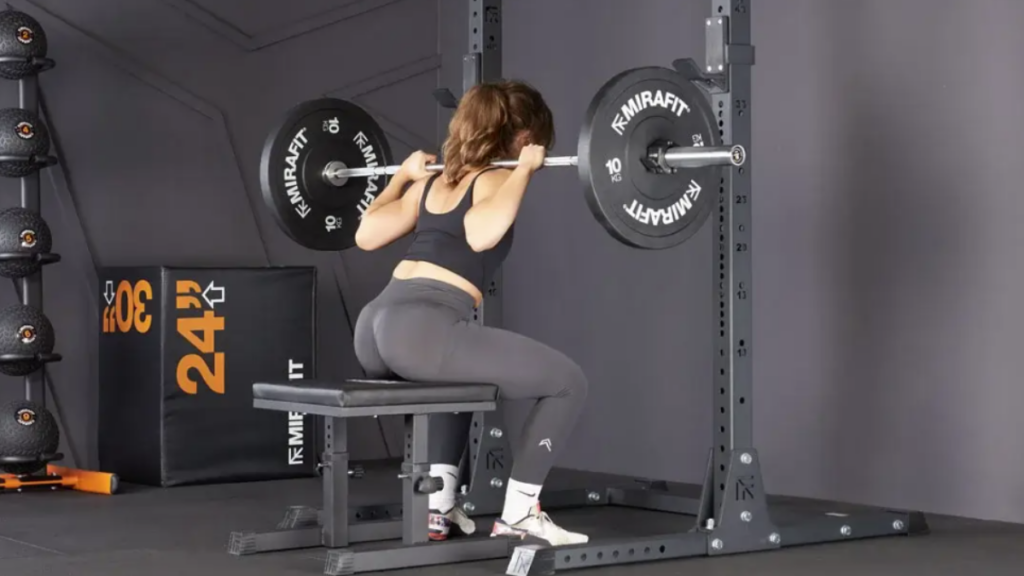
Often referred to as the absolute king of lower body exercises, the barbell back squat stands unmatched in its ability to build powerful legs and a strong core. Placing the bar across your upper back and squatting down to parallel forces your quadriceps, glutes, adductors, and spinal erectors to work in complete harmony.
Proper squat mechanics demand that you set your feet slightly wider than shoulder-width apart with your toes pointed slightly outward. As you lower your body, you must initiate the movement by hinging at the hips while simultaneously bending your knees, ensuring your knees track in line with your toes. Descending until your thighs are at least parallel to the floor ensures full recruitment of the gluteus maximus and deep quadriceps fibers.
How Fast Should You Be Able to Walk 1 Kilometer Based on Your Age?
From a biomechanical standpoint, the deep stretch experienced at the bottom of a squat creates tremendous stretch-induced hypertrophy. Research shows that training muscles at longer muscle lengths leads to greater structural remodeling and cross-sectional area expansion compared to partial repetitions.
| Muscle Group | Primary Role in the Squat | Hypertrophic Impact |
| Quadriceps | Prime mover during knee extension | Maximal growth across all four heads |
| Gluteus Maximus | Prime mover during hip extension | Exceptional mass build at deep stretch |
| Adductor Magnus | Major hip extender at bottom range | High inner thigh development |
| Erector Spinae | Isometric trunk stabilization | Dense back support and core strength |
The Barbell Conventional Deadlift
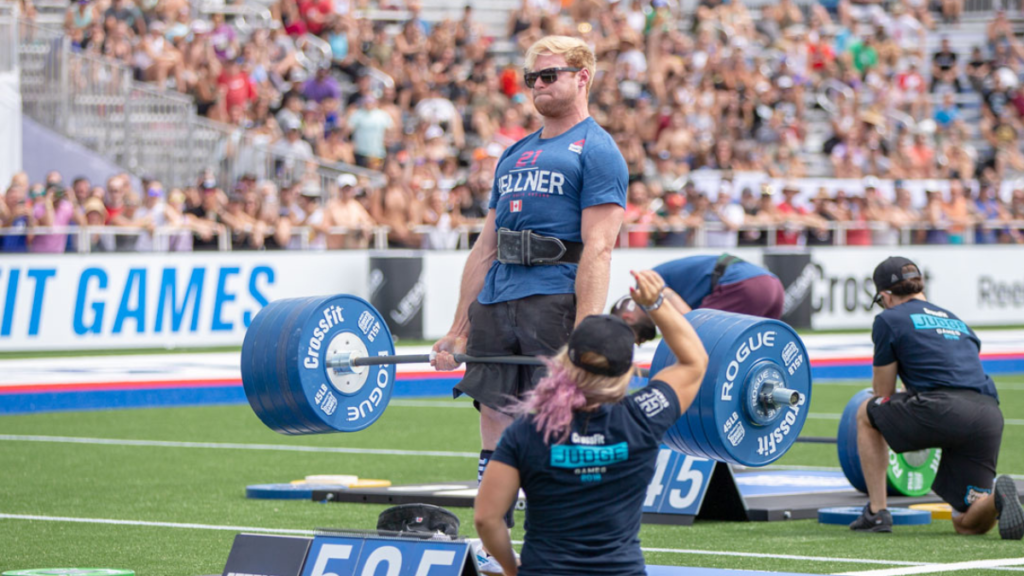
When it comes to building an impenetrable posterior chain from head to toe, the conventional barbell deadlift has no equal. This quintessential powerlifting movement requires you to lift a loaded barbell entirely from a dead stop on the floor, recruiting nearly every single muscle on the backside of your body simultaneously.
Executing the conventional deadlift safely requires stepping up to the bar so that your midfoot is centered directly underneath it. You hinge at your hips, take a shoulder-width double overhand or mixed grip, drop your hips until your shins gently touch the bar, and pull your chest proud while flattening your upper back. You then drive the floor away with your legs while locking your hips forward to finish standing tall.
The unparalleled value of the deadlift lies in its closed kinetic chain loading profile and massive systemic demand. Because the lift initiates from a dead stop with zero momentum, your muscles must generate immense initial force concentric contraction without the benefit of a pre-stretching phase. This intense mechanical demand triggers robust adaptations across the hamstrings, glutes, lats, traps, and erector spinae.
| Posterior Chain Muscle | Deadlift Function | Hypertrophic Benefit |
| Hamstrings | Hip extension and knee stabilization | Complete posterior thigh mass development |
| Erector Spinae | Isometric anti-flexion spine defense | Thick, armored lower and mid-back musculature |
| Trapezius | Scapular stabilization and support | Powerful upper back and neck structural density |
The Barbell Bench Press
To round out your full-body muscle building foundation, no upper body exercise matches the raw strength and mass-building potential of the flat barbell bench press. This classic exercise targets the pectoralis major, anterior deltoids, and triceps brachii in a single fluid compound movement.
To execute the bench press effectively, lie flat on the bench with your feet planted firmly on the floor. Grip the barbell slightly wider than shoulder-width apart, pull your shoulder blades down and together to create a solid base, and unrack the bar. Lower the barbell with control until it gently touches your mid-chest, keeping your elbows tucked at roughly a 45-degree angle from your torso, then press forcefully back up to the top lock-out position.
The bench press excels because it allows beginners to push substantial absolute weight compared to overhead presses or dumbbell variations. Pushing heavier weight with sound biomechanics maximizes motor unit recruitment in the chest and triceps, establishing the necessary stress required for upper body tissue remodeling.
| Upper Body Push Muscle | Bench Press Function | Hypertrophic Benefit |
| Pectoralis Major | Primary horizontal adductor | Massive chest thickness and width |
| Triceps Brachii | Primary elbow extender | Essential horseshoe triceps development |
| Anterior Deltoid | Shoulder flexor assistant | Front shoulder cap roundness and mass |
Mastering Progressive Overload for Beginners
Selecting the right exercises is only half the battle; how you execute and progress them over time determines your actual muscle gains. Beginners possess a unique training advantage known as novice adaptation, meaning their bodies are primed to build muscle and strength rapidly when provided with a consistent stimulus.
To maximize this phase, beginners should focus on progressive overload. Progressive overload simply means doing slightly more work over time. For a beginner, this is best accomplished by adding a small amount of weight to the barbell each week while maintaining strict form across moderate repetition ranges.
A classic, science-backed approach for beginners is working within the 5 to 8 repetition range for 3 to 4 working sets per compound exercise. Training in this window balances mechanical tension with sufficient training volume, providing an ideal stimulus for muscle hypertrophy without overloading joints or causing excessive central nervous system fatigue.
| Weekly Phase | Load Strategy | Target Reps | Primary Goal |
| Weeks 1 to 2 | Familiarization load | 3 sets of 8 reps | Technique and motor control mastery |
| Weeks 3 to 6 | Linear weight additions | 3 sets of 6 reps | Progressive mechanical tension buildup |
| Weeks 7 to 10 | Intensity progression | 4 sets of 5 reps | Maximize motor unit recruitment |
Key Takeaways
| Principle | Core Action for Beginners |
| Selection Focus | Master the Barbell Back Squat, Conventional Deadlift, and Bench Press |
| Growth Mechanism | Prioritize full range of motion to maximize mechanical tension |
| Progression Strategy | Apply linear progressive overload by adding weight consistently |
| Volume Allocation | Perform 3 to 4 sets of 5 to 8 repetitions per exercise per session |
References
Kubo, K, Ikebukuro, T and Yata, H 2019, ‘Effects of squat training with different depths on lower limb muscle volumes’, European Journal of Applied Physiology, vol. 119, no. 9, pp. 1933-1942.
Schoenfeld, BJ 2010, ‘The mechanisms of muscle hypertrophy and their application to resistance training’, Journal of Strength and Conditioning Research, vol. 24, no. 10, pp. 2857-2872.
Schoenfeld, BJ, Ogborn, D and Krieger, JW 2017, ‘Dose-response relationship between weekly resistance training volume and increases in muscle mass: A systematic review and meta-analysis’, Journal of Sports Sciences, vol. 35, no. 11, pp. 1073-1082.
Schoenfeld, BJ, Grgic, J, Ogborn, D and Krieger, JW 2016, ‘Strength and hypertrophy adjustments in response to resistance training volume: A systematic review and meta-analysis’, Sports Medicine, vol. 46, no. 11, pp. 1689-1697.
Wilk, M, Zajac, A and Tufano, JJ 2021, ‘The influence of movement tempo during resistance training on muscular strength and hypertrophy responses: A review’, Sports Medicine, vol. 51, no. 8, pp. 1629-1650.