

A strong back is one of the most important foundations of athletic performance, long term health, and physical appearance. Yet despite spending hours in the gym, many men still have surprisingly weak back muscles. They might have impressive chest development, decent arm size, and solid leg strength, but when it comes to pulling power, posture, and spinal support, significant weaknesses often emerge.
This matters more than many people realize. The muscles of the back are involved in nearly every major movement pattern. They stabilize the spine, support posture, transfer force between the upper and lower body, and help prevent injury. A strong back is also associated with better athletic performance, improved functional capacity, and reduced risk of musculoskeletal pain.


Research consistently shows that weakness in the muscles of the back and trunk is linked to lower physical function, increased injury risk, poorer posture, and chronic discomfort. At the same time, modern lifestyles and common training habits actively work against optimal back development.
The good news is that most causes of back weakness are completely fixable. Understanding why it happens is the first step.
What Does a Weak Back Actually Mean?
When people hear the phrase “weak back,” they often think about low back pain. While pain can sometimes be related to weakness, the two are not always the same thing.
A weak back generally refers to insufficient strength, endurance, or muscle mass in the muscles that support and move the spine, shoulders, and torso. These include the latissimus dorsi, trapezius, rhomboids, erector spinae, multifidus, quadratus lumborum, and several smaller stabilizing muscles.
A weak back can show up in many ways. You may struggle with pull ups, deadlifts, rows, carrying heavy objects, or maintaining good posture throughout the day. You might notice your shoulders rounding forward or your upper back fatiguing quickly during exercise.
The problem is often not obvious until performance suffers or discomfort develops.
Reason 1: Modern Life Keeps You Sitting Too Much
The human body evolved to move. Unfortunately, modern life encourages the opposite. Many men spend most of their day sitting at desks, driving cars, commuting, and relaxing in front of screens. This prolonged inactivity creates a perfect environment for back weakness to develop.

Sitting Reduces Muscle Activity
When sitting for long periods, many of the muscles responsible for maintaining posture become significantly less active. Over time, this reduced demand can contribute to muscular deconditioning.
Research has shown that sedentary behavior is associated with reduced muscular fitness, lower functional capacity, and poorer musculoskeletal health outcomes. The body adapts to whatever demands are placed upon it. If those demands are minimal, muscles gradually lose strength and endurance.
The back muscles are particularly vulnerable because they are designed to work continuously throughout the day to support posture and movement.
Poor Posture Creates Imbalances
Extended sitting often encourages a forward head position, rounded shoulders, and excessive flexion through the thoracic spine.
Over time, these positions can alter movement patterns and muscle activation. The muscles on the front of the body become relatively tight while important muscles in the upper and mid back become less effective at maintaining proper alignment.
This does not mean that poor posture automatically causes pain, but it can contribute to reduced muscular function and decreased mechanical efficiency during exercise and daily activities.
Inactivity Accelerates Muscle Loss
Muscle mass naturally declines with age, especially after the age of 30. However, inactivity accelerates this process significantly. Studies show that periods of reduced physical activity can rapidly decrease muscle protein synthesis and contribute to muscle loss. Men who spend most of their day inactive often lose strength and muscle mass at a faster rate than active individuals.

Because many back muscles are postural muscles designed for regular use, they are especially affected when movement levels drop.
How to Fix It
The solution is not simply standing instead of sitting. The real answer is increasing total movement throughout the day.
Regular walking, resistance training, mobility work, and movement breaks can help maintain muscular activity and prevent deconditioning. Even short periods of movement every hour can positively impact musculoskeletal health.
Strength training that specifically targets the back is particularly important because daily life rarely provides enough stimulus to build or maintain optimal back strength.
Reason 2: Most Men Train the Mirror Muscles More Than the Back
Walk into almost any commercial gym and you will see a familiar pattern. Bench presses are occupied. Dumbbell curls are popular. Chest machines are constantly in use. Meanwhile, rowing stations often sit empty.
Many men unknowingly create muscular imbalances because they prioritize muscles they can easily see in the mirror while neglecting those on the back side of the body.
The Push to Pull Imbalance
The upper body contains both pushing and pulling muscles. Pushing exercises include bench presses, push ups, dips, and overhead presses. Pulling exercises include rows, pull ups, chin ups, and face pulls.

Many recreational lifters perform significantly more pushing volume than pulling volume. Over time, this imbalance can lead to underdevelopment of key back muscles while the chest and front deltoids continue to grow.
Research examining resistance training programs suggests that balanced development of pushing and pulling musculature is important for shoulder health, posture, and performance.
The Back Is Harder to Feel
Another challenge is that many men struggle to establish a strong mind muscle connection with their back. Unlike biceps or chest muscles, the back cannot be directly observed during exercise. This makes it harder for beginners to recruit the target muscles effectively.
As a result, many lifters perform rows or pull downs primarily with their arms rather than their back muscles. The workout feels productive, but the intended muscles receive less stimulation than expected. Over months and years, this can limit back development.
Big Arms Often Hide a Weak Back
Many men assume they have a strong back because they can perform heavy biceps exercises. Unfortunately, arm strength and back strength are not the same thing.
The latissimus dorsi is the largest muscle of the upper body and plays a major role in pulling performance. If the lats, rhomboids, and trapezius are underdeveloped, pulling strength will eventually plateau regardless of how strong the arms become.
Research consistently demonstrates that progressive overload and adequate training volume are essential for muscular development. If the back receives less volume and attention than other muscle groups, it will lag behind.
How to Fix It
A simple rule is to perform at least as much pulling work as pushing work. Many coaches recommend an even higher ratio of pulling to pushing volume for individuals who spend long hours sitting or who have visibly rounded shoulders.
Exercises such as pull ups, chin ups, barbell rows, chest supported rows, single arm dumbbell rows, face pulls, and rear delt raises should become staples of a balanced training program. The goal is not merely improving appearance. Strong pulling muscles contribute to better shoulder function, improved posture, and greater overall strength.
Reason 3: Most Men Do Not Train the Back Through Its Full Function
Even men who train regularly often fail to develop a truly strong back because they misunderstand what the back actually does. The back is not a single muscle. It is a complex system responsible for multiple functions including spinal stabilization, shoulder movement, force transfer, and posture maintenance.
Training only one aspect of these functions leaves important weaknesses unaddressed.
Too Much Machine Work
Machines can be useful tools, especially for beginners or during rehabilitation. However, relying exclusively on machines may reduce the demands placed on stabilizing muscles compared to free weight exercises.
Research comparing resistance training modalities suggests that free weight exercises often require greater activation of stabilizing musculature. This is particularly relevant for the muscles that support the spine and shoulder girdle. A machine row may strengthen certain muscles, but it does not always challenge the body in the same way as a heavy dumbbell row or barbell row.
Neglecting the Posterior Chain
The posterior chain includes the erector spinae, glutes, hamstrings, and other muscles located on the back side of the body. These muscles work together to generate force, maintain posture, and stabilize the spine.
Many men train their upper back but neglect exercises that challenge the entire posterior chain. Deadlifts, Romanian deadlifts, good mornings, back extensions, kettlebell swings, and loaded carries all train important components of back strength that cannot be fully developed through seated rowing alone.
Research consistently identifies posterior chain strength as a key contributor to athletic performance and injury resilience.
Lack of Endurance Training
Strength is only part of the equation. Many back muscles are designed to work for extended periods. They need endurance as well as maximal force production. A person may be capable of lifting a heavy weight once yet still have poor muscular endurance.
Studies examining trunk musculature show that endurance capacity is strongly associated with spinal health and physical function. Muscles that fatigue quickly are less effective at providing stability during prolonged activities.
This is why exercises such as farmer carries, loaded carries, planks, bird dogs, and back extensions can be valuable additions to a training program.
How to Fix It
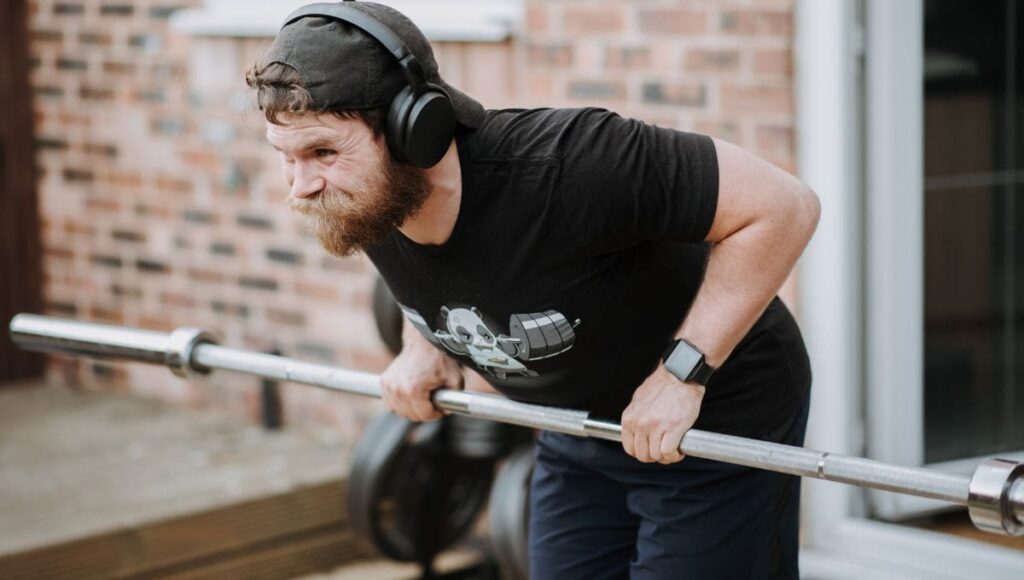
Train the back from multiple angles and through multiple functions. Include vertical pulling exercises such as pull ups and lat pull downs. Add horizontal pulling exercises such as rows. Incorporate hip hinge movements such as deadlifts and Romanian deadlifts. Develop endurance through carries and stability exercises.
This comprehensive approach creates a stronger, more resilient back than relying on a handful of machine exercises.
Signs Your Back Might Be Weaker Than You Think
Many men underestimate their weaknesses because daily life does not always expose them. Several warning signs may indicate inadequate back strength.
- If your shoulders consistently round forward, your upper back may lack sufficient strength and endurance.
- If you struggle with pull ups despite regular gym attendance, your pulling muscles may be underdeveloped.
- If your lower back fatigues quickly during standing, walking, or lifting, endurance deficits may exist.
- If your deadlift stalls despite improvements in other lifts, back weakness may be limiting performance.
- If you experience difficulty maintaining posture throughout the day, your postural muscles may require additional training.
These signs are not definitive diagnoses, but they often point toward areas that deserve attention.
5 Signs Your Body Is Aging Better Than Most
Why a Strong Back Matters for Longevity
Building a strong back is not only about athletic performance or aesthetics. Muscular strength is increasingly recognized as a powerful predictor of long term health outcomes. Research has shown that greater muscular strength is associated with lower rates of all cause mortality and improved physical function throughout life.
A strong back supports healthy movement patterns, helps preserve independence with aging, and improves the ability to perform everyday tasks. The benefits extend far beyond the gym.
Men who prioritize back strength often experience better posture, improved exercise performance, enhanced resilience, and greater confidence in physical activities.
The Bottom Line
Most men have a weaker back than they realize. The reasons are surprisingly simple. Modern life encourages prolonged sitting and inactivity. Many training programs overemphasize chest and arm development while neglecting pulling muscles. Even those who train their back often fail to challenge it through its full range of functions.
The result is a body that looks strong from the front but lacks the strength, endurance, and stability needed for optimal performance.
Fortunately, these weaknesses are highly trainable. Consistent movement, balanced resistance training, progressive overload, and comprehensive posterior chain development can dramatically improve back strength.
If you want to move better, lift more, reduce injury risk, and build a physique that is strong from every angle, start by asking a simple question: How strong is your back, really?
Key Takeaways
| Factor | How It Weakens the Back | What to Do |
|---|---|---|
| Excessive Sitting | Reduces muscle activity and promotes deconditioning | Move frequently, walk daily, strength train regularly |
| Training Imbalances | Too much pushing and not enough pulling | Match or exceed pushing volume with pulling exercises |
| Incomplete Back Training | Neglects spinal stabilizers and posterior chain muscles | Combine rows, pull ups, deadlifts, carries, and endurance work |
| Poor Muscular Endurance | Postural muscles fatigue quickly | Include carries, planks, back extensions, and stability exercises |
| Low Activity Levels | Accelerates muscle loss and weakness | Increase overall daily movement and resistance training |
References
• Andersen, L.L., Andersen, C.H., Mortensen, O.S., Poulsen, O.M., Bjornlund, I.B.T. and Zebis, M.K., 2010. Muscle activation and perceived loading during rehabilitation exercises: comparison of dumbbells and elastic resistance. Physical Therapy in Sport, 11(1), pp.13-19.
• Borde, R., Hortobagyi, T. and Granacher, U., 2015. Dose response relationships of resistance training in healthy old adults. Sports Medicine, 45(12), pp.1693-1720.
• Chodzko-Zajko, W.J., Proctor, D.N., Fiatarone Singh, M.A., Minson, C.T., Nigg, C.R., Salem, G.J. and Skinner, J.S., 2009. Exercise and physical activity for older adults. Medicine & Science in Sports & Exercise, 41(7), pp.1510-1530.
• Granacher, U., Gollhofer, A., Hortobagyi, T., Kressig, R.W. and Muehlbauer, T., 2013. The importance of trunk muscle strength for balance, functional performance, and fall prevention in older adults. Sports Medicine, 43(7), pp.627-641.
• Hides, J.A., Stanton, W.R., McMahon, S., Sims, K. and Richardson, C.A., 2008. Effect of stabilization training on multifidus muscle cross sectional area among young elite cricketers with low back pain. Journal of Orthopaedic and Sports Physical Therapy, 38(3), pp.101-108.
• Janssen, I., Heymsfield, S.B., Ross, R., Lowik, M.R. and Kemper, H.C., 2002. Skeletal muscle mass and distribution in relation to age in men and women. Journal of Applied Physiology, 89(1), pp.81-88.
• McGill, S.M., 2007. Low back disorders: evidence based prevention and rehabilitation. Human Kinetics, pp.1-312.
• Nelson, M.E., Rejeski, W.J., Blair, S.N., Duncan, P.W., Judge, J.O., King, A.C., Macera, C.A. and Castaneda-Sceppa, C., 2007. Physical activity and public health in older adults. Medicine & Science in Sports & Exercise, 39(8), pp.1435-1445.
• Peterson, M.D., Rhea, M.R. and Alvar, B.A., 2004. Maximizing strength development in athletes. Journal of Strength and Conditioning Research, 18(2), pp.377-382.