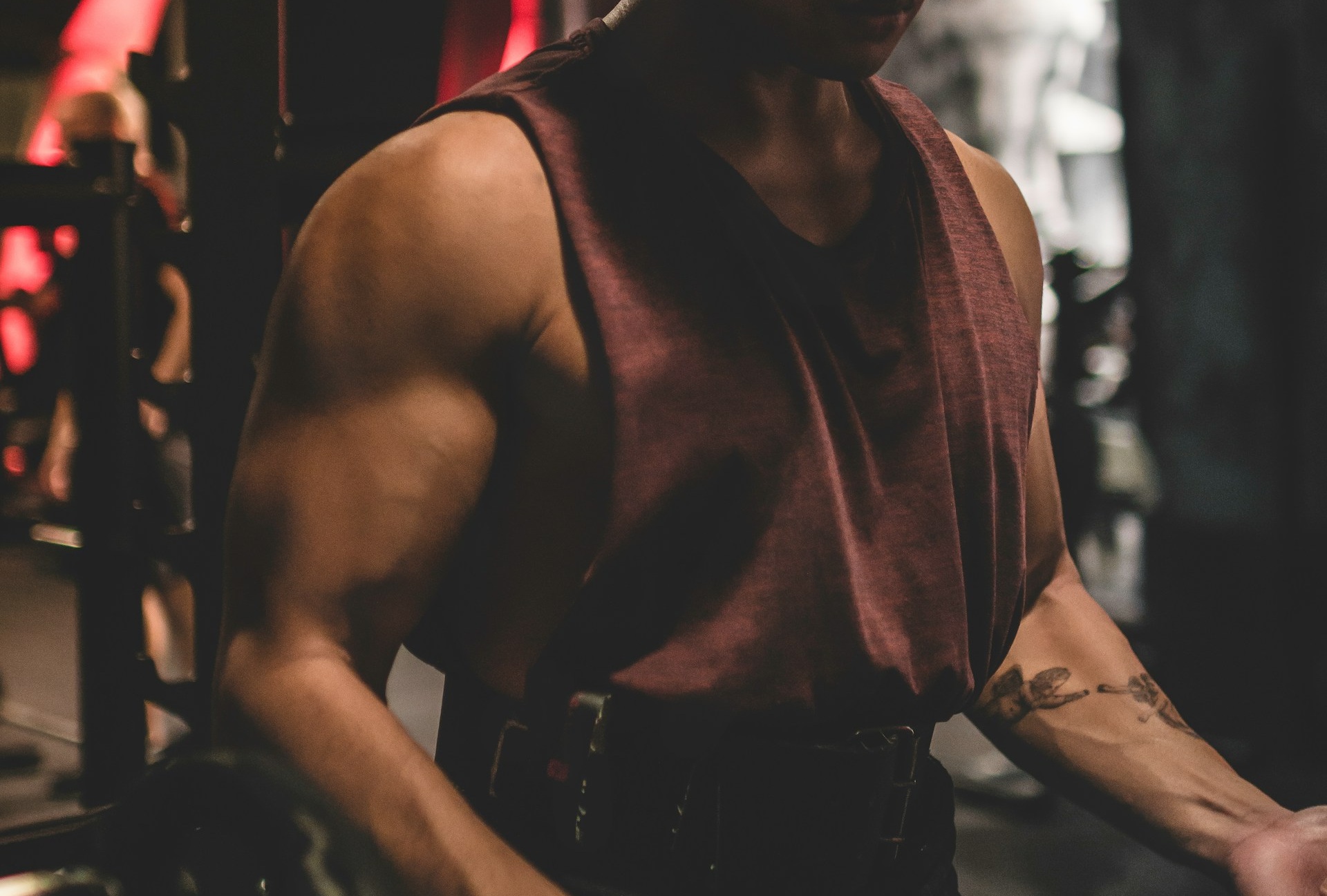


Building wider biceps is not simply about performing more standard curls. The visible width of your upper arm comes from more than the biceps brachii, the two headed muscle on the front of the arm. The brachialis sits underneath it, while the brachioradialis runs along the upper forearm. Adding size to these elbow flexors can make the arm look thicker from the front and side, even when your arm is relaxed.
The biceps brachii is strongly involved when you curl with your palms facing upward. It also helps rotate the forearm into that palm up position. The brachialis flexes the elbow regardless of whether the palm faces up, down, or inward. That makes curls performed with a neutral or pronated grip especially useful additions when your goal is a broader looking upper arm.


Free weights allow you to train those patterns with dumbbells, a barbell, or an EZ bar while adjusting your grip, arm path, and range of motion. They are not magic exercises, and no curl can change the shape you inherited from your parents. However, consistent resistance training can increase the size of the elbow flexors, and using more than one curl variation may help provide a more complete growth stimulus.
Here are five of the best free weight exercises for wider biceps, plus a practical way to program them.
What Makes Biceps Look Wider?
The biceps brachii has a long head and a short head, but arm width is also influenced by the muscles beneath and beside it. The brachialis lies deep to the biceps brachii and can push it outward as it grows. The brachioradialis contributes to the fullness of the upper forearm near the elbow and can make the transition from upper arm to forearm look more powerful.
This is why a wider biceps goal should not lead to an endless diet of supinated dumbbell curls. Standard curls remain useful, but a complete plan should also include neutral grip and palms down curling patterns. These positions train elbow flexion while changing the contribution of the muscles that assist the movement.
Research comparing curl variations has found that changing the exercise can alter muscle activity in the biceps brachii and brachioradialis. A recent eight week trial also found that preacher and incline curls produced different regional growth outcomes in the elbow flexors. This does not mean that one variation is universally best. It means exercise selection can be a sensible tool when you want to develop the arm from more than one angle.
1. Dumbbell Hammer Curl
The dumbbell hammer curl is the most important starting exercise for many lifters who want wider looking biceps. Holding the dumbbells with palms facing each other creates a neutral grip. You still train the biceps brachii, but the brachialis and brachioradialis have a major role in flexing the elbow.
Stand tall with a dumbbell held at each side. Keep your wrists straight and your shoulders still as you curl the weights upward. Stop when you have reached a hard squeeze without allowing the elbows to drift far forward. Lower under control until the elbows are fully extended, provided the position is comfortable for your joints.
The key is to use a load you can control. Swinging the dumbbells turns the exercise into a full body movement and reduces the useful work performed by the elbow flexors. A controlled lowering phase also helps you maintain tension through the movement rather than simply dropping the weights back to the starting position.
Hammer curls are easy to load progressively, and dumbbells let each arm work independently. This can be helpful if one side is stronger or if you tend to twist a barbell toward your dominant arm during regular curls.
How to Use It
Perform two to four sets of eight to 15 repetitions. Start with the dumbbells at your sides, keep your palms facing inward throughout, and finish most sets with roughly one to three repetitions left before technical failure.
2. Cross Body Hammer Curl
The cross body hammer curl uses the same neutral grip principle as a normal hammer curl, but changes the path of the dumbbell. Instead of curling both weights straight upward, curl one dumbbell across your torso toward the opposite side of your chest or shoulder.
Stand with the dumbbells at your sides and curl the right dumbbell diagonally toward the left side of your upper chest. Lower it under control, then repeat with the left arm. Keep the working elbow near the body and avoid rotating the shoulder excessively to cheat the weight upward.
This exercise is valuable because it allows many lifters to use a slightly heavier dumbbell than they can manage in a strict standing curl. The diagonal path can feel natural for the elbow flexors, and the unilateral format makes it easier to focus on one arm at a time.
Do not treat the heavier load as permission to use momentum. The aim is still elbow flexion. If your torso twists sharply, your shoulder rolls forward, or your elbow travels far behind the body, reduce the load and regain control.
How to Use It
Perform two to three sets of 10 to 15 repetitions per arm. Use a smooth rhythm and allow the arm to straighten fully at the bottom before beginning the next repetition.
3. EZ Bar Reverse Curl
The EZ bar reverse curl is one of the most direct ways to train the elbow flexors with a palms down grip. Pronating the forearm reduces the mechanical advantage of the biceps brachii for forearm supination, so the brachialis and brachioradialis become especially important contributors to the curl.
Hold an EZ bar with an overhand grip using the angled sections that feel most comfortable for your wrists. Stand upright with the bar in front of your thighs. Curl the bar upward by bending the elbows, then lower it steadily until your arms are straight.
An EZ bar is often more comfortable than a straight bar for reverse curls because the angled grip reduces wrist strain for many lifters. It also allows you to use both arms together and build strength with a stable, repeatable movement pattern.
Reverse curls should usually be lighter than conventional curls. The overhand grip can expose weak links in the forearms and elbows, especially if you are new to direct arm work. Begin conservatively and earn load increases through clean repetitions.
How to Use It
Perform two to four sets of eight to 12 repetitions. Keep your elbows close to your ribs, use a complete comfortable range of motion, and avoid leaning backward as the bar becomes challenging.
4. Zottman Curl
The Zottman curl combines two useful grip positions in one repetition. You curl the dumbbells upward with your palms facing up, rotate them at the top so the palms face down, then lower slowly using a reverse curl position.
Start with dumbbells at your sides and palms facing forward. Curl both dumbbells upward in the same way you would perform a regular supinated curl. At the top, rotate the dumbbells until your palms face down. Lower slowly to the bottom, then rotate the hands back to the starting position before beginning another repetition.
The upward phase trains the biceps brachii in a familiar curl pattern, while the lowering phase places the elbow flexors under tension with the forearms pronated. The exercise therefore combines a conventional biceps curl with a reverse curl in one movement.
The rotation must be controlled. Do not spin the dumbbells quickly or allow the wrists to bend back. Use a manageable load, especially at first, because the reverse curl lowering phase can challenge the forearms and elbow flexors more than expected.
How to Use It
Perform two to three sets of eight to 12 repetitions. Use a controlled three second lowering phase, and select a weight that allows your wrist position to remain stable throughout every repetition.
5. EZ Bar Reverse Preacher Curl
The reverse preacher curl gives you the palms down benefits of a reverse curl while using a bench to reduce momentum. The pad supports the upper arms, making it harder to swing the torso or use the shoulders to move the bar.
Set the preacher bench so that your armpits sit comfortably near the top of the pad. Hold an EZ bar with an overhand grip and begin with your arms nearly straight, without forcing the elbow into an uncomfortable locked position. Curl the bar upward until your forearms are close to vertical, then lower it slowly and with control.
The preacher position can make light weights feel difficult because it limits cheating and creates a demanding bottom position. That makes it an excellent choice for lifters who struggle to feel reverse curls in the target muscles when standing.
Do not rush the bottom of the movement. The elbow is relatively vulnerable when the arm is straight and the load is pulling downward. Lower with control, avoid bouncing off the pad, and stop short of any painful range.
Preacher and incline curl research suggests that different arm positions can lead to different regional changes in the elbow flexors over time. That is a useful reason to include a supported curl alongside standing curls, rather than repeating only one exercise for months.
How to Use It
Perform two to three sets of 10 to 15 repetitions. Keep the upper arms in contact with the pad, move smoothly, and use a lighter load than you would for standing reverse curls.
How to Program These Exercises for Growth
You do not need to perform all five exercises in every workout. That approach can create unnecessary fatigue in the wrists, elbows, and forearms. Instead, select two or three movements per session and train biceps directly one or two times each week.
A simple session could start with hammer curls for three sets of eight to 12 repetitions. Follow that with EZ bar reverse curls for three sets of 10 to 12 repetitions, then finish with cross body hammer curls or Zottman curls for two sets of 12 to 15 repetitions. If you train arms twice per week, use the reverse preacher curl in the second session.

Multiple sets performed consistently are an effective foundation for hypertrophy. Current evidence also suggests that muscle growth can occur across a range of loads when the sets are demanding enough. You do not need to use maximal weights for curls. Moderate and lighter loads can work well when you use good technique and take the set reasonably close to failure.
A useful target is to stop most sets when you believe you could complete one to three more clean repetitions. This provides a hard stimulus while helping you protect technique. Research suggests that hypertrophy tends to improve as sets are performed closer to failure, although training to absolute failure on every set is not required.
Use full, comfortable ranges of motion rather than cutting repetitions short to use more weight. Full range resistance training has generally produced better strength outcomes than partial range training, while the exact hypertrophy result can depend on the muscle and exercise. In practical terms, extend the elbow under control, curl through the range you can own, and do not sacrifice position simply to add plates.
Progressive overload still matters. When you can reach the top of your chosen repetition range for every set with clean technique, make a small load increase at the next workout. If the weight jump is too large, add repetitions first, slow the lowering phase, or add one additional set.
Common Mistakes That Limit Width Gains
The first mistake is relying entirely on regular palms up curls. They can build impressive biceps, but they do not give special attention to the neutral and pronated patterns that make hammer and reverse curls useful for a wider arm focus.
3 Best Exercises to Protect Your Lower Back if You Sit Too Much
The second is choosing weights that force you to swing. A small amount of natural body movement may happen on difficult sets, but repeated leaning and hip drive reduce the tension that your elbow flexors must produce. If you cannot control the lowering phase, the dumbbell or bar is too heavy for the purpose of the exercise.
The third mistake is neglecting recovery. Your biceps and forearms also work during pulling exercises such as rows, pull ups, chin ups, and pulldowns. Direct curl volume must fit around that work. More is not automatically better if your elbows are constantly sore or your performance is falling.
Finally, avoid treating a pump as proof of growth. Temporary swelling after training can make the arm look larger for a short time, but meaningful hypertrophy comes from repeated productive sessions, sufficient nutrition, recovery, and progression over many weeks.
Build a Broader Looking Upper Arm
For wider biceps, prioritize exercises that train more than the biceps brachii alone. Hammer curls, cross body hammer curls, reverse curls, Zottman curls, and reverse preacher curls all use elbow flexion while giving the brachialis and brachioradialis meaningful work.
Train them consistently, use controlled full range repetitions, and gradually make the exercise more challenging. The goal is not to chase novelty or destroy your elbows with excessive volume. It is to build stronger, larger elbow flexors over time so your upper arms look thicker from every angle.
Key Takeaways
| Focus | What to do | Why it matters |
|---|---|---|
| Build arm width | Include neutral grip and palms down curls | These patterns train the brachialis and brachioradialis alongside the biceps brachii |
| Main exercise | Start with dumbbell hammer curls | They are simple to progress and use a neutral grip |
| Add variety | Rotate reverse curls, Zottman curls, and reverse preacher curls | Different grips and arm positions can provide a broader training stimulus |
| Train hard | End most sets with one to three repetitions in reserve | Sets performed closer to failure tend to support greater hypertrophy |
| Use good technique | Control the lowering phase and avoid swinging | Better execution keeps the elbow flexors under tension and reduces unnecessary joint stress |
| Progress over time | Add repetitions or small amounts of load when ready | Consistent progressive overload drives long term adaptation |
References
- Currier, B.S., McLeod, J.C., Banfield, L., Beyene, J., Welton, N.J., D’Souza, A., Keogh, J.A., Lin, L., Coletta, G., Yang, A., Colenso-Semple, L., Lau, K.J., Verboom, A. and Phillips, S.M. (2023) ‘Resistance training prescription for muscle strength and hypertrophy in healthy adults: a systematic review and Bayesian network meta-analysis’, British Journal of Sports Medicine, 57(18), pp. 1211–1220.
- Kassiano, W., Costa, B., Kunevaliki, G., Lisboa, F., Stavinski, N., Prado, A., Tricoli, I., Francsuel, J., Lima, L., Nunes, J.P., Ribeiro, A.S. and Cyrino, E.S. (2025) ‘Distinct muscle growth and strength adaptations after preacher and incline biceps curls’, International Journal of Sports Medicine, 46(5), pp. 334–343.
- Marchetti, P.H., Cook, K., Neely, R.C., Martinez, V.G., Lhanre, L., Awakimian, S., Marchetti, P.N. and Jalilvand, F. (2020) ‘Seated row and biceps curl exercises present similar acute responses on muscle thickness, arm circumference, and peak force for elbow flexors after a resistance training session in recreationally trained subjects’, Journal of Sports Medicine and Physical Fitness, 60(11), pp. 1415–1422.
- Pallarés, J.G., Hernández-Belmonte, A., Martínez-Cava, A., Vetrovsky, T., Steffl, M. and Courel-Ibáñez, J. (2021) ‘Effects of range of motion on resistance training adaptations: a systematic review and meta-analysis’, Scandinavian Journal of Medicine and Science in Sports, 31(10), pp. 1866–1881.
- Robinson, Z.P., Pelland, J.C., Remmert, J.F., Refalo, M.C., Jukic, I., Steele, J. and Zourdos, M.C. (2024) ‘Exploring the dose response relationship between estimated resistance training proximity to failure, strength gain, and muscle hypertrophy: a series of meta regressions’, Sports Medicine, 54(9), pp. 2209–2231.
- Yamamoto, M. and Kawakami, Y. (2018) ‘Differences in electromyographic activity of biceps brachii and brachioradialis while performing three variants of curl’, Journal of Strength and Conditioning Research, 32(10), pp. 2797–2803.