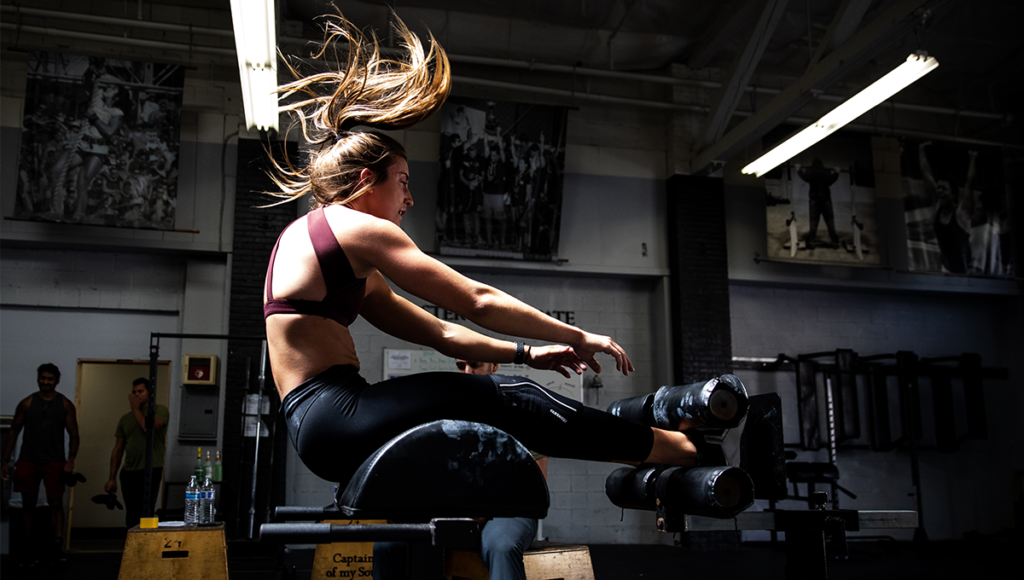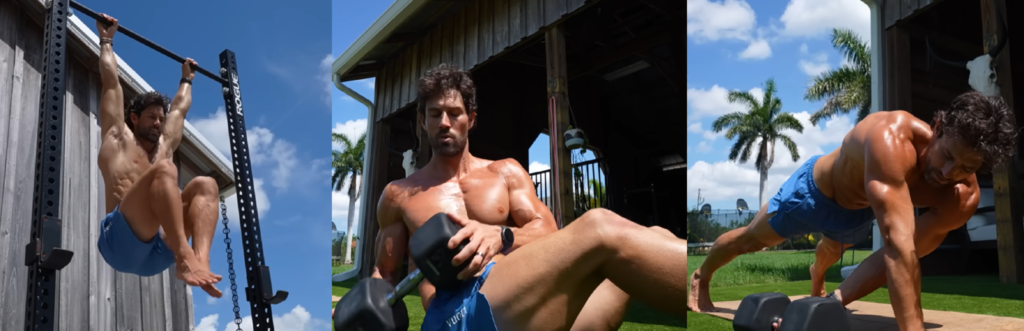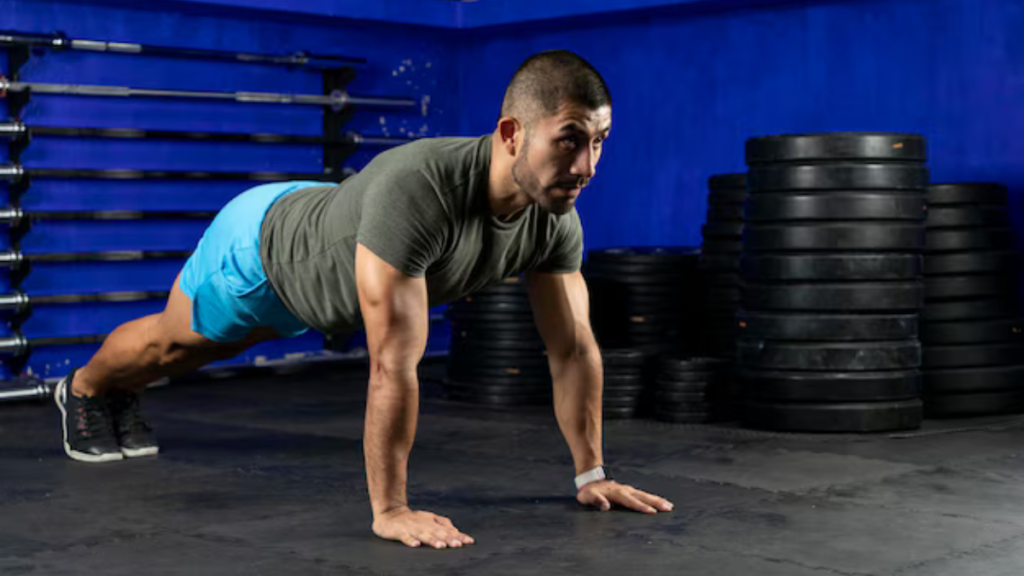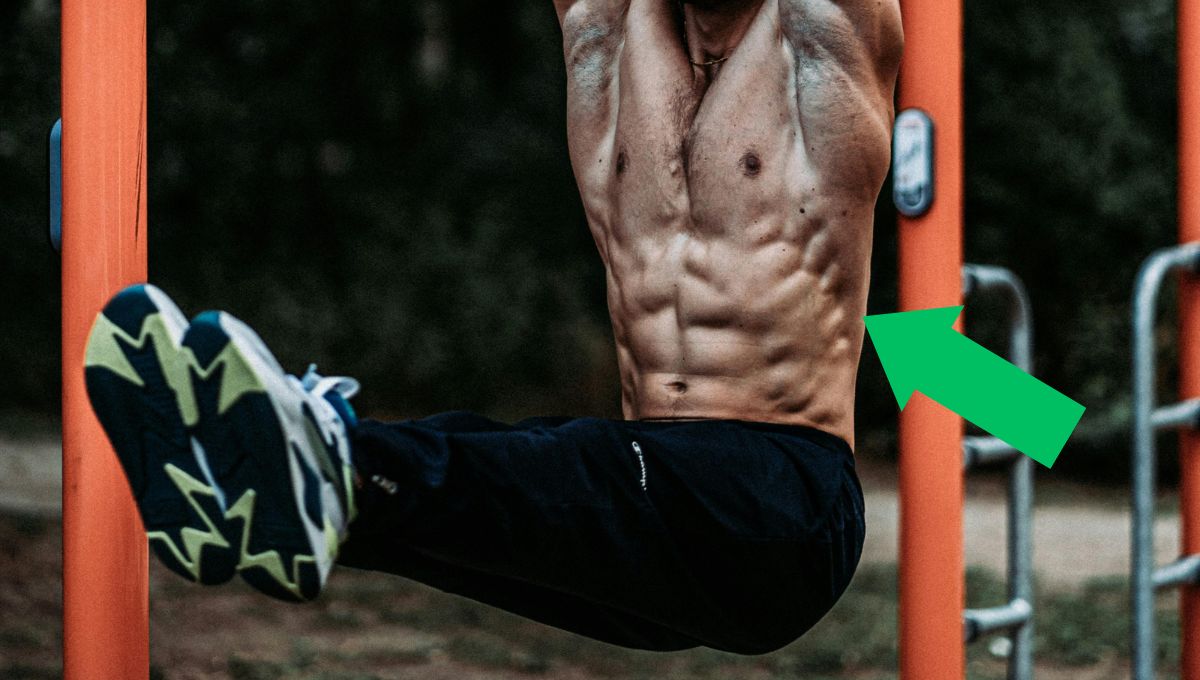


A deep V cut at the waist is one of the most sought-after physique traits in fitness. It signals low body fat, strong core muscles, and an athletic build. While genetics and overall leanness play a role, well-developed obliques are essential for creating that sharp taper from ribs to hips.
The obliques are often misunderstood. Many people either ignore them completely or train them incorrectly, fearing a “blocky” waist. Science tells a different story.


When trained intelligently, the obliques enhance trunk stability, improve force transfer in sport, protect the spine, and visually sharpen the midsection without necessarily increasing waist circumference.
This article breaks down exactly how to train your obliques for a shredded V cut look using five highly effective exercises. Every claim is grounded in research, and each movement is explained in a way that is practical, safe, and easy to apply to your training.
Understanding the Obliques and the V Cut

What Are the Obliques?
The abdominal wall consists of several layers of muscle. The obliques are divided into two main groups: the external obliques and the internal obliques.
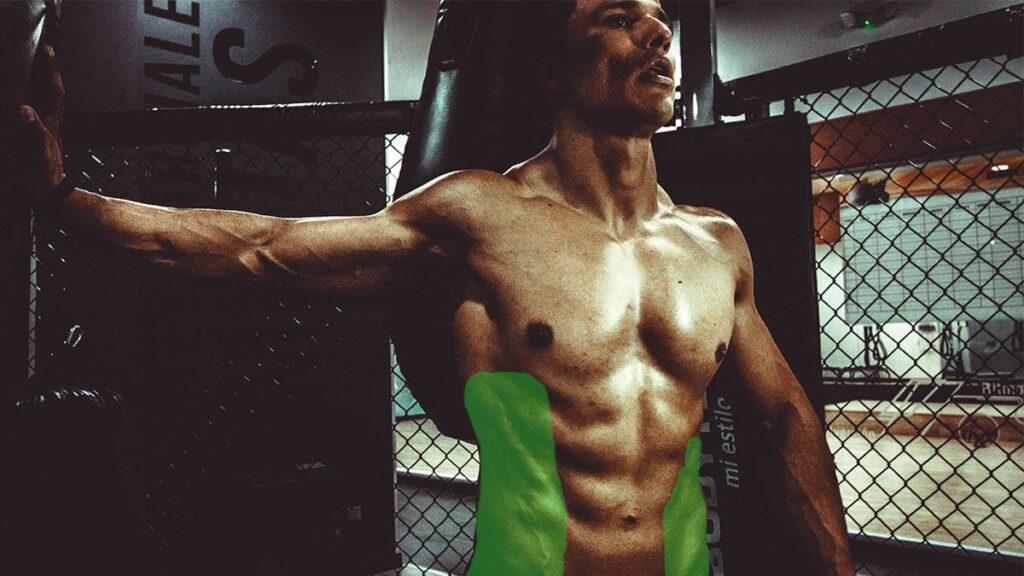
The external obliques are the most superficial muscles on the sides of the abdomen. Their fibers run diagonally downward and inward, similar to placing your hands in your pockets. The internal obliques lie beneath them, with fibers running diagonally upward and inward.
Together, these muscles are responsible for trunk rotation, lateral flexion, and resisting unwanted movement. They also play a critical role in stabilizing the pelvis and spine during heavy lifts, running, and athletic movements.
Electromyography (EMG) studies consistently show high oblique activation during rotational and anti-rotational tasks, particularly when the torso must resist external forces rather than simply flex forward (McGill, 2010).
What Creates the V Cut Look?
The V cut appearance is primarily visual. It is created by the contrast between wide shoulders and lats above, and a narrow, lean waist below. The obliques frame this transition.
Research confirms that localized fat loss is not possible. Fat loss occurs systemically, not in specific areas (Katch et al., 1984). However, increasing muscle thickness and definition in the obliques can make the waist look sharper once body fat is sufficiently low.
In addition, well-trained obliques improve posture by supporting the lumbar spine and pelvis. Better posture alone can make the waist appear tighter and more athletic, an effect supported by biomechanical research on spinal alignment (Neumann, 2017).
Do Oblique Exercises Make Your Waist Wider?
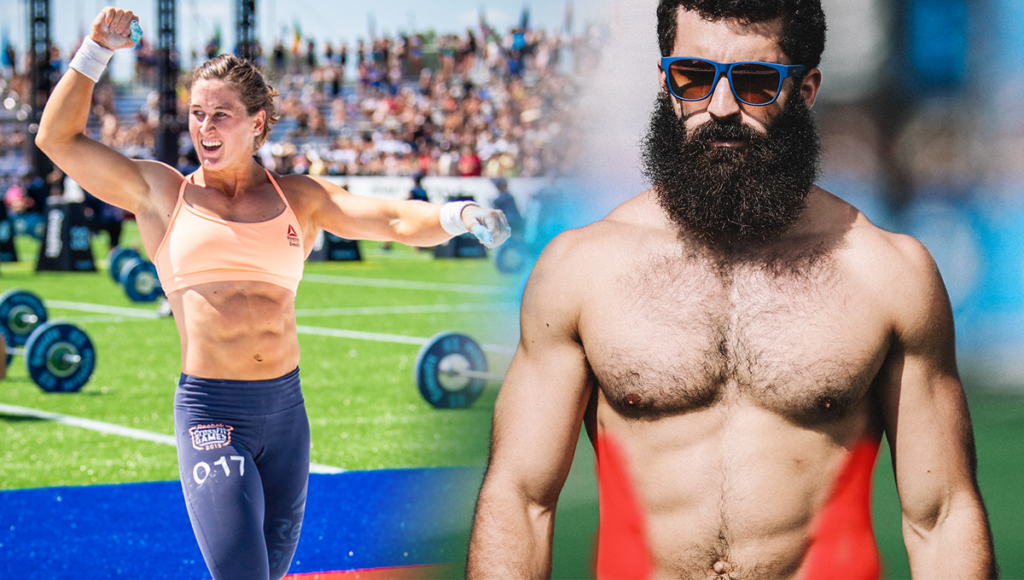
This is one of the most persistent myths in fitness.
Muscle hypertrophy depends on training volume, load, proximity to failure, and genetics. The obliques are endurance-oriented muscles with a high proportion of type I fibers, meaning they are less prone to excessive size increases compared to muscles like the quadriceps or glutes (Staron et al., 2000).
Studies on resistance training of the trunk show modest increases in muscle thickness, primarily associated with strength and stability improvements rather than large hypertrophic changes (Akuthota & Nadler, 2004).
In practical terms, oblique training enhances definition and tightness far more than it increases waist circumference, especially when combined with overall fat loss.
Principles for Training Obliques for Aesthetics and Performance
Focus on Anti-Movement, Not Just Movement
Traditional side bends and twists involve moving the torso through large ranges of motion. While these have value, research shows that the obliques are most active when resisting rotation, extension, or lateral flexion (McGill, 2010).
Anti-rotation and anti-lateral flexion exercises place high demands on the obliques without excessive spinal motion, making them ideal for both aesthetics and injury prevention.
Progressive Overload Still Matters
Like any muscle, the obliques adapt to training stress. Gradually increasing load, time under tension, or exercise difficulty is necessary to stimulate strength and muscular development.
However, extremely high volumes are unnecessary. Studies suggest that core muscles respond well to moderate volumes performed with high intent and excellent technique (Reed et al., 2012).
Breathing and Bracing Are Critical
Proper breathing enhances oblique engagement. Forced exhalation increases activation of the internal obliques and transversus abdominis, contributing to trunk stiffness (Hodges & Gandevia, 2000).
Each exercise below emphasizes controlled breathing and bracing to maximize effectiveness.
Exercise 1: Hanging Windshield Wipers
Why This Exercise Works
Hanging windshield wipers combine hip flexion, rotation, and anti-extension. EMG research shows that hanging leg raise variations produce significantly higher oblique activation than floor-based movements due to increased lever length and instability (Escamilla et al., 2010).
The rotational component forces both internal and external obliques to work dynamically and isometrically, making this one of the most demanding oblique exercises available.
How to Perform It Correctly
Hang from a pull-up bar with a firm grip and active shoulders. Raise your legs until they are perpendicular to your torso, keeping them straight or slightly bent depending on strength. Slowly rotate your legs to one side, keeping your torso as still as possible. Return to center, then rotate to the other side.
The movement should be slow and controlled. Swinging reduces muscle activation and increases injury risk.
Sets and Reps
Two to four sets of 6–12 controlled repetitions per side is sufficient for most trained individuals.
Common Mistakes
Using momentum, failing to control the descent, and letting the shoulders disengage are the most common errors. These reduce oblique activation and place unnecessary stress on the spine.
Exercise 2: Cable Woodchopper (High to Low)
Why This Exercise Works
The cable woodchopper mimics natural rotational patterns used in sports such as throwing and striking. Research shows that rotational resistance training significantly activates the external obliques, particularly when force is applied diagonally across the body (Anderson et al., 2005).
The constant tension provided by cables keeps the obliques engaged throughout the full range of motion.
How to Perform It Correctly
Set a cable handle at shoulder height or slightly above. Stand sideways to the machine with feet shoulder-width apart. Grasp the handle with both hands and pull it diagonally down and across your body toward the opposite hip.
Rotate through the torso and hips together, maintaining a neutral spine. Control the return to the starting position.
Sets and Reps
Three to four sets of 10–15 repetitions per side works well for hypertrophy and endurance.
Common Mistakes
Over-rotating the lower back, locking the hips, or using excessive weight reduces effectiveness. The movement should feel smooth and powerful, not forced.
Exercise 3: Side Plank with Hip Abduction
Why This Exercise Works
The side plank is one of the most studied core exercises in scientific literature. EMG data consistently shows high activation of the internal and external obliques during side plank variations (Ekstrom et al., 2007).
Adding hip abduction increases the demand on the lateral core by destabilizing the pelvis, forcing the obliques to work harder to maintain alignment.
How to Perform It Correctly
Lie on your side with your elbow directly under your shoulder. Stack your feet and lift your hips off the ground, forming a straight line from head to feet. While maintaining the plank, slowly raise the top leg upward and then lower it under control.
Keep your neck neutral and avoid rotating forward or backward.
Sets and Time
Hold for 20–45 seconds per side, performing 2–4 sets.
Common Mistakes
Letting the hips sag, shrugging the shoulder, or rushing the leg movement are common issues. Quality matters more than duration.
Exercise 4: Single-Arm Farmer’s Carry
Why This Exercise Works
Loaded carries are highly effective for trunk stability. Carrying weight on one side creates a lateral flexion torque that the obliques must resist. Studies show significant activation of the obliques and quadratus lumborum during asymmetrical carries (Anderson et al., 2006).
This exercise also has strong transfer to real-world and athletic tasks.
How to Perform It Correctly
Hold a heavy dumbbell or kettlebell in one hand. Stand tall with ribs down and core braced. Walk slowly and steadily for a set distance or time, resisting any leaning to the weighted side.
Switch hands after each set.
Sets and Distance
Three to five carries of 20–40 meters per side are effective.
Common Mistakes
Using weights that are too light, leaning excessively, or walking too fast reduces oblique engagement.
Exercise 5: Decline Russian Twist with Load
Why This Exercise Works
The decline Russian twist increases the lever arm and torque on the trunk, significantly raising oblique activation compared to flat variations. EMG studies confirm that rotational core exercises performed with load increase external oblique engagement when spinal alignment is maintained (Escamilla et al., 2010).
When performed under control, this exercise builds rotational strength without excessive spinal stress.
How to Perform It Correctly
Sit on a decline bench or elevated surface with feet anchored. Lean back slightly to engage the core. Hold a weight close to the chest and rotate the torso from side to side in a controlled manner.
Exhale as you rotate, keeping the movement smooth and deliberate.
Sets and Reps
Three sets of 12–20 total repetitions work well.
Common Mistakes
Rounding the lower back, moving too fast, or using excessive weight are the most frequent problems.
Nutrition and Body Fat: The Final Piece of the V Cut
Even the best oblique training will not reveal a V cut without sufficiently low body fat. Research consistently shows that visible abdominal definition in men typically requires body fat levels below approximately 12 percent, though this varies individually (Heymsfield et al., 2015).
A moderate calorie deficit, adequate protein intake, and resistance training are the most evidence-supported approach to fat loss while preserving muscle (Phillips & Van Loon, 2011).
How Often Should You Train Obliques?
The obliques are involved in many compound lifts, including squats, deadlifts, presses, and carries. Direct training two to three times per week is sufficient for most people.
Studies on core training frequency suggest that moderate frequency with proper recovery leads to better strength and endurance gains than daily high-volume work (Reed et al., 2012).
Putting It All Together
A shredded V cut is not built with endless crunches or fear-based training. It is the result of intelligent exercise selection, progressive loading, proper nutrition, and patience.
By focusing on scientifically supported oblique exercises that emphasize stability, rotation, and control, you can build a strong, athletic core that enhances both performance and aesthetics.
Train smart, stay consistent, and let the results follow.
References
- Akuthota, V. and Nadler, S.F. (2004) Core strengthening. Archives of Physical Medicine and Rehabilitation, 85(3), pp. 86–92.
- Anderson, K., Behm, D.G. and Buskies, W. (2005) Trunk muscle activity increases with unstable squat movements. Journal of Strength and Conditioning Research, 19(3), pp. 615–622.
- Anderson, K., Behm, D.G. and Buskies, W. (2006) Core muscle activation during asymmetrical loaded carries. Journal of Sports Science and Medicine, 5(3), pp. 448–455.
- Ekstrom, R.A., Donatelli, R.A. and Carp, K.C. (2007) Electromyographic analysis of core trunk, hip, and thigh muscles during nine rehabilitation exercises. Journal of Orthopaedic and Sports Physical Therapy, 37(12), pp. 754–762.
- Escamilla, R.F., Lewis, C., Bell, D., Bramblet, G., Daffron, J., Lambert, S., Pecson, A. and Imamura, R. (2010) Core muscle activation during Swiss ball and traditional abdominal exercises. Journal of Orthopaedic and Sports Physical Therapy, 40(5), pp. 265–276.
- Heymsfield, S.B., Gonzalez, M.C., Shen, W., Redman, L. and Thomas, D. (2015) Weight loss composition is one-fourth fat-free mass: a critical review and critique of this widely cited rule. Obesity Reviews, 15(4), pp. 310–321.
- Hodges, P.W. and Gandevia, S.C. (2000) Activation of the human diaphragm during a repetitive postural task. Journal of Physiology, 522(1), pp. 165–175.