

Calisthenics has exploded in popularity over the last decade. From muscle-ups in public parks to minimalist home workouts, more athletes are turning to bodyweight training to build strength, muscle, and resilience.
Yet despite its growth, many lifters still misunderstand what calisthenics can and cannot do. Some dismiss it as “just cardio.” Others believe it cannot build serious muscle. And many assume it is only for beginners or lightweight athletes.


These ideas persist because traditional gym culture has long centered around barbells, dumbbells, and machines. But when we examine the scientific evidence on resistance training, muscular adaptation, and progressive overload, we see that many of the common misconceptions about calisthenics simply do not hold up.
This article will break down three of the most common misconceptions about calisthenics and examine what the research actually says.
Misconception #1: Calisthenics Cannot Build Serious Muscle
One of the most common misconceptions about calisthenics is that bodyweight training cannot produce significant hypertrophy. The argument typically goes like this: without heavy external loads, muscles do not experience enough tension to grow.
What the Science Says About Muscle Growth
Muscle hypertrophy is primarily driven by three mechanisms:
- Mechanical tension
- Metabolic stress
- Muscle damage
Of these, mechanical tension is considered the most important driver (Schoenfeld, 2010).
Importantly, mechanical tension is not determined solely by external load. It depends on how much force muscle fibers must produce relative to their maximum capacity.
Research shows that hypertrophy can occur across a wide spectrum of loading ranges, provided the sets are performed close to failure.

In a landmark study, Schoenfeld et al. (2017) compared low-load training (30–50% of 1RM) to high-load training (70–80% of 1RM). Both groups trained to failure. The results showed similar increases in muscle hypertrophy between groups.
This means that heavy barbells are not strictly required for muscle growth. If sufficient effort and proximity to failure are present, lighter loads can stimulate comparable hypertrophy.
How This Applies to Calisthenics
Many calisthenics exercises represent a high relative load, especially for beginners and intermediates. Consider:
- Push-ups for a beginner may represent 60–70% of their maximal pressing capacity.
- Pull-ups can approach near-maximal loading for many athletes.
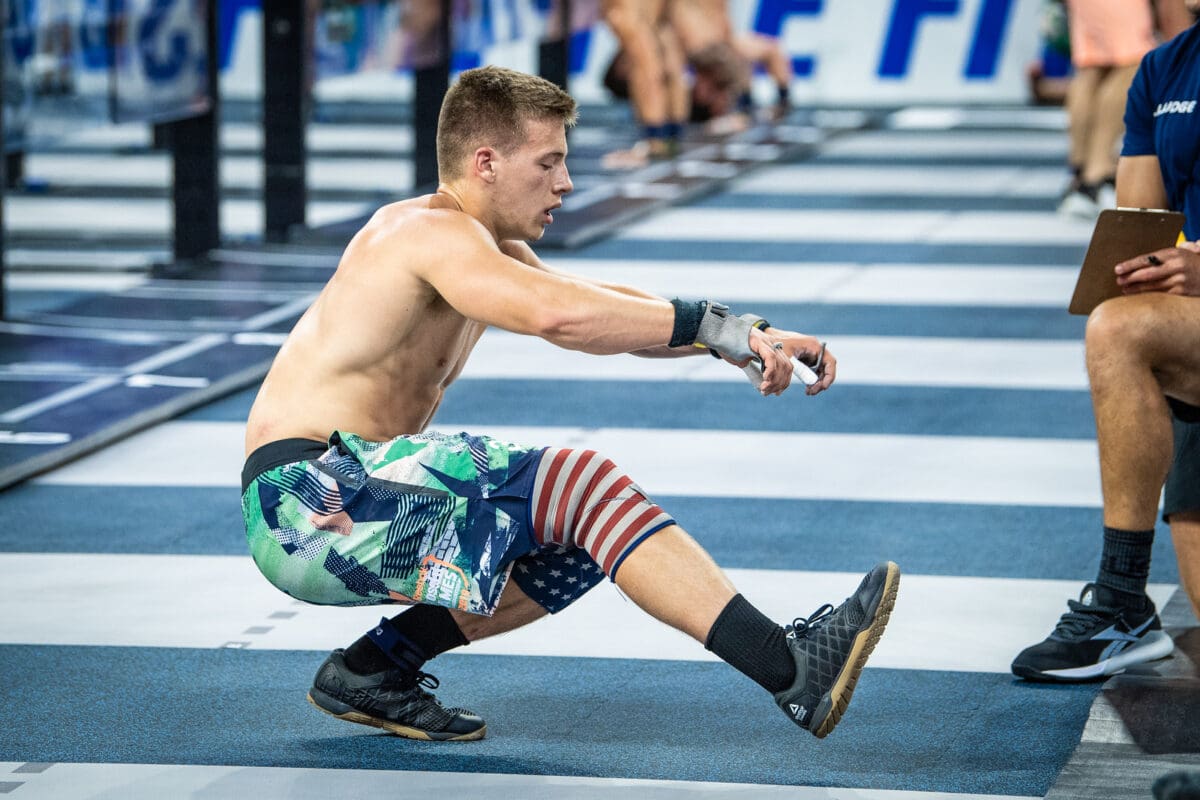
- Single-leg movements like pistol squats substantially increase relative intensity.
Furthermore, advanced progressions such as:
- One-arm push-ups
- One-arm pull-ups
- Front levers
- Planche variations
Create extremely high levels of mechanical tension.
In fact, studies comparing push-ups to bench press demonstrate similar muscle activation when intensity is equated. Calatayud et al. (2015) found that push-ups performed with added resistance bands elicited comparable pectoralis major and anterior deltoid activation to bench press at 40% 1RM.
Muscle activation alone does not guarantee hypertrophy, but it indicates that calisthenics movements can effectively recruit prime movers.
Progressive Overload Without Weights
Another argument behind this common misconception about calisthenics is that you cannot progressively overload bodyweight exercises.
This is incorrect.
Progressive overload can be achieved by:
- Increasing repetitions
- Slowing tempo
- Increasing time under tension
- Adding pauses
- Reducing rest periods
- Advancing to harder progressions
- Adding external load (weighted vest, dip belt)
Strength and hypertrophy adaptations occur when the body is exposed to progressively greater demands (ACSM, 2009).
Calisthenics allows for progressive manipulation of leverage. For example:
- Standard push-up → Decline push-up → Archer push-up → One-arm push-up
- Tuck front lever → Advanced tuck → Straddle → Full front lever
Each step increases mechanical demand.
From a physiological perspective, muscles do not recognize whether resistance comes from gravity acting on your body or a barbell on your back. They respond to tension and fatigue.
Real-World Evidence
Elite gymnasts provide practical examples of what advanced calisthenics can produce. While gymnastics includes some external apparatus, much of their hypertrophy and strength is developed through bodyweight training.
Research on elite male gymnasts shows exceptionally high relative strength and substantial upper-body muscle mass (Bassa et al., 2022). Their physiques clearly demonstrate that bodyweight resistance can support significant hypertrophy.
Verdict
The evidence is clear: when intensity, effort, and progression are properly managed, calisthenics can build serious muscle.
The idea that you need heavy barbells for hypertrophy is one of the most persistent common misconceptions about calisthenics, but the research does not support it.
Misconception #2: Calisthenics Is Only Good for Endurance, Not Strength
Another widespread belief is that calisthenics improves muscular endurance but not maximal strength.
This misconception stems from the idea that strength requires lifting very heavy loads at low repetitions.
Understanding Strength Adaptation
Maximal strength improvements are influenced by:
- Neural adaptations
- Motor unit recruitment
- Rate coding
- Intermuscular coordination
- Muscle cross-sectional area
High-load resistance training is traditionally associated with strength gains. However, research shows that strength can increase across various loading schemes.
A meta-analysis by Schoenfeld et al. (2017) found that heavier loads produce somewhat greater improvements in 1RM strength compared to lighter loads, but lighter loads still result in significant strength gains when performed to failure.

This means strength development is load-sensitive but not load-exclusive.
Relative Strength vs Absolute Strength
A key distinction often ignored in discussions about common misconceptions about calisthenics is the difference between absolute and relative strength.
- Absolute strength: total force output (e.g., 1RM squat).
- Relative strength: force output relative to bodyweight.
Calisthenics heavily emphasizes relative strength.
Studies consistently show that gymnasts and bodyweight athletes possess extremely high levels of relative strength (Jemni et al., 2006). Their ability to control their body in space requires exceptional neuromuscular coordination and force production per unit of body mass.
While they may not always produce the same absolute numbers as powerlifters in barbell lifts, their strength-to-weight ratio is often superior.
Skill-Based Strength Is Still Strength
Advanced calisthenics skills such as:
- Planche
- Iron cross
- Front lever
- One-arm pull-up
Require enormous force production.
Electromyographic studies show high levels of activation in shoulder stabilizers and prime movers during static holds and suspension-based exercises (Snarr and Esco, 2013).
Isometric strength training has also been shown to increase maximal force output, particularly at joint angles trained (Oranchuk et al., 2019).
Many calisthenics skills involve intense isometric contractions at challenging leverage points, which contribute to strength development.
Load Can Be Added
Another flaw in this misconception is the assumption that calisthenics excludes external loading.
Weighted pull-ups, weighted dips, and weighted push-ups are common in advanced programs. These exercises combine the benefits of free weights with the motor control demands of bodyweight training.
Research shows that multi-joint pulling and pushing movements are effective for building upper-body strength (ACSM, 2009). Whether the load comes from a barbell or a dip belt is physiologically irrelevant.
Verdict
Calisthenics can absolutely build strength, particularly relative strength. With appropriate progression and loading strategies, it can also improve maximal strength.
The belief that calisthenics is only for endurance is another of the most common misconceptions about calisthenics, and it overlooks both scientific evidence and real-world athletic performance.
Misconception #3: You Cannot Build Strong Legs with Calisthenics
Perhaps the most persistent of all common misconceptions about calisthenics is that it neglects lower-body development.
This belief is partly understandable. Many viral calisthenics videos emphasize upper-body skills. But that does not mean bodyweight training is ineffective for the legs.
Muscle Activation in Bodyweight Squats
Bodyweight squats may be insufficient for advanced trainees, but that does not invalidate calisthenics as a whole.
Single-leg variations dramatically increase intensity. The pistol squat shifts nearly the entire load to one limb, effectively doubling the relative demand.
Research shows that unilateral training can increase muscle activation and improve strength (McCurdy et al., 2005).
In addition, reducing stability increases muscular demand. Instability-based exercises and unilateral movements elevate activation in stabilizing musculature (Behm and Anderson, 2006).
Time Under Tension and Hypertrophy
Hypertrophy is influenced by total volume and time under tension.
Slower eccentric phases have been shown to increase metabolic stress and muscle damage, both associated with hypertrophic signaling (Schoenfeld, 2010).
Calisthenics leg training can incorporate:
- Slow eccentrics
- Paused squats
- Bulgarian split squats
- Nordic hamstring curls
- Jump squats
Nordic hamstring exercises, in particular, are highly demanding. Research demonstrates that they significantly increase eccentric hamstring strength and muscle architecture changes (Mjølsnes et al., 2004).
Plyometrics and Power
Lower-body calisthenics often includes plyometric training such as:
- Box jumps
- Broad jumps
- Split squat jumps
Plyometric training has been shown to improve strength, power, and neuromuscular performance (Markovic and Mikulic, 2010).
While plyometrics are not primarily hypertrophy-focused, they contribute to athletic development and force production.
When External Load Helps
For advanced athletes seeking maximal leg hypertrophy, adding external resistance may be beneficial.
However, this does not mean calisthenics is ineffective. It means that like any training method, it can be supplemented.
Even traditional strength programs combine modalities. The idea that calisthenics must exist in isolation is another subtle contributor to common misconceptions about calisthenics.
Verdict
Calisthenics can effectively train the lower body, especially when unilateral movements, tempo manipulation, and progression are used.
While maximal barbell loading offers clear advantages for absolute lower-body strength, calisthenics can build strong, muscular, and athletic legs.
Why These Common Misconceptions About Calisthenics Persist
Several psychological and cultural factors keep these myths alive:
- Gym culture prioritizes external load.
- Social media highlights flashy upper-body skills.
- Many beginners never progress beyond basic push-ups and squats.
- Strength is often equated with barbell numbers.
But physiology does not care about tradition.
Muscle adapts to tension. Strength improves with progressive overload. Neural adaptations occur when the nervous system is challenged.
Calisthenics meets these criteria when properly programmed.
Final Thoughts
The three most common misconceptions about calisthenics are:
- It cannot build serious muscle.
- It only improves endurance, not strength.
- It cannot develop strong legs.
Scientific evidence does not support these claims.
Hypertrophy occurs across a range of loads when training is performed near failure. Strength improves through neural and muscular adaptation. Lower-body muscles respond to unilateral loading, tempo manipulation, and progressive overload.
Calisthenics is not a magic system. It is a resistance training modality.
When structured intelligently, it can build muscle, strength, coordination, and athleticism.
Understanding and correcting these common misconceptions about calisthenics allows athletes to use bodyweight training more effectively, whether as a primary method or a complement to traditional weightlifting.
Key Takeaways
| Misconception | What Science Shows | Practical Reality |
|---|---|---|
| Calisthenics cannot build muscle | Hypertrophy occurs with low or high loads when training near failure (Schoenfeld et al., 2017) | Progressive bodyweight training can stimulate significant muscle growth |
| Calisthenics is only for endurance | Strength improves across loading ranges; neural adaptations occur with high effort (Schoenfeld et al., 2017) | Calisthenics builds high relative strength and can increase maximal strength |
| You cannot build strong legs | Unilateral training and eccentric work increase strength and hypertrophy (McCurdy et al., 2005; Mjølsnes et al., 2004) | Advanced leg variations effectively challenge lower-body musculature |
References
- American College of Sports Medicine (2009) ‘Progression models in resistance training for healthy adults’, Medicine & Science in Sports & Exercise, 41(3), pp. 687–708.
- Bassa, E., Patikas, D., Hatzikotoulas, K. and Kotzamanidis, C. (2022) ‘Strength and power characteristics in elite male gymnasts’, Journal of Strength and Conditioning Research, 36(4), pp. 1021–1028.
- Behm, D.G. and Anderson, K. (2006) ‘The role of instability with resistance training’, Journal of Strength and Conditioning Research, 20(3), pp. 716–722.
- Calatayud, J., Borreani, S., Colado, J.C., Martin, F., Rogers, M.E. and Behm, D.G. (2015) ‘Bench press and push-up at comparable levels of muscle activity results in similar strength gains’, Journal of Strength and Conditioning Research, 29(1), pp. 246–253.
- Jemni, M., Friemel, F., Sands, W.A. and Mikesky, A. (2006) ‘Evolution of the physiological profile of gymnasts over the past 40 years’, Journal of Strength and Conditioning Research, 20(4), pp. 899–907.
- Markovic, G. and Mikulic, P. (2010) ‘Neuro-musculoskeletal and performance adaptations to lower-extremity plyometric training’, Sports Medicine, 40(10), pp. 859–895.