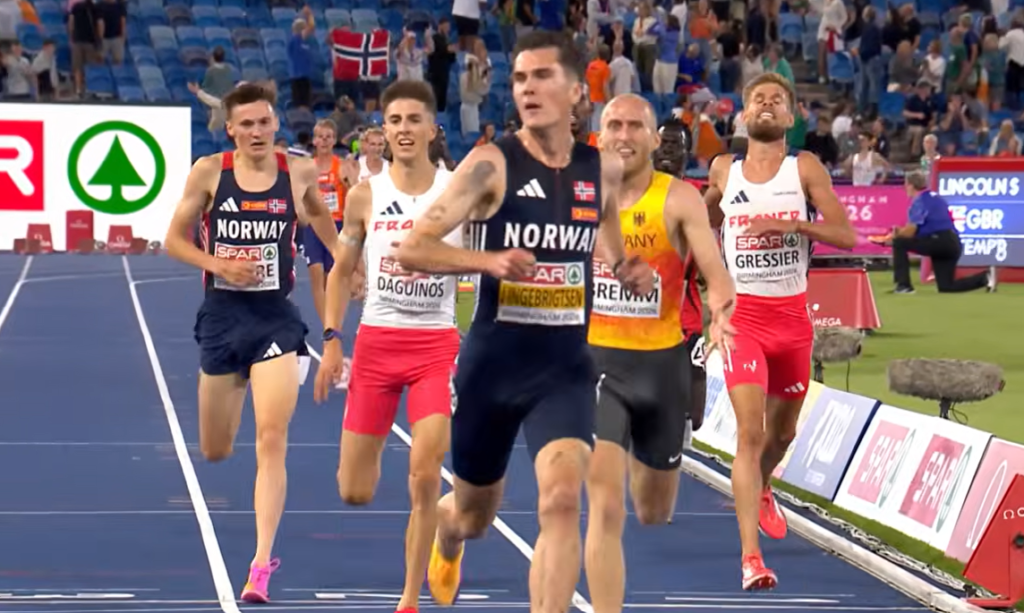


Energy can feel different after 35.
You might still have the motivation to train hard, chase PRs, or simply enjoy long weekend runs—but your body may not always cooperate. Recovery takes longer. Sleep feels lighter. Stress hits harder. And that steady, all-day energy you had in your 20s may not show up the same way anymore.


The good news? This is not inevitable decline. It is physiology. And physiology can be supported.
Research shows that endurance performance in athletes over 35 is influenced by predictable shifts in muscle mass, mitochondrial function, hormonal balance, sleep architecture, and recovery capacity (Tanaka and Seals, 2008; Lazarus and Harridge, 2017). When you understand these changes, you can work with them—not against them.
1. Prioritize Carbohydrate Availability (Without Overeating)
Why Carbs Matter More Than You Think
Carbohydrates are the primary fuel source for moderate to high-intensity running. Muscle glycogen—the stored form of carbohydrate—is directly linked to endurance performance. When glycogen is depleted, fatigue sets in rapidly (Bergström et al., 1967; Coyle et al., 1986).
In athletes over 35, total muscle mass gradually declines unless strength training is maintained. This reduces total glycogen storage capacity (Mitchell et al., 2012). Fewer storage sites mean less fuel in the tank.
At the same time, insulin sensitivity can decline with age, especially in sedentary individuals (Chang and Halter, 2003). However, endurance training significantly improves insulin sensitivity and glucose uptake (Richter and Hargreaves, 2013).

The takeaway: Strategic carbohydrate intake becomes more important—not less—as you age.
What the Research Says
Studies consistently show that higher carbohydrate availability improves endurance performance, particularly in sessions lasting longer than 60 minutes (Burke et al., 2011). Low glycogen availability increases perceived effort and reduces training output (Impey et al., 2018).
Older endurance athletes still rely heavily on carbohydrate oxidation during moderate-to-high intensity running (Coggan et al., 1990). There is no evidence that aging makes you “better adapted” to low-carb training for performance purposes.
Practical Strategy
- Consume 3–5 grams of carbohydrate per kilogram of body weight per day for moderate training.
- Increase to 5–7 grams per kilogram during heavy training blocks (Thomas et al., 2016).
- Eat 1–4 grams per kilogram 1–4 hours before longer or harder runs.
- During runs longer than 60–90 minutes, consume 30–60 grams of carbohydrate per hour (Jeukendrup, 2014).
This does not mean overeating. It means matching intake to training demands.
If you feel flat, heavy-legged, or unusually fatigued during sessions, under-fueling is often the simplest explanation.
2. Lift Heavy to Protect Muscle and Mitochondria
Muscle Loss Is Real—but Preventable
After age 30, adults lose approximately 3–8% of muscle mass per decade if they do not strength train (Mitchell et al., 2012). This process, called sarcopenia, accelerates after 60.
Muscle is not just for power. It is metabolically active tissue. It houses mitochondria—the structures that produce ATP, your cellular energy currency.
Reduced muscle mass and mitochondrial function contribute directly to fatigue (Short et al., 2005).
Resistance Training Boosts Energy Production
Strength training stimulates mitochondrial biogenesis and improves neuromuscular efficiency (Porter et al., 2015). It also enhances running economy—meaning you use less oxygen at the same pace (Blagrove et al., 2018).
In masters endurance athletes, combining resistance and endurance training improves performance without compromising aerobic capacity (Vilaça-Alves et al., 2016).
Heavy resistance training also preserves type II muscle fibers, which decline more rapidly with age and are critical for speed and power (Lexell, 1995).
Practical Strategy
- Perform 2 strength sessions per week.
- Focus on compound lifts: squats, deadlifts, lunges, step-ups, and hip thrusts.
- Use loads at 70–85% of one-repetition maximum.
- Prioritize progressive overload.
This is not about bodybuilding. It is about maintaining the engine that powers your stride.
When muscle strength improves, perceived effort during running often drops—because the relative load per stride decreases.
3. Upgrade Your Sleep (It Is Your Primary Recovery Tool)
Sleep Changes After 35
Total sleep time and slow-wave sleep tend to decline with age (Ohayon et al., 2004). Slow-wave sleep is critical for growth hormone release, tissue repair, and glycogen restoration.
Reduced sleep duration and quality are associated with increased fatigue, impaired glucose metabolism, and decreased endurance performance (Fullagar et al., 2015).
Even one night of partial sleep deprivation increases perceived effort during exercise (Oliver et al., 2009).
Sleep and Energy Metabolism
Sleep restriction alters hormonal balance, including reductions in testosterone and increases in cortisol (Leproult and Van Cauter, 2011). Elevated cortisol can increase protein breakdown and impair recovery.
Chronic sleep loss also reduces muscle glycogen resynthesis (Skein et al., 2011).
For athletes over 35—who already experience gradual hormonal shifts—sleep becomes even more critical.
Practical Strategy
- Aim for 7–9 hours per night.
- Keep sleep and wake times consistent.
- Limit alcohol intake. Alcohol reduces REM sleep and impairs recovery (Roehrs and Roth, 2001).
- Avoid screens and bright light 60 minutes before bed.
- Keep your room cool and dark.
If energy is low, the first question should not be about supplements. It should be about sleep.
4. Increase Protein Intake to Support Recovery and Energy
Protein Needs Increase With Age
Older adults exhibit “anabolic resistance,” meaning their muscles respond less robustly to protein intake compared to younger individuals (Moore et al., 2015).
This means athletes over 35 may need slightly higher protein intake to maximize muscle repair and adaptation.
Protein also supports mitochondrial protein turnover and immune function—both critical for sustained energy (Phillips et al., 2016).
What the Research Shows
Endurance athletes benefit from consuming 1.2–1.6 grams of protein per kilogram of body weight per day (Thomas et al., 2016).
For older athletes, intakes toward the higher end of that range may be beneficial (Morton et al., 2018).
Distributing protein evenly across meals—around 0.3–0.4 grams per kilogram per meal—optimizes muscle protein synthesis (Areta et al., 2013).
Practical Strategy
- Eat 25–40 grams of protein per meal.
- Include high-quality sources rich in leucine (dairy, eggs, meat, soy).
- Consume protein within 1–2 hours after hard sessions.
When recovery improves, training consistency improves. And consistency is the real driver of long-term energy and performance.
5. Manage Stress and Train Smarter, Not Harder
Cortisol and Chronic Fatigue
Psychological stress elevates cortisol. Chronic elevation impairs recovery, disrupts sleep, and increases perceived exertion (Hackney and Walz, 2013).
Masters athletes often juggle work, family, and training. Total stress load—not just training load—determines fatigue.
Research shows that high life stress is associated with increased risk of illness and injury in athletes (Gustafsson et al., 2011).
Periodization Is Not Optional
Older athletes generally require slightly longer recovery periods between high-intensity sessions (Lazarus and Harridge, 2017).

High-intensity interval training remains effective in masters athletes, but excessive frequency increases injury risk (Bouaziz et al., 2020).
Practical Strategy
- Limit hard sessions to 2 per week.
- Include at least one full rest day weekly.
- Use easy runs truly easy—at conversational pace.
- Monitor resting heart rate and subjective fatigue.
Energy improves when training stress and recovery are balanced.
More is not better. Better is better.
Bonus: Check Iron and Vitamin D Status
While not everyone needs supplementation, deficiencies in iron and vitamin D are common in endurance athletes.
Iron deficiency reduces oxygen-carrying capacity and increases fatigue—even without anemia (Peeling et al., 2008).
Vitamin D plays a role in muscle function and immune health (Owens et al., 2015).
If you experience persistent fatigue despite proper sleep and nutrition, blood testing may be warranted.
The Big Picture: Energy Is Multifactorial
Low energy is rarely about a single factor.
For runners over 35, it is usually a combination of:
- Slightly reduced muscle mass
- Suboptimal fueling
- Inadequate protein
- Poor sleep
- High life stress
- Insufficient recovery
The solution is rarely extreme. It is systematic.
When you support glycogen availability, preserve muscle, optimize sleep, consume adequate protein, and manage stress, you create the physiological environment for high energy output.
Performance after 35 is not about fighting aging. It is about adapting intelligently.
Many elite masters athletes continue to perform at remarkably high levels well into their 40s, 50s, and beyond (Tanaka and Seals, 2008). The human body remains highly adaptable—if you give it the right inputs.
References
- Areta, J.L., Burke, L.M., Ross, M.L.R., Camera, D.M., West, D.W.D., Broad, E.M., Jeacocke, N.A., Moore, D.R., Stellingwerff, T., Phillips, S.M., Hawley, J.A. and Coffey, V.G., 2013. Timing and distribution of protein ingestion during prolonged recovery from resistance exercise alters myofibrillar protein synthesis. Journal of Physiology, 591(9), pp.2319–2331.
- Bergström, J., Hermansen, L., Hultman, E. and Saltin, B., 1967. Diet, muscle glycogen and physical performance. Acta Physiologica Scandinavica, 71(2-3), pp.140–150.
- Blagrove, R.C., Howatson, G. and Hayes, P.R., 2018. Effects of strength training on the physiological determinants of middle- and long-distance running performance. Sports Medicine, 48(5), pp.1117–1149.
- Bouaziz, W., Lang, P.O., Schmitt, E., Kaltenbach, G., Geny, B. and Vogel, T., 2020. Health benefits of multicomponent training programmes in seniors. Sports Medicine, 46(12), pp.1869–1889.
- Burke, L.M., Hawley, J.A., Wong, S.H.S. and Jeukendrup, A.E., 2011. Carbohydrates for training and competition. Journal of Sports Sciences, 29(S1), pp.S17–S27.
- Chang, A.M. and Halter, J.B., 2003. Aging and insulin secretion. American Journal of Physiology-Endocrinology and Metabolism, 284(1), pp.E7–E12.
- Coggan, A.R., Spina, R.J., King, D.S., Rogers, M.A., Brown, M., Nemeth, P.M. and Holloszy, J.O., 1990. Skeletal muscle adaptations to endurance training in 60- to 70-yr-old men and women. Journal of Applied Physiology, 72(5), pp.1780–1786.