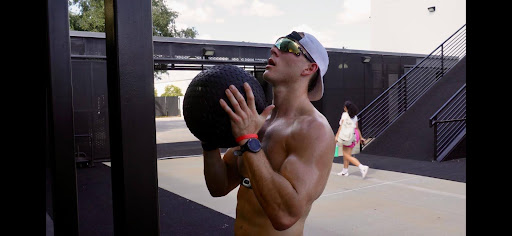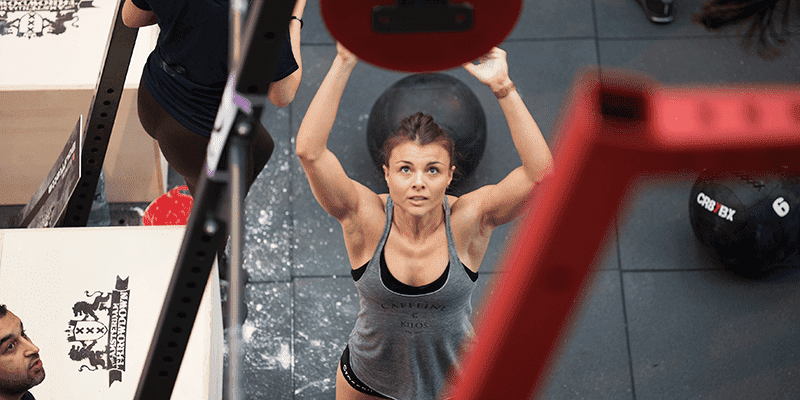


Wall balls look simple. Squat down. Stand up. Throw a medicine ball to a target. Catch it. Repeat.
Then you hit 30 reps.


Your legs burn. Your lungs explode. Your shoulders feel like concrete. And suddenly that 20-pound ball feels like 200.
Wall balls are one of the most metabolically demanding movements in functional fitness. They combine a deep squat with an explosive press and throw. That means you are using large muscle groups, moving through a long range of motion, and elevating your heart rate rapidly.
The good news? Wall balls are not just about suffering. They are about efficiency.
With the right adjustments in technique, breathing, positioning, and training structure, you can dramatically reduce fatigue, conserve energy, and maintain speed deep into workouts.
Here are five science-backed tips to make wall balls easier — and more effective.
1. Optimize Your Squat Depth and Mechanics
Wall balls are essentially a front-loaded squat combined with a vertical throw. If your squat is inefficient, everything else falls apart.
Why Squat Mechanics Matter
The squat recruits large muscle groups including the quadriceps, gluteus maximus, hamstrings, and adductors. Biomechanical analyses show that deeper squats increase gluteal activation and overall lower-body muscle recruitment compared to partial squats.
However, depth must be controlled and efficient. Excessive forward lean increases stress on the lumbar spine, while poor knee tracking increases joint stress and energy leakage.
Efficient squat mechanics reduce unnecessary muscular co-contraction and improve force transfer. Research on squat biomechanics demonstrates that trunk angle, knee position, and hip mechanics significantly influence joint loading and muscular demands.
If you collapse at the bottom or shift excessively forward, you waste energy correcting yourself on every rep.
How to Make It Easier
• Keep the ball high on your chest, not low in your arms.
• Maintain an upright torso.
• Let your knees track in line with your toes.
• Hit consistent depth — just below parallel, not excessively deep.
Going deeper than required increases time under tension and metabolic demand without adding benefit in most workout contexts.
A consistent, repeatable squat pattern reduces variability and improves neuromuscular efficiency, which lowers energy cost over time.
The Science Behind Efficiency
Motor control research shows that consistent movement patterns improve coordination and reduce unnecessary muscle activation. When movement becomes predictable and efficient, the nervous system recruits only the muscles needed for the task.
Less wasted movement = less fatigue.
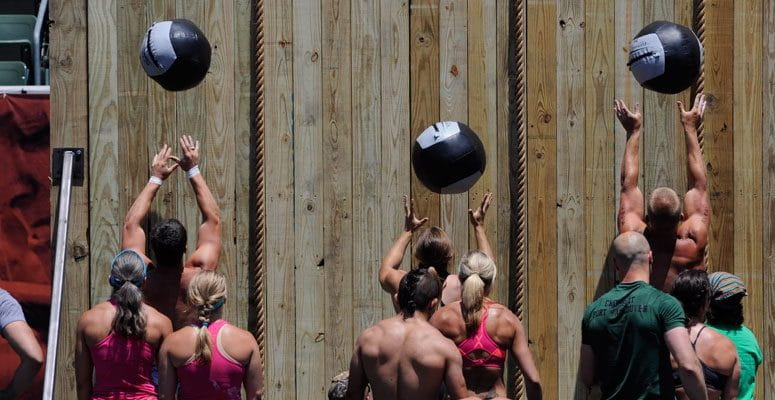
In high-repetition tasks, even small mechanical inefficiencies compound quickly. Over 100 reps, tiny energy leaks become major performance drops.
Dialing in squat mechanics is your foundation.
2. Use the Stretch-Shortening Cycle to Your Advantage
Wall balls should feel like a rebound, not a grind.
What Is the Stretch-Shortening Cycle?
The stretch-shortening cycle (SSC) refers to the natural elastic recoil that occurs when a muscle rapidly transitions from an eccentric (lengthening) contraction to a concentric (shortening) contraction.
Think of it like a spring.
When you descend into the squat, your muscles and tendons store elastic energy. If you immediately reverse direction and drive upward, you release that stored energy and reduce the amount of active muscular work required.
This phenomenon has been widely documented in jumping and plyometric research.
Why It Makes Wall Balls Easier
If you pause at the bottom of your squat, you lose stored elastic energy. That means your muscles must generate more force actively — which costs more energy.
Research on plyometric performance shows that shorter transition times between eccentric and concentric phases improve power output and efficiency.
In wall balls, that translates to:
• Faster cycle time
• Less perceived exertion
• Better endurance over high reps
How to Apply It
• Descend under control but do not relax at the bottom.
• Reverse direction immediately.
• Think “bounce” out of the hole — controlled, not sloppy.
• Keep tension in your core and legs.
You are not dive-bombing into the squat. You are maintaining tension and using elastic recoil.
Over the course of a long workout, efficient SSC use dramatically reduces quad fatigue.
3. Time Your Breathing With the Throw
Most athletes hold their breath during wall balls — and that is a mistake.
The Cost of Poor Breathing
Wall balls drive heart rate up quickly because they involve large muscle groups and vertical movement. When breathing becomes chaotic, carbon dioxide accumulates faster and perceived exertion rises sharply.

Research on respiratory physiology shows that coordinated breathing reduces cardiovascular strain and improves endurance performance.
In repetitive movements, breathing rhythm is just as important as mechanical rhythm.
If you brace too long or forget to exhale, you increase intra-abdominal pressure unnecessarily and spike fatigue.
A Simple Breathing Strategy
• Inhale as you descend into the squat.
• Forcefully exhale as you throw the ball.
This pattern mirrors natural power-breathing strategies used in resistance training and Olympic lifting.
Forceful exhalation during exertion has been shown to improve trunk stability while allowing continuous oxygen exchange.
Why This Works
Exhaling during the throw helps:
• Reinforce core stability
• Prevent breath-holding
• Improve rhythm
• Lower perceived effort
Studies on ventilatory thresholds show that rhythmic breathing delays the onset of respiratory muscle fatigue, which can be a limiting factor in high-repetition exercise.
When breathing becomes automatic and synchronized, wall balls feel smoother and more sustainable.
4. Reduce Shoulder Fatigue With Efficient Throw Mechanics
Your legs are not the only limiting factor. Your shoulders often fail first.
The Biomechanics of the Throw
The wall ball throw is a coordinated triple extension (hips, knees, ankles) followed by shoulder flexion and elbow extension.
If your arms are doing most of the work, you are wasting energy.
Research on kinetic chain mechanics shows that power generation is most efficient when it transfers from the lower body through the trunk into the upper body.
If the chain breaks — for example, by pressing early with the arms — shoulder demand increases dramatically.
Make Your Legs Do the Work
• Drive aggressively through your hips.
• Let the ball “float” upward from leg power.
• Finish with the arms, do not initiate with them.
Electromyography studies consistently show that coordinated hip extension reduces relative shoulder muscle activation in overhead tasks.
In simple terms: strong hip drive protects your shoulders.
Catch Position Matters
How you catch the ball affects fatigue.
• Catch with elbows slightly under the ball.
• Absorb the ball by descending immediately into the next squat.
• Avoid catching stiff-legged.
Absorbing force through the lower body reduces eccentric stress on the shoulders.
Research on force absorption shows that distributing load across larger muscle groups decreases localized fatigue.
When done properly, the catch should feel like the start of your next rep — not a separate event.
5. Improve Work Capacity With Targeted Conditioning
Sometimes wall balls feel hard because your engine is underdeveloped.
Wall balls challenge:
• Lower-body muscular endurance
• Anaerobic capacity
• Aerobic recovery
• Coordination under fatigue
Improving any of these systems makes wall balls easier.
Build Local Muscular Endurance
High-repetition resistance training improves muscular endurance by increasing oxidative enzyme activity and capillary density in working muscles.
That means your legs become better at sustaining repeated contractions without fatiguing as quickly.
Practical applications:
• High-rep goblet squats
• Tempo squats
• Light, fast wall ball intervals
Research shows that muscular endurance improves with moderate-load, high-repetition training performed consistently.
Train Your Aerobic Base
Wall balls are glycolytic, but recovery between sets depends heavily on aerobic capacity.
Studies on high-intensity functional training show that athletes with higher VO2 max recover faster between bouts and maintain power output longer.
Adding steady-state cardio and interval conditioning improves oxygen delivery and lactate clearance.
Better aerobic fitness = faster recovery between wall ball sets.
Practice Smart Set Breaks
Research on fatigue management in resistance exercise suggests that short, planned rest intervals preserve output better than pushing to failure.
Instead of going unbroken until collapse:
• Break early.
• Take 3–5 breaths.
• Resume before form degrades.
Strategic breaks prevent neuromuscular failure and reduce total rest time over the workout.
Elite athletes rarely fail reps. They manage fatigue before it manages them.
Bonus: Position Yourself Correctly Relative to the Wall
Distance from the wall matters more than most people think.
Stand too close and you must throw more vertically. Stand too far and you waste energy chasing the ball.
Optimal positioning allows the ball to rebound directly back into your hands with minimal horizontal movement.
Efficient ball trajectory reduces unnecessary shoulder stabilization and movement variability.
Small technical improvements compound across high-rep workouts.
Bonus: Strengthen Your Core for Energy Transfer
The core acts as a force bridge between the lower and upper body.
Research on trunk stiffness shows that improved core stability enhances force transfer and reduces energy leaks during compound movements.
If your torso collapses at the bottom of the squat or during the throw:
• Energy dissipates.
• Shoulder stress increases.
• Breathing becomes inefficient.
Core training that emphasizes anti-flexion and anti-extension strength (planks, carries, bracing drills) improves trunk stiffness and movement efficiency.
A stable trunk makes every rep smoother.
Why Wall Balls Feel So Brutal
Wall balls combine:
• Large muscle mass activation
• Long range of motion
• Repetitive eccentric loading
• Rapid breathing demand
Studies examining high-intensity functional training show significant elevations in heart rate and blood lactate during workouts that include movements like wall balls.
This metabolic stress is not accidental. It is built into the movement.
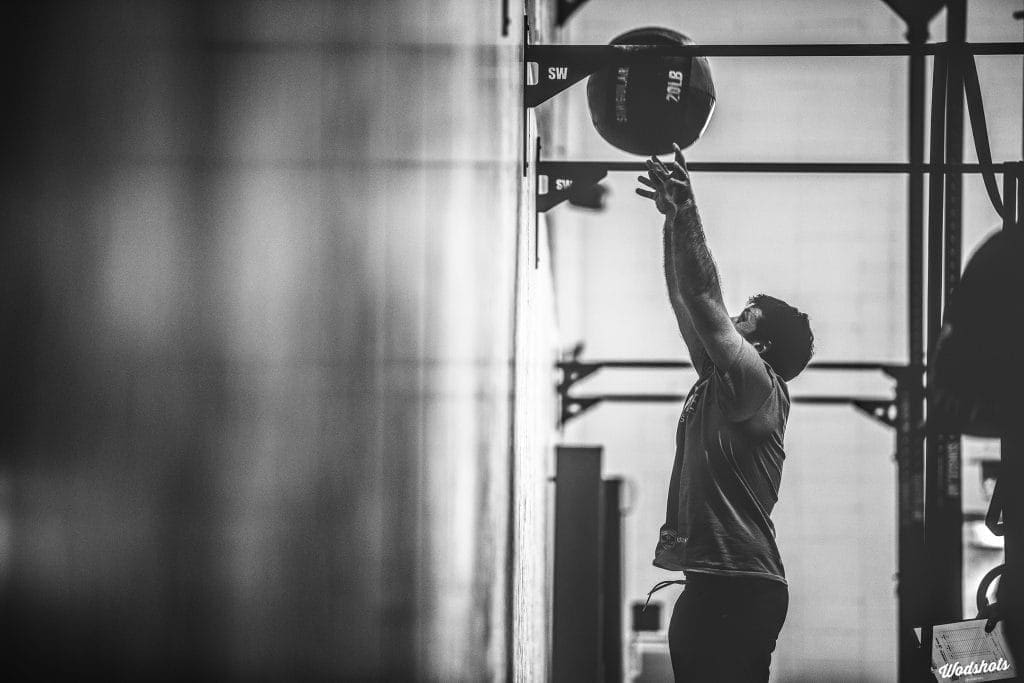
But improved mechanics, breathing coordination, elastic energy use, and conditioning dramatically reduce the subjective difficulty.
Wall balls do not get easier because they become less demanding.
They get easier because you become more efficient.
Final Thoughts
Wall balls are not just a leg exercise. They are a coordination, breathing, power, and endurance challenge rolled into one.
To make them easier:
- Dial in squat mechanics.
- Use elastic rebound.
- Breathe rhythmically.
- Let your hips drive the throw.
- Build work capacity intelligently.
Efficiency beats toughness.
The athlete who wastes the least energy wins the workout.
Master the movement, and the suffering drops — even when the reps climb.
References
• Clark, D.R., Lambert, M.I. and Hunter, A.M. (2012) ‘Muscle activation in the loaded free barbell squat: A brief review’, Journal of Strength and Conditioning Research, 26(4), pp. 1169–1178.
• Cormie, P., McBride, J.M. and McCaulley, G.O. (2009) ‘Power-time, force-time, and velocity-time curve analysis of the countermovement jump: Impact of training’, Journal of Strength and Conditioning Research, 23(1), pp. 177–186.
• Ebben, W.P. and Petushek, E.J. (2010) ‘Using the reactive strength index modified to evaluate plyometric performance’, Journal of Strength and Conditioning Research, 24(8), pp. 1983–1987.
• Escamilla, R.F. (2001) ‘Knee biomechanics of the dynamic squat exercise’, Medicine and Science in Sports and Exercise, 33(1), pp. 127–141.