

Burpees are simple. Squat down. Kick back. Push up. Jump. Repeat.
And yet, few movements in functional fitness are as universally respected (or feared) as the burpee. They demand strength, coordination, power, and aerobic capacity. They spike your heart rate in seconds and expose weaknesses quickly. That is exactly why they work.


This article delivers three hard functional fitness workouts built around burpees. But before the sweat starts, we will break down why burpees are so effective, using scientific evidence to explain how and why they improve conditioning, strength endurance, fat loss, and performance.
Why Burpees Are So Effective
Full-Body Muscle Recruitment
A burpee recruits nearly every major muscle group:
- Quadriceps and glutes during the squat
- Chest, shoulders, and triceps during the push-up
- Core muscles for trunk stability
- Hip flexors and hamstrings during the kick-back
- Calves and glutes during the jump
Multi-joint exercises that involve large muscle mass create a greater metabolic demand than isolated movements. Research consistently shows that exercises engaging multiple muscle groups simultaneously increase oxygen consumption and caloric expenditure more than single-joint exercises.
High muscle recruitment increases metabolic stress and cardiovascular demand. That is why burpees feel harder than they look.
Cardiovascular Stress and VO2 Response
High-intensity bodyweight exercises such as burpees can rapidly elevate heart rate to near-maximal levels. Research examining high-intensity interval training (HIIT) demonstrates that short bursts of intense full-body work significantly improve VO2max, a key measure of aerobic fitness.

VO2max is one of the strongest predictors of cardiovascular health and endurance performance. Studies show that even brief, high-intensity intervals can produce meaningful improvements in aerobic capacity comparable to longer steady-state sessions.
Because burpees combine strength and aerobic work in one movement, they are ideal for high-intensity metabolic conditioning.
Anaerobic Power and Lactate Tolerance
Burpees are not just cardio. When performed at high speed, they heavily tax anaerobic glycolysis, the energy system responsible for short, high-intensity efforts.
High-intensity interval protocols have been shown to significantly increase glycolytic enzyme activity and improve buffering capacity, allowing athletes to tolerate higher lactate levels. This translates to better repeat sprint ability and improved work capacity in functional fitness settings.
In simple terms: you can go hard for longer.
Hormonal Response and Metabolic Impact
Large compound movements performed at high intensity stimulate significant hormonal responses, including increases in catecholamines and growth hormone. These hormones support energy mobilization and metabolic adaptation.
Research comparing high-intensity interval training with moderate continuous training shows greater improvements in insulin sensitivity and similar or superior reductions in body fat despite lower total training time.
Burpees, when programmed intelligently, can contribute to improved metabolic health and body composition.
Neuromuscular Coordination and Movement Efficiency
Burpees demand rapid transitions between movement patterns:
- Vertical to horizontal
- Eccentric to concentric
- Ground to standing
Explosive movements such as jumps improve neuromuscular efficiency and rate of force development. Repeated exposure improves coordination and movement economy.
This is especially relevant in functional fitness, where transitions and efficiency matter as much as strength.
Programming Burpees for Maximum Effect
Before diving into the workouts, it helps to understand how to manipulate burpees for different training effects.
For Aerobic Conditioning
- Moderate pace
- Longer time domains (15–30 minutes)
- Sustainable output
For Anaerobic Capacity
- Short intervals
- High speed
- Incomplete recovery
For Muscular Endurance
- High repetitions
- Combined with loaded movements
- Minimal rest
For Power
- Add broad jumps or target jumps
- Emphasize explosive take-off
The workouts below combine these elements into demanding functional fitness sessions.
Workout 1: Engine Collapse
This workout targets aerobic capacity and muscular endurance under fatigue.
Structure
For time:
- 50 Burpees
- 40 Wall Balls (20/14 lb)
- 30 Burpee Box Jump Overs (24/20 in)
- 20 Dumbbell Thrusters (50/35 lb, alternating)
- 10 Bar-Facing Burpees
Time cap: 25 minutes
Why This Works
This descending rep scheme front-loads fatigue. Starting with 50 burpees elevates heart rate immediately. Research on interval training shows that beginning with high-intensity work increases oxygen kinetics and forces rapid cardiovascular adaptation.
Wall balls and thrusters add loaded squatting and pressing volume, increasing metabolic stress. Compound resistance exercises performed in circuit fashion significantly elevate post-exercise oxygen consumption, meaning you continue burning calories after finishing.

The burpee box jump overs increase eccentric loading and power demand. Plyometric movements improve rate of force development and neuromuscular coordination.
Pacing Strategy
- Break the first 50 burpees into manageable sets (e.g., 25-15-10).
- Maintain smooth transitions.
- Avoid redlining before the thrusters.
This workout challenges sustained work capacity—your ability to produce force repeatedly under metabolic stress.
Workout 2: Lactate Tolerance Grinder
This session targets anaerobic power and repeat high-intensity output.
Structure
5 Rounds:
- 20 Burpees
- 15 Kettlebell Swings (heavy)
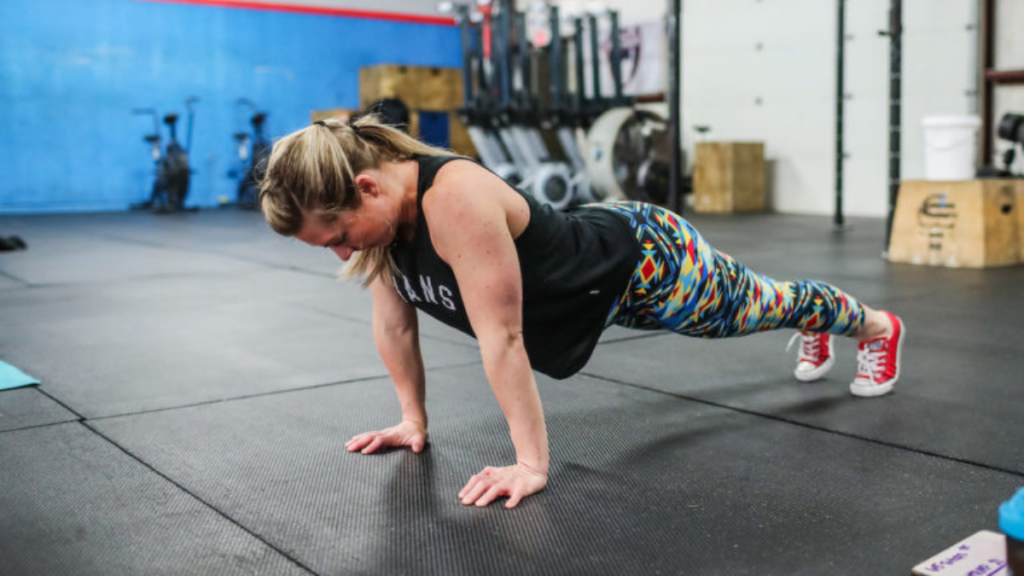
- 10 Hand-Release Push-Ups
- 200-meter sprint
Rest 90 seconds between rounds.
Why This Works
The combination of burpees and sprints heavily taxes glycolytic pathways. High-intensity interval training protocols using repeated sprint formats have been shown to significantly improve both aerobic and anaerobic capacity.
Kettlebell swings add hip-dominant explosive loading. Research on ballistic resistance training shows improvements in power output and neuromuscular efficiency.
The structured rest interval allows partial recovery, which has been shown to enhance high-intensity repeatability while maintaining overall training quality.
Intended Stimulus
Each round should feel uncomfortable but repeatable. If your sprint drops off dramatically, you started too fast.
This workout improves:
- Lactate tolerance
- Speed under fatigue
- Explosive hip extension
- Cardiovascular recovery
Workout 3: Burpee Strength-Endurance Complex
This is the longest and most mentally demanding session.
Structure
AMRAP 30 minutes:
- 10 Deadlifts (moderate-heavy, 60–70% 1RM)
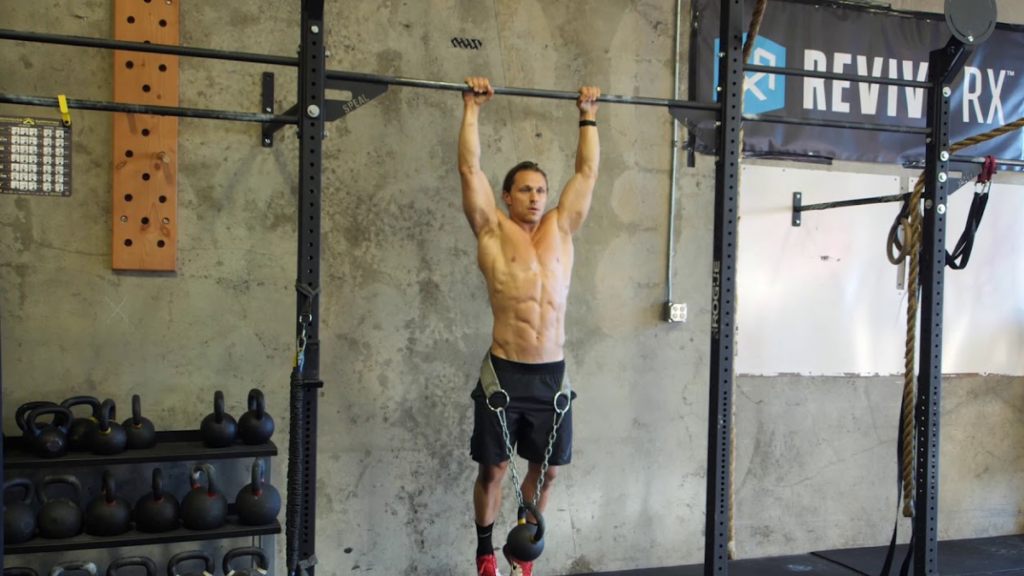
- 15 Pull-Ups
- 20 Burpees
- 400-meter run
Why This Works
Combining resistance training and endurance work in a circuit improves both strength and aerobic fitness. Research on concurrent training demonstrates that combining resistance and endurance exercise can improve muscular strength and cardiovascular performance simultaneously when programmed correctly.
Deadlifts recruit large muscle mass, increasing systemic fatigue and oxygen demand. Pull-ups add upper-body pulling endurance.
Burpees act as a metabolic bridge between lifting and running, keeping heart rate elevated.
Thirty minutes forces pacing discipline and aerobic control. Longer high-intensity sessions increase mitochondrial adaptations, which improve endurance efficiency.
Scaling Options
- Reduce deadlift load
- Substitute ring rows for pull-ups
- Reduce run distance to 300 meters
Intensity should remain high but sustainable.
Technique Matters: How to Make Burpees Safer and More Effective
Spine Position
Maintain a neutral spine during the kick-back. Excess lumbar flexion under fatigue increases stress on spinal structures.
Controlled Descent
Drop with control rather than collapsing. Research shows that eccentric control improves muscular adaptation and reduces injury risk.
Efficient Footwork
Step or lightly hop back to conserve energy in longer workouts.
Breathing Pattern
Exhale during the jump. Controlled breathing improves oxygen utilization and helps manage heart rate during high-intensity intervals.
How Often Should You Do Burpee Workouts?
High-intensity sessions should be limited to 2–4 times per week depending on training experience.
Research indicates that adequate recovery is essential for adaptation to high-intensity interval training. Overtraining without sufficient rest impairs performance and hormonal balance.
Alternate hard burpee workouts with strength-focused or lower-intensity aerobic sessions.
Who Should Be Careful?
- Beginners without base conditioning
- Individuals with shoulder or wrist pain
- Anyone with uncontrolled hypertension
High-intensity training significantly elevates heart rate and blood pressure. Clearance from a healthcare provider is recommended for high-risk individuals before starting vigorous exercise.
Final Thoughts
Burpees are brutally simple—and brutally effective.
They challenge the cardiovascular system, build muscular endurance, improve anaerobic capacity, and demand full-body coordination. When programmed intelligently, they deliver exceptional returns in minimal time.
The three workouts above are not meant to be easy. They are designed to push your limits safely and scientifically.
Train hard. Recover well. Repeat.
Key Takeaways
| Topic | Key Point |
|---|---|
| Muscle Recruitment | Burpees activate multiple large muscle groups simultaneously, increasing metabolic demand. |
| Cardiovascular Benefit | High-intensity burpee intervals improve VO2max and aerobic capacity. |
| Anaerobic Adaptation | Repeated high-intensity efforts improve lactate tolerance and glycolytic efficiency. |
| Hormonal Response | Compound high-intensity training supports metabolic adaptation and insulin sensitivity. |
| Programming | Manipulate volume, intensity, and rest to target aerobic, anaerobic, or endurance goals. |
| Frequency | Limit high-intensity burpee sessions to 2–4 times per week with proper recovery. |
References
- Burgomaster, K.A., Howarth, K.R., Phillips, S.M., Rakobowchuk, M., MacDonald, M.J., McGee, S.L. and Gibala, M.J. (2008) ‘Similar metabolic adaptations during exercise after low volume sprint interval and traditional endurance training in humans’, The Journal of Physiology, 586(1), pp. 151–160.
- Gibala, M.J., Little, J.P., MacDonald, M.J. and Hawley, J.A. (2012) ‘Physiological adaptations to low-volume, high-intensity interval training in health and disease’, The Journal of Physiology, 590(5), pp. 1077–1084.
- Hazell, T.J., MacPherson, R.E.K., Gravelle, B.M.R. and Lemon, P.W.R. (2010) ‘10 or 30-s sprint interval training bouts enhance both aerobic and anaerobic performance’, European Journal of Applied Physiology, 110(1), pp. 153–160.
- LaForgia, J., Withers, R.T. and Gore, C.J. (2006) ‘Effects of exercise intensity and duration on the excess post-exercise oxygen consumption’, Journal of Sports Sciences, 24(12), pp. 1247–1264.