

The ring muscle up is one of the most demanding and rewarding movements in functional fitness. It combines strength, coordination, and technique across multiple movement patterns. Many athletes struggle with this skill not because they lack effort, but because they lack the specific strength and positional awareness required to execute it efficiently.
If you want to improve your ring muscle ups, focusing on the right accessory work is essential. The keyword here is specificity. The best accessory exercises for ring muscle ups are those that directly improve the limiting factors of the movement, including pulling strength, transition mechanics, and pressing stability.


Understanding the Ring Muscle Up
Before diving into the accessory exercises, it is important to understand what makes the ring muscle up challenging. The movement consists of three main phases:
- The pull phase
- The transition phase
- The dip phase
Each phase demands different muscular and neurological qualities.
Pull Phase
The pull requires explosive strength through a large range of motion. Unlike a standard pull up, you need to pull your chest toward the rings with enough force to elevate your body above them.
This requires high levels of relative strength and power. Research shows that greater upper body pulling strength correlates strongly with performance in gymnastic movements and calisthenics skills.
Transition Phase
The transition is often the weakest link. It requires you to rotate your body over the rings while maintaining tension and control. This phase demands coordination, shoulder stability, and strong elbow flexors. Many athletes fail here because they lack strength in deep shoulder flexion and internal rotation positions.

Dip Phase
The final phase is a deep ring dip. Stability is critical because the rings are unstable. Studies show that unstable training increases activation of stabilizing muscles, particularly in the shoulder complex.
Why Accessory Exercises Matter
Accessory exercises for ring muscle ups target weak points in the movement. Instead of repeatedly failing muscle ups, you build the specific strength required to succeed.
Scientific principles that support accessory training include:
- Specificity: Training adaptations are specific to the movement patterns used
- Progressive overload: Strength improves when muscles are challenged beyond their current capacity
- Neuromuscular coordination: Repeated exposure to similar patterns improves motor control
Accessory work allows you to train these qualities without the fatigue and frustration of repeated failed attempts.
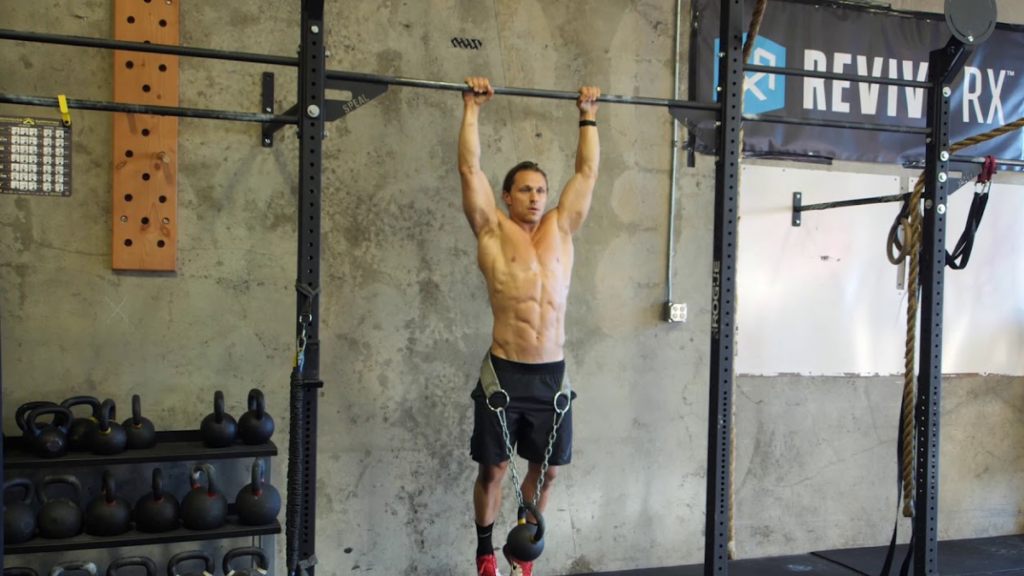
1. Chest to Ring Pull Ups
Why This Exercise Works
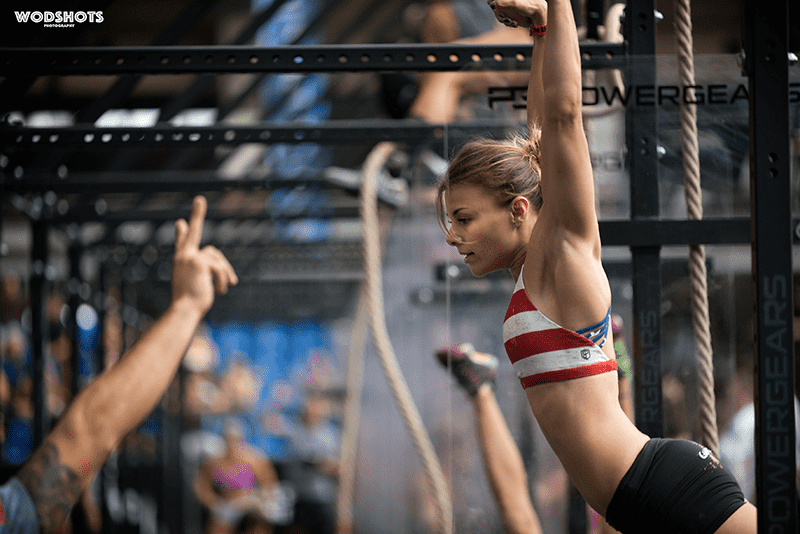
Chest to ring pull ups are one of the most effective accessory exercises for ring muscle ups because they directly improve the pull phase. Unlike standard pull ups, this variation requires:
- A higher pulling height
- Greater scapular retraction
- Increased upper back activation
Research shows that exercises emphasizing scapular retraction and depression improve shoulder stability and pulling efficiency. This is critical for the muscle up.
Additionally, pulling higher increases force production. Studies on resistance training indicate that training through larger ranges of motion leads to greater strength gains.
How to Perform Chest to Ring Pull Ups
- Start hanging from the rings with a false grip if possible
- Engage your shoulders by pulling them down and back
- Pull explosively until your chest touches the rings
- Keep your elbows close to your body
- Lower under control
Focus on quality over quantity. Each rep should be powerful and controlled.
Common Mistakes
- Pulling only to chin height
- Losing tension at the bottom
- Using excessive kipping without control
Programming Tips
To get the most out of this accessory exercise:
- Perform 3 to 5 sets of 3 to 8 reps
- Rest 2 to 3 minutes between sets
- Add weight once you can perform 8 clean reps
Scientific Insight
Higher pulling variations increase activation of the latissimus dorsi and trapezius muscles. These muscles are key contributors to powerful pulling movements. Strengthening them improves the ability to generate upward momentum during the muscle up.
2. Ring Transition Drills
Why This Exercise Works
The transition phase is where most athletes fail. Ring transition drills isolate this portion of the movement and allow you to build strength and coordination in this critical range.
Motor learning research shows that breaking complex skills into smaller components improves skill acquisition. Practicing the transition separately allows your nervous system to refine the movement pattern. Additionally, training in unstable environments like rings increases proprioception and joint stability.
How to Perform Ring Transition Drills
There are several effective variations:
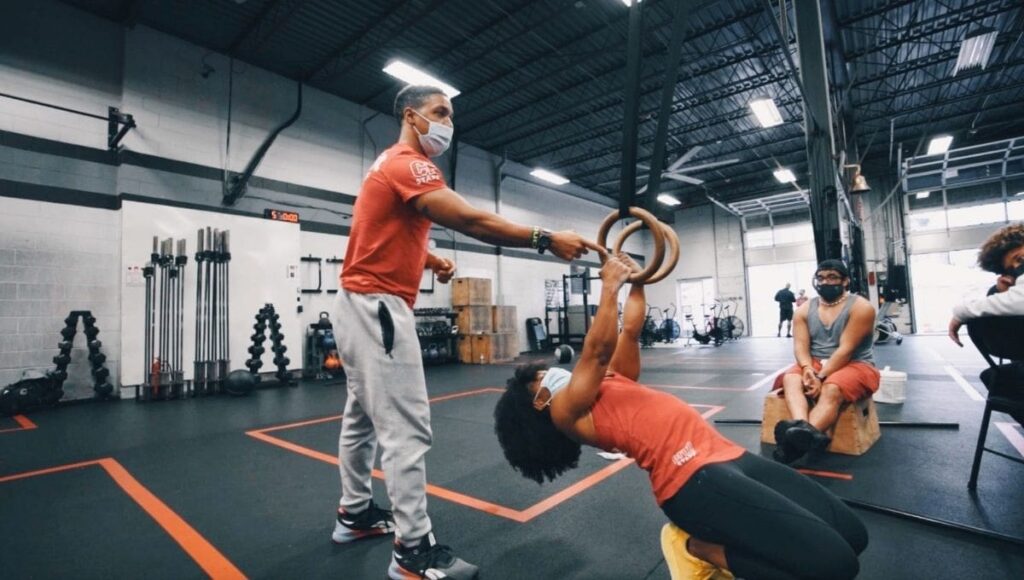
Low Ring Transition
- Set the rings at chest height
- Place your feet on the ground or a box
- Start in a pulling position
- Pull yourself into the rings and rotate your shoulders forward
- Finish in a dip position
Jumping Transition
- Use a slight jump to assist the movement
- Focus on the timing of the turnover
- Keep the rings close to your body
Key Technique Points
- Keep the rings close to your torso
- Rotate quickly but under control
- Maintain tension through your core
Common Mistakes
- Letting the rings drift away from the body
- Dropping into the dip without control
- Rushing the movement without proper positioning
Programming Tips
- Perform 3 to 4 sets of 5 to 10 reps
- Use slow and controlled tempo
- Practice frequently, even on non strength days
Scientific Insight
Skill acquisition improves with repetition under controlled conditions. Studies show that practicing submaximal variations of complex movements enhances motor learning and reduces injury risk.
In addition, shoulder stability improves when training includes controlled rotational movements under load. This is essential for the transition phase of the muscle up.
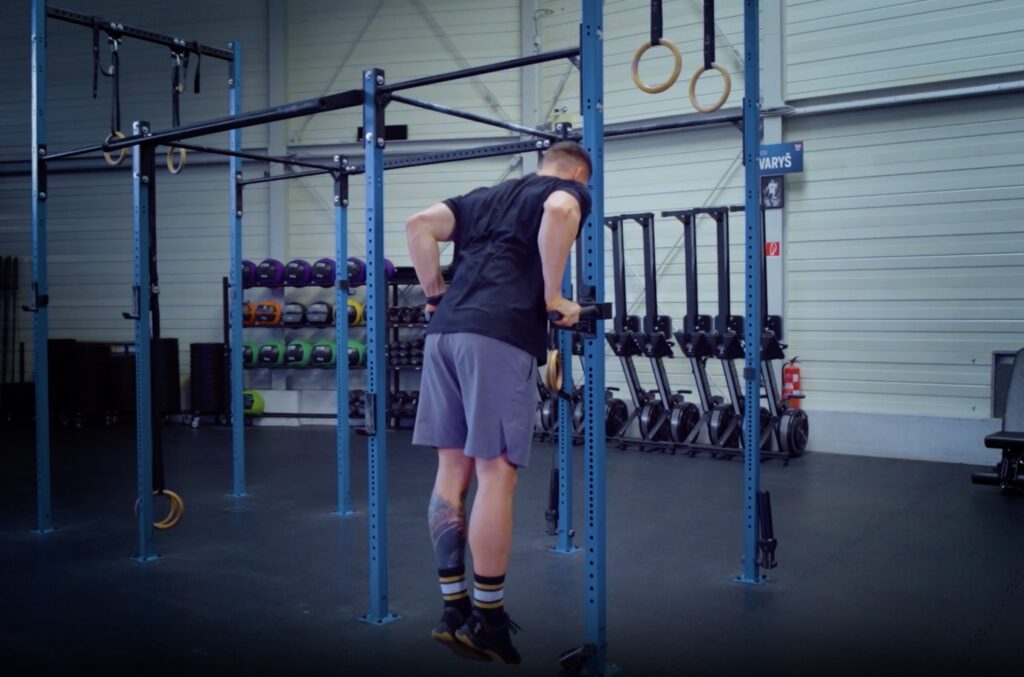
3. Deep Ring Dips
Why This Exercise Works
The dip phase of the ring muscle up requires both strength and stability. Deep ring dips strengthen the pressing muscles while also improving control in unstable conditions. Compared to bar dips, ring dips:
- Require more stabilization from the shoulder
- Increase activation of the chest and triceps
- Improve joint control
Research comparing stable and unstable pressing exercises shows greater activation of stabilizing muscles when using rings.
How to Perform Deep Ring Dips
- Start in a support position on the rings
- Turn the rings slightly outward
- Lower slowly until your shoulders are below your elbows
- Press back up to full lockout
Maintain control throughout the entire movement.
Common Mistakes
- Shallow range of motion
- Losing control at the bottom
- Flaring the elbows excessively
Programming Tips
- Perform 3 to 5 sets of 5 to 10 reps
- Add weight once bodyweight becomes easy
- Focus on slow eccentric control
Scientific Insight
Training through a full range of motion increases muscle hypertrophy and strength. Deep dips place the muscles under tension for longer periods, which enhances adaptation. Additionally, unstable training improves joint stability and coordination, both of which are essential for ring muscle ups.
How to Combine These Accessory Exercises
To maximize your progress, you should integrate all three accessory exercises into your training program.
Sample Weekly Structure
Day 1: Pull Focus
- Chest to ring pull ups
- Core work
Day 2: Skill Focus
- Ring transition drills
- Light technique practice
Day 3: Push Focus
- Deep ring dips
- Shoulder stability work
This structure allows you to target each phase of the muscle up without excessive fatigue.
Additional Factors That Influence Success
Accessory exercises for ring muscle ups are essential, but they are not the only factor.
Grip Strength
A strong false grip reduces the distance you need to travel during the transition. Research shows that grip strength is strongly correlated with upper body performance.
Core Stability
The muscle up requires full body tension. Weak core muscles reduce force transfer between the upper and lower body.
Mobility
Shoulder mobility allows for smoother transitions and reduces injury risk. Limited mobility can restrict your ability to achieve optimal positions.
Common Mistakes When Training for Ring Muscle Ups
Many athletes waste time by making avoidable mistakes.
- Practicing muscle ups without sufficient strength
- Ignoring the transition phase
- Using excessive kipping instead of building strict strength
- Neglecting ring stability work
Focusing on the right accessory exercises for ring muscle ups helps eliminate these issues.
How Long Does It Take to Learn a Ring Muscle Up
The timeline varies depending on your starting point. If you already have:
- 10 strict pull ups
- 10 strict dips
You may achieve your first muscle up within a few weeks of focused training. If not, it may take several months to build the required strength. Consistency and smart programming are key.
Final Thoughts
The ring muscle up is not just about effort. It is about applying the right training methods to build the specific strength and coordination required.
The three best accessory exercises for ring muscle ups are:
- Chest to ring pull ups
- Ring transition drills
- Deep ring dips
Each one targets a critical phase of the movement and is supported by scientific principles of strength development and motor learning. By consistently incorporating these exercises into your training, you will build the strength, control, and confidence needed to master the ring muscle up.
References
- Behm, D.G. and Colado, J.C. (2012). The effectiveness of resistance training using unstable surfaces and devices for rehabilitation. International Journal of Sports Physical Therapy, 7(2), pp.226 to 241.
- Schoenfeld, B.J. (2010). The mechanisms of muscle hypertrophy and their application to resistance training. Journal of Strength and Conditioning Research, 24(10), pp.2857 to 2872.
- Andersen, L.L. et al. (2014). Muscle activation and perceived loading during rehabilitation exercises. Journal of Strength and Conditioning Research, 28(6), pp.1835 to 1842.