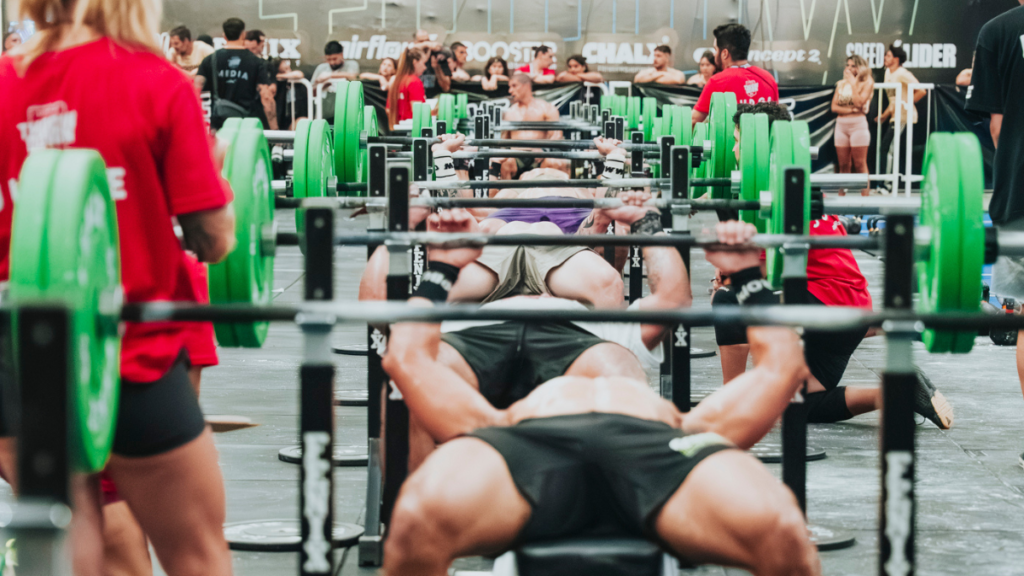


A bigger chest is not just about doing more bench presses. If you want to build serious muscle while developing real pressing strength, you need to spend time training from a dead stop. Dead stop exercises remove the stretch reflex, forcing your muscles to produce force from a complete pause. That makes every repetition harder and often more effective for improving both strength and muscle recruitment.
Many lifters rely heavily on momentum during presses without realizing it. The elastic energy stored in muscles and tendons helps them move heavier weights, but it can also hide weak points. Dead stop exercises expose those weaknesses and force the chest, shoulders, and triceps to generate power without assistance.



Research consistently shows that increasing mechanical tension, training through full ranges of motion, and improving motor unit recruitment are among the most important drivers of muscle growth and strength. Dead stop training checks all of those boxes while providing a fresh stimulus that many lifters rarely include.
Here are three of the best dead stop exercises for building a stronger and more muscular chest.
Why Dead Stop Training Works
Before looking at the exercises, it helps to understand why removing momentum changes the training stimulus so dramatically.
During traditional pressing movements, muscles and connective tissues store elastic energy as the weight lowers. This phenomenon is known as the stretch shortening cycle. When the weight immediately reverses direction, some of that stored energy contributes to the lift, making the concentric phase easier.
The 5 Fat Loss Mistakes Even Experienced Gym-Goers Make
Pausing the weight completely eliminates most of that stored energy. Every repetition starts from zero velocity, meaning your muscles must overcome inertia entirely through active force production.
This has several important benefits. It increases starting strength, improves technique because there is less room to bounce the weight, develops weak positions that are often neglected, and increases motor unit recruitment. High threshold motor units are responsible for producing the greatest amounts of force and have the highest potential for muscle growth.
Research also shows that full range of motion resistance training generally produces greater hypertrophy than partial repetitions, especially in muscles trained under stretch. Combining full range pressing with dead stops creates an effective environment for both muscle growth and strength development.
Exercise 1. Dead Stop Barbell Bench Press
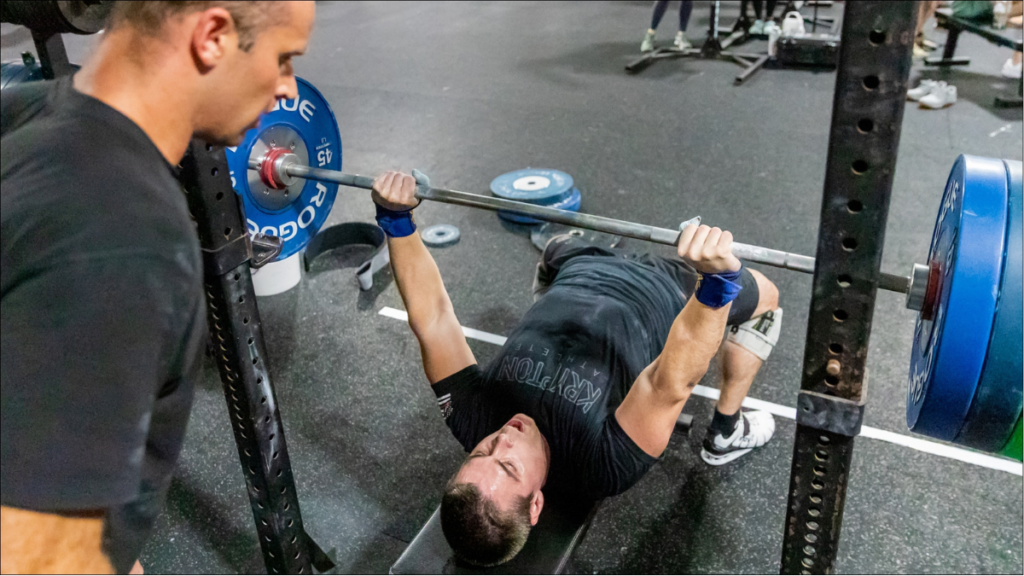
The dead stop bench press is arguably the king of dead stop chest exercises. Instead of lowering the bar continuously and pressing immediately upward, the bar briefly settles on the safety pins inside a power rack before each repetition begins. This completely removes momentum and forces every repetition to begin from a dead stop.
How to Perform It
Set the safety pins inside a power rack so the bar rests just above your chest without compressing it. Lie underneath the bar exactly as you would for a normal bench press.
Grip the bar using your standard bench press grip and brace your upper back tightly against the bench. Take a deep breath, create full body tension, and press the bar explosively off the pins until your elbows reach full extension. Lower the bar under control until it settles on the pins again. Let the bar become completely motionless before beginning the next repetition.
Avoid relaxing your body during the pause. Your muscles should stay tight while only the bar loses momentum.
Why It Builds More Strength
Starting from complete stillness dramatically increases force production demands. Without help from elastic recoil, the chest, anterior deltoids, and triceps must generate all the force required to move the load.
Research examining isometric and concentric force production shows that improving force output from static positions transfers well to dynamic lifting performance. This explains why powerlifters frequently use pin presses to strengthen sticking points. The dead stop also teaches better bar path consistency because each repetition starts from exactly the same position.
Best Programming
Perform three to five sets of three to six repetitions using heavy loads around 75 to 90 percent of your one repetition maximum. Rest at least two to three minutes between sets.
The focus should remain on maximum force production rather than muscular fatigue.
Exercise 2. Dead Stop Dumbbell Floor Press
The dumbbell floor press already limits excessive shoulder extension, making it a shoulder friendly pressing exercise. Adding a dead stop between repetitions increases the challenge even further.
Each repetition begins with the upper arms resting on the floor, eliminating momentum while forcing the chest and triceps to create force from a complete pause.
How to Perform It
- Lie flat on the floor holding two dumbbells above your chest.
- Lower both dumbbells under control until your upper arms gently contact the floor. Pause completely for one to two seconds without bouncing.
- Drive the dumbbells upward explosively until your elbows nearly lock out.
- Repeat while maintaining tightness throughout your torso.
Why It Is So Effective
The floor naturally creates a consistent stopping point every repetition. This improves exercise repeatability while protecting the shoulders from excessive range of motion that may bother some lifters with previous injuries or limited mobility.
Although the floor reduces the total range compared with a bench press, the elimination of momentum significantly increases the effort required during the initial pressing phase.
Research comparing unstable and unilateral dumbbell training also demonstrates that free weights require greater stabilizer activation than machines, improving coordination while still allowing high levels of muscle activation. Because each arm works independently, muscular imbalances become much harder to hide.
Best Programming
Perform three to four sets of six to ten repetitions.
Focus on controlled lowering, a full pause, and an explosive press on every repetition.
Exercise 3. Paused Deficit Push Up
Push ups often receive less attention than they deserve. When performed with a deficit and a complete dead stop, they become an outstanding chest builder.

Using handles or parallettes allows the chest to travel below hand level, increasing the range of motion and placing the pecs under greater stretch. Pausing at the bottom completely removes momentum before each repetition begins.
How to Perform It
- Place two sturdy handles, parallettes, or hex dumbbells slightly wider than shoulder width.
- Assume a strong push up position with your core braced and body forming a straight line.
- Lower yourself slowly until your chest reaches below your hands.
- Pause for one to two seconds while maintaining tension throughout your body.
- Press explosively back to the starting position.
If body weight becomes too easy, wear a weighted vest or place a weight plate on your upper back with a training partner.
Why It Stimulates Muscle Growth
Studies examining resistance training at longer muscle lengths consistently show greater hypertrophy compared with shorter ranges. The deeper stretch achieved during deficit push ups increases mechanical tension across the chest while the dead stop removes elastic assistance.
The result is a demanding body weight exercise capable of producing impressive gains in muscle size. Push ups also allow natural movement of the shoulder blades, which may improve comfort for individuals who experience discomfort during heavy barbell pressing.
Best Programming
Perform three to four sets of eight to fifteen repetitions. Choose a resistance level that brings you close to muscular failure while maintaining excellent technique.
How Dead Stop Training Builds More Muscle
Hypertrophy depends primarily on sufficient mechanical tension, progressive overload, and adequate training volume. Dead stop exercises increase mechanical tension because muscles cannot rely on stored elastic energy.
Each repetition begins with maximal voluntary contraction, increasing force demands from the very first inch of movement. Research using electromyography demonstrates that higher motor unit recruitment accompanies greater force requirements. These larger motor units possess the greatest capacity for muscle growth because they innervate larger, stronger muscle fibers.

Dead stop training also improves exercise quality. Lifters cannot bounce through weak positions or rely on momentum to complete repetitions. Every rep becomes more honest, making progression easier to measure over time.
Common Mistakes
One common mistake is relaxing completely during the pause. Only the weight should stop moving. Your muscles should remain braced so you can generate maximum force immediately.
Another mistake is choosing loads that are too heavy. Dead stop repetitions are naturally harder than standard repetitions. Most lifters need to reduce the weight by around 10 to 20 percent when first introducing these exercises. Rushing the pause also defeats the purpose. Wait until the weight becomes completely motionless before beginning the next repetition.
Finally, avoid replacing every chest exercise with dead stop variations. Traditional continuous repetitions still have an important place in hypertrophy training because they allow greater total training volume.
How to Add Dead Stop Chest Training to Your Program
Most lifters only need one or two dead stop movements per week. A practical approach is to begin one upper body session with heavy dead stop bench presses while using conventional pressing later in the workout.
On another day, include dead stop floor presses or deficit push ups after your primary compound lift. Because these exercises generate high force demands, place them early in the session when fatigue is lowest. Over time, gradually increase either the weight, repetitions, or total number of sets while maintaining strict pauses.
Who Should Use Dead Stop Chest Exercises?
Dead stop exercises benefit nearly every training level.
- Beginners learn proper control while developing foundational strength.
- Intermediate lifters overcome sticking points that often appear during the bench press.
- Advanced athletes gain greater starting strength and force production that transfers well to heavy compound lifting.
Athletes involved in football, rugby, wrestling, combat sports, and throwing events may also benefit because explosive upper body force production plays an important role in performance.
Individuals recovering from certain shoulder issues may find the floor press particularly comfortable because it naturally limits excessive shoulder extension. However, anyone with existing injuries should consult a qualified healthcare professional before beginning a new training program.
Final Thoughts
Dead stop chest exercises force your muscles to work harder because they eliminate momentum and the stretch shortening cycle. Every repetition begins from complete stillness, increasing force production, improving motor unit recruitment, and exposing weaknesses that traditional pressing can hide.
The dead stop barbell bench press develops maximal pressing strength. The dead stop dumbbell floor press combines strength gains with shoulder friendly mechanics and improved stability. The paused deficit push up delivers impressive chest stimulation using little more than body weight and a greater range of motion.
Used alongside conventional pressing exercises, these three movements can help you build a bigger, stronger, and more balanced chest while improving performance on your primary lifts.
Key Takeaways
| Exercise | Primary Benefit | Recommended Reps |
|---|---|---|
| Dead Stop Barbell Bench Press | Maximal strength and starting power | 3 to 6 |
| Dead Stop Dumbbell Floor Press | Chest strength with shoulder friendly mechanics | 6 to 10 |
| Paused Deficit Push Up | Muscle growth through deeper range of motion | 8 to 15 |
| Best Weekly Frequency | One to two sessions | Depends on overall training volume |
| Main Training Focus | Eliminate momentum and maximize force production | Maintain full body tension |
References
- Ahtiainen, J.P., Pakarinen, A., Alen, M., Kraemer, W.J. and Häkkinen, K., 2003. Muscle hypertrophy, hormonal adaptations and strength development during strength training in strength trained and untrained men. European Journal of Applied Physiology, 89(6), pp.555 to 563.
- Behm, D.G. and Colado, J.C., 2012. The effectiveness of resistance training using unstable surfaces and devices for rehabilitation. International Journal of Sports Physical Therapy, 7(2), pp.226 to 241.
- Grgic, J., Schoenfeld, B.J., Orazem, J. and Sabol, F., 2020. Effects of resistance training performed to repetition failure or non failure on muscular strength and hypertrophy. Journal of Sport and Health Science, 10(3), pp.275 to 283.
- Komi, P.V., 2000. Stretch shortening cycle. Strength and Power in Sport, 2nd ed., pp.184 to 202.
- Krzysztofik, M., Wilk, M., Wojdala, G. and Gołaś, A., 2019. Maximizing muscle hypertrophy through advanced resistance training techniques and methods. International Journal of Environmental Research and Public Health, 16(24), 4897.
- Maeo, S., Ando, Y., Kanehisa, H. and Kawakami, Y., 2021. Neuromuscular adaptations following resistance training using different ranges of motion. Scandinavian Journal of Medicine and Science in Sports, 31(5), pp.1015 to 1026.
- Pinto, R.S., Gomes, N., Radaelli, R., Botton, C.E., Brown, L.E. and Bottaro, M., 2012. Effect of range of motion on muscle strength and thickness. Journal of Strength and Conditioning Research, 26(8), pp.2140 to 2145.
- Schoenfeld, B.J., 2010. The mechanisms of muscle hypertrophy and their application to resistance training. Journal of Strength and Conditioning Research, 24(10), pp.2857 to 2872.
- Schoenfeld, B.J. and Grgic, J., 2020. Effects of range of motion on muscle development during resistance training interventions. Sports Medicine, 50(1), pp.169 to 180.
- Tillin, N.A. and Folland, J.P., 2014. Maximal and explosive strength training elicit distinct neuromuscular adaptations specific to the training stimulus. European Journal of Applied Physiology, 114(2), pp.365 to 374.