

Mind muscle connection describes deliberately focusing attention on the muscle you are trying to train while performing an exercise. During a biceps curl, for example, you might focus on contracting the biceps as you lift the dumbbell. During a row, you might think about pulling with your upper back rather than simply moving the handle from point A to point B.
The idea is popular because it sounds intuitive. If you can feel a muscle working, surely you must be training it more effectively. There is some truth in that, but the full answer is more complicated. Mind muscle connection can help beginners learn exercises, improve control, and increase activation of a target muscle in certain situations. It is not a substitute for good technique, sufficient resistance, progressive overload, or consistent training.



The most important point is that feeling a muscle work is not the same as proving that it will grow more. A muscle can feel a strong burn during a light set without receiving enough mechanical tension for optimal long term progress. On the other hand, a challenging compound exercise can build muscle even when you do not feel one specific muscle working intensely.
For beginners, mind muscle connection is best used as a skill. It helps you learn where an exercise should be felt, reduces unnecessary momentum, and makes it easier to identify when another part of the body is taking over. It should improve your lifting, not turn every set into a mental struggle.
1. Mind Muscle Connection Can Improve Control and Muscle Activation
What Internal Focus Means
Mind muscle connection is a type of internal focus of attention. Internal focus means concentrating on a body part or muscle during movement. An external focus means concentrating on the effect of the movement outside the body.
For example, during a squat, an internal focus might be, “Drive through my quads and glutes.” An external focus might be, “Push the floor away.” During a cable row, an internal focus might be, “Squeeze my upper back.” An external focus might be, “Pull the handle toward my ribs.”
Both forms of attention can be useful. The best choice depends on the exercise, the goal, the person’s experience, and the amount of load being used.
5 Best Beginner Training Tips for Wider Biceps
Research has shown that internal focus can increase activation of specific muscles in some exercises. In a study of trained men performing bench press, focusing on the chest increased pectoral muscle activation at lighter loads. The effect became less clear at heavier loads, where the task required more overall effort and coordination.
This is useful for beginners because lighter loads are often used while learning technique. During a machine chest press, pushup, or dumbbell fly, focusing on the chest can help a beginner understand what the exercise is intended to train. During a leg extension, focusing on the quadriceps can help prevent rushing through repetitions. During a lateral raise, focusing on lifting with the side of the shoulder can reduce the temptation to swing the weights.
Feeling the Right Muscle Can Expose Technique Problems
Mind muscle connection can also reveal when an exercise is being performed poorly for its intended purpose. If you perform a biceps curl but mostly feel your lower back, shoulders, or forearms, momentum or poor positioning may be shifting the work away from the biceps.
The same principle applies to many common gym movements. If a row feels almost entirely like a biceps exercise, the load may be too heavy or the shoulder blade movement may be rushed. If a glute bridge is felt only in the lower back, the lifter may be overextending the spine rather than using the hips. If a chest press is felt mostly in the front of the shoulder, grip position, elbow path, range of motion, or load selection may need adjustment.
This does not mean every exercise must create a perfect sensation in one muscle. Compound movements are supposed to involve multiple muscles. A squat should involve the quadriceps, glutes, trunk, and other supporting muscles. A deadlift should involve the hips, legs, back, trunk, and grip. The goal is to recognize whether the main muscles are contributing in a way that matches the exercise.
Use It to Learn, Not to Overthink
Beginners benefit from clear, simple cues. One cue is often enough. Trying to think about the feet, knees, hips, shoulders, breathing, target muscle, bar path, and tempo at the same time can make an exercise feel harder than necessary.
Choose one useful internal cue for a set. During a cable fly, think about bringing the upper arms together with the chest. During a leg curl, think about pulling the heel toward the glutes with the hamstrings. During a lat pulldown, think about drawing the elbows down toward the sides of the body.
After the set, assess whether the cue helped. If it improved control and helped you feel the intended muscle, keep it. If it made your technique worse or caused you to use less range of motion, choose a simpler cue.
2. Feeling a Muscle Is Not the Same as Building a Muscle

The Main Driver Is Mechanical Tension
Muscle growth is largely driven by mechanical tension. Mechanical tension is created when muscle fibers produce force against resistance. The tension must be challenging enough, repeated consistently, and supported by recovery and nutrition.
Mind muscle connection can help direct effort toward a target muscle, but it does not replace mechanical tension. A light dumbbell curl performed with intense concentration may create a strong pump, but the biceps still need enough challenge to adapt over time. If you can perform thirty easy repetitions without approaching fatigue, the set may not be an efficient muscle building stimulus regardless of how focused you are.
This is why progressive overload remains important. Over time, the exercise must become more demanding through added load, more repetitions, more difficult variations, improved range of motion, or additional hard sets. Mind muscle connection can make those hard sets better, but it cannot replace them.
The Pump Is Not a Reliable Scorecard
A pump is the temporary swelling sensation that occurs when blood and fluid accumulate in a working muscle. It can feel satisfying, especially during isolation exercises. However, the pump does not directly measure muscle growth.
You can get a large pump from high repetition, light load training. You can also gain muscle from heavier sets that create less immediate swelling. Research comparing different resistance training loads shows that muscle hypertrophy can occur across a wide range of loads when sets are performed with sufficient effort.
The pump can still provide useful information. If you are performing a set of cable curls and feel the biceps working, that suggests the exercise is likely targeting the intended area. It becomes unhelpful when you treat the pump as proof that a workout was effective or chase it at the expense of load, technique, range of motion, and progression.
Muscle Soreness Is Not Proof Either
A strong mind muscle connection may increase the sensation of local fatigue, and a new exercise can create soreness. Neither feeling guarantees muscle growth.
Soreness is influenced by novelty, volume, eccentric loading, training status, and individual recovery. A person can make excellent progress while experiencing little soreness. Another person can become very sore after an unfamiliar workout that does not fit their goals or recovery capacity.
Use performance over weeks and months as the main measure of progress. Are you gradually lifting more weight with good technique? Are you performing more controlled repetitions at the same load? Are your measurements, strength, or exercise quality improving? These changes are more meaningful than whether a particular muscle burned during one set.
3. The Best Focus Depends on the Exercise and Goal
Internal Focus Works Best for Many Isolation Exercises
Isolation exercises are movements designed to place most of the work on one primary muscle group. Examples include biceps curls, triceps extensions, leg extensions, leg curls, calf raises, lateral raises, chest flies, and cable pullovers.
These movements are often good places to use mind muscle connection. The technique is usually less complex than a heavy compound lift, and the target muscle is easier to identify. Focusing on the working muscle can help you avoid momentum and perform a smoother repetition.
During a lateral raise, for example, think about lifting the upper arm away from the body with the side of the shoulder. Keep the torso still and avoid throwing the dumbbells upward. During a leg extension, focus on contracting the quadriceps while controlling the lowering phase. During a triceps pressdown, focus on straightening the elbow without allowing the shoulders to drift forward.
A study on attentional focus and resistance training found that participants who used an internal focus while training the elbow flexors experienced greater biceps muscle thickness gains than participants using an external focus. This finding is interesting, but it should not be turned into a universal rule. The study focused on one muscle group and one training context. It suggests that internal focus can be useful for hypertrophy, especially in simpler exercises, rather than proving that it is always superior.
External Focus Can Be Better for Strength and Complex Lifts
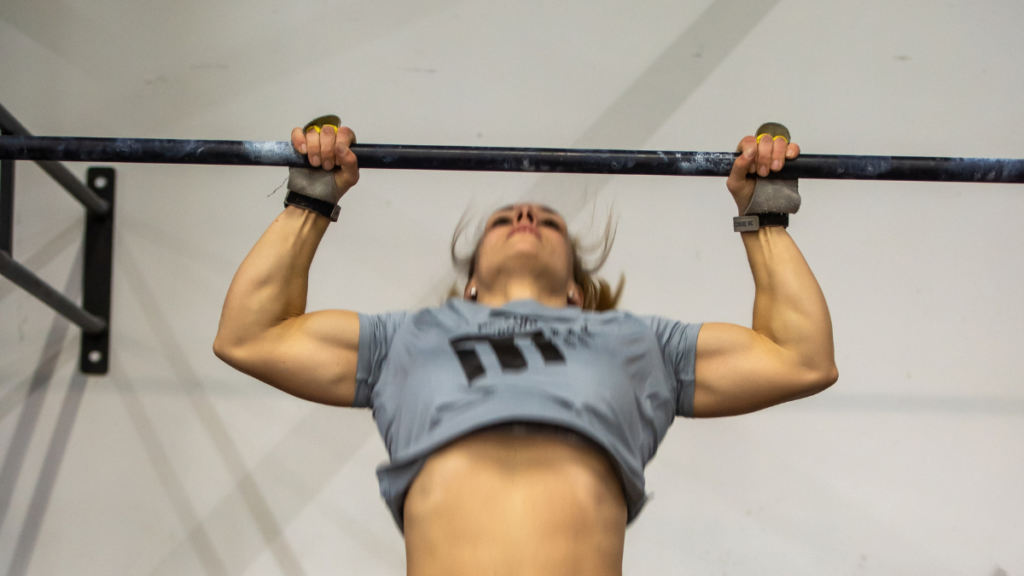
Compound movements involve several joints and multiple muscle groups. Squats, deadlifts, presses, rows, pullups, lunges, and Olympic lifting variations require coordination across the whole body. During these movements, thinking intensely about one muscle can sometimes interfere with the larger movement pattern.
Research on motor learning often finds that an external focus improves performance and learning compared with an internal focus. An external cue directs attention toward the task outcome rather than a specific body part. This can help movement become more automatic and efficient.
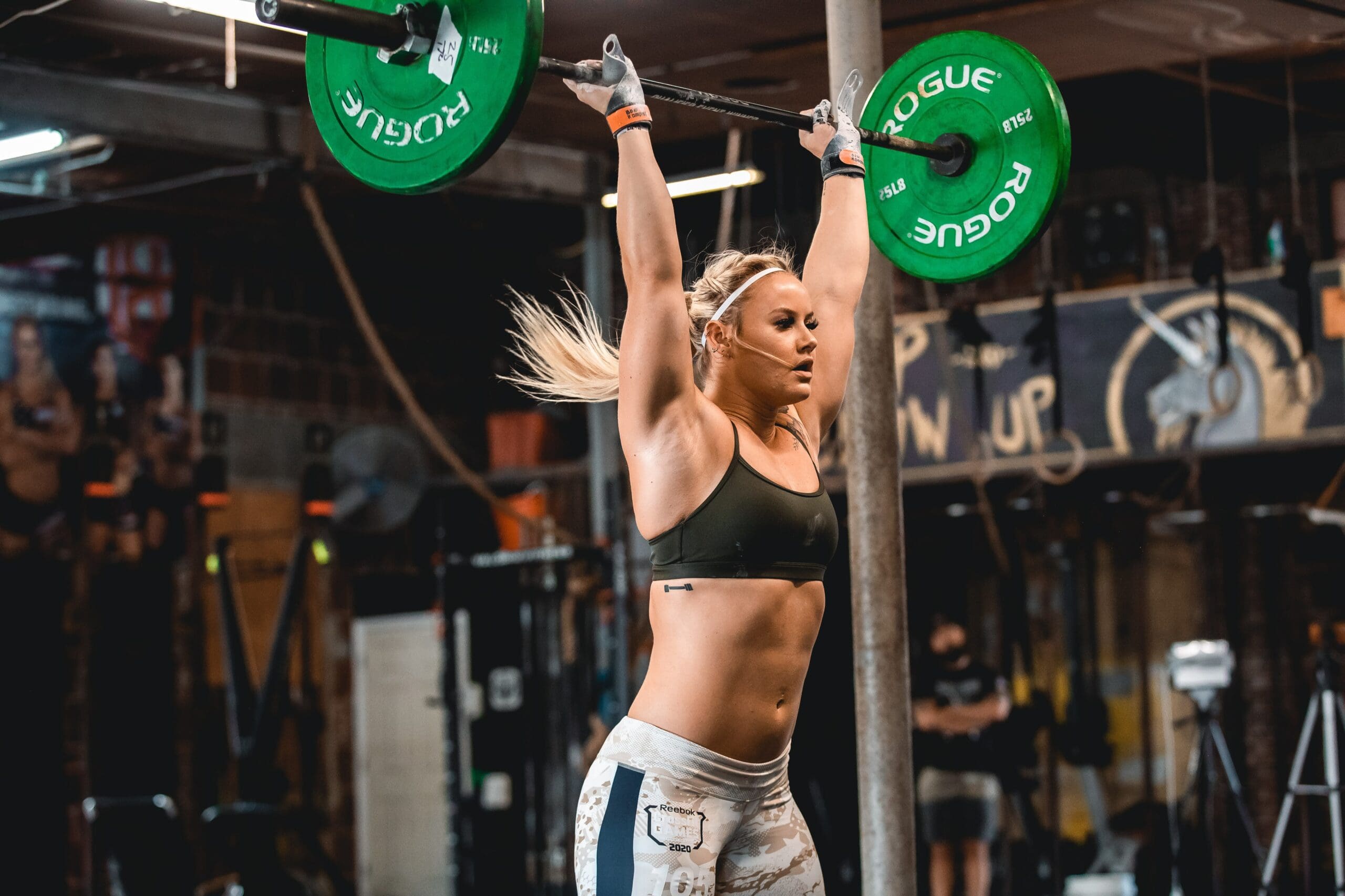
For a squat, an external cue might be “Push the floor away.” For a deadlift, it might be “Push the ground away and keep the bar close.” For a row, it might be “Pull the handle toward your lower ribs.” For a standing overhead press, it might be “Push the weight toward the ceiling.”
These cues do not eliminate muscle awareness. You can still notice whether your glutes, quadriceps, upper back, or chest are doing their job. The difference is that the primary focus stays on performing the movement well rather than trying to consciously control every muscle.
Heavy Loads Require a Simpler Approach
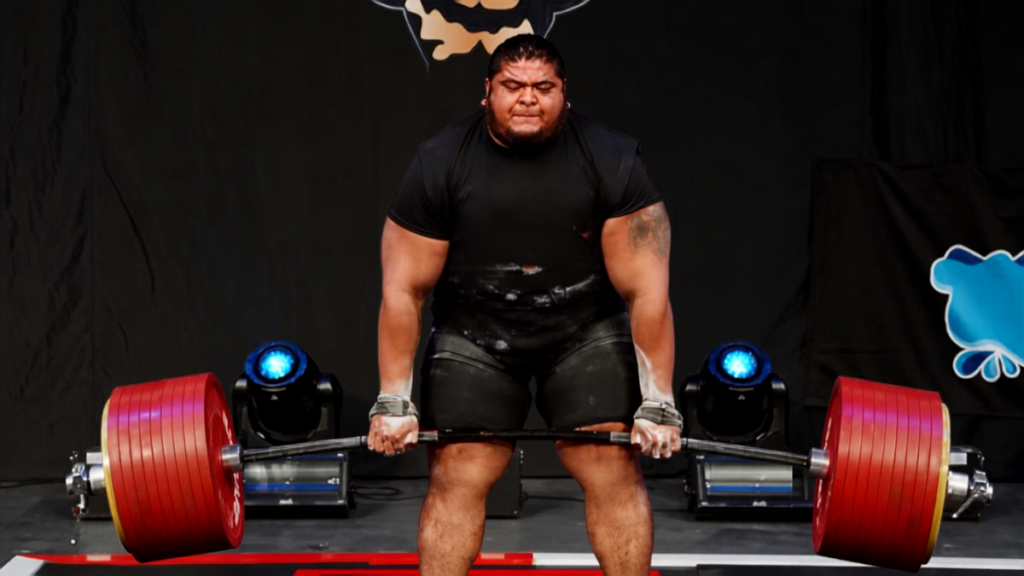
As weights become heavier, the body recruits more muscle fibers and demands more coordination. There is less room to concentrate on squeezing one muscle. A heavy squat requires balance, bracing, foot pressure, knee control, and trunk stability. A heavy deadlift requires a stable setup, grip, bracing, hip and knee extension, and a close bar path.
At higher loads, use one or two simple technique cues. Focus on setting up consistently and applying force through the intended movement. Trying to create a strong mind muscle connection with one specific muscle can be distracting when the entire body needs to work together.
This does not make mind muscle connection useless for heavy training. It simply changes its role. Use it before the set to understand the purpose of the exercise. Then use a simple task based cue while lifting.
How Beginners Can Improve Mind Muscle Connection
Reduce the Load When Necessary
If you cannot control the movement or feel the intended area working at all, reduce the weight. This is especially useful for isolation exercises and machine movements. A lighter load gives you time to learn the path of the movement and reduces the need to use momentum.
Reducing the load does not mean the exercise must become easy. You should still select a resistance that challenges the target muscle by the end of the set. The difference is that you are choosing a weight you can control rather than a weight that forces you to compensate.
For example, if a lateral raise causes you to swing your torso, choose lighter dumbbells and perform a controlled set. If a cable row makes you lean far backward, lower the resistance and keep your torso stable. If a biceps curl causes your elbows to drift forward and your back to arch, use less weight and keep the upper arm relatively still.
Slow the Lowering Phase Slightly
A controlled lowering phase can help you notice the target muscle and prevent momentum from taking over. For many exercises, lowering the weight over roughly two seconds is enough. There is no need to count perfectly, but you should avoid dropping the load or rushing through the easiest part of the movement.
During a chest fly, control the return phase and feel the chest lengthen. During a leg curl, lower the pad steadily and keep the hips in position. During a pulldown, allow the arms to rise with control before beginning the next repetition.
A slower lowering phase should not turn into an exaggerated negative that prevents you from using an appropriate load. It is a technique tool, not a mandatory rule.
Use Machines Strategically
Machines can be helpful for beginners who are trying to learn muscle awareness. They reduce some balance and coordination demands, allowing you to focus on a smaller number of joints and muscles. A leg extension, chest press machine, seated row, leg curl, or calf raise machine can make it easier to understand what the target muscle does.
Machines are not inferior to free weights for muscle growth. Both can be effective when they are used with sufficient effort and progressive overload. A beginner can use machines to learn control while also practicing free weight compound exercises for broader strength and coordination.
The best program often includes both. Machines allow focused work. Free weights and bodyweight movements teach whole body control.
Common Mistakes to Avoid
The first mistake is assuming that every exercise should be felt in only one muscle. Compound lifts involve several muscles by design. It is normal to feel your triceps during a bench press, your biceps during rows, and your lower back working to stabilize a deadlift.

The second mistake is using extremely light weights just to create a sensation. The target muscle should be challenged, not merely active. If you are no longer progressing in load, repetitions, range of motion, or control, the exercise may need to become more demanding.
The third mistake is ignoring pain because you believe you are “feeling the muscle.” Normal training effort can include fatigue, heat, and local discomfort. Sharp pain, numbness, tingling, joint pain, or symptoms that worsen during the set are different. Stop the exercise and seek appropriate guidance if symptoms persist.
The final mistake is comparing your sensations to someone else’s. People differ in body proportions, training experience, movement patterns, and sensitivity to fatigue. You do not need to feel an exercise exactly as another lifter describes it. You need to perform it safely, challenge the intended muscles, and progress over time.
Key Takeaways
| Topic | Practical guidance |
|---|---|
| Meaning | Mind muscle connection means deliberately focusing on the target muscle during an exercise. |
| Best use | Use it to improve control, learn exercise technique, and reduce unnecessary momentum. |
| Muscle activation | Internal focus can increase activation of a target muscle in some exercises, particularly with lighter loads. |
| Muscle growth | Mind muscle connection supports training quality but does not replace mechanical tension, effort, volume, or progressive overload. |
| Isolation exercises | Internal focus is especially useful for curls, extensions, lateral raises, flies, and machine work. |
| Compound exercises | Use simple task based cues for squats, deadlifts, presses, and rows instead of trying to control every muscle consciously. |
| Heavy lifting | As loads get heavier, prioritize setup, bracing, balance, and movement quality. |
| Progress tracking | Judge progress by improved performance and consistency over time, not just by the pump or soreness. |
References
- Calatayud, J., Vinstrup, J., Jakobsen, M.D., Sundstrup, E., Brandt, M. and Andersen, L.L. (2016) ‘Importance of mind muscle connection during progressive resistance training’, European Journal of Applied Physiology, 116(3), pp. 527 to 533.
- Marchant, D.C., Greig, M., Scott, C., Clough, P.J. and Levy, A.J. (2009) ‘Attentional focusing instructions influence force production and muscular activity during isokinetic elbow flexions’, Journal of Strength and Conditioning Research, 23(8), pp. 2358 to 2366.
- Schoenfeld, B.J., Contreras, B., Vigotsky, A.D., Peterson, M. and Fahnestock, J. (2018) ‘The effects of attentional focus on muscle hypertrophy during resistance training: a randomized controlled trial’, European Journal of Sport Science, 18(5), pp. 705 to 712.
- Schoenfeld, B.J., Grgic, J., Ogborn, D. and Krieger, J.W. (2017) ‘Strength and hypertrophy adaptations between low versus high load resistance training: a systematic review and meta analysis’, Journal of Strength and Conditioning Research, 31(12), pp. 3508 to 3523.
- Vance, J., Wulf, G., Töllner, T., McNevin, N. and Mercer, J. (2004) ‘The effects of cognitive strategy on strength performance’, Journal of Sports Sciences, 22(6), pp. 577 to 585.
- Wulf, G. (2013) ‘Attentional focus and motor learning: a review of fifteen years’, International Review of Sport and Exercise Psychology, 6(1), pp. 77 to 104.