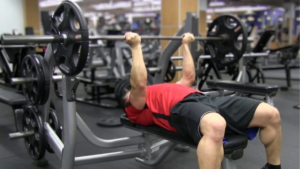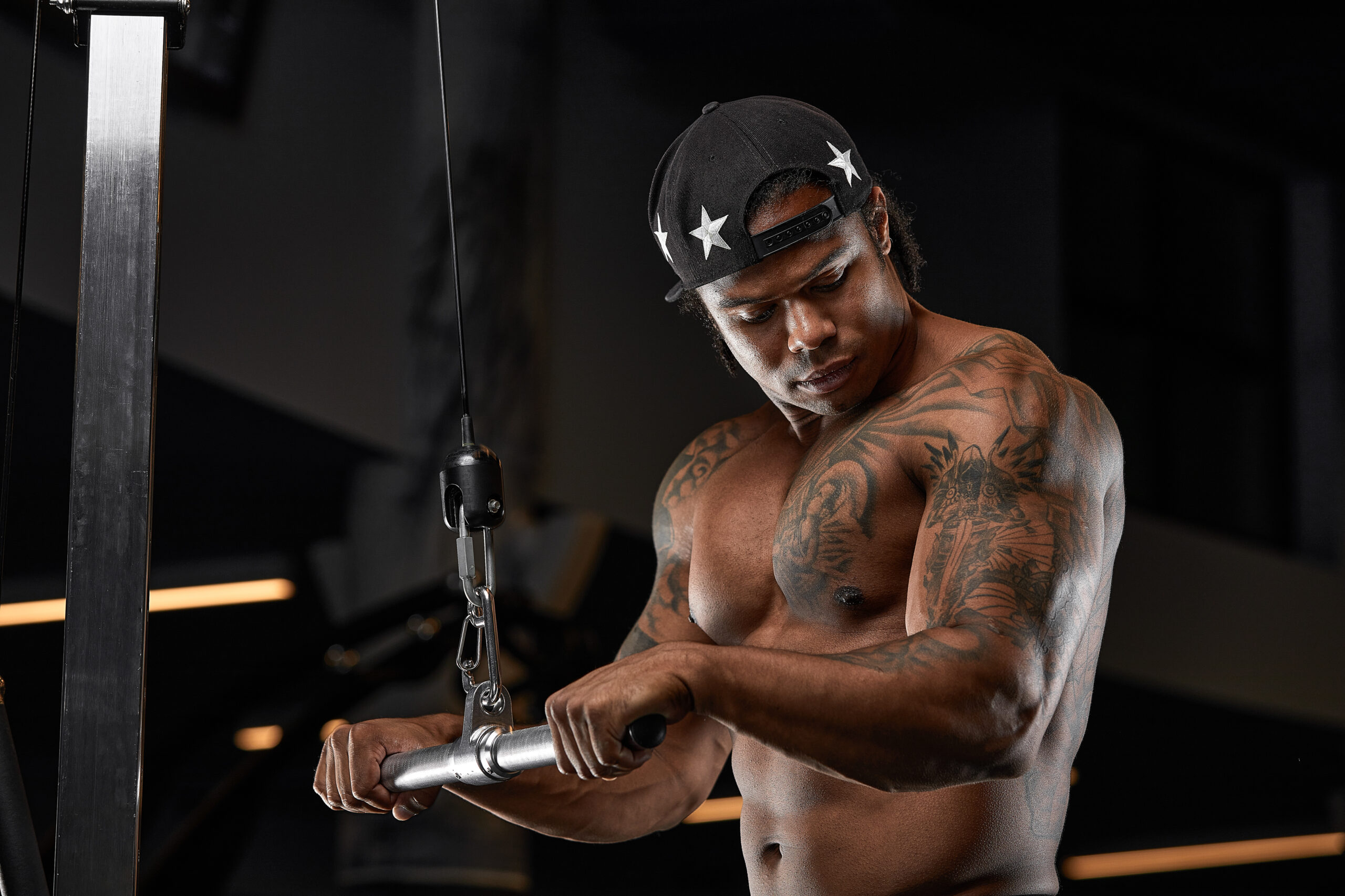


The triceps make up roughly two thirds of your upper arm muscle mass, which means they have a much greater impact on arm size than the biceps alone. If your goal is to build wider, thicker, and more muscular arms, prioritizing triceps development is essential.
Most people rely on staples such as pushdowns, skull crushers, and close grip bench presses. These exercises certainly work, but they also become predictable over time. Your muscles respond to mechanical tension, progressive overload, and sufficient training volume, but introducing movements that challenge the triceps in different positions can improve muscle recruitment while keeping training fresh.


The three exercises below are not commonly seen in commercial gyms, yet each offers unique benefits supported by biomechanics and exercise science. They challenge the triceps through different resistance profiles and joint angles, helping you stimulate all three heads of the muscle while reducing monotony in your workouts.
Why Exercise Variation Matters for Triceps Growth
Muscle hypertrophy depends primarily on sufficient mechanical tension, training volume, and progressive overload. Research consistently shows that muscles adapt best when they are challenged through a full range of motion with enough intensity to approach failure.
Variation also has practical benefits. Different exercises alter resistance curves, joint angles, and muscle lengths. This changes which fibers experience the greatest tension during a movement. While no exercise can completely isolate one head of the triceps, changing shoulder position and elbow angle can shift emphasis between the long, lateral, and medial heads.
How Long Should You Be Able to Hold a Plank?
The long head deserves special attention because it crosses both the shoulder and elbow joints. Exercises performed with the arms overhead place the long head in a stretched position, which may increase hypertrophy through greater mechanical loading at longer muscle lengths.
Recent research has highlighted the benefits of resistance training performed in lengthened muscle positions, showing superior muscle growth compared to exercises that emphasize only shortened positions. With that foundation established, here are three unusual exercises worth adding to your arm workouts.
1. Bodyweight Triceps Extensions
Why It Works
At first glance, this exercise looks like a hybrid between a push up and an overhead extension. In reality, it creates one of the hardest bodyweight challenges for the triceps. Instead of pressing your body upward with the chest and shoulders, your elbows perform most of the movement. Your body acts as the resistance, making the exercise surprisingly demanding despite requiring no external weight.
Unlike traditional push ups, which distribute work across the chest, shoulders, and triceps, the bodyweight triceps extension dramatically increases elbow extension demands. Another advantage is the long range of motion. As your forehead moves toward your hands, the elbows flex deeply before extending again. This creates substantial mechanical tension throughout the movement.
How to Perform It
- Begin facing a squat rack, Smith machine, or sturdy bar set around waist height.
- Grip the bar with hands shoulder width apart.
- Walk your feet backward until your body forms a straight line from head to heels.
- Lower yourself by bending only the elbows while keeping your upper arms relatively fixed.
- Your forehead should travel toward the bar.
- Once you reach a deep stretch, extend your elbows to return to the starting position.
- The lower the bar, the more difficult the exercise becomes.
- Beginners can start with a higher bar before progressing toward a lower angle.
Why It Is Effective
Bodyweight triceps extensions create high levels of muscle activation while remaining joint friendly for many lifters. Because the resistance comes from your own body mass, the exercise naturally adapts to your strength level through body position adjustments.
It also develops stability throughout the shoulders and core, making it more functional than many machine based alternatives.
2. Tate Press
Why It Works
Named after elite powerlifter Dave Tate, the Tate Press remains surprisingly uncommon despite offering excellent triceps stimulation.
The movement combines elements of a dumbbell press with a triceps extension. Instead of lowering the dumbbells beside your chest, you rotate them inward so the elbows flare while the dumbbells approach the middle of your chest. This unusual path greatly increases elbow extension demands while reducing the contribution of the chest. Many lifters report an intense contraction in the lateral head, although all three heads contribute during the exercise.
How to Perform It
- Lie flat on a bench holding two dumbbells with your arms extended above your chest.
- Rotate the dumbbells inward so the ends point toward each other.
- Lower the weights by bending your elbows while allowing them to flare naturally.
- The dumbbells should descend toward the center of your upper chest without resting on it.
- Pause briefly before extending your elbows to return to the starting position.
- Control every repetition and avoid excessive momentum.
Why It Is Effective
The Tate Press places constant tension on the triceps because the elbows remain the primary moving joint.
The dumbbells also allow each arm to work independently, helping address strength imbalances while encouraging better shoulder positioning than a fixed barbell.
Using moderate loads with controlled repetitions typically produces the best results.
3. Single Arm Overhead Cable Triceps Extension Facing Away
Why It Works
Cable overhead extensions are familiar to many gym goers, but facing away from the machine while using one arm changes the exercise considerably. This variation creates continuous tension from the cable while positioning the long head of the triceps under significant stretch.
Unlike free weights, where resistance changes throughout the lift because of gravity, cables maintain tension across nearly the entire range of motion. The unilateral setup also forces greater stability and allows you to focus on achieving a full range of motion without compensating with your stronger arm.
How to Perform It
- Attach a single handle to the lowest cable position.
- Grip the handle and turn so your back faces the machine.
- Raise your working arm overhead with your elbow pointing upward.
- Slowly bend your elbow until you feel a deep stretch in the triceps.
- Extend your elbow until your arm is nearly straight without aggressively locking the joint.
- Complete all repetitions before switching arms.
- Keep your torso stable throughout the movement and avoid arching your lower back.
Why It Is Effective
The combination of continuous cable resistance and overhead positioning makes this exercise especially valuable for targeting the long head.
Research increasingly supports the importance of training muscles under stretch, making this movement an excellent complement to more traditional pressing exercises. Many lifters also find cables more comfortable on the elbows than heavy skull crushers.
Programming These Exercises for Maximum Growth
You do not need to replace your favorite triceps exercises. Instead, use these movements strategically alongside proven compound lifts. Heavy presses such as close grip bench presses and weighted dips remain outstanding strength builders because they allow high loading. The unusual exercises discussed here are best used to increase training volume while exposing the muscles to different resistance patterns.
Aim to train the triceps at least twice per week. Current evidence suggests that weekly training volume is one of the strongest predictors of muscle growth, provided recovery is adequate.

Most lifters achieve excellent results with approximately 10 to 20 challenging sets for the triceps each week. Beginners often grow well with the lower end of this range, while advanced athletes may benefit from higher volumes.
Keep most sets within one to three repetitions of muscular failure. Research consistently demonstrates that training close to failure recruits the high threshold motor units responsible for maximizing hypertrophy.
Common Mistakes That Limit Triceps Growth
One of the biggest mistakes is using excessive weight at the expense of technique. Swinging the shoulders or using momentum reduces the amount of work performed by the triceps. Another common error is performing only pushdowns. While pushdowns are effective, they place the shoulder in a relatively neutral position. Including overhead work challenges the long head at longer muscle lengths, providing a more complete stimulus.
Many people also rush through repetitions. Controlled lowering phases increase time under tension while improving movement quality. Eccentric contractions are especially important because they produce high mechanical tension, one of the primary drivers of muscle growth.
Finally, insufficient recovery limits progress. Muscles grow after training, not during it. Consuming adequate protein, sleeping enough each night, and allowing enough time between hard sessions all contribute to better long term results.
Final Thoughts
If your arm growth has stalled, adding a few less common exercises can provide a fresh stimulus without abandoning proven training principles. The bodyweight triceps extension delivers intense loading using only your body weight while improving stability. The Tate Press offers a unique pressing pattern that heavily challenges elbow extension. The single arm overhead cable extension keeps continuous tension on the long head through a stretched position that modern research increasingly supports for maximizing hypertrophy.
None of these exercises are magic, and none will outperform consistent progressive overload, sufficient training volume, and proper recovery. However, when used intelligently within a balanced program, they can help build thicker, wider, and stronger triceps while keeping your workouts engaging.
Key Takeaways
| Exercise | Primary Benefit | Best Use |
|---|---|---|
| Bodyweight Triceps Extension | High triceps activation with long range of motion and bodyweight resistance | Finisher or main accessory exercise |
| Tate Press | Unique elbow extension pattern that emphasizes the triceps while reducing chest involvement | Moderate weight hypertrophy work |
| Single Arm Overhead Cable Extension Facing Away | Continuous cable tension with strong stretch on the long head | Isolation work and muscle building |
| Training Frequency | Train triceps at least twice per week with sufficient recovery | Long term hypertrophy |
| Weekly Volume | Approximately 10 to 20 hard sets per week depending on experience | Progressive muscle growth |
| Recovery | Adequate protein, calories, and sleep maximize adaptations | Essential for consistent gains |
References
- American College of Sports Medicine. (2009) ‘Progression models in resistance training for healthy adults.’ Medicine & Science in Sports & Exercise, 41(3), pp. 687 to 708.
- Grgic, J., Schoenfeld, B.J., Orazem, J. and Sabol, F. (2022) ‘Effects of resistance training performed to repetition failure or non failure on muscular strength and hypertrophy.’ Journal of Sport and Health Science, 11(2), pp. 202 to 211.
- Maeo, S., Ando, Y., Kanehisa, H. and Kawakami, Y. (2021) ‘Muscle hypertrophy is greater in the muscle lengthened position than the shortened position during resistance training.’ Frontiers in Physiology, 12, Article 689604.
- Morton, R.W., Murphy, K.T., McKellar, S.R., Schoenfeld, B.J., Henselmans, M., Helms, E., Aragon, A.A., Devries, M.C., Banfield, L., Krieger, J.W. and Phillips, S.M. (2018) ‘A systematic review, meta analysis and meta regression of the effect of protein supplementation on resistance training induced gains in muscle mass and strength in healthy adults.’ British Journal of Sports Medicine, 52(6), pp. 376 to 384.
- Schoenfeld, B.J. (2010) ‘The mechanisms of muscle hypertrophy and their application to resistance training.’ Journal of Strength and Conditioning Research, 24(10), pp. 2857 to 2872.
- Schoenfeld, B.J., Ogborn, D. and Krieger, J.W. (2017) ‘Dose response relationship between weekly resistance training volume and increases in muscle mass.’ Journal of Sports Sciences, 35(11), pp. 1073 to 1082.
- Wakahara, T., Ema, R., Miyamoto, N. and Kawakami, Y. (2013) ‘Increase in vastus lateralis aponeurosis width after resistance training is associated with muscle hypertrophy.’ European Journal of Applied Physiology, 113(8), pp. 2151 to 2158.