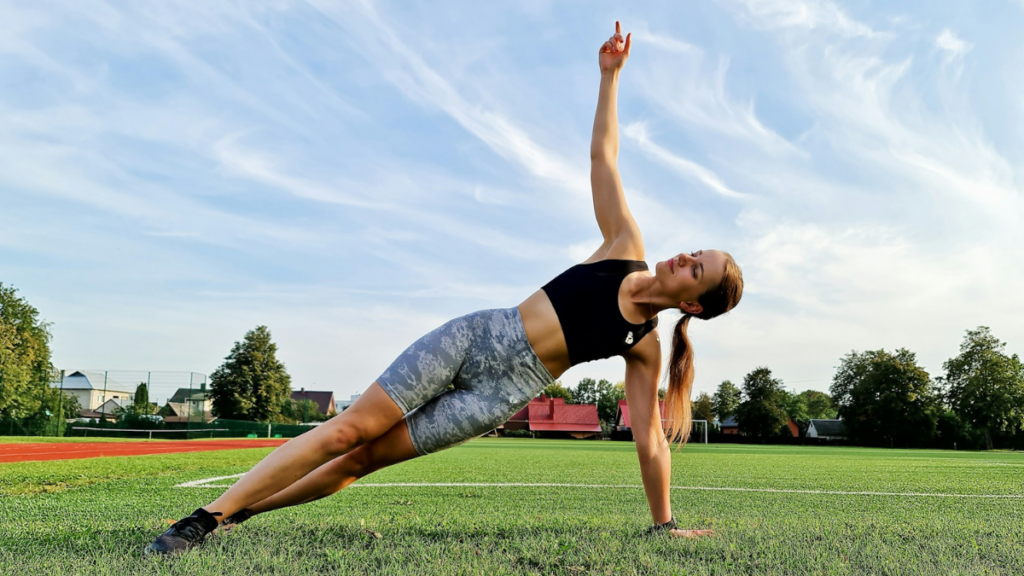
Visible abs are one of the most common fitness goals, yet there is still plenty of confusion about which exercises actually build a stronger core. The reverse crunch has earned a reputation as one of the best movements for targeting the lower portion of the rectus abdominis, often called the lower abs. While the idea of lower abs is not completely accurate from an anatomical perspective, the exercise does emphasize the lower fibers of the abdominal muscles by changing how the pelvis moves during the exercise.
The reverse crunch is also attractive because it requires no equipment, places less strain on the neck than traditional crunches, and can easily be included in almost any training program. That does not automatically make it the perfect six pack exercise, however.


Whether the reverse crunch deserves a permanent place in your workouts depends on your goals, your current fitness level, and how you perform the movement. Understanding the science behind abdominal training can help you decide if this exercise belongs at the center of your routine.
What Is the Reverse Crunch?
The reverse crunch is a bodyweight abdominal exercise that focuses on spinal flexion through controlled pelvic movement. Instead of lifting your shoulders toward your knees like a traditional crunch, you lift your knees toward your chest while keeping your upper back relatively stable.
The movement begins by lying flat on your back with your knees bent at about 90 degrees. Your feet are elevated off the floor and your hands rest beside your body or lightly hold a stable object overhead for support. From this position, you contract your abdominal muscles and curl your pelvis upward until your hips lift slightly off the floor. After a brief pause, you slowly lower your hips back to the starting position under control.

The most important part of the exercise is not how high your knees travel. The key is producing the movement through your abdominal muscles rather than swinging your legs.
Which Muscles Does the Reverse Crunch Work?
The reverse crunch primarily targets the rectus abdominis, which is the long muscle running vertically down the front of your abdomen. This muscle is responsible for spinal flexion and posterior pelvic tilt. The exercise also recruits the external obliques, internal obliques, and transverse abdominis, which help stabilize the trunk throughout the movement.
Your hip flexors also contribute, although their involvement is generally lower than in exercises such as straight leg raises or hanging leg raises because the knees remain bent.
Electromyography research has shown that reverse crunches produce high activation of the rectus abdominis while minimizing unnecessary involvement of the neck muscles compared to some traditional abdominal exercises. This can make the movement more comfortable for people who experience neck fatigue during regular crunches.
Can You Really Target the Lower Abs?
Many fitness articles claim that certain exercises isolate the lower abs. Anatomically, this is not entirely correct. The rectus abdominis is a single muscle extending from the rib cage to the pelvis. It cannot contract in separate upper and lower sections. However, research suggests that different exercises can produce greater activation in different regions of the muscle because of changes in movement mechanics and body position.
During the reverse crunch, the pelvis rotates upward, placing greater demand on the lower fibers of the rectus abdominis. While the entire muscle remains active, many people experience a stronger contraction in the lower abdominal region.
How Many Sit Ups Should You Be Able to Do Based on Your Age?
This explains why reverse crunches have become one of the most popular exercises for developing the appearance of the lower portion of the six pack.
What Does the Science Say?
Researchers have spent decades comparing abdominal exercises using electromyography, commonly called EMG, to measure muscle activation.
Several studies have found that exercises involving controlled pelvic rotation, including reverse crunches, produce greater rectus abdominis activation than many traditional crunch variations.
Research sponsored by the American Council on Exercise compared multiple abdominal exercises and found that movements requiring greater stabilization and pelvic control consistently ranked among the most effective for abdominal muscle activation. While bicycle crunches and captain’s chair leg raises scored particularly well, reverse crunches also demonstrated strong activation while being accessible to most people.

Other studies have confirmed that proper technique is essential. Rapid repetitions with excessive momentum reduce abdominal activity and increase reliance on the hip flexors. This reinforces an important principle of resistance training. Muscle tension matters more than speed.
Benefits of the Reverse Crunch
The reverse crunch offers several advantages that explain why strength coaches and physical therapists frequently include it in core training programs.
Excellent Abdominal Activation
The exercise creates significant tension in the rectus abdominis without requiring external weights. This makes it effective for both beginners and experienced trainees who focus on slow, controlled repetitions. Unlike many machine based abdominal exercises, the reverse crunch teaches the abdominal muscles to stabilize and move the pelvis through a natural range of motion.
Less Neck Strain
One of the biggest complaints with traditional crunches is neck discomfort. Many people pull on their head with their hands or excessively flex their neck while attempting to lift their shoulders.
The reverse crunch largely eliminates this issue because the head and shoulders remain supported on the floor. This often allows trainees to focus more effectively on contracting the abdominal muscles.
Minimal Equipment Required
You only need enough floor space to perform reverse crunches. This makes them ideal for home workouts, hotel room training, or anyone without access to gym equipment.
Easy to Progress
The exercise can become more challenging by slowing the lowering phase, increasing the range of motion, pausing at the top, or eventually progressing to hanging knee raises and hanging leg raises. Progressive overload remains one of the most important principles for muscle growth, even for abdominal muscles.
Limitations of the Reverse Crunch
Despite its many strengths, the reverse crunch is not a complete core training solution.
It Does Not Build Every Core Function
The core has multiple responsibilities beyond spinal flexion. It also resists rotation, lateral bending, and excessive spinal movement while transferring force between the upper and lower body. Exercises such as planks, Pallof presses, farmer carries, and suitcase carries challenge these additional functions more effectively. A balanced training program should include multiple movement patterns.
Visible Abs Still Depend on Body Fat
No abdominal exercise can burn fat specifically from the stomach. Spot reduction has repeatedly been shown to be ineffective in scientific studies. Even the most effective abdominal workout will not reveal a six pack if body fat levels remain too high. Nutrition, total energy balance, resistance training, cardiovascular exercise, sleep quality, and long term consistency all play much larger roles in achieving visible abs.
Technique Is Easy to Lose
Many people swing their legs instead of curling their pelvis. Once momentum takes over, abdominal tension decreases and the exercise becomes far less effective. Quality always matters more than quantity.
How to Perform the Perfect Reverse Crunch
Technique determines whether the reverse crunch becomes a powerful abdominal exercise or simply a way of moving your legs.
- Start by lying flat on your back with your knees bent and feet elevated.
- Brace your abdominal muscles before initiating the movement.
- Instead of thinking about lifting your knees, focus on curling your pelvis upward.
- Your hips should leave the floor slightly as your lower back rounds naturally.
- Pause briefly at the top while squeezing your abdominal muscles as hard as possible.
- Lower yourself slowly over two to four seconds until your hips gently touch the floor again.
- Avoid allowing your feet to swing downward or using momentum between repetitions.
- Controlled movement produces greater muscular tension and better long term results.
Who Should Do Reverse Crunches?
The reverse crunch works well for a wide range of people.
Beginners benefit because the exercise teaches proper abdominal control without requiring expensive equipment. Intermediate and advanced lifters can use it as part of hypertrophy focused abdominal training or as accessory work after compound lifts.
Athletes may also benefit from improved trunk control and pelvic stability, although sport specific training should also include anti rotation and anti extension exercises. Older adults who tolerate spinal flexion comfortably may find reverse crunches easier than traditional sit ups because they place less stress on the neck. People with certain spinal conditions, acute low back pain, or recent abdominal surgery should consult a qualified healthcare professional before performing the exercise.
How Many Reverse Crunches Should You Do?
The ideal volume depends on your goals. For muscular endurance, sets of 15 to 20 controlled repetitions work well. For muscle growth, slowing each repetition and performing 8 to 15 challenging repetitions close to muscular fatigue often provides a better stimulus.
Training the abdominal muscles two to four times per week appears sufficient for most people, provided overall recovery and total training volume are managed appropriately. Like every skeletal muscle, the abdominals respond best to progressive overload rather than endless high repetition workouts.
Are Reverse Crunches Better Than Regular Crunches?
Neither exercise is objectively superior. Traditional crunches emphasize lifting the upper torso while reverse crunches emphasize posterior pelvic tilt. Research suggests both effectively activate the rectus abdominis when performed correctly.
The reverse crunch often has practical advantages because it reduces neck strain and encourages better pelvic control. Many coaches recommend including both exercises at different points in a training program to expose the abdominal muscles to slightly different movement patterns. The best choice ultimately depends on individual comfort, technique quality, and training goals.
The Verdict
The reverse crunch is one of the best bodyweight exercises for strengthening the rectus abdominis and improving control of pelvic movement. It combines high abdominal muscle activation with low equipment requirements and relatively little stress on the neck.
It is not a magic exercise that guarantees visible abs, nor does it fully train every function of the core. Achieving a defined six pack still depends primarily on reducing body fat through appropriate nutrition, resistance training, and consistent physical activity. When performed with slow, controlled technique and combined with a comprehensive core training program, the reverse crunch deserves its reputation as one of the most effective abdominal exercises available. For most people, it is not the only six pack exercise they need, but it is certainly one of the smartest ones to include.
Key Takeaways
| Topic | Takeaway |
|---|---|
| Main muscles | The reverse crunch primarily trains the rectus abdominis while also engaging the obliques and transverse abdominis. |
| Lower abs | It does not isolate the lower abs, but it places greater emphasis on the lower fibers through pelvic movement. |
| Benefits | High abdominal activation, reduced neck strain, minimal equipment, and easy progression make it highly effective. |
| Limitations | It does not train every core function and cannot reduce belly fat on its own. |
| Best technique | Lift the pelvis rather than simply raising the knees, avoid momentum, and lower slowly under control. |
| Training frequency | Two to four sessions per week with progressive overload is appropriate for most people. |
| Best use | Include it as one part of a balanced core training program alongside anti rotation and stabilization exercises. |
References
- Akuthota, V. and Nadler, S.F., 2004. Core strengthening. Archives of Physical Medicine and Rehabilitation, 85(Suppl. 1), pp.S86 to S92.
- American Council on Exercise, 2001. ACE sponsored study identifies the most effective abdominal exercises. ACE Fitness Research Reports.
- Escamilla, R.F., McTaggart, M.S., Fricklas, E.J., DeWitt, R., Kelleher, P., Taylor, M.K., Hreljac, A., Moorman, C.T. and Imamura, R.T., 2006. An electromyographic analysis of commercial and common abdominal exercises. Journal of Orthopaedic and Sports Physical Therapy, 36(2), pp.45 to 57.
- Hibbs, A.E., Thompson, K.G., French, D., Wrigley, A. and Spears, I., 2008. Optimizing performance by improving core stability and core strength. Sports Medicine, 38(12), pp.995 to 1008.
- Schoenfeld, B.J., 2010. The mechanisms of muscle hypertrophy and their application to resistance training. Journal of Strength and Conditioning Research, 24(10), pp.2857 to 2872.
- Schoenfeld, B.J., Contreras, B., Krieger, J., Grgic, J., Delcastillo, K., Belliard, R. and Alto, A., 2019. Resistance training volume enhances muscle hypertrophy but not strength in trained men. Medicine and Science in Sports and Exercise, 51(1), pp.94 to 103.
- Soderberg, G.L. and Cook, T.M., 1984. Electromyographic activity of selected trunk muscles during flexion and extension exercises. Physical Therapy, 64(5), pp.721 to 725.
- Vispute, S.S., Smith, J.D., LeCheminant, J.D. and Hurley, K.S., 2011. The effect of abdominal exercise on abdominal fat. Journal of Strength and Conditioning Research, 25(9), pp.2559 to 2564.