

Building bigger, stronger arms is one of the most common fitness goals for beginners. Well developed arms do more than improve your appearance. Strong biceps and triceps help you lift heavier, carry groceries with ease, perform better in sports, and reduce the risk of injury during everyday activities.
Many beginners assume they need dozens of different exercises or complicated workout routines to grow their arms. The science says otherwise. Muscle growth depends much more on choosing effective exercises, training consistently, progressively increasing the challenge over time, and recovering properly than constantly changing your workouts.



Research consistently shows that resistance training is highly effective for increasing muscle size and strength across all experience levels. Beginners often experience particularly rapid improvements because their bodies respond very well to new training stimuli.
This article covers three of the best beginner exercises for building muscular arms. These movements are easy to learn, require minimal equipment, and are supported by exercise science. You will also learn why they work, how to perform them correctly, and how to get the most muscle growth from every workout.
Why Arm Muscles Grow
Before looking at the exercises themselves, it helps to understand what actually causes muscle growth.
Muscle hypertrophy occurs when resistance training creates enough mechanical tension to stimulate muscle protein synthesis. Over time, provided nutrition and recovery are adequate, muscle fibers repair themselves and become larger.
Modern research suggests that mechanical tension is the primary driver of hypertrophy. Training close to muscular failure, using controlled repetitions, and progressively increasing training volume or load over time are all key factors for maximizing muscle growth. The two primary muscle groups of the upper arm serve different functions. The biceps brachii flex the elbow and rotate the forearm into a palm up position. They also assist shoulder movement during pulling exercises.
The triceps brachii extend the elbow and make up approximately two thirds of the upper arm’s total muscle mass. This means that bigger triceps contribute more to overall arm size than bigger biceps alone.

For beginners, the most effective training programs include exercises for both muscle groups while also emphasizing proper technique before lifting heavier weights.
What Makes an Exercise Good for Beginners?
Not every exercise is equally suitable for someone just starting resistance training. The best beginner exercises should be simple to learn, allow controlled movement, provide a full range of motion, safely overload the muscles, and remain effective for months or even years as strength improves.
Scientific reviews comparing resistance training exercises show that consistent progressive overload matters more than finding a supposedly perfect exercise. However, certain movements make progression much easier while reducing technical complexity. The following three exercises meet all these criteria.
Exercise One: Dumbbell Biceps Curl
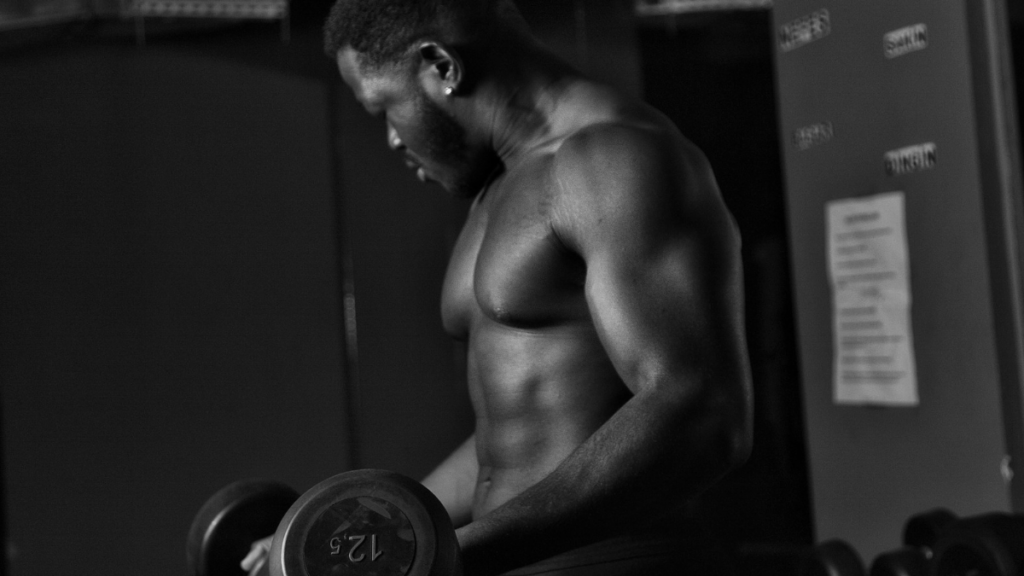
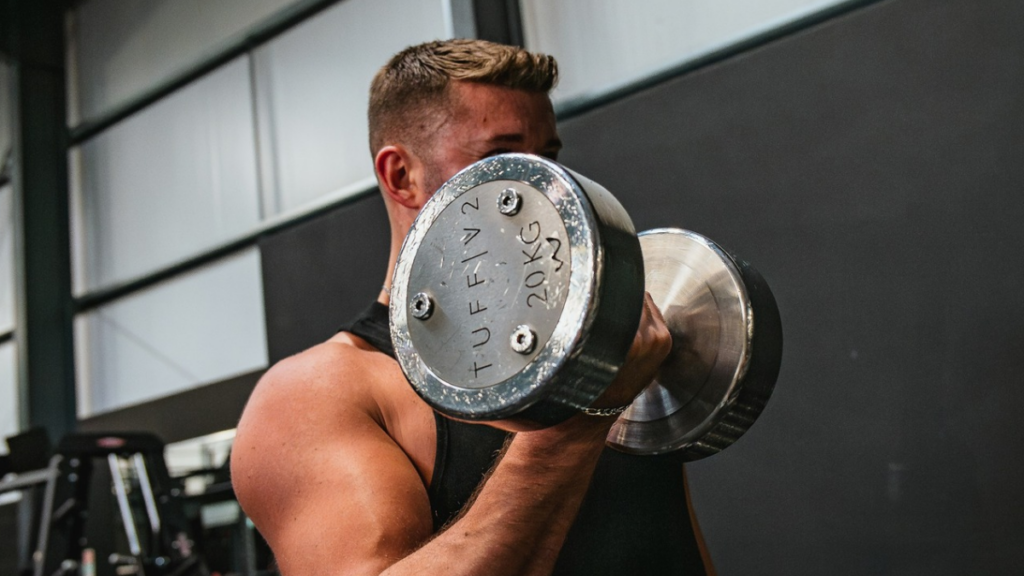
The dumbbell curl remains one of the most effective exercises for directly developing the biceps.
Unlike barbells, dumbbells allow each arm to move independently. This helps reduce strength imbalances while allowing the wrists and elbows to move naturally throughout the exercise.
Electromyography studies consistently show high activation of the biceps brachii during dumbbell curls, making them an excellent isolation movement for muscle development.

How to Perform the Dumbbell Curl
Stand upright while holding a dumbbell in each hand with your palms facing forward. Keep your elbows close to your sides throughout the movement. Curl the dumbbells upward by bending your elbows without swinging your body. Raise the weights until your forearms are nearly vertical and your biceps are fully contracted.
Pause briefly before lowering the dumbbells under control until your elbows are fully extended. The lowering phase should be slow and controlled because eccentric muscle contractions are particularly effective for stimulating muscle growth.
Common Beginner Mistakes
Many beginners use momentum by leaning backward to lift heavier weights. This shifts tension away from the biceps and reduces training effectiveness. Another common mistake is stopping the lowering phase halfway. Using a full range of motion produces greater muscle development than partial repetitions for most people.
Moving too quickly also limits muscle tension. Each repetition should remain smooth and controlled from start to finish.
Programming Recommendations
Beginners should perform two to four sets of eight to fifteen repetitions while stopping with one to three repetitions left before complete muscular failure. Once all prescribed repetitions become comfortable, gradually increase the weight.
Exercise Two: Triceps Pushdown
The triceps pushdown is one of the safest and most beginner friendly exercises for building larger triceps. Unlike overhead movements or skull crushers, cable pushdowns provide consistent resistance throughout the entire movement while placing relatively little stress on the shoulder joints.

Research examining muscle activation demonstrates that cable exercises effectively recruit all three heads of the triceps when performed through a full range of motion.
How to Perform the Triceps Pushdown
- Stand facing a cable machine with a straight bar or rope attachment.
- Grip the attachment with your elbows bent and positioned close to your torso.
- Push the attachment downward by extending your elbows until your arms are straight.
- Pause briefly while squeezing your triceps before slowly returning to the starting position.
- Keep your upper arms stationary throughout the movement.
- Only your forearms should move.
Common Beginner Mistakes
Many beginners allow their elbows to flare outward during the exercise. This reduces tension on the triceps while making the movement less efficient.
Using excessive body weight to force the attachment downward is another common error. Select a weight that allows smooth and controlled repetitions.
Avoid locking the elbows aggressively at the bottom of each repetition. Instead, reach full extension while maintaining muscular control.
Programming Recommendations
Perform two to four sets of ten to fifteen repetitions. The cable allows easy progression by adding small weight increments over time while maintaining excellent technique.
Exercise Three: Chin Up
Although chin ups are often considered a back exercise, they are among the most effective compound movements for developing bigger biceps. Unlike curls, chin ups allow the biceps to work alongside the muscles of the back while handling much greater resistance. For many people, this leads to substantial improvements in both arm size and overall upper body strength.

Research comparing different pulling exercises has found that underhand grip chin ups produce high levels of biceps activation while simultaneously strengthening the latissimus dorsi and forearm muscles.
For beginners who cannot yet perform bodyweight chin ups, assisted chin up machines or resistance bands provide excellent alternatives.
How to Perform the Chin Up
- Grip the bar with your palms facing toward you and your hands approximately shoulder width apart.
- Begin from a full hang with your shoulders engaged.
- Pull yourself upward by driving your elbows downward until your chin clears the bar.
- Lower yourself slowly under control until your arms are fully extended.
- Avoid swinging or kicking your legs to create momentum.
Common Beginner Mistakes
Many beginners shorten the movement by performing only partial repetitions. Another mistake is relaxing completely at the bottom position, which places unnecessary stress on passive structures rather than maintaining muscular control.
Using assistance is perfectly acceptable. Performing complete repetitions with good technique produces better long term progress than struggling through poor quality repetitions.
Programming Recommendations
Aim for two to four sets of five to twelve repetitions.
If bodyweight chin ups are currently too difficult, use assistance that allows completion of the target repetition range with proper form.
How Often Should Beginners Train Their Arms?
Training frequency has received considerable scientific attention over the past decade. Research suggests that total weekly training volume is the primary factor influencing muscle growth. However, spreading that volume across two or more weekly sessions often improves training quality and recovery.
For beginners, training arms two times per week is an excellent starting point. A simple weekly routine could include dumbbell curls, triceps pushdowns, and chin ups after larger upper body exercises such as rows, presses, or pulldowns.
Each workout might include six to ten total working sets for both the biceps and triceps combined. As recovery capacity improves, total weekly volume can gradually increase.
The Importance of Progressive Overload
No exercise will continue producing muscle growth unless the muscles are challenged over time. Progressive overload simply means gradually increasing the demands placed on the muscles.
This can involve adding weight, performing more repetitions, increasing training volume, improving exercise technique, or slowing the lowering phase to increase muscular tension. Research consistently identifies progressive overload as one of the fundamental principles of long term muscle development.
Beginners often make excellent progress for many months by making only small weekly improvements.
Patience Produces Bigger Arms
Many beginners expect dramatic arm growth within a few weeks. While early strength gains occur quickly because of improvements in nervous system function, visible muscle growth usually develops gradually over several months of consistent training.
The good news is that beginners often experience faster hypertrophy than experienced lifters because nearly any well designed resistance training program provides a strong growth stimulus. Consistency almost always beats perfection. Mastering three effective exercises and performing them regularly will produce far better long term results than constantly switching between complicated workouts found on social media.
Final Thoughts
Building muscular arms does not require an enormous exercise library or advanced bodybuilding techniques. The dumbbell biceps curl, triceps pushdown, and chin up cover the essential movement patterns needed for impressive arm development. Together they train both major upper arm muscle groups using a combination of isolation and compound loading that is strongly supported by scientific research.
Focus on excellent technique, train close to muscular failure, increase the challenge gradually over time, eat enough protein, and remain consistent. Those habits matter far more than searching for secret exercises or miracle training methods.
For beginners, mastering these three movements provides a simple, effective, and evidence based foundation for building stronger and more muscular arms.
Key Takeaways
| Topic | Key Point |
|---|---|
| Best biceps exercise | Dumbbell curls provide excellent biceps activation while allowing natural movement and correcting side to side imbalances. |
| Best triceps exercise | Cable triceps pushdowns effectively target all three heads of the triceps with beginner friendly technique. |
| Best compound exercise | Chin ups heavily recruit the biceps while strengthening the back and grip. |
| Training frequency | Train arms about twice per week while accumulating sufficient weekly training volume. |
| Repetition range | Most beginners benefit from sets of 5 to 15 repetitions performed close to muscular failure. |
| Progressive overload | Gradually increase weight, repetitions, or training volume to continue building muscle. |
| Nutrition | Consume sufficient protein and calories to maximize muscle growth and recovery. |
| Recovery | Prioritize quality sleep and adequate recovery between workouts. |
References
- American College of Sports Medicine. (2009). American College of Sports Medicine position stand. Progression models in resistance training for healthy adults. Medicine & Science in Sports & Exercise, 41(3), pp. 687 to 708.
- Grgic, J., Schoenfeld, B.J., Orazem, J. and Sabol, F. (2022). Effects of resistance training performed to repetition failure or non failure on muscular strength and hypertrophy. Journal of Sport and Health Science, 11(2), pp. 202 to 211.
- Krieger, J.W. (2010). Single versus multiple sets of resistance exercise for muscle hypertrophy. Journal of Strength and Conditioning Research, 24(4), pp. 1150 to 1159.
- Maeo, S., Androulakis Korakakis, P., Halaki, M. and Nosaka, K. (2021). Muscle hypertrophy after resistance training is associated with changes in muscle architecture. Sports Medicine, 51(12), pp. 2513 to 2532.
- Morton, R.W., Murphy, K.T., McKellar, S.R., Schoenfeld, B.J., Henselmans, M., Helms, E., Aragon, A.A., Devries, M.C., Banfield, L., Krieger, J.W. and Phillips, S.M. (2018). A systematic review, meta analysis and meta regression of protein supplementation on resistance training induced gains in muscle mass and strength. British Journal of Sports Medicine, 52(6), pp. 376 to 384.
- Schoenfeld, B.J. (2010). The mechanisms of muscle hypertrophy and their application to resistance training. Journal of Strength and Conditioning Research, 24(10), pp. 2857 to 2872.
- Schoenfeld, B.J., Ogborn, D. and Krieger, J.W. (2016). Effects of resistance training frequency on measures of muscle hypertrophy. Sports Medicine, 46(11), pp. 1689 to 1697.
- Schoenfeld, B.J., Grgic, J., Ogborn, D. and Krieger, J.W. (2017). Strength and hypertrophy adaptations between low load and high load resistance training. Journal of Strength and Conditioning Research, 31(12), pp. 3508 to 3523.
- Wakahara, T., Fukutani, A. and Kawakami, Y. (2013). Nonuniform muscle hypertrophy. Sports Medicine, 43(11), pp. 1075 to 1089.